The first World Wide Stereo could run four products at once. Its electrical service was a cord improvised into a utility pole; its displays were plywood; its inventory included Vector Research receivers and BIC cassette decks. A nearby competitor predicted the place would be dead within three months. This was not an unreasonable diagnosis. It was 1979, America was in recession, an oil embargo was squeezing households, and the proprietor was a former psychologist with no retail balance sheet worth discussing.
Bob Cole had $2,000 in cash and $16,000 in local-bank loans. The franchise called World Wide Stereo, where he had taken a job after his mental-health center lost funding, had already failed. Cole kept the name, opened his own 1,500-square-foot version in Montgomeryville, Pennsylvania, and made an odd bet: people buying confusing technology wanted to feel understood.
That sounds almost quaint until you look at the modern company. World Wide Stereo now sells premium electronics nationwide, operates experience centers in Montgomeryville and Wayne, and designs the nervous systems of houses - audio, video, Wi-Fi, lighting, shades, surveillance, electrical infrastructure and the controls that keep all of it from becoming expensive clutter. In 2023 the Consumer Technology Association named it Integrator of the Year. A trade report placed the company sixth on that year's CE Pro 100, with revenue above $50 million.
The first thing that failed was useful
Cole did not leave psychology because he had spotted an electronics roll-up. The center where he worked ran out of money. The stereo franchise was his next move, and it folded too. Those failures removed two safer paths. What remained was his enthusiasm for gadgets and a professional habit of listening to people describe what bothered them.
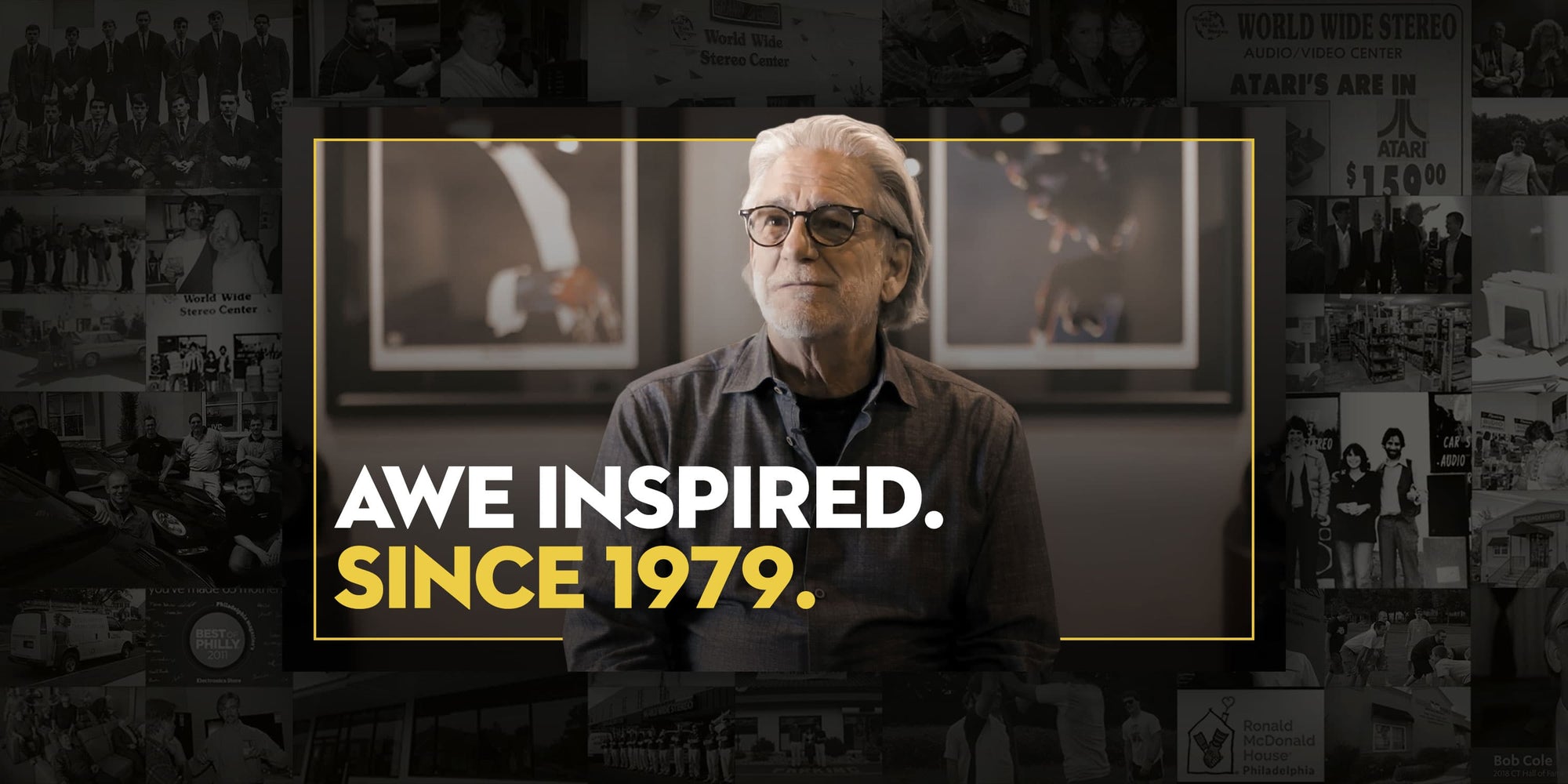
The connection mattered. A stereo store can easily become a clubhouse where experts make newcomers feel illiterate. Cole built the opposite. In a 2020 industry interview, he put it plainly: “I had no money. I had no profit-making background. But I knew about people.” TWICE later described the shop as the “Cheers” of audio-video retailing - warm, informal and staffed by people who stayed.
The first custom installation was a pair of car speakers placed near a customer's hot-tub area. One employee learned that standing in water, wearing flip-flops, around 110 volts is not a training program. The anecdote is funny because the present-day operation is its precise inverse: engineering documents, background-checked staff, rack drawings, Wi-Fi heat maps, cooling requirements and coordination with electricians, builders and designers.
“I had no money. I had no profit-making background. But I knew about people.”Bob Cole, founder
Three businesses wearing one name tag
World Wide Stereo is easiest to understand as a relay race. The online store moves recognizable hardware - headphones, televisions, turntables, speakers and amplifiers - across the country. The showrooms let customers hear differences that collapse on a comparison table. The integration group handles the projects where a shopping cart is the beginning of the problem, not the end.
national reach
physical proof
design + aftercare
The customer may be an audiophile choosing a two-channel system, a family turning a basement into a cinema, or a homeowner who wants the shades, lights and music to obey one button. Another customer is not a homeowner at all. World Wide Stereo says more than 60 percent of its custom projects arrive through architects, interior designers and builders. For those partners, the company translates technology into plans early enough to avoid ugly speakers, late change orders and trades arguing inside a finished wall.
The business model follows the complexity. Commodity products generate retail revenue; curation and demos help them convert. Design, engineering, installation, programming, calibration and ongoing service turn equipment into a working environment. Financing, trade-ins, open-box gear, local delivery and consultations remove smaller points of friction. The company is privately held, and no conventional venture rounds are publicly disclosed.
The internet did not replace the showroom. It escaped from it.
Emily Cole, Bob's daughter and now chief marketing officer, joined in 2008 to launch worldwidestereo.com. The stated goal was revealing: reproduce the friendly showroom online. Most retailers treated e-commerce as cheaper shelves. World Wide Stereo treated it as a translation exercise. Buying guides, reviews, comparison pieces, live help and approachable copy carried the sales-floor expertise beyond Pennsylvania.
The bet took time. The company says its millionth customer bought a turntable in 2011; in 2014 it opened a 13,500-square-foot distribution center. Newsweek and Statista eventually ranked the site first in consumer electronics on their Best Online Shops 2022 list, after evaluating shops on usability, trust, payment, delivery, service and technical performance. A local identity had become national distribution without sanding off all its personality.
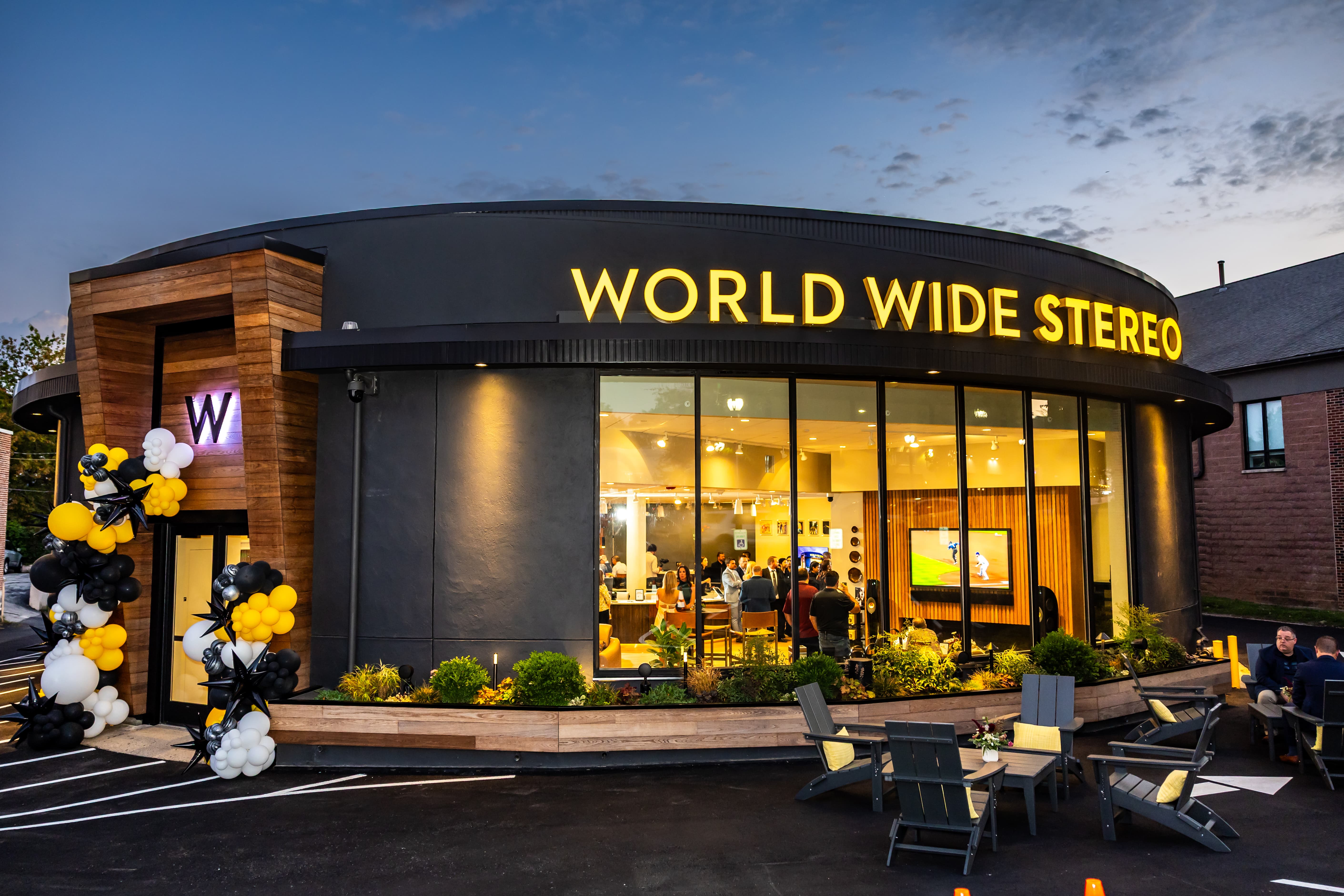
The physical side changed too. Instead of supermarket aisles full of boxes, the Montgomeryville flagship was rebuilt around rooms that resemble homes. In September 2025, the company opened a Wayne Experience Center with 21 immersive zones: a theater, a two-channel listening room, hidden speakers, art-like televisions and a 150-inch video wall facing Lancaster Avenue. The store became a proof environment. You do not have to imagine what “invisible audio” means while staring at a specification sheet.
The moat is a sequence, not a slogan
Best Buy can match a television. Amazon can deliver an amplifier quickly. A gifted local installer can wire a theater. World Wide Stereo's difference is the connected sequence: discover the product, hear it in a credible room, design it with someone who understands the house, install it, calibrate it and call the same organization when the app forgets the lights.
Long tenure compounds that sequence. The company says more than half its installation department has been there for at least 15 years. That institutional memory matters when a home combines products from Lutron, McIntosh, Bowers & Wilkins, Sony, Hunter Douglas and a control platform. The expertise is not knowing one catalog. It is knowing what happens when six catalogs move into the same house.
One project makes the point with comic excess: a Montgomery County theater with a 193-inch screen, 29 speakers and 16 subwoofers. The room required structural and acoustical engineers, a builder, an architect, programmers and installers. Another project reused a founder's older McIntosh equipment while adding automated Lutron shades, tunable lighting, surveillance and unified voice and remote control. The product is judgment about the whole, including what not to replace.
The scary neighbor and the quiet lesson
In 2009, Sixth Avenue Electronics - then a roughly $400 million chain - opened directly across Route 309. On Black Friday, World Wide Stereo employees watched customers line up for televisions priced hundreds below their own. It looked like the old prediction of a quick death had merely arrived 30 years late.
By 2011, Sixth Avenue was leaving Pennsylvania. Price had produced a line, but not a durable local business. World Wide Stereo kept radio advertising, expert staff and installation work that a doorbuster could not replicate. The lesson is not that small shops possess moral magic. It is that price competition works brutally well when the purchase is interchangeable. World Wide Stereo spent decades making more of its purchase non-interchangeable.
In 2024, the company faced a different transition: succession. World Wide Stereo and Maryland integrator Gramophone announced a strategic partnership as Bob Cole retired. Gramophone's leaders took oversight, while both firms said their brands, teams and operating identities would remain distinct. Financial terms were not disclosed. It is a pragmatic version of preservation - share strength and leadership without deleting the local names customers recognize.
What an independent operator can copy
Copy the architecture, not the audiophile furniture. First, publish the questions your best salesperson answers every week. Second, make the showroom demonstrate outcomes rather than hold inventory. Third, partner upstream with professionals who meet the customer before you do. Fourth, attach a service to the product that removes a genuine fear. Finally, keep the tone human. World Wide Stereo's old radio ads, workshop-like events and “relax and inspire - never push” showroom brief make expertise less intimidating.
Turn expertise into content, demos, installation and aftercare. Each format should hand the customer naturally to the next.
High-touch service fails when order values are low, products need little explanation, or a market lacks enough dense, affluent demand to support skilled local crews.
The model also breaks if the handoffs are sloppy. A beautiful showroom cannot rescue late installers. Great technicians cannot fix misleading e-commerce promises. Trade partnerships evaporate when project documentation arrives after the drywall. This is why the company's HTA certification and detailed engineering process matter more than a wall of shiny amplifiers: they turn taste into repeatable operations.
There is no tidy fairy tale here. World Wide Stereo expanded, survived and then chose a partner to carry the business beyond its founder. Its advantage was not stubbornly remaining the same. It kept changing the container - cars, websites, distribution, design services, experience centers - while holding on to a simple observation from a psychologist who liked stereos: expensive technology gets easier to buy when someone first understands how you want to live.
Keep listening
Explore the company, its rooms and its working demonstrations.