Sonos Wired the Whole House for Sound - Then Shipped the App That Nearly Unplugged It
The company that made multi-room music feel effortless spent 2024 proving how quickly one software update can undo twenty years of goodwill - and 2025 trying to earn it back.
Somewhere in your home, or in the home of someone you know, there is a small speaker that answers to a phone. Tap a name, pick a room, choose a song, and the sound arrives in one room or every room at once. That trick - now so ordinary it feels like plumbing - did not exist as a mainstream product until a Santa Barbara startup shipped it in 2005. The startup was Sonos, and for most of the two decades since, it has been the name people reach for when they mean "wireless speakers that just work."
Then, in the spring of 2024, "just work" stopped working. And the story of how a beloved hardware company nearly talked itself into a crisis - over software, of all things - is the most useful thing about Sonos right now.
What it actually doesOne app, every room, almost any service
Strip away the marketing and Sonos sells one idea: audio that follows you around the house without wires and without hassle. A single free app finds your speakers on Wi-Fi, groups them however you like, and pipes in music from more than 100 streaming services - Spotify, Apple Music, Amazon Music, YouTube Music, Tidal - plus podcasts, radio and the audio from your TV. Play the same track everywhere for a party, or a different one in each room. The company's Trueplay feature even uses a phone's microphone to tune a speaker to the shape of the room it sits in.
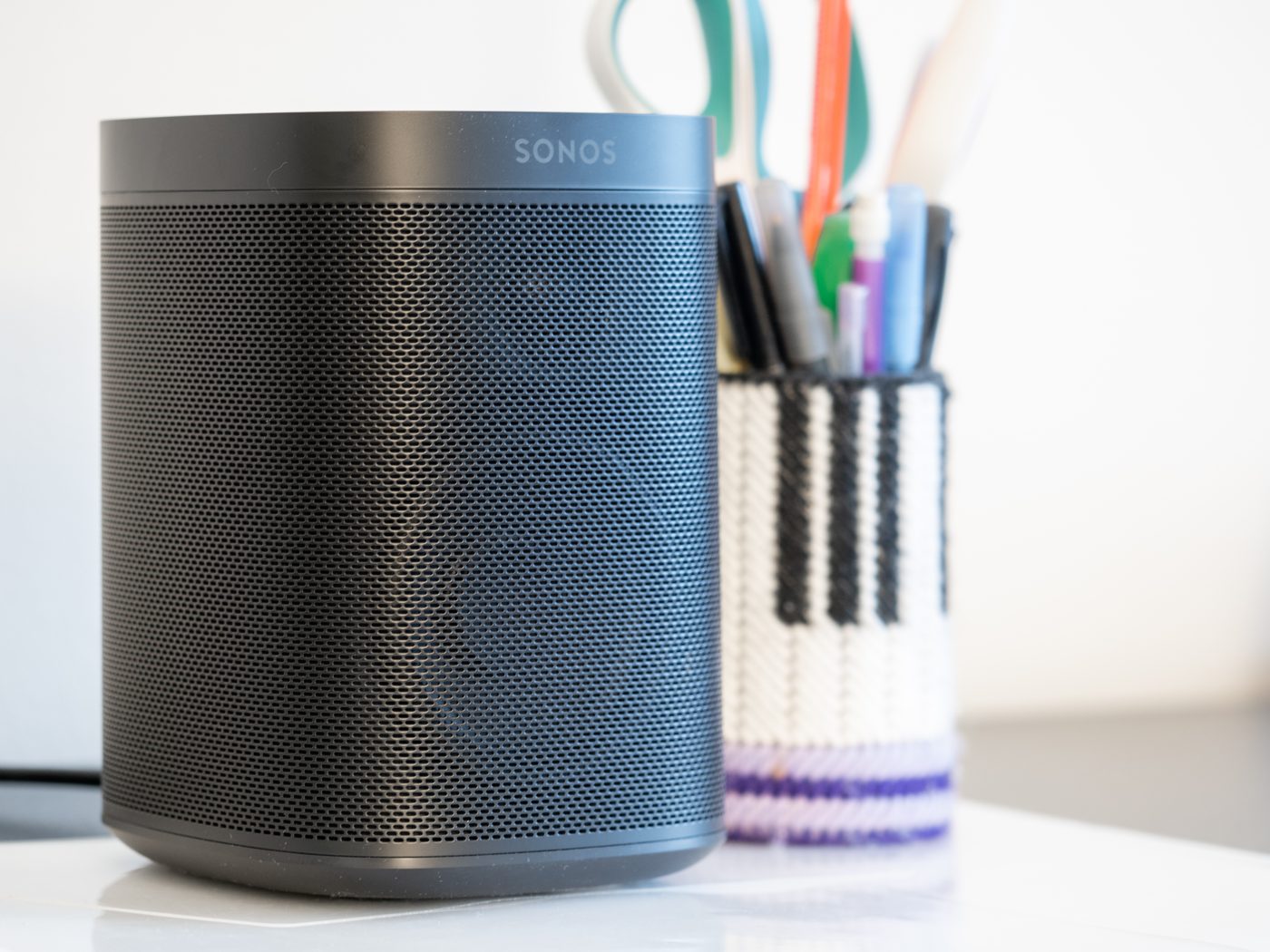
The catalog now covers nearly every corner of a home. Soundbars (Arc Ultra, Beam, Ray) handle the television. Smart speakers (Era 100, Era 300, One) handle a shelf or a kitchen counter. Portable speakers (Roam, Move) go outside and come back. Subwoofers (Sub 4, Sub Mini) add the low end. Components (Amp, Port, Five) power turntables and older wired speakers. And in 2024, for the first time in its history, Sonos strapped the whole philosophy to your head with the Ace headphones.
OriginsA stealth startup that bet on streaming too early
Sonos was founded in 2002 - originally incorporated as Rincon Audio, Inc. before taking the Sonos name in 2004 - by John MacFarlane, Craig Shelburne, Tom Cullen and Trung Mai. The founders had come from Software.com, and they funded the early, product-less years partly with the proceeds of that prior venture. Their bet was that people would one day stream music from the internet to every room of the house. In 2002, broadband was young and the iPhone did not exist. The idea was early enough that the company spent nearly three years in stealth before it had anything to sell.
What it eventually sold, in 2005, was the Sonos Digital Music System: a networked player and a dedicated handheld controller that could sync audio across rooms. It was expensive and it was niche. It was also, in hindsight, the template for an entire category.
Play the same song in every room, or a different one in each. That single sentence, shipped in 2005, became a product category.The Sonos premise
Who buys itPremium homes, and a quiet bet on business
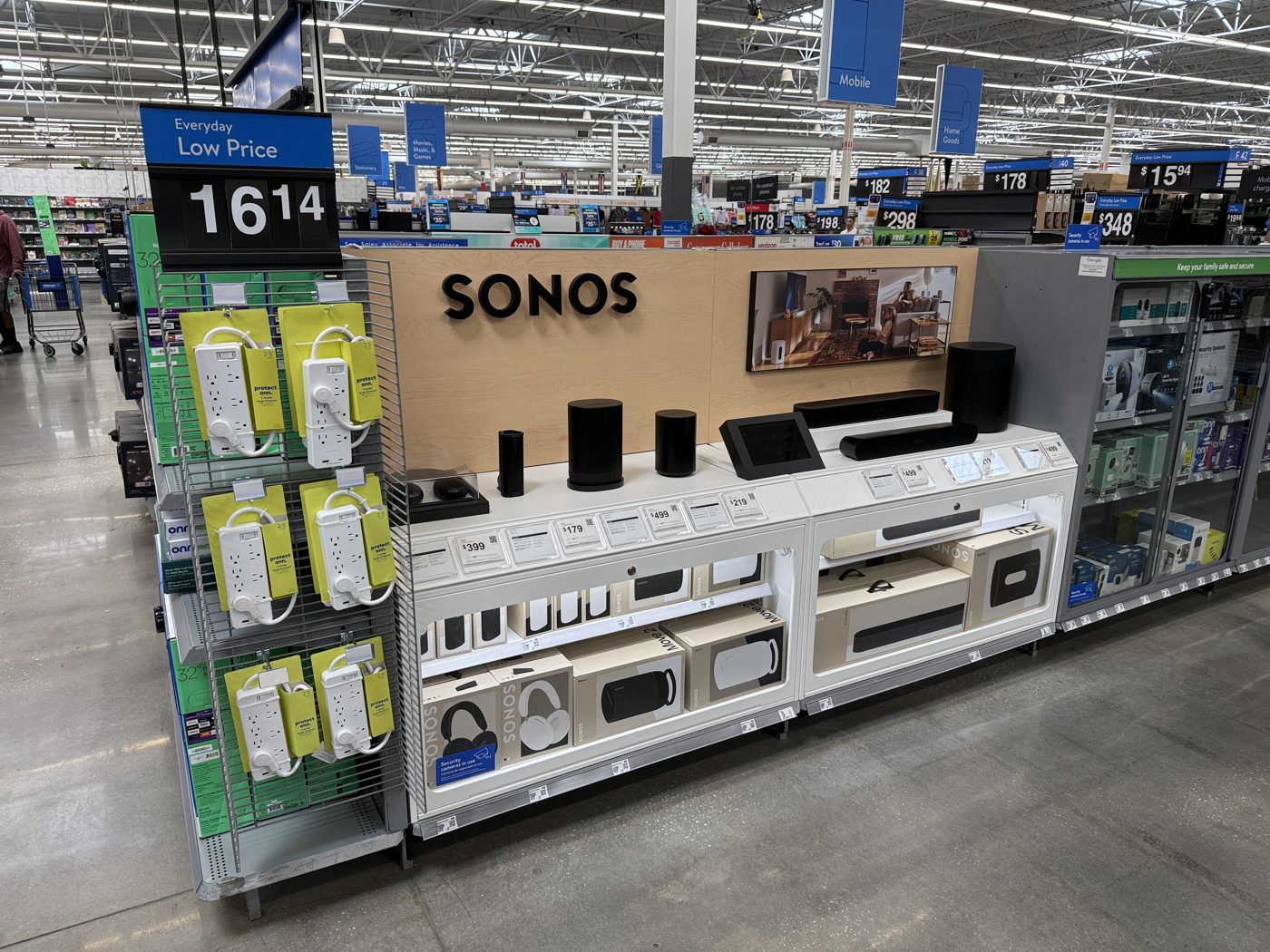
Sonos customers skew premium. These are people who want genuinely good sound but do not want to run speaker cable, configure a receiver or troubleshoot a network - they will pay more to skip all of that. The company has said its products are in tens of millions of homes worldwide, and it leans on a direct-to-consumer model: most sales run through sonos.com and the Sonos app, backed by a global retail and custom-installer channel.
The less obvious customer is the business down the street. Through Sonos Pro - a cloud subscription for managing systems across many locations - plus Sonos for Business and Sonos Sound Solutions, the company sells the same "it just works" promise to restaurants, retailers, offices and hotels. Sonos Architectural by Sonance, a partnership line of in-wall, in-ceiling and outdoor speakers, extends it into custom installations.
The 2024 crisisThe app that cost a CEO his job
In May 2024, Sonos rolled out a completely rebuilt app. It shipped missing features and full of bugs. Users found they could not reliably access or search their own music libraries, set sleep timers, or in some cases even complete setup. For a company whose entire brand was reliability, it was close to the worst possible failure - and it happened in public, to loyal customers who had bought into an ecosystem over years.
The fallout was concrete, not vague. Sonos said fixing the app would cost roughly $20 million to $30 million. It cut about 6% of its workforce. Revenue slid - the company reported a 16% decline in one quarter and warned holiday sales would drop. In October 2024, then-CEO Patrick Spence acknowledged the mistakes and said he and seven other leaders would forgo their bonuses. It was not enough. On January 13, 2025, Spence resigned, effective immediately.
For a brand built on "it just works," shipping an app that famously didn't was the one failure customers would not shrug off.Why the app mattered more than any speaker
The board turned to one of its own: Tom Conrad, a director since 2017 and a former chief technology officer at Pandora, stepped in as interim CEO. Later in 2025, after what the board called a comprehensive and competitive search, it named Conrad permanent CEO - the best person, it said, to lead Sonos into its next chapter. Notably, the company did not walk back the new app. It committed to fixing it rather than reverting, a decision that told you which way the company intended to fight.
The recoveryThe comeback nobody live-tweeted
Here is the part that got far less attention than the disaster: the fix seems to be working. Sonos called fiscal 2025 a transitional year, and revenue did decline over the full year. But the trajectory bent back up. In the fourth quarter of fiscal 2025, revenue grew 13% year over year and the company posted positive adjusted EBITDA. Trust is slower to rebuild than a quarter of numbers, but the numbers at least stopped falling.
The shape is the point: a revenue slide through the crisis, a seasonal peak, then a return to year-over-year growth by Q4 fiscal 2025. Bar heights are illustrative of direction, not precise figures.
The moatPatents strong enough to spook Google
Sonos does not just make speakers; it holds the intellectual property behind a lot of how wireless multi-room audio works - a portfolio of more than 600 issued patents. It has been willing to defend them. It settled a patent case against Denon's HEOS system, and it took on a far larger opponent in Google. Sonos sued in 2020, alleging Google copied its technology after the two had partnered. The fight escalated to the U.S. International Trade Commission, which in 2022 issued an exclusion order affecting a range of Google products. The litigation swung back and forth for years, but in 2025 an appellate court restored a $32.5 million jury verdict in Sonos's favor.
The dollar figure is almost beside the point. The signal is that a mid-sized audio company built a patent wall solid enough to threaten one of the largest companies on earth.
The fieldHow Sonos differs from the giants
Sonos sits in an unusual spot. It is smaller than the giants it competes with, but it is the specialist. Amazon and Google will sell you a cheap smart speaker to run an assistant; Sonos sells sound quality and a system that spans the whole house and stays open to nearly every service. Bose competes on premium audio but has a narrower connected ecosystem. Apple's HomePod sounds great but pulls you toward Apple's world. Sonos's pitch is breadth plus neutrality: better sound than the cheap stuff, more openness than the walled gardens.
| Player | Strength | Where Sonos differs |
|---|---|---|
| Amazon / Google | Cheap, assistant-first | Sonos leads on sound and multi-room, stays service-neutral |
| Bose | Premium audio brand | Sonos has a broader whole-home ecosystem |
| Apple HomePod | Great sound, tight integration | Sonos is open to 100+ services, not one platform |
| Denon / Bluesound | Audiophile multi-room | Sonos wins on scale, setup simplicity and app reach |
| Sony / Samsung | Soundbars, TVs | Sonos ties the bar into a room-by-room system |
The businessHardware first, with software as the hook
However much people talk about the app, Sonos still makes most of its money selling boxes. Speakers, soundbars, subs, components and now headphones carry healthy margins, sold mostly direct-to-consumer. Software - the free app, Sonos Radio and Sonos Radio HD, the Sonos Pro subscription - is the glue that keeps people inside the ecosystem and opens the door to recurring revenue and commercial licensing. That structure is exactly why the app crisis hit so hard: in connected hardware, the software is not a feature bolted onto the product. It is the product.

The recordTwo decades, one arc
Founded as Rincon Audio
Four founders start the company in Santa Barbara to build internet-streamed home audio.
First product ships
The Sonos Digital Music System launches, creating mainstream wireless multi-room audio.
IPO on Nasdaq
Sonos goes public under SONO with an implied value around $1.5 billion.
Sonos sues Google
A multi-year patent fight begins over smart-speaker technology.
Era speakers launch
The Era 100 and spatial-audio Era 300 refresh the smart-speaker lineup.
Ace headphones - and the app crisis
Sonos ships its first headphones, then a broken app rewrite triggers backlash and a costly fix.
Leadership reset
Spence resigns; Tom Conrad becomes interim then permanent CEO as Q4 revenue returns to growth.
The takeawayWhat you can copy from the Sonos playbook
If you build anything that mixes hardware and software, the Sonos story is worth keeping on your desk. What worked: pick a promise so clear a customer can say it in one sentence ("music in every room, from your phone"), then defend the technology behind it hard enough that even Google has to take you to court. What failed first: the software, not the sound. The speakers were fine; the app broke the trust. And what changed the company's mind was the cost of that trust - a CEO's job, a chunk of revenue, and a public commitment to fix rather than retreat.
Where the model strains: Sonos lives at the premium end, so it is exposed when wallets tighten, and its openness to every streaming service is a strength that also means it depends on partners it does not control. But the core lesson travels. When your product is trust, your release schedule is a risk register - and a great speaker cannot save a bad update.