The original Silica Hardware sold pitchforks, flour, and dynamite to Wisconsin farmers. The modern Silica For Your Home sells induction ranges, reclining furniture, OLED televisions, mattresses, outdoor grills, and smart-home systems. That sounds like a company with an identity crisis. Look closer and it is unusually consistent. For 104 years, the Schneider family has changed what sits on the showroom floor while preserving one sentence behind the counter: “We Service What We Sell.”
That promise is more demanding than it sounds. A dishwasher is not useful until it is connected. A television is not a home theater while it remains in a carton. A luxury refrigerator can turn into a very expensive cabinet-measurement error. Silica tries to close those gaps with its own delivery and installation crews, factory-trained repair technicians, furniture designers, and custom electronics integrators. The company does not merely sell the object. It accepts responsibility for the object becoming part of the house.
The first failure was a map problem
Matthew Schneider opened the business in 1922 in Silica, a settlement northeast of Fond du Lac with roughly 30 people. His cheese-factory operation had already begun selling practical goods to nearby farmers. A separate hardware store followed. The assortment made sense for the place: farm tools, housewares, and even dynamite for moving fieldstones in the era before readily available heavy machinery.
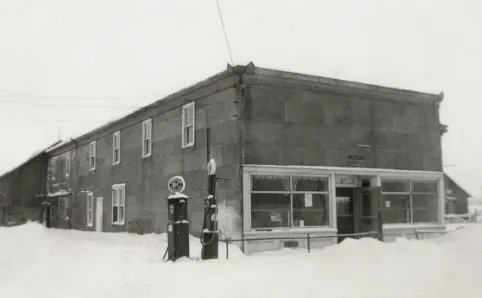
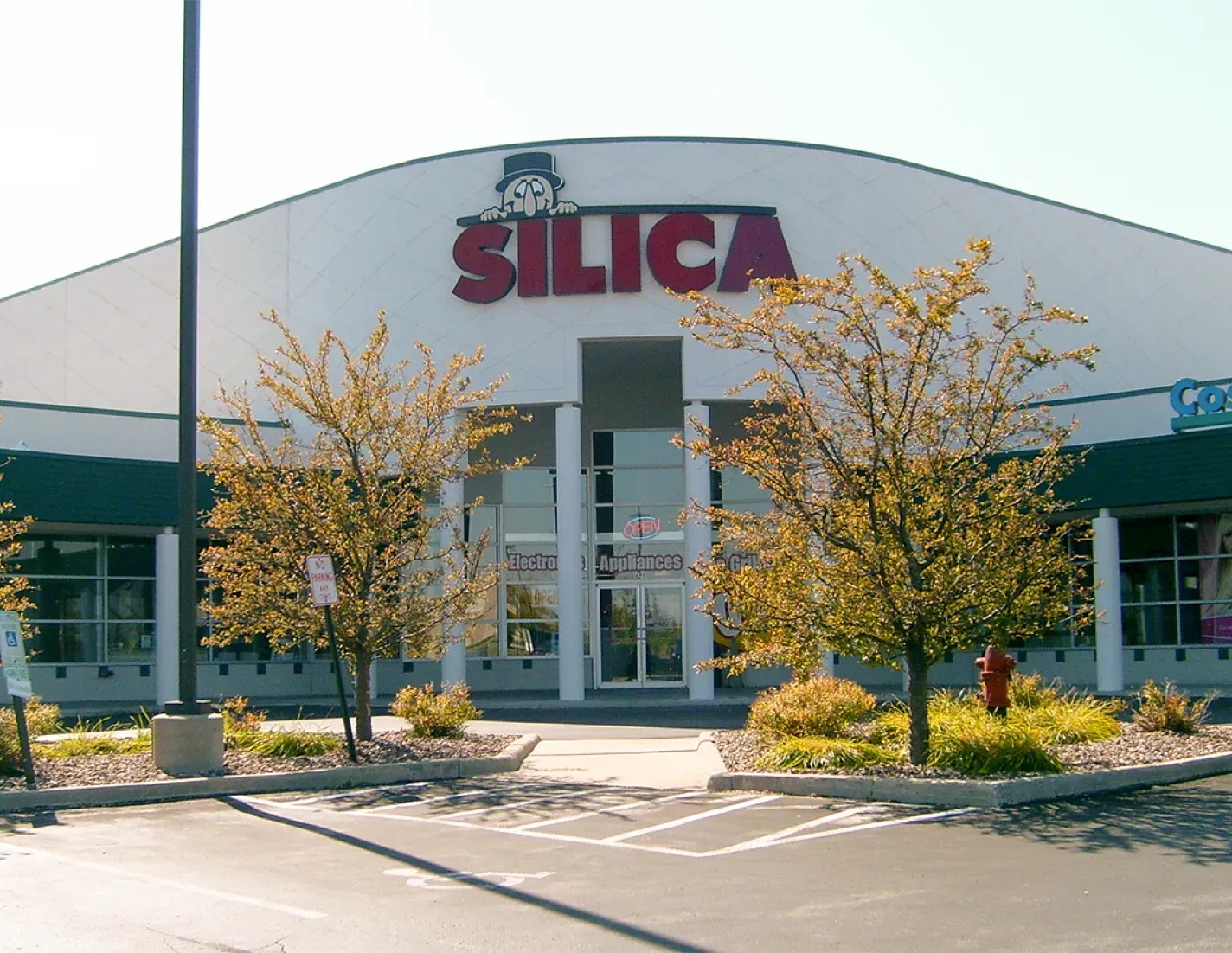
The weakness arrived before Amazon, Walmart supercenters, or algorithmic advertising. Customers heard about the store but could not find it. In 1965, the company created Smedley, a country fellow in bib overalls who appeared on roadside signs pointing motorists toward Silica Hardware. His first assignment was directing traffic. Smedley still peers over the company name on the Fond du Lac storefront.
A mascot could patch navigation, not geography. Alphonse Schneider, Matthew's son, took over in 1951 after serving in World War II and expanded into appliances, electronics, and grills. The merchandise was becoming less rural even if the address was not. Eventually, the family moved into Fond du Lac and opened stores in Beaver Dam and Watertown. Tom Schneider has described leaving Silica as emotionally difficult. It was also the rational move: the larger city had more customers, more competition, and fewer excuses for getting lost.
“Our personality stayed the same. Our focus on service stayed the same, but we had to make the changes.”Tom Schneider, third-generation owner
The checkout is the middle, not the end
Silica now occupies a peculiar spot in the market. It is broader than a specialist appliance dealer but more involved than a general big-box store. The showrooms cover appliances, furniture, bedding, electronics, outdoor cooking, lift chairs, and premium built-in kitchens. Online, shoppers can browse an enormous catalog, compare promotions, seek rebates, use financing, and request a price match. In the home, Silica's teams can measure a room, plan furniture, wire whole-house audio, mount a television, install an appliance, remove the old one, and return later to repair what it sold.
One accountable loop
That loop solves a coordination problem familiar to anyone who has renovated a kitchen. Retailer, manufacturer, freight carrier, installer, cabinetmaker, electrician, and warranty administrator can all point at one another. Silica's model reduces the cast. It is especially valuable in luxury kitchens and integrated homes, where a few millimeters of fit or one forgotten cable can matter more than a promotional discount.
Customers include homeowners replacing a failed washer, couples testing mattresses, builders assembling appliance packages, lake-house owners planning outdoor kitchens, and people who want a home theater without becoming their own systems engineer. The revenue model is similarly layered: product margin first, then delivery, installation, repair, parts, protection plans, accessories, consumables, and custom integration. A supplied company-data estimate puts annual revenue near $9.16 million, though Silica is private and does not publish accounts.
The grill department explains the whole company
In 2019, Silica offered a wonderfully specific look at its outdoor-cooking experiment. The main showroom measured about 34,000 square feet. The grill area used only 800 of them - roughly 2.4 percent - and displayed 34 grills. Rather than accept a jumble of manufacturer fixtures, the retailer paid for a consistent slat-wall system. Pellets, charcoal, rubs, sauces, and other replenishable goods sat near the entrance. A punch card gave pellet buyers an eleventh bag after ten purchases.
Then the floor became a stage. Staff cooked on Saturdays and handed out samples, creating the smell, taste, and conversation that a product grid cannot reproduce. Traeger's marketing team helped recruit customers for two three-hour Shop Classes. Admission cost $100. Fifty people attended each night, and some drove more than 100 miles. Silica supplied the tent; Traeger supplied the instruction. The retailer reported outdoor-business growth of 15 percent and gross margins above 32 percent at the time.
The point is not that every retailer should sell smoked brisket. It is that Silica designed a loop. The grill creates an initial purchase. Demonstrations reduce uncertainty. Classes build skill. Pellets and sauces create return trips. In-house repair prevents a parts-only warranty from becoming a dead end. The same logic applies to mattresses that need fitting, smart homes that need programming, and premium appliances that need precise installation.
What another local retailer can copy
Choose one painful step
Start with delivery, installation, or repair in the category where third-party failure causes the most customer anger.
Make the product perform
Cook on the grill, compare the television, test the mattress, or run the appliance. A working product beats a laminated feature card.
Merchandise the refill
Put compatible consumables and accessories where they are easy to understand, then use service and simple loyalty to invite the next visit.
Let suppliers teach
Silica brought the audience and venue while Traeger handled instruction. Good partnerships divide the work instead of duplicating it.
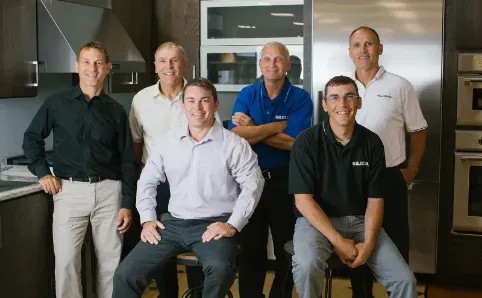
There is also a cultural copy. Tom and fourth-generation president Josh Schneider describe the desired sales floor as friendly, informed, and low-pressure. “It's not a transaction, it's a friend,” Tom said in a centennial interview. The line can sound sentimental until it is paired with operational evidence: long-tenured employees, product training, certified technicians, transparent repair estimates, and a stocked truck. Warmth without competence is theater. Competence without warmth is a call center.
The conditions that break the model
In-house service is a moat only when the math supports the trucks. Technicians, inventory, training, scheduling, insurance, and warranty administration create fixed costs. A retailer needs enough local order density to keep crews productive, enough product margin to absorb exceptions, and enough manufacturer access to obtain parts and technical training. Spread the territory too thin, and local accountability becomes an expensive windshield-time business.
Do not copy the org chart before proving the route density.
The approach is less likely to work for low-frequency categories with tiny margins, online-only sellers serving scattered customers, retailers unable to recruit skilled technicians, or stores whose suppliers will not support parts and training. In those conditions, a vetted specialist network may beat payroll.
Breadth can also collapse into confusion. Appliances, sofas, mattresses, audio, grills, and security systems do not naturally belong together. Silica makes them coherent by organizing around a homeowner's finished room and by assigning specialists to the categories. Remove that expertise and “one-stop shop” becomes code for a store that knows a little about too much.
A family story that refuses to become a museum
Silica celebrated its centennial in 2022 with a gathering of roughly 1,100 to 1,200 people. It was deliberately not a sale. The company displayed old artifacts, told the family history, distributed checks from a pay-it-forward campaign, and credited employees for the milestone. Later that year it planned to pack 70,000 meals for local food pantries. Current community work includes a partnership with the Fond du Lac Dock Spiders and Boys & Girls Club: every stolen base at home generates a $50 donation. The 100th such base in 2026 unlocked $5,000.
Those programs are marketing, of course. They are also a sensible expression of the business model. A local retailer cannot outspend a national chain or out-index an infinite marketplace. It can be more visible in the moments a town already cares about: a ballgame, a school drive, a humane-society laundry room, a broken refrigerator on Tuesday morning.
Silica's achievement is not uninterrupted perfection. It is disciplined revision. The company left the village that supplied its name. It stopped selling the hardware that supplied its category. It added furniture in a 10,700-square-foot Fond du Lac expansion, built a connected-home team, adopted e-commerce, and now publishes buying guides on air fryers and OLED versus QLED screens. In 2025, it hosted 20 independent retailers and seven buying-group leaders for two days of peer learning. The old hardware store had become a classroom again.
The reader can copy the sequence, not the century: find the handoff customers hate, take responsibility for it, teach people how to use what they buy, create an honest reason to return, and change the assortment before the market changes it for you. Smedley no longer needs to rescue lost motorists at a country intersection. His pointing finger still gets the strategy right.