The camera has a peculiar habit: it gives equal attention to the important and the absurd. A stranger at the door, a cat on the sofa, a moth taking a tour of the porch light - each can become a notification. YI Technology built its early reputation by making cameras that captured more. Its more consequential business began when it tried to make cameras interrupt people less.
The picture in five frames
- Founded in 2014 by Shengwei “Sean” Da, YI first grew with Xiaomi backing and distribution.
- Its catalog stretched from action and 360-degree cameras to indoor and outdoor home cameras.
- In 2019, YI publicly paused active development of its action-camera products and app.
- The home-security offer paired cameras with AI detection, mobile controls, cloud storage and optional emergency response.
- YI also pitched the combined system to other brands seeking a faster route into connected security.
The adventure camera comes indoors
In the middle of the last decade, an action camera looked like a passport to a more interesting life. YI sold one. It also made a mirrorless camera, a dash camera and a 360-degree VR camera. The company’s early association with Xiaomi gave it a ready-made route to customers; by 2016, YI was stressing its own name. Da, an engineer who had spent years in Silicon Valley, talked about the image technology with the pride of someone who knew precisely what was inside the casing.
Yet the home camera offered a different kind of demand. A mountain-bike run may be filmed once. A front door needs watching tomorrow, too. YI’s indoor camera could stream to a phone, send motion alerts and let someone speak through it. Parents could check a sleeping child; pet owners could see what the dog was doing. The use cases were less cinematic and considerably more frequent.
The decisive public sign came in October 2019. A YI support notice said the company was pausing active development of all YI Action Cam products and the YI Action App. It gave no date for a restart. The notice also dealt with iOS problems and recommended local recording for reliability. The company did not publish a grand conversion story; it published the kind of support page that reveals where a product has reached its limit.
“We are pausing active development on all YI Action Cam products and the YI Action App.”YI Technology support notice, October 2019
The expensive part is deciding what matters
A camera that sees everything can be exhausting. YI’s later home products leaned into a more useful promise: distinguish a person from a pet, an insect or a change in light. Its 2020 Kami Mini, for instance, advertised human and face detection on an edge-computing chip, plus activity zones. Its Home 3 camera offered adjustable alert sensitivity and faster search through recorded video. These features address the dull but defining task in home security: deciding whether the latest clip is worth anyone’s time.
YI says it has more than 150 patented technologies across computer vision, deep learning and related algorithms. The exact number matters less than what the expertise is aimed at. An indoor camera does not win trust by sending a flood of alerts. It wins trust when someone can leave it on and still get through a meeting.
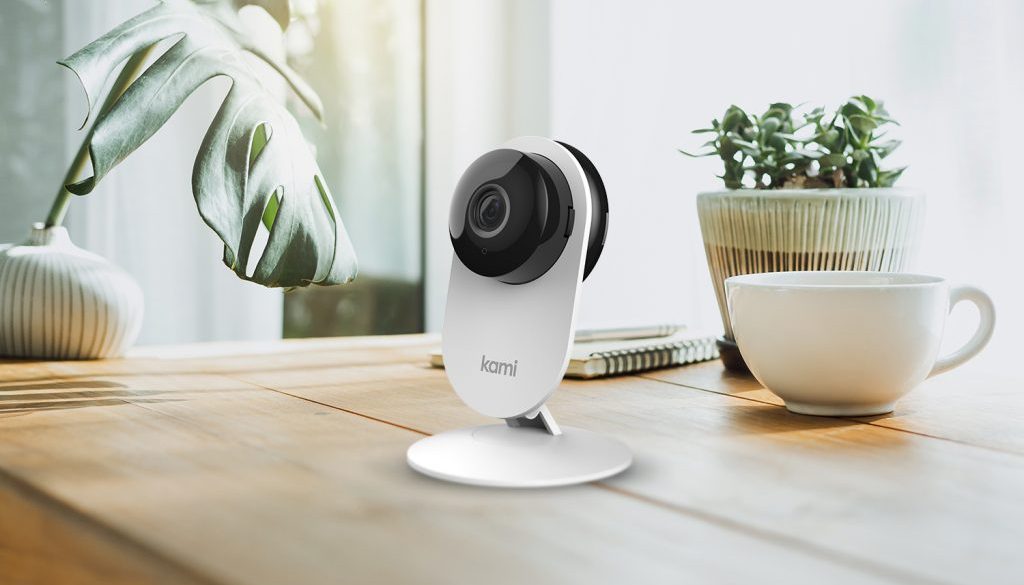
Kami, the smart-security line introduced in 2018, made the change visible on the shelf. The Kami Indoor Camera had a mechanical “eyelid” that could cover the lens. A privacy setting on a phone is abstract; a covered lens is something a person can see from across the room. The camera’s 340-degree rotation and app-controlled view made it technically capable. The eyelid made it easier to live with.
One camera, two businesses
YI sells hardware, but its longer relationship with a buyer happens after the box is opened. The app displays live feeds, sends alerts and lets users adjust camera behavior. Optional cloud plans store video so a stolen or damaged camera does not take its own evidence with it. The model turns a one-time purchase into the possibility of recurring subscription revenue. It also makes software quality impossible to treat as an afterthought.
In 2019, YI added another layer in the United States through Noonlight: optional 24/7 emergency-response dispatch, priced then at $4.99 a month or $49.99 a year. The premise was concrete. A person away from home who sees trouble on a live feed may need help at the property, not at the location of their own phone. YI’s offer tried to connect observation to a local response. That price is a historical launch price, not a current quote.
The useful product is the whole chain, not only the lens.
YI kept refining the home-camera line. In January 2024 it announced a 2K upgrade to its Dome Guard indoor camera, with pan-and-tilt control, local SD-card or cloud storage, and optional AI alerts that could distinguish people, vehicles, animals and unusual sounds. A sharper picture was still on the agenda; so was the question of what the picture meant.
There was also an enterprise version of this idea. In 2019, YI described a platform for brands that wanted to sell a connected-home security line of their own: select a device family, define the customer experience, build the app, integrate the cloud and adapt AI models. YI said such a partner could launch in three to four months. That is a company pitch, rather than evidence that every partner did. It does show the ambition: sell the camera system as infrastructure, not merely a camera with someone else’s logo.
The flaw in the picture
Home security is a crowded aisle. Ring, Nest, Arlo and Wyze all offer ways to watch a room or doorstep. YI’s case rests on combining accessible hardware with vision software, app controls and cloud services. Its old Xiaomi connection helped it reach shoppers; its own brand had to give those shoppers a reason to stay. More detection features alone cannot do that. They have to work, and the app has to make the result understandable.
The company’s public updates show the less glamorous side of that work. In September 2021, YI said a recent app release had fallen short and listed fixes for missing timestamps, a full-screen timeline, SD-card behavior, audio and navigation. For an action camera, a software fault might frustrate an afternoon’s footage. For a home camera, it can undermine the reason the device is there. The company’s 2019 action-app pause had made that lesson plain.
The transferable insight is specific. If a hardware product asks for a place in daily life, measure the nuisance it creates as carefully as the feature it provides. Let users decide where the camera watches, when it turns on, and which events deserve a buzz. Give privacy a visible signal when possible. And if the business depends on a subscription, make the service after purchase useful enough to justify one.
YI’s story is a curious inversion. The action camera promised memorable moments and could struggle for routine use. The home camera promised routine use and had to learn which moments were memorable. A small lens can do both. The business depends on knowing the difference.