A coffee table can look perfectly reasonable on a shopping page and absurd in your living room. The photograph has concealed the most useful facts: scale, placement, the awkward distance between the sofa and the door. VisionX’s early retail work addressed this small domestic ambush. Give a phone camera an understanding of space, put a digital object into that space, and a shopper can make a better decision before anybody books a delivery truck.
- Builds custom enterprise AI around vision, voice and text.
- Connects recognition to actions in existing business systems.
- Offers deployments on customer infrastructure, including edge and air-gapped environments.
That is a useful introduction to VisionX because it starts with work, rather than a claim about intelligence. The company now presents itself as a builder of multimodal enterprise AI. Beneath the terminology sits a familiar problem: businesses have information in one place and decisions to make somewhere else.
A coffee table is a data problem
In its 2019 Design My Space case study, VisionX described creating realistic furniture models, measuring rooms and combining both inside an application. The team tested AR toolkits before choosing Unreal Engine. Stakeholder interviews revealed that much of the use would happen on-site, making quick measurement and shared designs consequential features.
The interface was tested with Staples teams, VisionX designers and independent testers. Users could choose styles and plan an office in two and three dimensions. Notice what changed the design: an observation about where people would use it. A technically impressive preview would have been less useful if it ignored the room in which the decision happened.
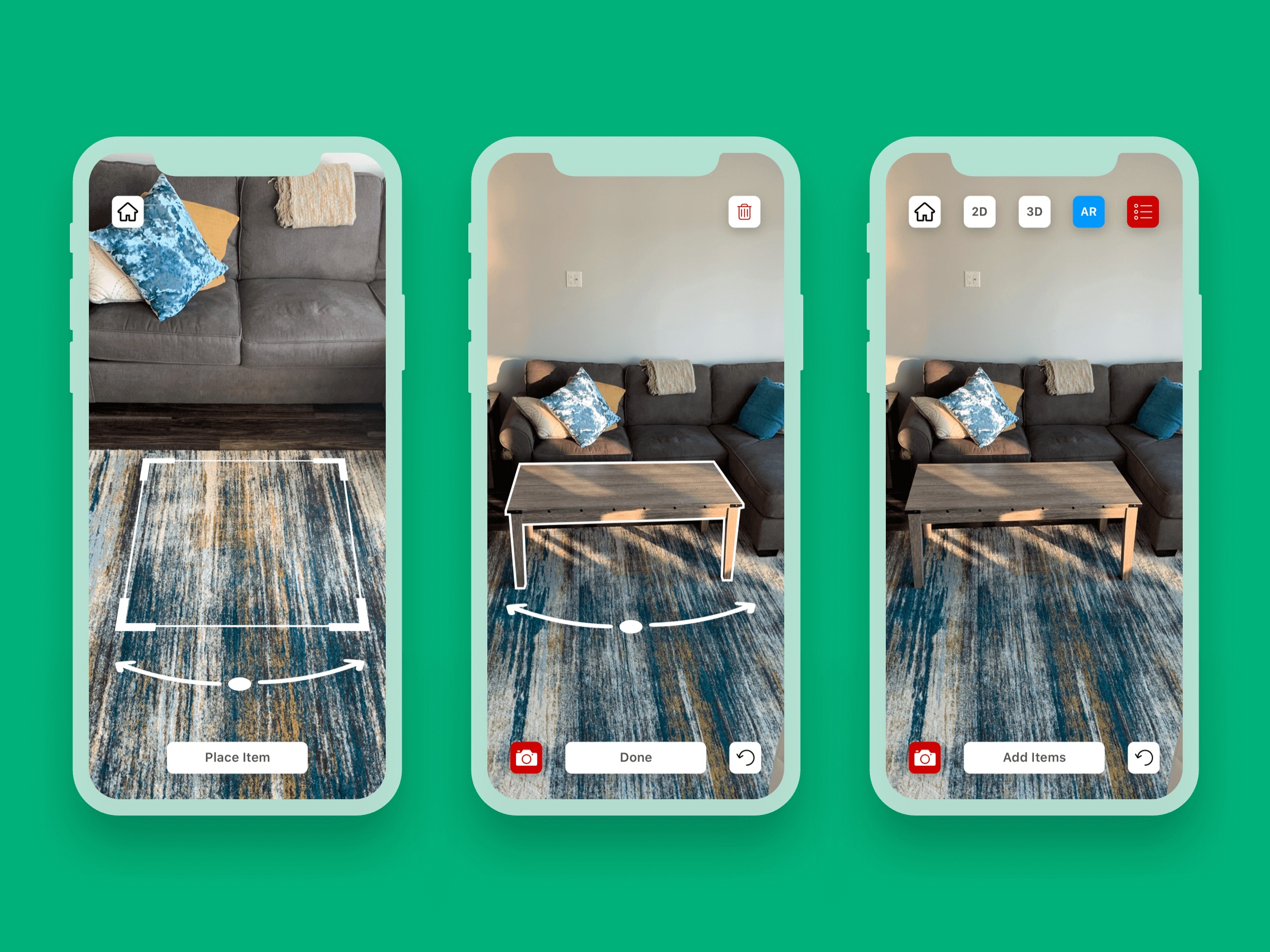
In 2020, Fast Company included VisionX in its ten-company VR/AR innovation list. Its entry focused on retail visualization, including scale, lighting and shadows. Those are modest details with commercial significance. The shopper wants to know whether the thing belongs there.
The label has to go somewhere
Move from a living room to a receiving dock and the same translation problem becomes less decorative. A label contains information. A warehouse needs that information inside its systems, attached to the correct item and destination. Recognizing the text is one step in a longer chain.
VisionX’s logistics offering covers receiving, inventory counting, fulfillment verification and document capture. Its published ADNOC example describes package identification, barcode and label detection, damage checks and automatic routing across 16 internal entities, working with PackageX. The number matters because recognition must lead to the right destination among several possibilities.
internal entities in VisionX’s company-described ADNOC receiving and routing example with PackageX.
PackageX began as a VisionX product and now presents a separate logistics business. Keeping that distinction clear makes the story more interesting: a general engineering capability can produce a focused product, while still supporting bespoke customer work.
A utility complaint offers another version of the handoff. VisionX describes a National Water Company pilot that classified complaints, assigned priorities aligned with service-level tiers and routed them to internal teams. The practical question is who receives the problem next. Classification earns its keep when somebody can act on it.
Three layers, one piece of work
VisionX’s current menu divides the job into custom multimodal models, agentic applications and operational intelligence. Think of these as distinct responsibilities. A model interprets information. An agent uses software tools to carry out a sequence. A command center gives operators a view of sites, assets, alerts and decisions.
- 01 / INPUTCamera · voice · document
- 02 / INTERPRETDomain-specific model
- 03 / EXECUTEAgent + existing tools
- 04 / REVIEWOperator + audit trail
The operational-intelligence offering describes a path from detecting a potential equipment failure to estimating exposure, recommending a response, dispatching maintenance and recording the outcome. Read that as a proposed workflow, rather than a guarantee that every warning will prevent an outage. The useful ambition is to carry context through the whole sequence.
Its utility-focused UtilX offering extends the idea into enterprise and field copilots. The advertised tasks include retrieving asset history, capturing findings through voice or photographs, and assembling reporting from operational data. Different interfaces meet different workers at the point where they need information.
The model-development service makes the engineering explicit: audit the data, choose a suitable architecture, fine-tune it, optimize inference, deploy and transfer knowledge to the customer’s team. Large language models, visual models and smaller local models serve different requirements. The selection is supposed to follow latency and cost constraints. The largest available model need not be the appropriate purchase.
The bargain includes the plumbing
VisionX sells scoped business engagements. Its about page describes a consultation followed by an engagement proposal; its software services include implementation and maintenance. For a buyer, the economic unit is a working business process. Comparing it with a consumer chatbot subscription would obscure most of the work being purchased.
The company also emphasizes customer control: edge hardware, on-premise infrastructure and sovereign cloud. This is a meaningful buying criterion when data residency or isolation determines where a system can operate. Ownership is part of the pitch; the actual contract must specify what the customer receives.
VisionX occupies the territory between an internal engineering team, a custom AI consultancy and a systems integrator. Its distinction is the combination of perception, application development and deployment choices. A buyer should compare alternatives against the particular workflow, the existing technology and the team available to maintain it.

There is also a geography behind the offer. VisionX lists New York and Islamabad locations. Its careers page advertises on-site Islamabad positions spanning AI product management, quality assurance and interface design. That mix is revealing: shipping an enterprise application involves deciding what to build, checking how it behaves and making it usable. The model is only one contributor to the finished service.
Observe first. Automate second.
People were an early management lesson. In a 2020 interview, founder Farrukh Mahboob described misjudging expectations of colleagues, then introducing longer evaluation periods and clearer goals through OKRs. He singled out a mindset principle: “We are self-aware.”
“We are self-aware.”Farrukh Mahboob / describing a company principle, 2020
The company’s February 2026 automation essay makes a related operational argument: documented processes can miss the exceptions that workers handle every day. Automating those diagrams can reproduce their omissions. Its agent roadmap therefore starts with discovery and sandbox testing, adds human approvals during a pilot, and relaxes routine approval gates as confidence meets benchmarks.
The lesson a reader can copy is concrete: watch the handoffs, identify an accountable owner, define success and keep exceptions visible. VisionX’s own AI guidance says agents depend on reliable data, integrations and governance. Without those foundations, a clever model inherits a confused process. The coffee table was the charming demonstration. Knowing where it belongs was the useful work.