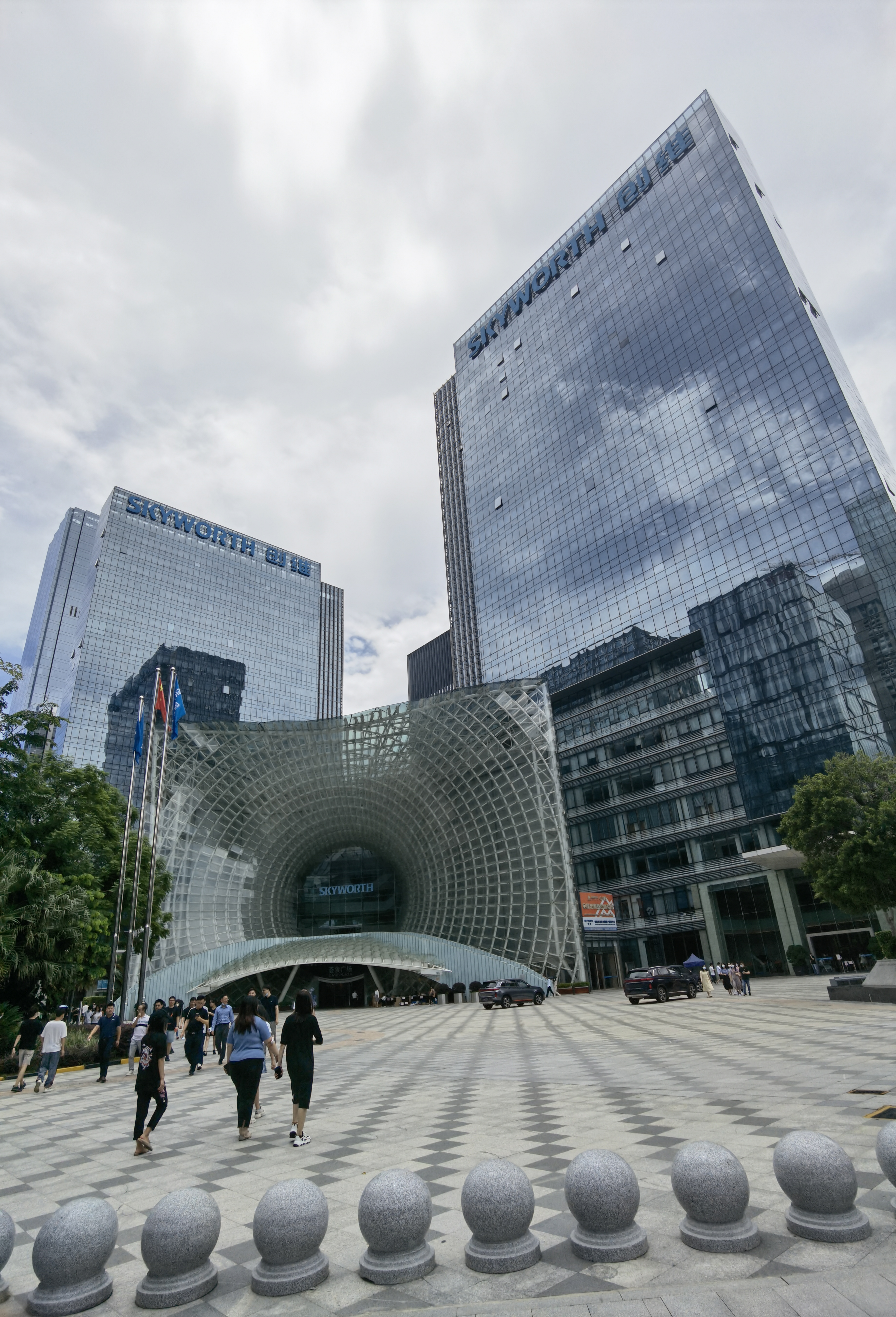
In 1988, in a Shenzhen that was still figuring out what a Special Economic Zone was supposed to be, a man named Huang Hongsheng put his savings into a small idea: a better television remote control. It worked well enough that the industry started calling him the "Remote Control King." That gadget became a company. The company became Skyworth. And Skyworth became one of the largest electronics groups in China - the kind whose products end up in living rooms across more than 100 countries without most buyers ever learning the name on the parent company's letterhead.
Here is the part that makes Skyworth worth a closer look in 2026. The company that spent 37 years perfecting the picture on your wall now makes a serious chunk of its money from something with no picture at all: rooftop solar. In early 2025, Skyworth's own founder said the quiet part out loud - the group's new-energy revenue could overtake television sales for the first time. For a business built on screens, that is a remarkable sentence.
From one gadget to four businesses
What Skyworth actually doesStrip away the marketing and Skyworth is a manufacturer with four legs. The multimedia business builds smart TVs - OLED, QLED, and QD-Mini LED sets under the Skyworth and Coocaa names. The smart appliances business makes air conditioners, refrigerators, washing machines, and kitchen goods, and it is the group's biggest revenue line. The smart system technology business, run largely through subsidiary Skyworth Digital, turns out set-top boxes and home access systems. And the new energy business sells and installs distributed photovoltaic power stations, mostly on Chinese homes.
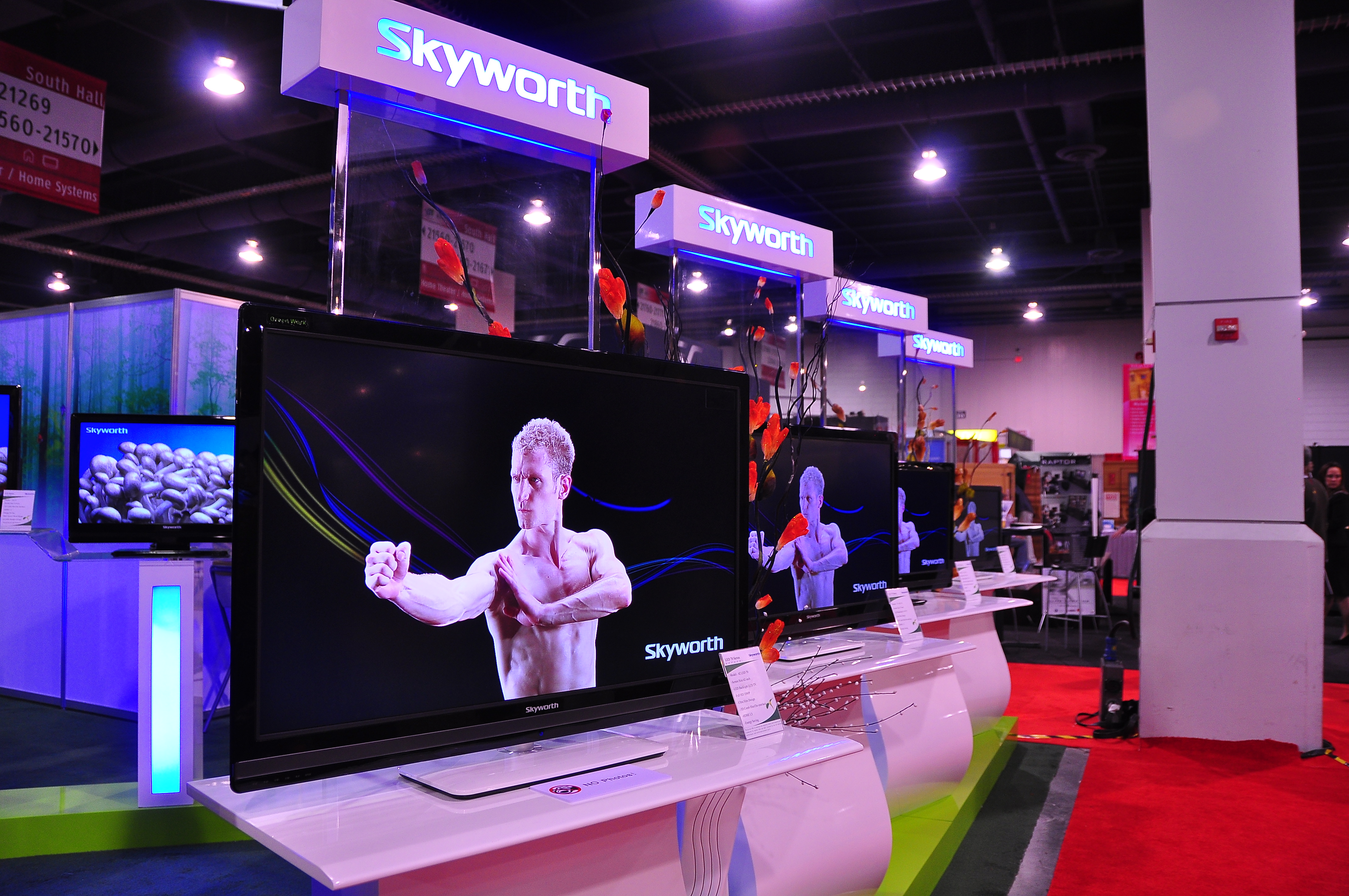
Four segments sounds like a scattershot conglomerate. It isn't, quite. Look closely and they share a single idea: each one installs something into a home. A TV on the wall. A fridge in the kitchen. A set-top box behind the screen. Solar panels on the roof. Same brand, often the same retail reach and installer relationships, different boxes. That is the thread that ties the whole company together.
The pivot hiding in plain sight
Where the money is movingThe numbers tell the story better than adjectives can. In its 2024 interim results, Skyworth's TV business brought in roughly 9.5 billion RMB. Its photovoltaic new-energy business brought in about 9.0 billion RMB - nearly level with the screens the company was built on. Meanwhile, the smart household appliances segment did the heavy lifting overall, generating around 33.4 billion RMB, more than half of total sales.
Why does a TV maker end up selling kilowatt-hours? Because the TV business got hard. Margins across the industry got squeezed as panels commoditized and price wars broke out. Skyworth's 2024 profit was flagged down roughly 35% year on year. Faced with that, the company did two things at once instead of picking one. It pushed up the TV market - premium OLED and Mini-LED sets, where a 22% jump in premium sales suggests buyers will still pay for a better picture. And it pushed out, into distributed solar, where Chinese policy and household demand were creating a genuinely new market. The 2025 "green home" campaign leaned into rural and suburban China with in-app financing and real-time savings calculators - the same consumer-finance playbook that sells appliances, pointed at the roof.
The AI that lives on your wall
Coocaa and the DeepSeek TVSkyworth's software brand, Coocaa, runs the operating system on its televisions and the content ecosystem behind them. In February 2025 Coocaa did something that got noticed well beyond China: it put the full DeepSeek-R1 large language model into a shipping product, the G7F Pro, for large-screen AI you talk to from the couch. There is a small lesson in that timing. While much of the industry debated AI on the desktop and in the browser, a Shenzhen hardware company simply shipped a frontier model to the living room. Getting to hardware first is its own kind of moat.
Who buys Skyworth
Customers and scaleThe customer list is broad by design. There are ordinary consumers buying TVs and appliances across China and 100-plus export markets. There are rural and suburban households signing up for rooftop solar with financing baked into the app. There are OEM and ODM clients who put Skyworth-built TVs and set-top boxes under their own brands - Skyworth is one of the top three global suppliers of the Android TV platform, which is a business you only notice when you read the fine print. And there are commercial, industrial, and government buyers of lighting and display systems. Tying it together is scale: a group turnover north of 75 billion RMB in 2024 and a workforce in the tens of thousands.
How it stacks up
The competitive pictureIn televisions and appliances, Skyworth runs in the same pack as Hisense, TCL, Xiaomi, Samsung, and LG - a crowded, brutal, margin-thin fight. Its differentiation isn't a single killer feature; it's the range. Design-forward products like the Canvas Art TVs, which hang flat and display artwork like a framed picture, sit alongside value LED sets and 8K OLED flagships. In distributed solar, the rivals change entirely - Longi, Trina, and a field of installers - and there Skyworth's edge is the thing a pure solar startup lacks: an existing brand, retail footprint, and installer muscle built over decades of selling appliances into the same homes.
A 37-year line
The short historyWhat you can take from it
The playbookSkyworth is a useful case study precisely because it is not glamorous. The lesson isn't about televisions or solar panels - it's about the move. Dominate a hardware category. Use the factories, brand, and distribution you built to enter adjacent ones. And when a category peaks, don't die defending it; walk your existing customer relationships toward where the growth actually is. That is easy to say and very hard to do, which is why so few hardware companies manage the jump from one S-curve to the next. Skyworth has now done it more than once - from remotes to TVs, TVs to appliances, and appliances to the roof.
Where would this playbook not work? Where the new category has nothing to do with the old customer. Skyworth's segments all share a buyer and a doorway - the household - so the brand and the installer travel with it. A company whose next market needs a different buyer, a different sales motion, and a different trust relationship can't just glide across on reputation. Skyworth's advantage is that its next product still knocks on the same front door.