Company Profile / Smart Home & Security
The Doorbell That Rang Before Ring
It crowdfunded $600K, out-patented its rivals, and put two million cameras on America's doorframes - then Amazon bought Ring and everything about the doorbell wars got louder.
A founder came home to a missed-package slip and asked a small, stubborn question: wouldn't it be nice to answer the front door from anywhere? In 2013 that question became a product called iDoorcam, then a company called SkyBell, and then something the smart-home industry rarely produces - a first mover that actually got there first. SkyBell shipped a Wi-Fi video doorbell, put it on doorframes in more than fifty countries, and did it before "video doorbell" was a category most people could name.
More than a decade later, the odd thing about SkyBell is how many people have used one without knowing it. The brand on the box was often someone else's - Honeywell, Alarm.com - while the camera inside was a SkyBell. That quiet arrangement, plus a wall of patents and a crowdfunding campaign that became case-study famous, is the whole story in miniature.
01 / What it doesSee the door. Answer the door. From anywhere.
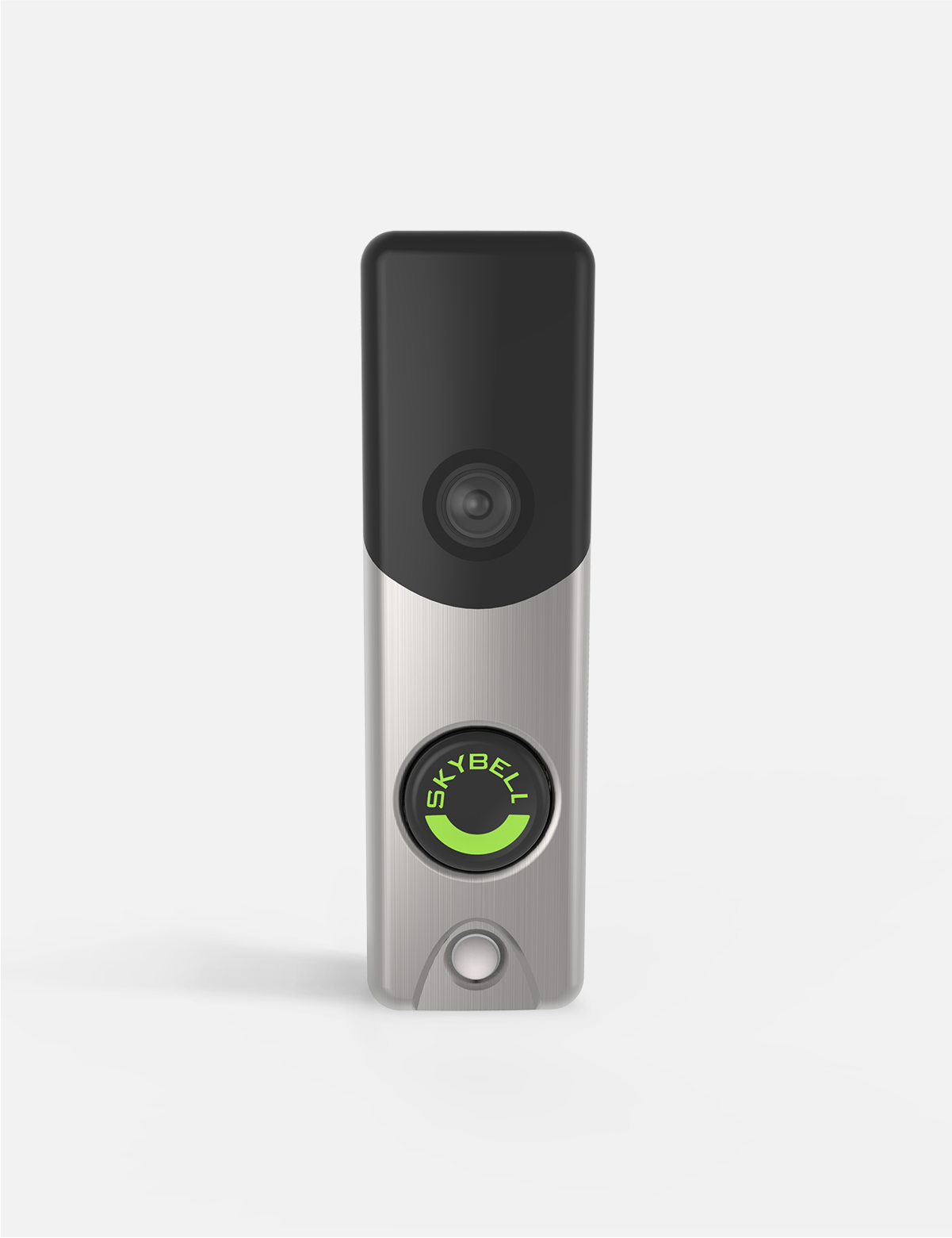
The core product is simple to describe and, in 2013, was genuinely new. A SkyBell mounts where an ordinary doorbell button goes. When someone presses it - or when its motion sensor trips - the homeowner's phone lights up with a live HD video feed and two-way audio. You can be at work, on a plane's Wi-Fi, or upstairs in your pajamas and still tell the delivery driver to leave the box behind the planter. SkyBell paired that with full-color night vision at a time when most rivals showed you a grainy grayscale ghost after dark.
On top of the hardware sits a subscription. SkyBell's Premium Service adds cloud video storage, recorded-clip review, smarter motion and recognition, and the feature the company now leads with: HOME911, a one-touch link to emergency services built on the RapidSOS safety network. Press and hold a green shield in the app and SkyBell sends your home's information straight to 911 and first responders - the doorbell reframed as a panic button for the house.
02 / The originZero dollars to $100K in five days
SkyBell's launch is a crowdfunding parable that founders still trade. The Indiegogo campaign went live in the summer of 2013 with a $100,000 goal and hit it in roughly five days. It closed around $600,000 from about 4,250 backers - people who paid up front for a doorbell that did not yet exist, funding the first production run and becoming the first customers in one motion. Co-founder Andrew Thomas ran the campaign and the press; within days the product was on Engadget and TechCrunch, and pre-orders piled up alongside it.
The lesson people took was "crowdfund your hardware." The more useful lesson is what SkyBell did next: it turned proof-of-demand into patents and partnerships before a better-funded competitor could drown it out. One of those moves worked. The other ran into Amazon.
03 / The customersTwo doors to market, one camera
Most consumer-hardware companies pick a lane: sell direct, or sell through partners. SkyBell drove in both at once. On one side is a direct-to-consumer storefront - built on Shopify - selling the doorbells, an indoor Chime, and the Premium subscription to homeowners who want to install it themselves. On the other is a business-to-business channel that supplies the same camera hardware, often white-labeled, to the professional security industry.
That second channel is why the installed base is measured in millions. Buy a doorbell through Alarm.com or Honeywell and you may well be buying a SkyBell wearing a different logo, controlled through that partner's app and wired into that partner's alarm panel. The homeowner sees Honeywell or Alarm.com; the guts are SkyBell. It is an unglamorous model, and it is exactly the distribution a small brand cannot build on its own.
04 / The productsHD, Trim, Slim - pick your doorframe
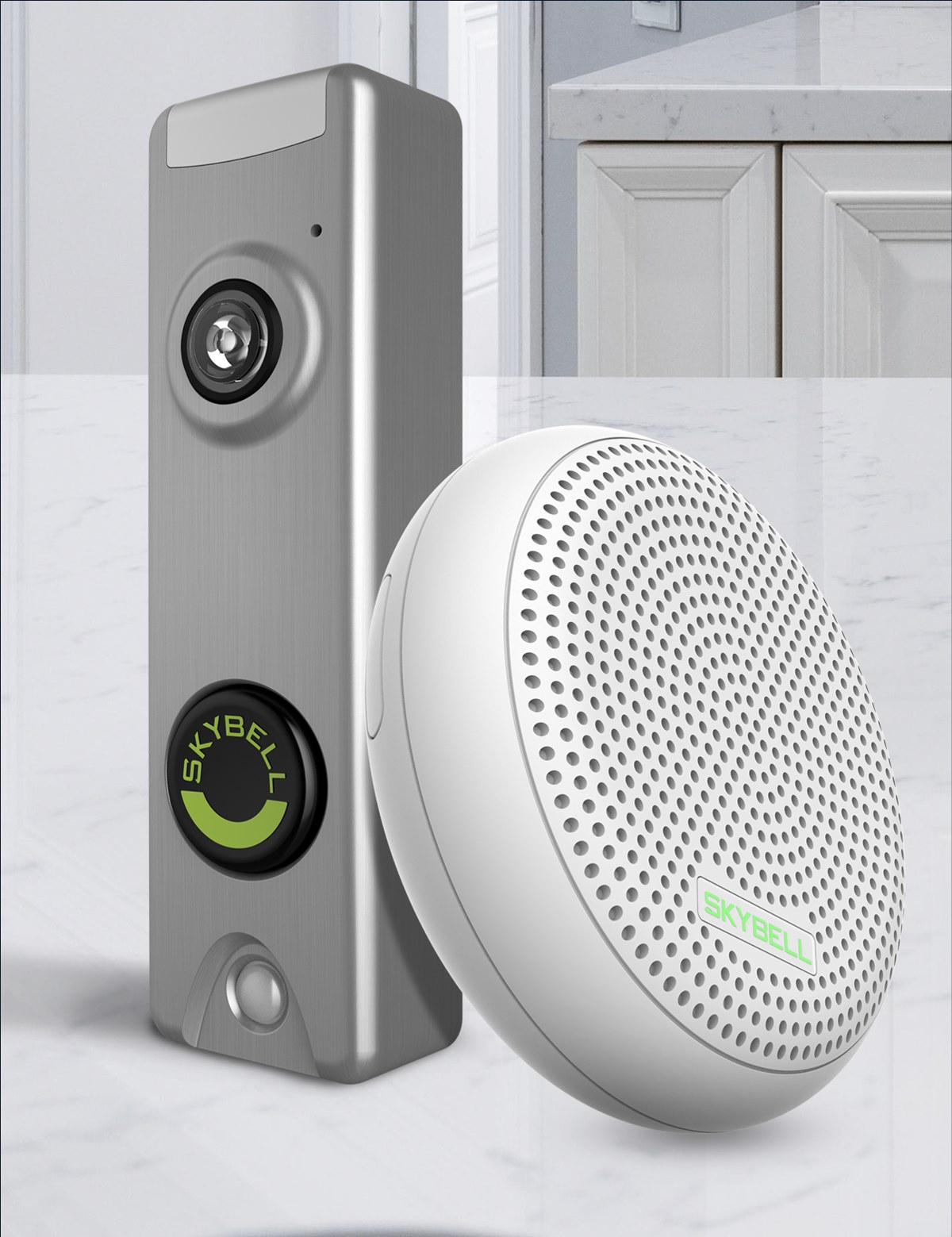
The lineup is organized less by feature tier than by the shape of your front door. The SkyBell HD is the hardwired flagship, sold in a version that folds neatly into Alarm.com systems. The Trim Plus - narrower, and able to run hardwired or on battery - is the easy-install option and the one Honeywell rebadged as the DBCAM. The Slim line squeezes into the tightest trim. A wireless Chime rounds it out so the doorbell tone still carries through the house.
SkyBell lineup, by install
Relative ease of installation - taller bar means fewer tools and choices
05 / The moatA wall of patents - and a fight with Amazon
SkyBell's real distinction is intellectual property. The company calls itself the category's IP leader and has the paperwork to argue it - 150+ patents and innovations by its count, with founder-CTO Joe Scalisi personally holding more than 200 US and international patents across telecom, cameras, audio, and IoT. One tally ranked him 241st among roughly 1.5 million IoT patent holders worldwide.
In January 2018, SkyBell put that portfolio to work and sued Ring for infringing three of its doorbell patents - covering motion detection at a door, streaming video from the door to a phone, and ringing a chime on that phone. The timing was cinematic: Amazon acquired Ring for about a billion dollars in the same window. The scrappy first mover was suddenly litigating against the deepest pockets in tech.
Being right on paper and winning are different things. In July 2020 the Patent Trial and Appeal Board canceled challenged claims and rejected SkyBell's proposed substitutes - a setback in the dispute, and a reminder that a strong patent is only as strong as its last review. The moat was real. It just was not impassable.
06 / The fieldWhere SkyBell sits in the doorbell wars
Today the shelf is crowded: Ring and Google's Nest Doorbell own the marketing, with Arlo, Eufy, and Wyze fighting on price and features. SkyBell's edge was never the loudest app or the widest camera angle - reviewers note its field of view runs narrower than some rivals. Its edge is the pro-install channel and the security-system integrations that a pure consumer brand cannot easily replicate.
| Trait | SkyBell | Typical rival |
|---|---|---|
| Got to market | 2013, early | 2014+ |
| Night vision | Full color | Often grayscale |
| Pro-install channel | Deep | Mostly DIY |
| One-tap 911 | HOME911 | Rare |
| Consumer mindshare | Modest | High |
07 / The peopleInventors, an operator, and an importer
SkyBell was founded by Joseph Scalisi, Andrew Thomas, and Desiree Mejia. Scalisi is the inventor and CTO; his 2014 CES Innovations Award sits alongside a patent count most hardware startups never approach. Mejia, the operations co-founder, is credited with overseeing the professional installation of more than two million units and building the back office that made the partner channel run. Thomas ran revenue and the crowdfunding launch before moving on to advising and speaking. President Giovanni Tomaselli, a digital-imaging veteran, arrived later and drove the 2023 platform relaunch.



08 / The next actFrom a doorbell to a platform
For its tenth anniversary in 2023, SkyBell tried to stop being "a doorbell company." It launched the Safety, Security, and Trust (SST) Platform and bolted the RapidSOS emergency link onto its Premium tier. The bet is that the doorbell is a foothold, not the whole house - a way into a broader safety service that connects the home to first responders and the wider smart-home ecosystem. Whether that repositioning sticks is the most interesting open question about the company.
Launches on Indiegogo (as iDoorcam) and raises about $600,000 from 4,250 backers.
Wins a CES Innovations Design & Engineering Award and appears in Apple's WWDC HomeKit keynote.
The HD ships and the company scales through Alarm.com and Honeywell.
Sues Ring over three doorbell patents just as Amazon buys Ring for about $1 billion.
Marks its decade with the SST Platform and RapidSOS-powered One-Touch Home 911.
Read one way, SkyBell is a cautionary tale: first to the door, second in the public's memory. Read another way, it is a durable business that turned a crowdfunding fluke into millions of installs and a patent portfolio that made the biggest company in retail pay attention. Both readings are true. The doorbell is still ringing.