Company Profile · Hardware
The Spanish Company That Answers the Door for 85 Countries
Every apartment buzzer has a story. For millions of doors from Valencia to Sydney, the story starts at a Spanish radio-repair workshop that opened in 1949.
Press the buzzer on almost any apartment block in Madrid, Manchester or Melbourne and there is a decent chance a small Valencian company is listening. FERMAX has spent 75 years building the least glamorous object in modern architecture - the thing on the wall by the front door that lets you in - and turning it into a business that now sells in more than 85 countries. It is the sort of company you have used without ever knowing its name.
The name itself is a giveaway of how it began. FERMAX is simply FERnando MAestre, the founder, smashed together and registered as a brand in 1952. Maestre was a self-taught radio obsessive who, according to the company, once rebuilt a homemade telegraph from a manipulator that had belonged to an aircraft shot down during the Spanish Civil War. In 1949 he opened a radio-repair workshop in Valencia and launched what FERMAX describes as Spain's first radio interphone for industrial use. The apartment buzzer was a side quest that became the whole company.
01 / WHAT IT MAKESThe buzzer, grown up
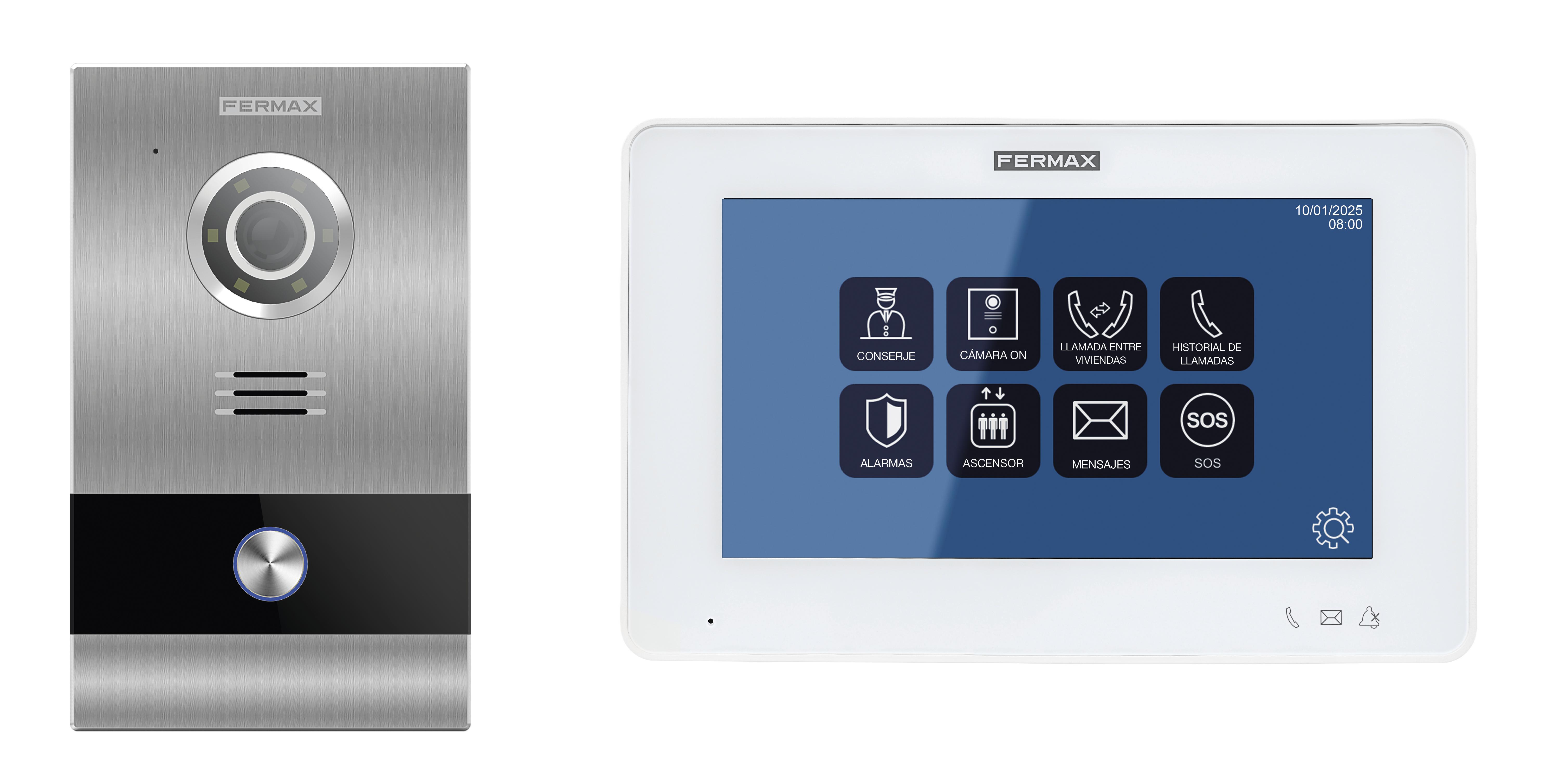
Strip away the jargon and FERMAX makes three things: intercoms, video door entry panels, and access control - the keypads, fobs and fingerprint readers that decide who gets in. In 1963 it shipped the Fonoporta, described as the first electronic door intercom designed in Spain. In 1980 it built Spain's first video door entry system. The through-line across 75 years is consistent: whoever is standing at the entrance, and whoever is upstairs deciding whether to let them in, FERMAX wants to be the wire between them.
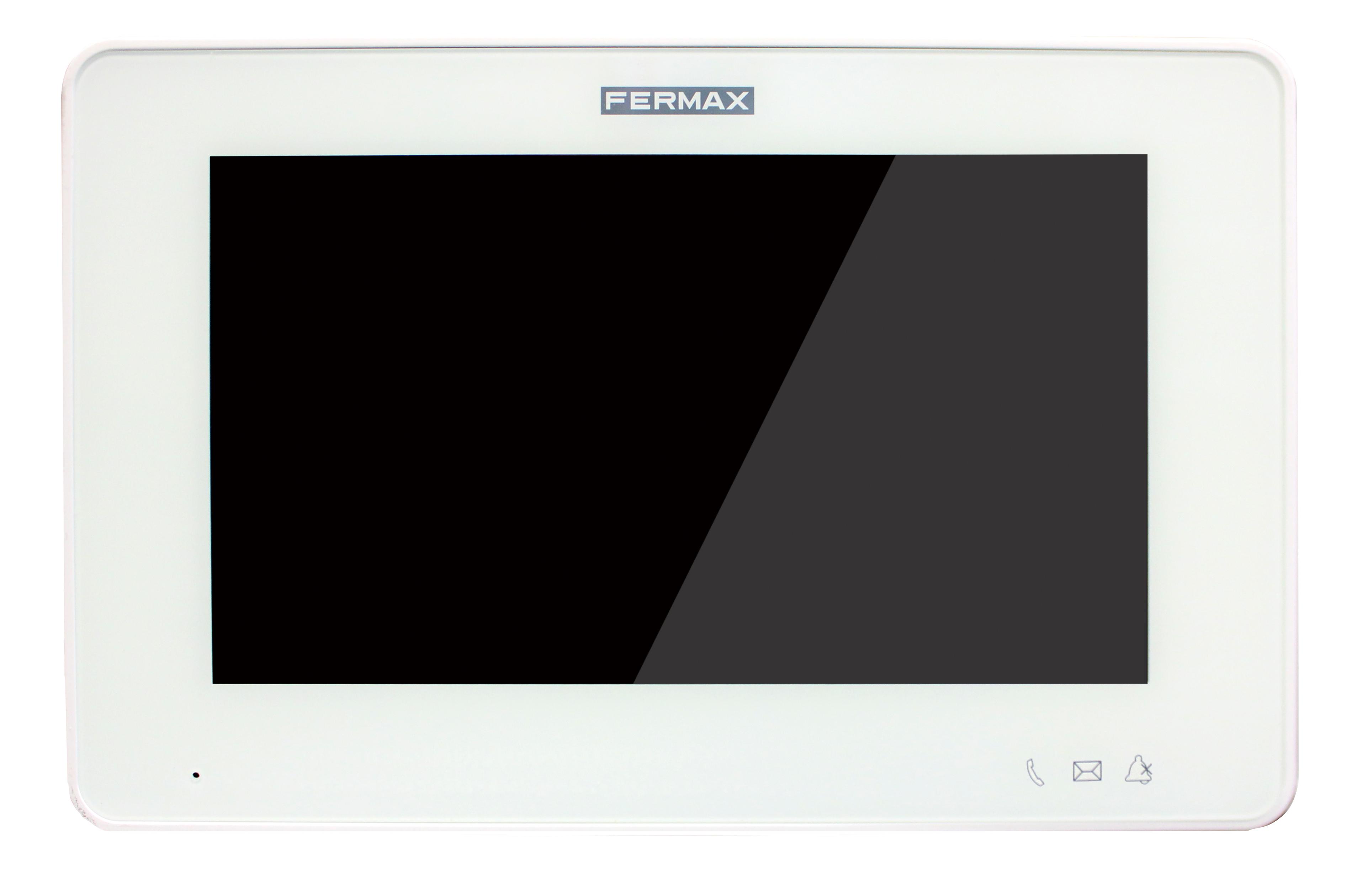
Today that splits into two headline systems. DUOX PLUS is a fully digital video intercom that runs over just two wires - which sounds trivial until you are an installer trying to retrofit a 1970s building without ripping out the walls. MEET is the modern one: a 100% IP system with HD video and digital audio that, unusually, works peer-to-peer. Panels and monitors talk directly to each other over the network without a central server sitting in a cupboard waiting to fail.
02 / WHO USES ITArchitects specify it, electricians install it
FERMAX is a business-to-business company that ends up in consumer homes. The buyers are architects, property developers and building managers who specify the entrance system; the installers are the professional electricians and security firms who actually mount the panel and run the cable. The end users - the people pressing the button - rarely choose FERMAX and rarely know they have it. That is the quiet leverage of infrastructure: you win the specification once, and the hardware sits in the wall for 15 years.
The catalogue reflects who is buying. There are austere single-house kits for a villa, and there are centralised systems like AC-MAX for a large mixed-use development with a concierge desk. The MEET guard unit is a desktop console that lets a doorman talk to any panel or monitor in the building - the kind of detail that only matters if you are running a 300-flat tower, which is exactly the customer FERMAX wants.
The third leg of the catalogue, access control, is where FERMAX quietly widened its footprint. Alongside the intercom sit keypads (Memokey), proximity fobs, radio-frequency readers, fingerprint units (Inkey) and the centralised AC-MAX platform, plus the electric lock releases that actually pull the latch. It means a developer can buy the entrance as one coordinated system - who rings, who sees, who is allowed in - from a single Valencian supplier rather than stitching three vendors together. For a building manager, one throat to choke is a feature.
03 / THE DESIGN BETA door panel that won an award
Here is the detail that amuses and explains FERMAX at once. In 1991 its Cityline outdoor panel - designed by Ramon Benedito with a distinctive curved-convex aluminium profile - won the Valencia Award for Innovation in Industrial Design. A door buzzer, winning a design prize. It went on to be installed in more than 1.5 million buildings. The earlier T-1 door telephone, also a Benedito design, sold roughly 4.5 million units.
The lesson buried in those numbers is not about aesthetics for their own sake. In a category where the buyer is a professional making a durable, hard-to-reverse choice, good industrial design is not decoration - it is distribution. A panel that looks right and installs cleanly gets specified again on the next building.
Relative system reach, illustrative - MEET targets new IP-native builds, DUOX targets retrofits.
04 / THE MONEYBoring hardware, patient capital
FERMAX is the kind of asset private equity likes precisely because nobody tweets about it. Revenue reached 83.45 million euros in 2024, up 4.4% on the prior year, with roughly 44.86 million of that coming from outside Spain. In 2018, MCH Private Equity and Eurazeo took a majority stake. In 2025 they sold it on to the French investment firm Ardian, reportedly at a 2.6x cash-on-cash return and an internal rate of return near 40%.
+4.4% year over year. International sales were roughly €44.9M of the 2024 total.
The business model is unglamorous and durable: design and manufacture the hardware in Valencia across two sites, then sell it through a global network of electrical wholesalers, security distributors and installers. Apps like MeetMe and Blue - which divert door calls to a phone - add a software layer, but the core is still a physical box bolted to a wall. Recurring installs, long product lifespans, a fragmented base of professional buyers. It is not a rocket ship. It compounds.
05 / THE COMPETITIONThe intercom wars nobody covers
FERMAX is not alone at the door. It competes with Italy's Comelit and Came/BPT, Japan's Aiphone, the fast-moving IP players 2N (owned by Axis) and Akuvox, and fellow Spaniard Golmar. The pressure from above is obvious: consumer smart doorbells like Ring made "see who is at the door on your phone" a default expectation. FERMAX's answer was not to fight the smartphone but to absorb it - MEET diverts the call to your phone, and opens the platform to home-automation partners like Airzone, Dorlet and Interra.
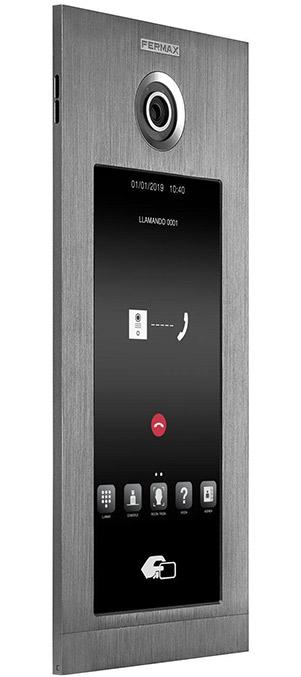
Where FERMAX sits in that field is telling. It is not the cheapest, and it is not the flashiest consumer brand. It occupies the professional middle: a European manufacturer with 75 years of installer trust, a broad catalogue that spans a single villa to a concierge tower, and enough IP credibility through MEET to be specified on a new build rather than only a retrofit. Selling in more than 85 countries from two factories in one Spanish city is its own kind of moat - the distribution and the installer relationships took decades to build and cannot be cloned in a funding round.
06 / THE TRACKSeventy-five years in one column
07 / THE TAKEAWAYWhat a founder can steal
The FERMAX playbook is almost boring enough to ignore, which is the point. Pick a product people need but never think about. Design it well enough that professionals keep choosing it. Manufacture close to home so quality stays under your control. Sell it to the entire planet through people who install for a living. Then give it decades. The company that answers the door for 85 countries did it without a single moment of hype - and outlasted plenty of louder ideas.