Walk into the television aisle and Hisense makes a mildly impolite proposal: perhaps you have been paying too much for a familiar badge. The company sells bright MiniLED televisions, wall-filling laser projectors, refrigerators, ranges, dishwashers, air conditioners and commercial displays. Its products sit at Best Buy, Lowe's, Walmart, Costco and Amazon - the American equivalent of being everywhere at once. The pitch is not mystery. Put features associated with premium sets into a lower-priced box, get that box onto a national shelf and let the spec card start the argument.
That formula has made Hisense one of the world's two largest television brands by unit shipments in recent years and the leader, by the company's cited Omdia data, in the peculiar but growing realm of televisions measuring 100 inches or more. It has also left the U.S. business with a harder problem than obscurity: success at being affordable can train shoppers to read "value" as "compromise." Hisense now wants to keep the price advantage while earning a place in the premium conversation.
A factory, a borrowed name and an early bruise
Hisense's parent began as a radio factory in Qingdao in 1969 and moved into televisions about a decade later. Hisense USA was established in Georgia in 2001. But the pivotal American move came in 2015, when Hisense agreed to pay $23.7 million for Sharp's television plant in Rosarito, Mexico, its distribution network and a five-year license to sell televisions under the Sharp name across much of the Americas.
It was an unusually cheap bundle of useful things: production near the U.S. border, retailer access and a name Americans already knew. It was also where the first big crack appeared. Sharp later accused Hisense of damaging the brand through allegedly low-quality sets and regulatory problems. Hisense contested the claims; the trademark litigation was eventually dropped. The episode is not a clean morality play. It is a reminder that borrowed trust comes with an owner, a contract and a definition of quality you do not control.
What changed the company's mind was not a single boardroom epiphany. The market did it. Distribution and low prices could earn a first purchase, but not automatically a premium reputation. Hisense began investing in its own name more visibly, including North American research and development, a Georgia home-appliance research center and a parade of products designed to make the logo itself memorable.
The useful trick is speed, not spectacle
Hisense's television range now runs from ordinary 4K sets through QLED and MiniLED to RGB MiniLED, which controls red, green and blue light at the backlight instead of filtering a conventional white backlight. Laser TV takes another route: an ultra-short-throw projector sits close to the wall and throws an image onto a paired screen, creating an 80- to 150-inch cinema without hanging a refrigerator-sized panel.
The differentiation is less about inventing every ingredient than combining current display technology, big sizes and aggressive retail timing. Larsen has contrasted Hisense with the familiar CES ritual in which a concept appears under exhibition lights and reaches stores years later. Hisense wants the gap measured in weeks or months. In August 2026, selected Hisense models also became the first televisions to receive Dolby Vision 2, turning a software update into evidence for that speed claim.
That position matters because televisions have become a compression market: panel improvements travel quickly, streaming platforms look similar and last year's premium feature keeps sliding down the price ladder. Brand heritage still helps, but a shopper can compare brightness, refresh rate and operating system in minutes. Hisense is built for that impatient comparison.
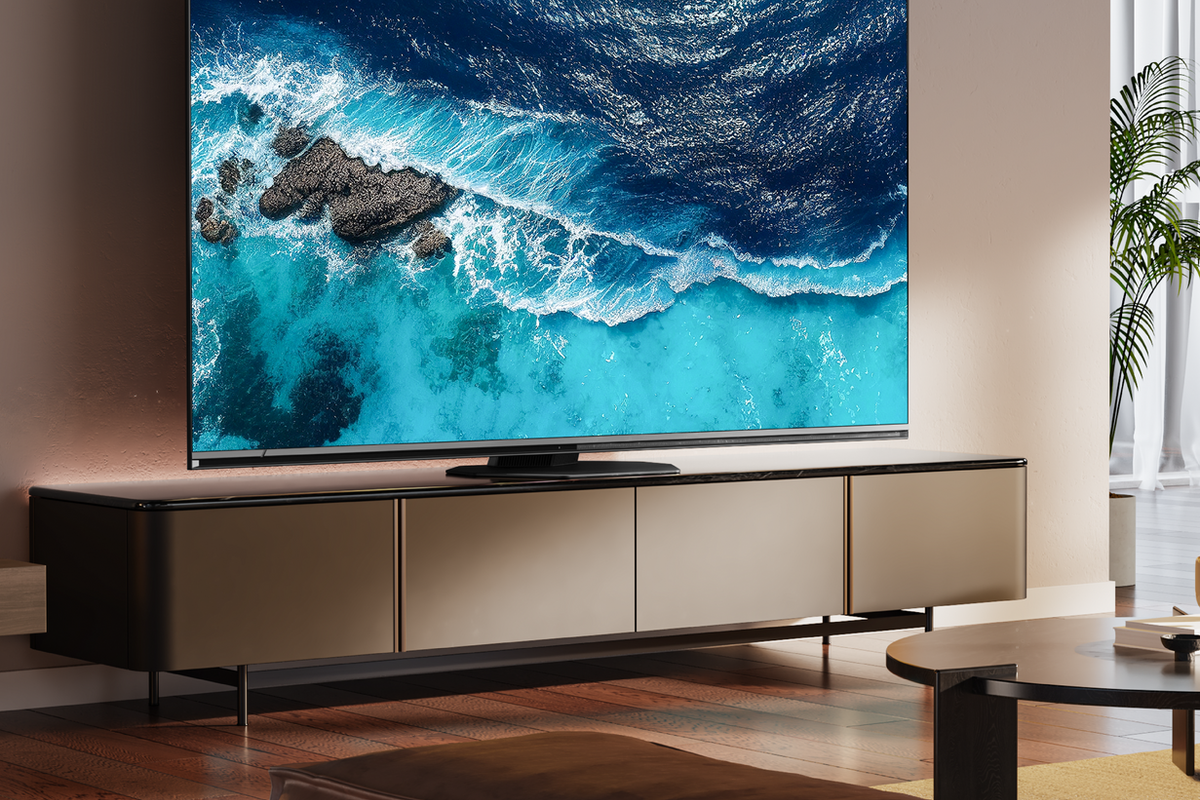
Televisions are only the loudest part of a broad catalog. Kitchen products include refrigerators, ranges, dishwashers, microwaves and wine coolers. Air products cover portable and window air conditioners, dehumidifiers and HVAC. ConnectLife links appliances and adds features such as energy monitoring, meal planning and Dish Designer, an Azure-based recipe assistant developed with Microsoft. Commercial displays, refrigeration and HVAC carry the same manufacturing logic into business markets.
The customers are therefore not one tidy tribe. They include families replacing an aging living-room screen, gamers who care about refresh rates, sports fans who want brightness in daytime rooms, renters buying portable air conditioning, homeowners fitting a kitchen and businesses cooling a building. Hisense makes money primarily when those customers buy hardware through retailers or its online shop. Software platforms and content add usefulness, but the cash register still rings because a physical box moved.
03 / The awareness machinePut the TV beside the reason to buy a TV
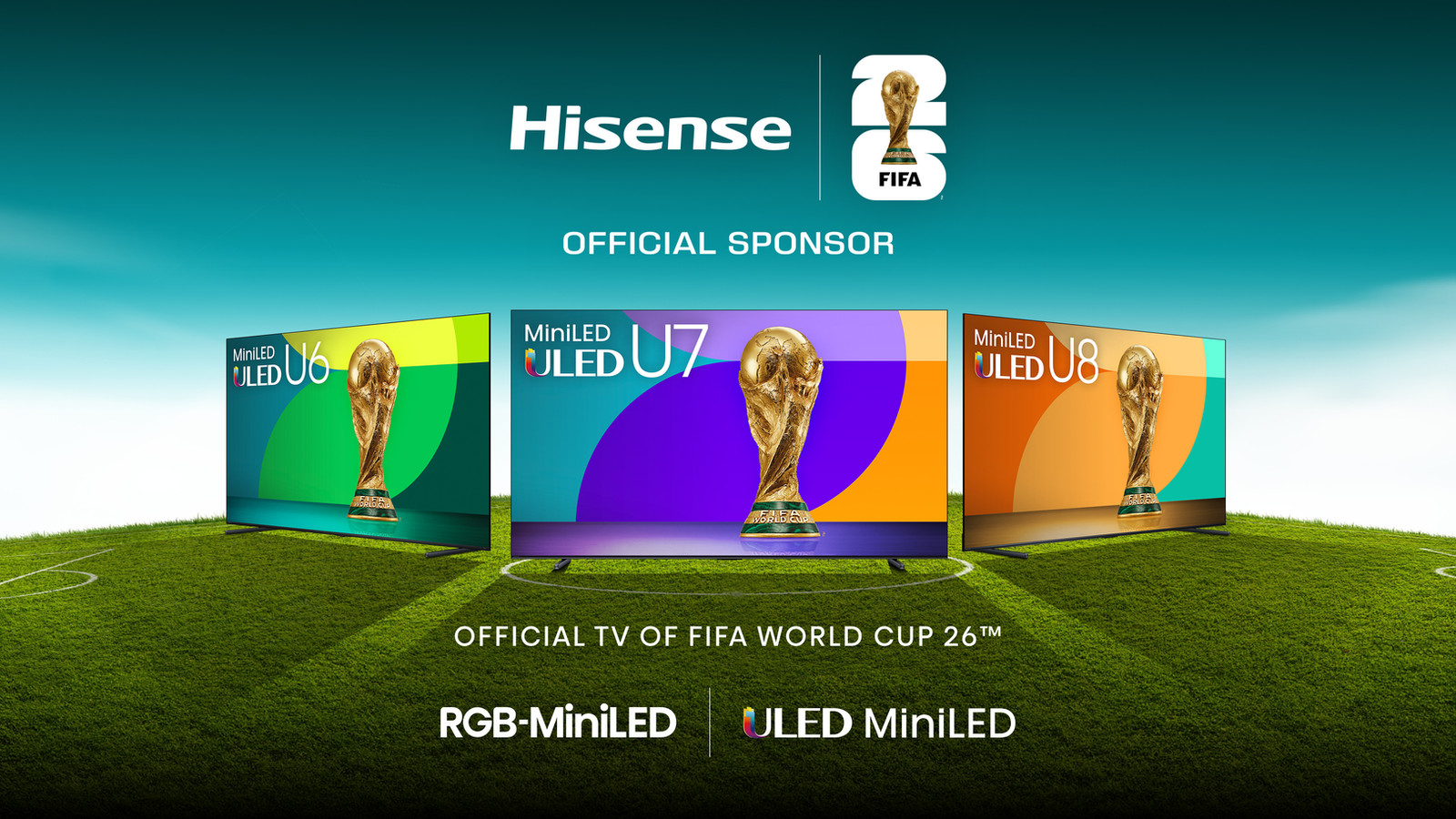
Hisense's sports partnerships are less decorative than they look. The company has worked with FIFA, UEFA, the NBA, Formula 1 and NASCAR. The 2026 World Cup marks a third consecutive World Cup sponsorship. In 2023, the NBA relationship made Hisense its official television and home-appliance partner. Xbox lent its "Designed for Xbox" designation to the PX3-PRO laser projector. French audio company Devialet tunes selected TVs, audio systems and laser products.
The copyable idea is precise: advertise at the moment your product becomes the room's bottleneck. A football tournament makes a small television feel smaller. A basketball partnership gives a 110-inch limited-edition set a reason to exist. The game supplies emotion; the screen supplies the upgrade. Reported company figures say global brand awareness rose 56 percent from 2018 to 2024 while overseas revenue rose 160 percent. Those numbers do not isolate sponsorship as the cause, but the alignment is easy to understand.
A cheap price can become expensive positioning
Hisense competes most directly with TCL in the value-led television market, then runs uphill toward Samsung, LG and Sony. In appliances, the comparison set expands to LG, Samsung, GE Appliances, Whirlpool, Haier, Midea and Frigidaire. The company can win a spec-sheet contest and still lose on trust, service, software polish or resale expectations. Those soft factors become less soft the moment a 100-inch object needs repair.
Where the playbook breaks
It does not work when discounting teaches customers to wait for the next sale, when warranty service cannot match expanding volume, when connected-TV advertising harms the ownership experience, or when an incumbent matches the feature set at the same street price. Hardware speed buys attention. It does not excuse quality variance, confusing model names or slow support.
This is why Hisense's premium move is delicate. Raise prices too quickly and the original bargain disappears. Stay permanently promotional and the flagship becomes a showroom ornament. The better framing, repeated by Larsen, is that value should mean performance, quality and experience at a sensible price - not simply the lowest number on the shelf. Her own arrival is part of the signal: before becoming Hisense USA's CMO in late 2025, she had worked on OLED at LG and Neo QLED at Samsung. The challenger hired someone fluent in the language of the companies it wants to unsettle.
05 / What to stealFour moves worth copying - with conditions
The Sharp deal delivered a factory, distribution and temporary trust. Copy it only when the asset shortens a real operational bottleneck.
Shipping shortly after a debut makes immediacy tangible. It fails if speed creates defects or support debt.
Sports works because viewers use the product during the event. Choose a cultural moment that demonstrates the thing you sell.
Hisense keeps broad price coverage while adding flagships. The move fails if existing buyers feel deserted or premium buyers see only a discount label.
The broader lesson is not "sponsor the World Cup" or "make a huge television." It is to construct a loop in which manufacturing advantage becomes an obvious customer benefit, distribution makes that benefit easy to encounter and marketing appears where the product can prove itself. Hisense does this best when a shopper stands in front of two screens and the less familiar logo looks unexpectedly good.
Its American future will be decided after that surprise. If the set remains reliable, the software behaves and support answers, value can mature into trust. If not, the old label returns. Hisense has already made the giant screen affordable. The premium aisle asks a less measurable question: does the owner feel clever a year later?