The whole remote, in five buttons
- The job: control the living room and find something worth watching from a phone.
- The unlock: replace a $100 infrared accessory with software built into Samsung and HTC handsets.
- The customer: viewers used the remote; broadcasters paid for measurable tune-ins.
- The high-water mark: more than 130 million registered users reported in late 2015.
- The lesson: preinstallation removes friction, but it also raises the standard for restraint.
On a coffee table crowded with black plastic, Peel’s first product looked like someone had misplaced a pear. Designed in soft fruit shapes, the little object listened to an iPhone over Wi-Fi and translated its wishes into infrared signals for a television, cable box, or receiver. It was charming. It cost about $100. It also exposed the central problem with smart-home products in 2011: before making life simpler, they made you buy and configure one more thing.
Peel’s founders, Thiru Arunachalam and Bala Krishnan, were aiming at a problem larger than the missing remote. Television was becoming abundant and difficult. The cable grid showed everything but understood nothing about the person holding it. Peel proposed a phone screen filled with visual recommendations, learned preferences, reminders, and controls. The old remote knew what button you pushed. Peel wanted to know what you might enjoy next.

The pear was not the breakthrough
The company’s most important act was making its handsome object unnecessary. Android phone makers were beginning to put infrared blasters inside handsets. Peel supplied the software layer, and partners including Samsung and HTC supplied the shelf space. A customer no longer had to spend $100, wait for a package, or reserve an outlet near the television. The remote was simply there.
Phone app + Wi-Fi + $100 Fruit + setup + infrared line of sight.
Compatible phone + built-in infrared + software already on the device.
This was distribution masquerading as a product feature. In March 2014, Peel announced 50 million activations and 2.5 billion remote commands a month. By October, when Alibaba invested $50 million, the company reported 90 million users and 5 billion monthly commands. By November 2015, Peel said it had more than 130 million registered users who had tuned into 6.6 billion shows and movies.
The numbers need a small label. Activations were not the same as enthusiastic adopters; the app arrived on many phones by arrangement, not search. Still, the commands show genuine utility. Volume, channel, power, guide: these are tiny actions repeated until they become a habit. Peel had made itself useful at the exact moment between sitting down and watching.
Peel’s cleverest move was to stop selling the object and start living inside someone else’s.
A guide, a remote, and an ad that could act
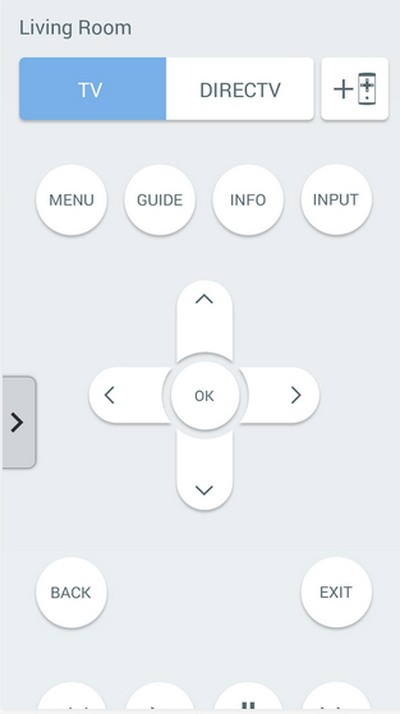
Peel was not merely a digital button pad. The guide recommended programs, crossed from live television into DVR controls, and eventually included Netflix, Hulu, and YouTube discovery. On supported equipment, iPhone users could control DISH and DirecTV boxes over Wi-Fi. The app sat above brands and inputs, which made it useful to viewers who cared about the program, not the plumbing.
That position also created an unusual advertising business. Networks such as History, National Geographic, and Sundance paid for tune-in promotions. A conventional TV ad asks a viewer to remember. Peel could turn a tap into the channel change itself. Its Peel.in platform extended the idea to links in social posts: encounter a promotion on the phone, tap, and let the remote do the rest.
In 2014, one executive said the company was on track for about $8 million in annual revenue, largely from tune-in advertising, and expected considerably more the following year. The logic was neat. Give the remote away, use recommendations to understand intent, and charge media companies when attention became viewing.
The first failure was permission
The remote continued to work. What cracked first was the bargain around it. Beginning in 2017, users complained that Peel placed ads and content on the lock screen, opened full-screen promotions, ran in the background, and could be difficult to remove because it had been preinstalled. The distribution advantage inverted. An app downloaded deliberately can be deleted deliberately. An app that came with the phone, then occupied the screen, felt less like a service and more like a landlord.
Google soon prohibited lock-screen advertising by apps whose primary purpose was not the lock screen. In 2019, security researchers described older Peel versions transmitting user images to an external server; a later version they tested no longer showed the behavior. That June, researchers reported that the app had been removed from Google Play for intrusive activity.
This is the part of Peel’s story that makes the growth chart more interesting. Preinstallation had solved acquisition so thoroughly that it weakened the ordinary signal of user choice. An installed base can tell a company how many devices it occupies. It cannot, by itself, say how much patience the owners of those devices have left.
Borrowed distribution creates a peculiar debt: you must keep earning consent you never collected.
The useful parts are still worth copying
Peel’s playbook works when the underlying hardware is common, the action is frequent, and integration removes a real purchase or setup step. A thermostat controller or vehicle key can benefit from the same thinking: meet the sensor already in the device; make the utility immediate; let software absorb the complexity.
Peel grew after the $100 accessory disappeared. Find the component, setup step, or separate purchase stopping the first useful action.
Remote commands revealed repeated use better than downloads. Choose the smallest behavior that proves the product is doing its job.
Broadcasters paid because Peel could connect promotion to tuning. Monetization was strongest when it matched the user’s immediate goal.
OEM reach is fast but fragile. Give users obvious controls, modest permissions, and a clean exit before adding more surfaces.
The conditions matter. This approach weakens when phone makers remove the enabling hardware, when every TV platform offers a capable first-party app, or when viewing shifts from channels to streaming services with their own discovery and controls. It also collapses when monetization interrupts the action more often than the utility earns goodwill. Peel’s phone could replace six plastic remotes. It could not make people grateful for an ad on the lock screen.
The company understood one future early: television would become software, and the winning interface would care less about which box delivered the show. Its later trouble came from another truth about software. The screen is intimate territory. Getting onto it is a distribution achievement. Knowing when to leave it alone is a product skill.