The Headphone Company Betting You'd Rather Hear the Traffic
While the rest of the audio world raced to seal your ears shut with noise cancellation, Shokz built a business on the opposite promise - keep them open, and let people hear the world they are moving through.
Put on a pair of Shokz and the first thing you notice is what you can still hear. The doorbell. The bus pulling up behind you. The coach yelling splits across the pool deck. There are no tips jammed into your ear canal, no rubber seal, no wall of noise cancellation. Instead the music arrives through your cheekbones - a small motor buzzing sound into the bone of your skull - while the ear itself stays wide open to the world. It is a strange sensation the first time. It is also, for a certain kind of person, the entire point.
That person is usually moving. Shokz, the brand formerly known as AfterShokz, has spent more than a decade selling headphones to people who cannot afford to go deaf to their surroundings: runners on shared roads, cyclists in traffic, swimmers counting strokes, and lately office workers who still want to hear a colleague walk up. It is a business built on a contrarian read of where audio was heading. As everyone else chased silence, Shokz sold awareness.
01A radio-headset company that found consumers
The origin story is less Silicon Valley and more workbench. Shokz grew out of a Shenzhen audio company whose early business was two-way radio headsets for military, law enforcement and sports broadcasters - gear designed for people who need to take a command in one ear while keeping the other on the room. Bone conduction, a technology that dates back centuries and was long used in hearing aids, was a natural fit. In October 2011 the company brought it to consumers under the AfterShokz name. Co-founders Ken Chen, Chen Hao and Qi Xin still lead the company today.
The early products were clunky and the category was tiny. What changed the trajectory was a titanium headband and a leap of faith on the internet.

02The $654,916 gamble
In 2015 the company launched the Trekz Titanium on Indiegogo, asking strangers to fund a wraparound bone-conduction headphone built for athletes. The campaign raised $654,916 from 4,888 backers across 94 countries, hitting 211% of its goal in a single day - a record for a bone-conduction product and one of the larger headphone crowdfunding runs of its era. It was proof, in cash, that the weird idea had a market. From there the lineup grew: the featherweight Air in 2017, the flagship Aeropex and the waterproof Xtrainerz swim headphones in 2019.
Inspiration is easy. Innovation is really hard.
Ken Chen, Co-founder03How it actually works
Bone conduction skips the part of hearing most headphones rely on. Rather than pushing air against your eardrum, a transducer turns the audio signal into mechanical vibrations. Those vibrations travel through the cheekbones and skull straight to the cochlea, the inner ear. Your eardrum never gets involved, so the ear canal stays open to everything around you.
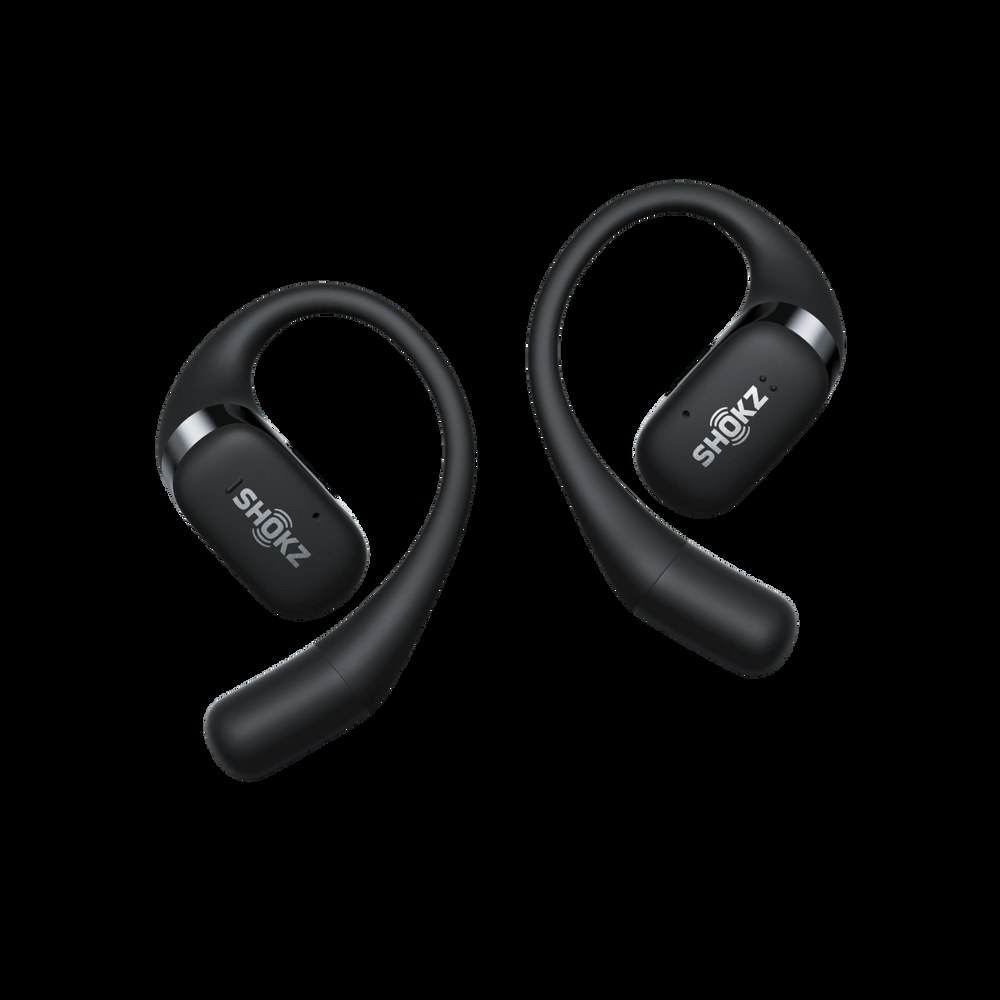
Later products added a second trick. The OpenFit earbuds use air conduction - tiny speakers that sit just outside the ear and aim sound in while minimizing leakage - and the 2024 OpenRun Pro 2 combined both approaches in a DualPitch dual-driver design, letting bone conduction handle the mids and highs while a dedicated air-conduction driver fills in the bass that bone conduction has always struggled with. The company says it holds one of the largest bone-conduction patent portfolios in the industry.
04A lineup organized by sport, not by spec
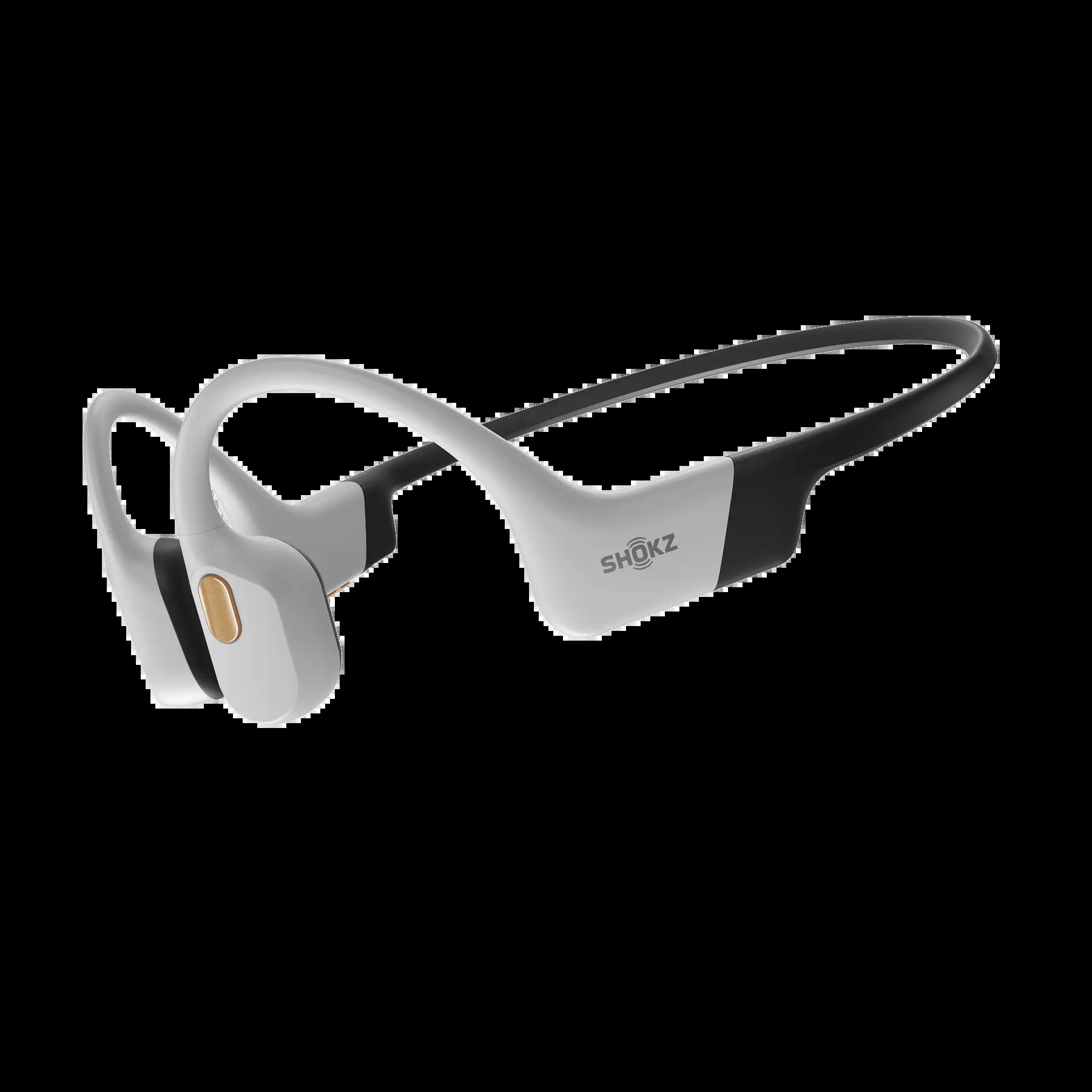
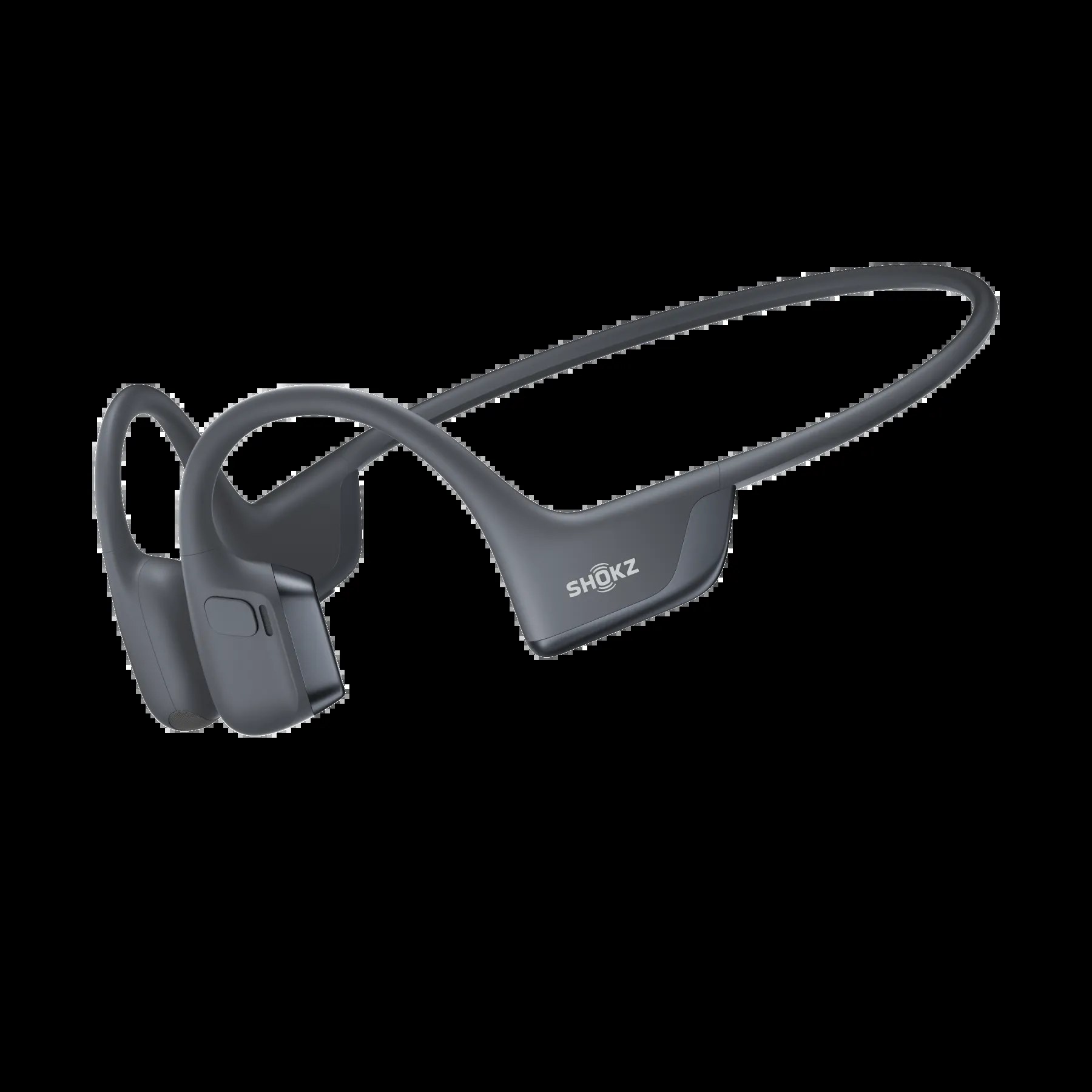
Where most audio brands sort products by price tier, Shokz sorts them by what you are doing. The OpenRun family is for running and cycling. OpenSwim is for the pool, waterproof to IP68 and able to play 32GB of stored music two meters underwater with no phone in sight - a genuinely useful trick where Bluetooth simply does not reach. OpenFit and the clip-on OpenDots are open-ear earbuds for everyday wear, and OpenComm and OpenMeet put a boom mic on the concept for calls and hybrid work.
05Who is buying, and how
The core customer is an endurance athlete - the marathoner, the triathlete, the open-water swimmer - but the tent has widened to commuters, dog walkers, parents who want one ear on the kids, and people with certain hearing considerations who find an open ear more comfortable than a plug. Shokz reaches them directly through its own regional online stores and Amazon, where its headphones average around 4.7 out of 5, and through more than 10,000 physical stores including Best Buy, Costco and REI. It is a hardware business at its core: sell the device, no subscription attached.
That mix matters. Direct online sales let Shokz keep the margin and the customer relationship, while shelf space at big-box retailers puts the odd-looking headband in front of shoppers who would never search for "bone conduction" but will happily try on a pair at the counter. The communication headsets add a quieter B2B channel, selling into contact centers and hybrid offices where hearing the room is a feature, not a bug. Few audio brands span the pool, the pavement and the conference call, and fewer still make that range the whole identity rather than a scattershot catalog.
Where Shokz sits in a crowded field
06Widening the pond on purpose
One of the more revealing decisions came when Shokz looked at its own signature technology and admitted its ceiling. Bone conduction is beloved by athletes but was never going to seat everyone. Rather than keep fighting for a narrow slice, the company launched air-conduction open-ear earbuds and, in 2021, retired the AfterShokz name on the brand's tenth anniversary. The rebrand was more than cosmetic: it renamed the Aeropex to OpenRun and the Xtrainerz to OpenSwim, and even dropped the dot from the "o" in the logo to stand for the open ear.
Bone conduction is a fantastic technology. But the market is relatively limited. Open-ear audio lets us serve a much broader audience.
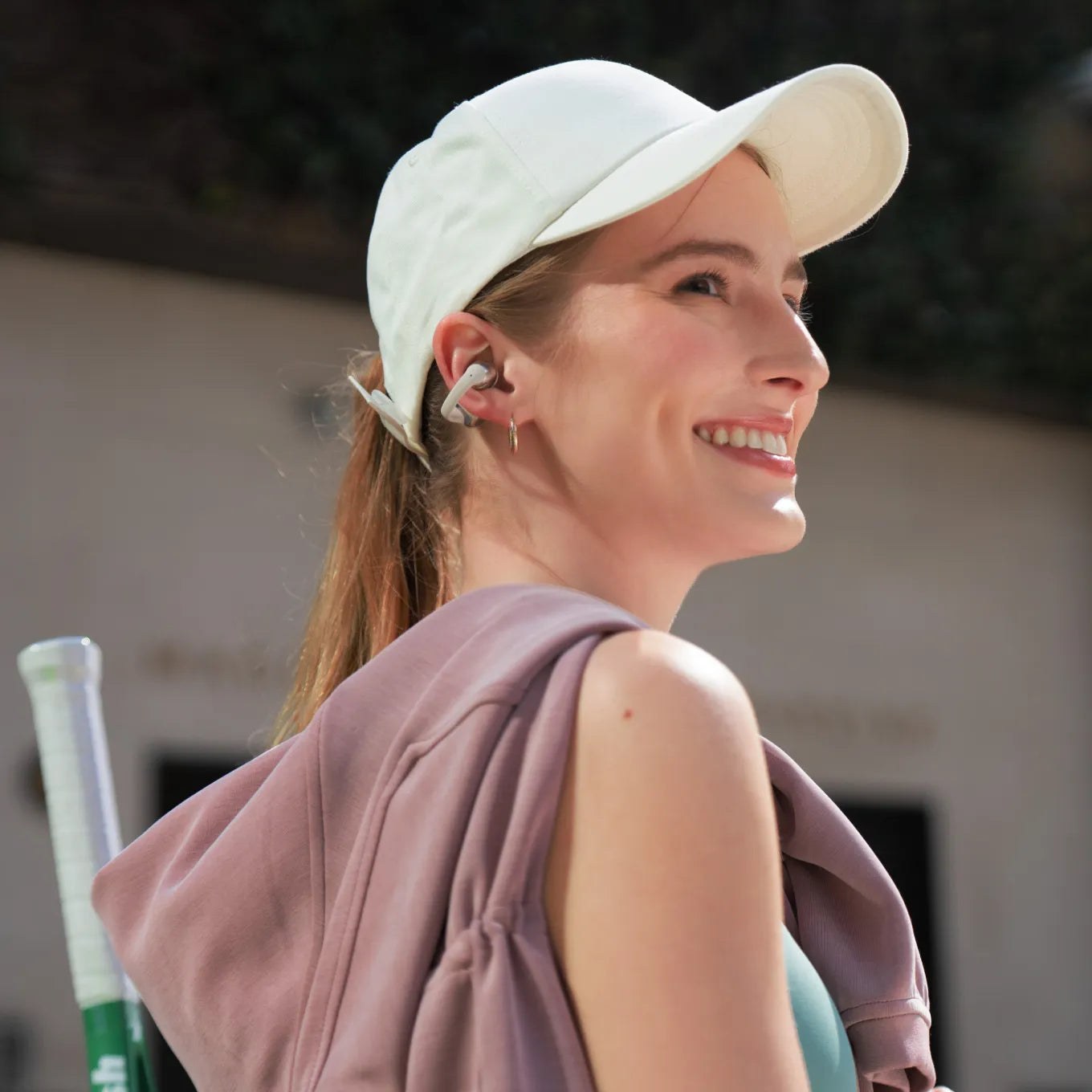
Ken Chen, Co-founderThe bet on the category looks better every year. When Bose, Sony and Apple all shipped open-ear products of their own, they validated a lane Shokz had been grading for a decade. The clearest sign that open-ear is no longer fringe is who now competes in it.
07Trophies, marathons and famous ears
Recognition has followed the products. The OpenRun Pro 2 landed on TIME's Best Inventions of 2025, and the company has collected multiple CES Innovation Awards, including for the OpenMeet office headset and, in 2026, the OpenFit Pro and OpenDots ONE. On the field, Shokz has signed some of the most recognizable names in endurance sport: marathon great Eliud Kipchoge and triathlon champion Jan Frodeno among its ambassadors, alongside sponsorships of the IRONMAN North America Series and the Western States 100-Mile Endurance Run. For a brand whose pitch is "wear these while you push your body," the roster is the argument.
08Where it fits, and where it goes next
Shokz runs a dual-base playbook - R&D and manufacturing rooted in Shenzhen, a North American headquarters in Austin, Texas after an earlier home in East Syracuse, New York - and sells the result in more than 60 countries. Financial details are held close; third-party estimates put annual revenue around $92.8 million, though that figure likely understates a company shipping units at the scale it reports. What is clearer is the direction. Executives have signaled work on AI features, hearing solutions and smart glasses, extending the open-ear idea from a headphone into a broader wearable.
The competitive question is whether that place stays defensible now that the giants have arrived. Shokz has no answer to Apple's ecosystem or Bose's brand budget, and it does not try to. Its moat is narrower and more stubborn: a long head start in open-ear tuning, a patent library built over more than a decade, and a reputation with athletes that a newcomer cannot buy overnight. When the pitch is trust with your safety on a dark road, being early and being specialized both count.
The through-line has not moved since a titanium headband on Indiegogo. Most of the industry keeps refining how completely it can shut the world out. Shokz keeps refining the opposite - how well you can hear your music and everything else at once. In a market obsessed with silence, that remains a specific, defensible place to stand.