The Last AA
You'll Ever Buy
A Park City company put a USB-C port on the side of a AA battery. Its bet: you'll buy one, then never buy that battery again.
The most boring aisle in the store is the one nobody has bothered to fix. You grab a blister pack of AA cells, feed them to a remote or a smoke detector or a kid's toy, and a few months later you throw them in a drawer, or worse, the trash. Then you buy more. Paleblue, a company of about sixteen people working out of Park City, Utah, decided that loop was the whole opportunity - and that the fix was almost stupidly simple: put a charging port on the side of the battery.
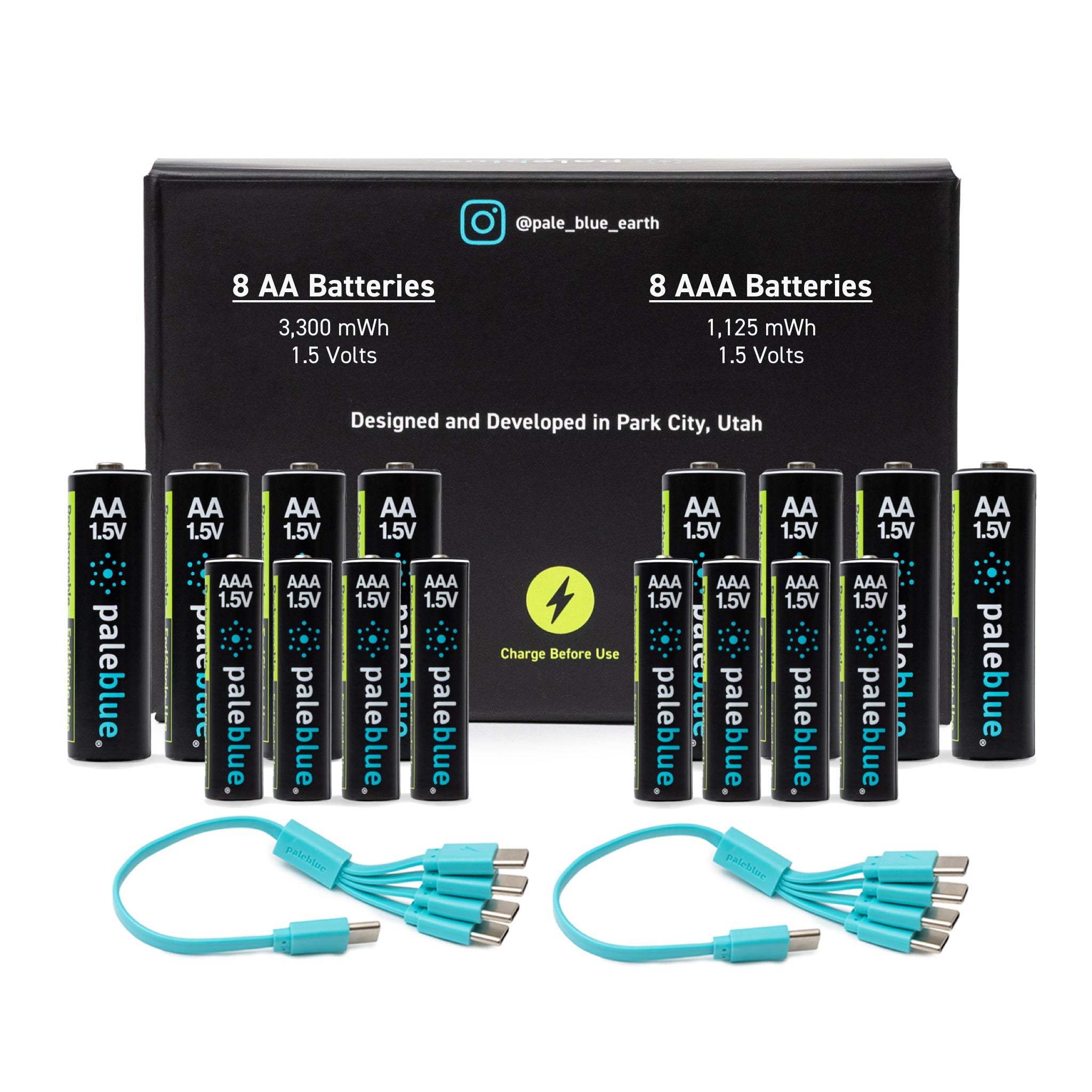
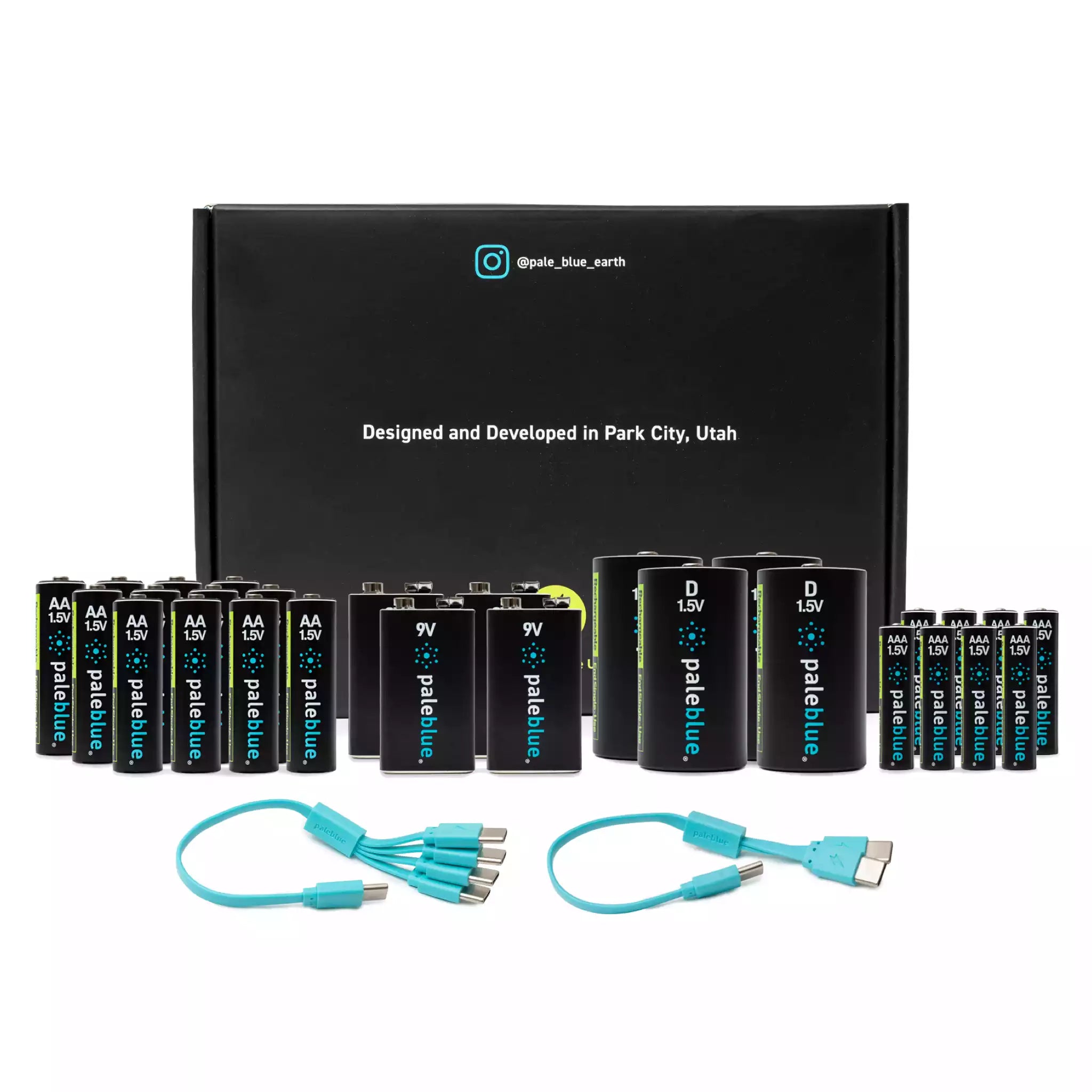
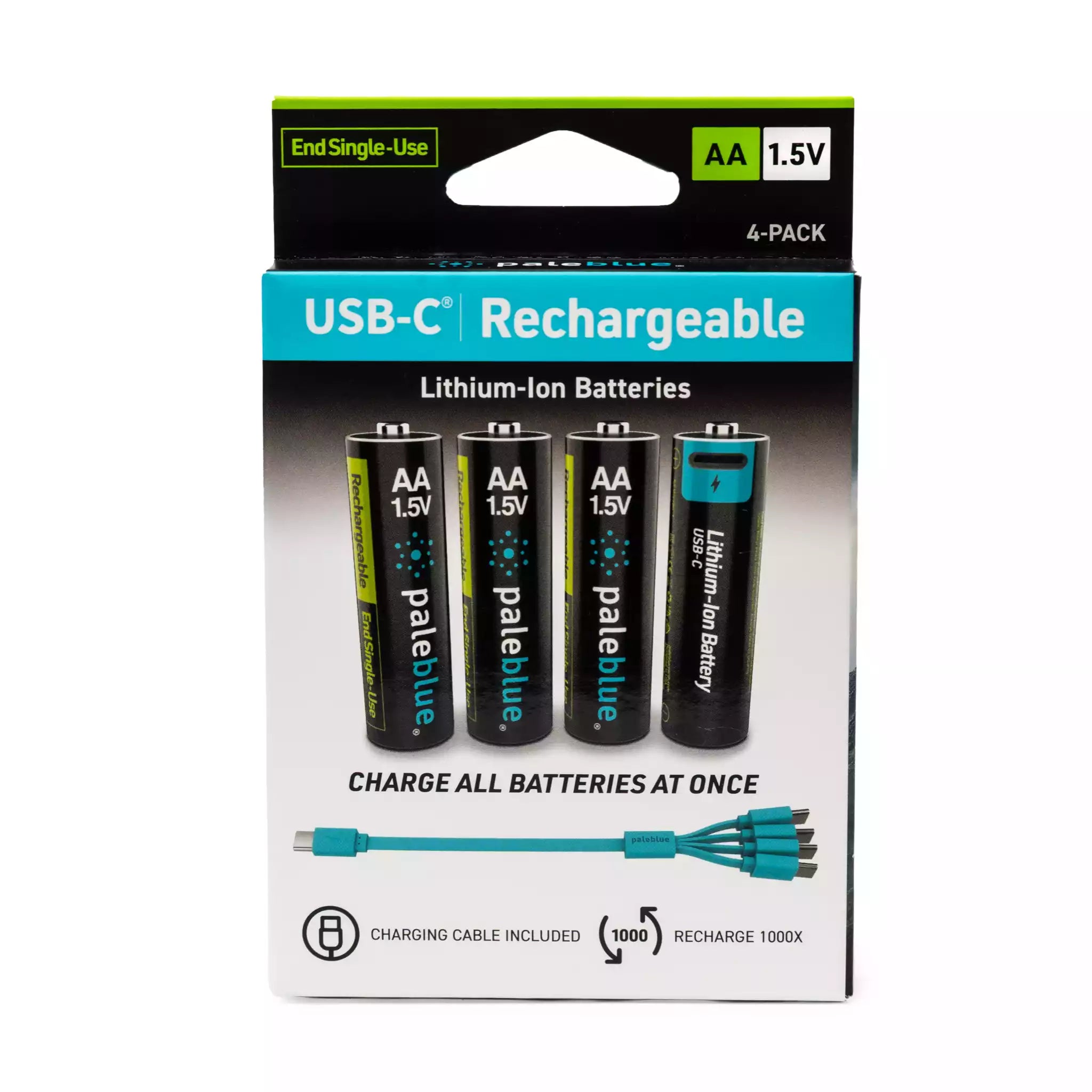
Each Paleblue cell is a lithium-ion rechargeable in a familiar shape - AA, AAA, 9V, C, D, even the CR123A your trail camera eats through - with a USB-C port built directly into the body. Plug it into the same cable that charges your phone, wait roughly an hour, and it's full again. There is no cradle. There is no proprietary dock. That single design decision, removing the charger, is the entire pitch.
01 / THE PROBLEMA waste stream hiding under the couch cushions
Founder and CEO Tom Bishop likes to point out a number most people never think about: Americans throw away an estimated ten million single-use batteries every day. They are awkward to recycle, easy to forget, and quietly expensive. Bishop, who spent years in hardware at Skullcandy, Burton Snowboards and the baby-monitor company Owlet - about eleven of those years based in China - had already cut single-use plastics and disposables out of his life. Batteries were the holdout.
The moment that turned into a company, by his telling, was mundane. He recharged one of the early prototypes and noticed what he hadn't done: "I didn't go anywhere, buy anything, or throw anything away." That is the feeling Paleblue is actually selling. Not guilt, not a lecture about landfills - just the small relief of never running out.
02 / THE PRODUCTSame battery, one extra hole
Paleblue's flagship is the Voyager line. The trick that makes it feel different from the rechargeables you might remember - the ones that came with a bulky wall charger and a promise you never kept - is the on-cell USB-C port. You can top up a AA at your desk, in a car, off a power bank, wherever a cable reaches. The chemistry is lithium-ion rather than the older NiMH standard, which holds a steadier voltage and loses less charge sitting in a drawer.
What one Paleblue cell is designed to replace
Around the core cells sit the bundles that do most of the converting: a Home Conversion Kit meant to swap out a household's disposable stock in one purchase, a Sustainability Kit, plus solar chargers, headlamps and accessories. The company also moved the whole line to USB-C, added a color-forward "Vivid" range, and - unusual for a battery - announced a limited lifetime warranty. A guarantee like that is partly marketing and partly a signal: they expect you to keep these for years.
03 / THE DIFFERENCEWhy this isn't your dad's rechargeables
Rechargeable batteries are not new. What Paleblue changed is the friction. Traditional NiMH systems like Eneloop work fine, but they hinge on a separate charger you have to own, find, and remember. Disposable brands like Duracell and Energizer own the shelf but bank on you coming back. Paleblue's wedge sits in the gap: the reliability people expect from a name-brand cell, without the dock and without the repeat trip.
| Disposable alkaline | Old NiMH rechargeable | Paleblue | |
|---|---|---|---|
| Recharges | 0 | Hundreds | ~1,000 |
| Charger needed | - | Separate cradle | USB-C, no dock |
| Recharge time | - | Hours | ~1 hour |
| Repeat purchases | Constant | Rare | Rare |
There is a catch worth stating plainly, because Paleblue's own math rests on it: the upside only lands if you keep the batteries around long enough to recharge them many times. A roughly hundred-dollar starter investment beats a lifetime of alkaline for a heavy user, but a household that buys a pack, loses half of them behind the couch, and never plugs the rest back in would have been fine with the cheap ones. The product rewards the people who actually adopt the habit.
04 / THE BUSINESSFrom a Kickstarter to Walmart shelves
Paleblue was founded in 2018 by Bishop with co-founders Steven Warren and David Kizer, and started shipping after a 2019 Kickstarter that raised around $430,000. It has grown mostly the hard way: direct-to-consumer on its own Shopify store, marketplace sales on Amazon and Walmart, and wholesale into roughly 350 retail doors across about 20 countries. By 2022 the company reported $3.3 million in revenue, up around 180% year over year, and it has now sold more than two million batteries since launch.
The capital story matches the scrappy retail one. After the Kickstarter and a stretch of angel money, Paleblue ran a 2023 community round on Wefunder, raising more than $850,000 from over 280 investors at a roughly $16.8 million valuation, and closed an $860,000 convertible note that December. The stated plan for the money: inventory to feed retail expansion, marketing, hiring, and a push into Europe. The company is also a member of 1% for the Planet and partners with Protect Our Winters, which fits both the product and the Park City address.
Traction, roughly to scale
05 / THE MARKETA 16-person team against the battery giants
Who buys these? The natural customers are the people who burn through cells: gamers with wireless controllers, photographers, and the trail-camera and security-camera crowd, plus flashlight users, outdoor and emergency-preparedness households, and some medical and industrial devices. These are exactly the users for whom the recharge math turns from "nice idea" into real savings.
The obvious risk is scale. A sixteen-person company is going up against Duracell and Energizer, brands with decades of shelf presence and a copper-top so famous it's a punchline. Paleblue's answer isn't to out-shelf them; it's to change the unit of the purchase from "a pack you'll buy again" to "a thing you own." If that framing sticks, the incumbents' greatest strength - being the default repeat buy - becomes the thing customers are trying to escape. That is the whole wager, and it is being tested one remote control at a time.