Blaine Butler was not supposed to become a ceramics founder. She spent 15 years climbing the restaurant industry, including a stretch as a startup consultant logging 70-hour weeks. Then a car accident stopped all of it, and postpartum depression arrived after her first child. To feel like a person again, she started digging in her San Diego yard. The garden that grew there is the reason Momma Pots exists.
In early 2017 she started making pots in her garage - hand-pouring vessels, hand-painting them in metallics, stripes, geometrics, and marble. The idea was small and personal: make beautiful things that would nudge people to slow down and pay attention to what grows around them. What happened next was not small. Today Momma Pots planters sit in more than 1,300 stores worldwide, and the company has sold over two million of them.
01 / THE PRODUCTThe whole company is one good idea about pots
Nobody remembers the plant. Everybody notices the pot. That is the quiet insight Momma Pots is built on, and it explains why the brand treats a planter like a design object rather than a hardware-store afterthought. The flagship is the Gemstone Collection: cylinders, pedestals, and low bowls in matte, eye-popping colors, made of food-grade porcelain. The shapes are sized for real houseplants, from a trailing philodendron to a fiddle leaf fig.
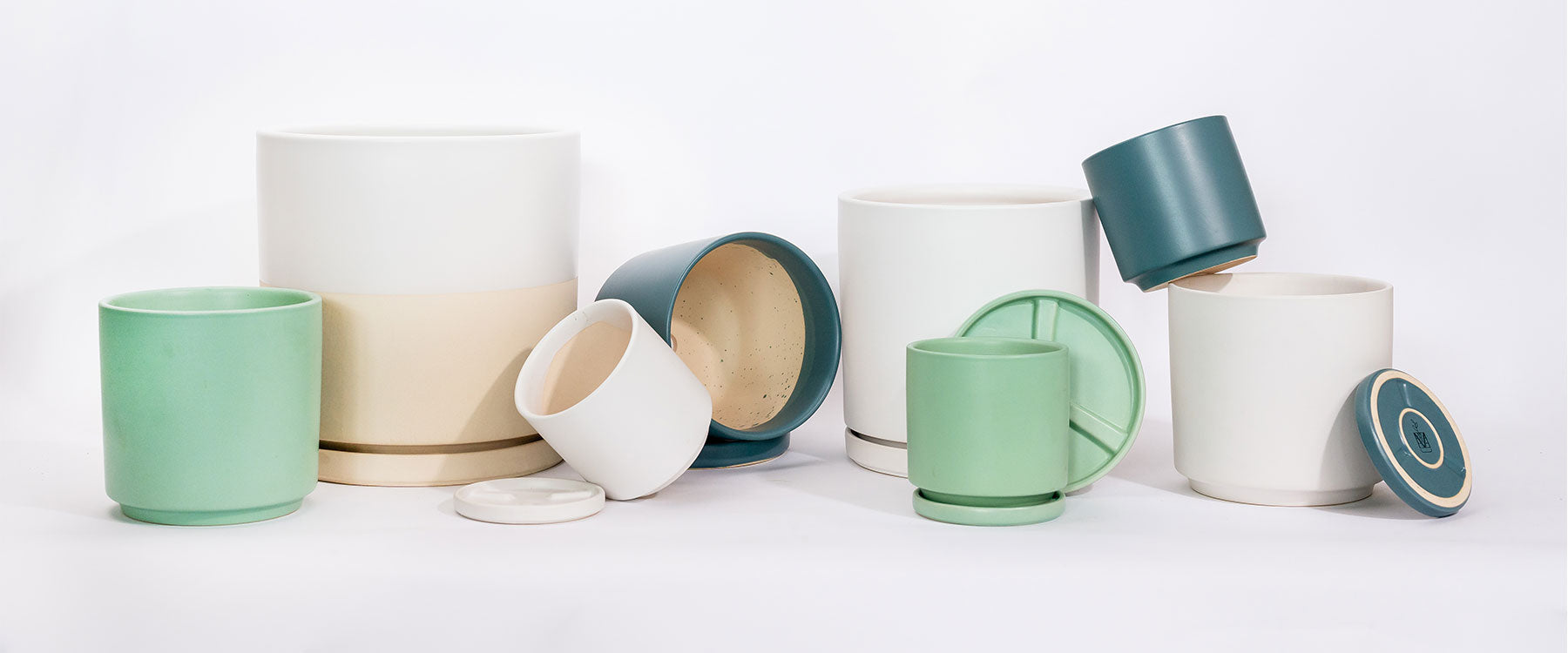
Two details do a lot of quiet work. Every pot has an actual drainage hole, and every pot comes with a matching footed saucer to catch the water. Plenty of decorative planters skip both, forcing buyers to choose between a pot that looks good and a pot that keeps a plant alive. Momma Pots refuses the trade-off, and that completeness is a big reason shops keep reordering.
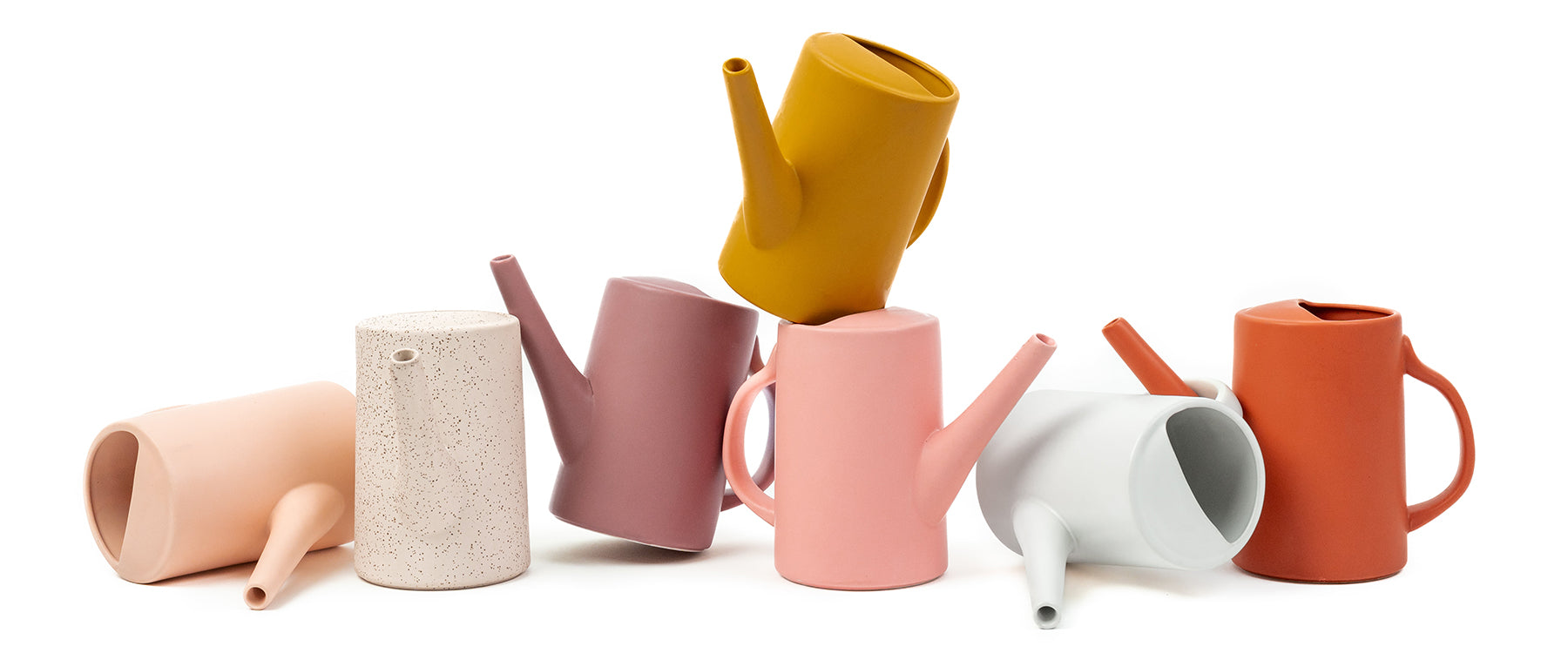
Around the planters sits a tidy product family: porcelain watering cans in colors matched to the Gemstone palette, decorative vases and cache pots, plus garden accessories and apparel for the plant-loving crowd. The hand-painted cylinders - the closest thing to the originals Blaine made in her garage - remain the main line sold directly to shoppers.
02 / THE CUSTOMERIt sells to shops, not just to shoppers
Most consumer brands you read about are direct-to-consumer stories - burn cash on ads, own the customer, chase the margin. Momma Pots ran the other way. Its center of gravity is wholesale: independent plant shops, garden centers, and gift boutiques, reached largely through the Faire marketplace. Those 1,300+ storefronts do the selling; department stores, including Bloomingdale's, have carried the pots too.
Who's buying
- Plant shopsIndependent nurseries and boutique plant studios that reorder the Gemstone line season after season.
- Garden centersLarger retailers stocking planters, saucers, and watering cans as a matched set.
- Department storesBloomingdale's among the names that have put Momma Pots on their shelves.
- Plant peopleA 23K-strong Instagram community buying select pieces direct from mommapots.com.
The direct-to-consumer store still matters - it is where the hand-painted, limited pieces live, and where the brand's playful voice lands. The Instagram bio says it plainly: "Your Favorite Pot Dealer." It is a joke, and it is also sharp positioning. A commodity became a brand people follow.
03 / THE MODELWhy wholesale-first was the smart call
A wholesale-first model changes the math. Instead of paying to acquire each customer, Momma Pots ships pallets to shops that already have foot traffic and trust. The retailer carries the last-mile cost and the storefront; the brand focuses on design, color, and supply. It is slower to look explosive and much cheaper to keep alive - which is how a six-person team in El Cajon moved two million units.
Supply is the other half of the story. Rather than shopping around dozens of factories, Momma Pots runs an exclusive partnership with a single family-owned, woman-led manufacturer. Single-sourcing is usually framed as a risk. Here it reads as a moat: consistent color, consistent porcelain, and a relationship deep enough to protect quality at scale. In April 2025 the company raised $1M in debt financing - capital to fund inventory and growth, not a splashy venture round.
04 / THE EDGEHow it differs from everything else in the aisle
The planter market splits into two unhappy halves. On one side, mass-market pots that are cheap, functional, and forgettable. On the other, one-off handmade ceramics that look great and cost like art. Momma Pots planted itself in the gap: designed, colorful, functionally complete pots at accessible prices, produced consistently enough to fill a wholesale order. Competitors range from West Elm and CB2 planter lines to Etsy ceramicists and plant brands like The Sill - but few combine the color, the drainage-plus-saucer completeness, and the wholesale reach in one place.
05 / THE FOUNDERThe restaurant lifer who learned to sell herself
Blaine Butler's background looks unrelated to ceramics until you notice what carried over. Fifteen years in restaurants and consulting taught her operations, hospitality, and how to build something people come back to. The harder part was personal: she has described being too shy to promote herself, then learning to do it anyway as the brand grew into a 5,000 square foot warehouse with attached retail space. The company today is woman-owned and largely woman-run, from the founder to the factory.
What you can steal
- Go wholesaleLet shops that already have traffic sell for you before you spend a dollar on ads.
- Finish the productDrainage hole plus matching saucer - solve the whole job, and buyers reorder.
- Pick a color laneWhen the category is beige, being the bright one is a strategy, not a risk.
- Single-source on purposeOne deep manufacturing relationship can beat ten shallow ones on quality.
- Adjacent skills travelRestaurant operations and hospitality transferred straight into a product brand.
06 / THE LIMITSWhere the model would strain
The playbook is not free of gravity. Wholesale-first means thinner per-unit margins and dependence on retailers' buying cycles - when shops tighten, orders soften. Porcelain is heavy and breakable, so freight and damage are permanent line items. And an exclusive single-factory partnership that protects quality also concentrates risk: one disruption, and there is no second line running. Two million pots is a real number, but it was built the patient way, and the patient way has a ceiling that only more capital or more channels can raise.
Still, the shape of the thing is clear. A personal recovery became a garden, the garden became a product, and the product became a brand that a thousand-plus shops chose to carry. Momma Pots did not reinvent the plant pot. It just took the pot seriously - the color, the drainage, the saucer, the box it ships in - and found out how many people were waiting for someone to do that.
Find Momma Pots
El Cajon, California / Founded 2017 / ~6 employees