Breaking: Sabai turns recycled water bottles into sofas you can affordB Corp score 90.1 - nearly double the medianFirst furniture buyback program in the USRepair Don't Replace: the sofa built to outlive its ownerMade in High Point, North Carolina~58K following a greater future on InstagramBreaking: Sabai turns recycled water bottles into sofas you can affordB Corp score 90.1 - nearly double the medianFirst furniture buyback program in the USRepair Don't Replace: the sofa built to outlive its ownerMade in High Point, North Carolina~58K following a greater future on Instagram
Company • Sustainable Furniture
Sabai Design
The women-founded furniture brand quietly rewriting how a couch lives - and how it dies.
Est. 2019New York, NYCertified B CorpD2C
THE ESSENTIAL. A sofa that arrives flat-packed, sits down like it costs three times as much, and - if you ever tire of it - gets bought back instead of thrown out. Recycled fibers, non-toxic finish, made in North Carolina.
The Scene
It's moving day in a fourth-floor walk-up. Two friends, fresh out of school, are staring at the same bad choice everyone their age faces: the cheap couch that will be curbside trash in eighteen months, or the expensive one that isn't. Sabai exists because that choice always felt rigged.
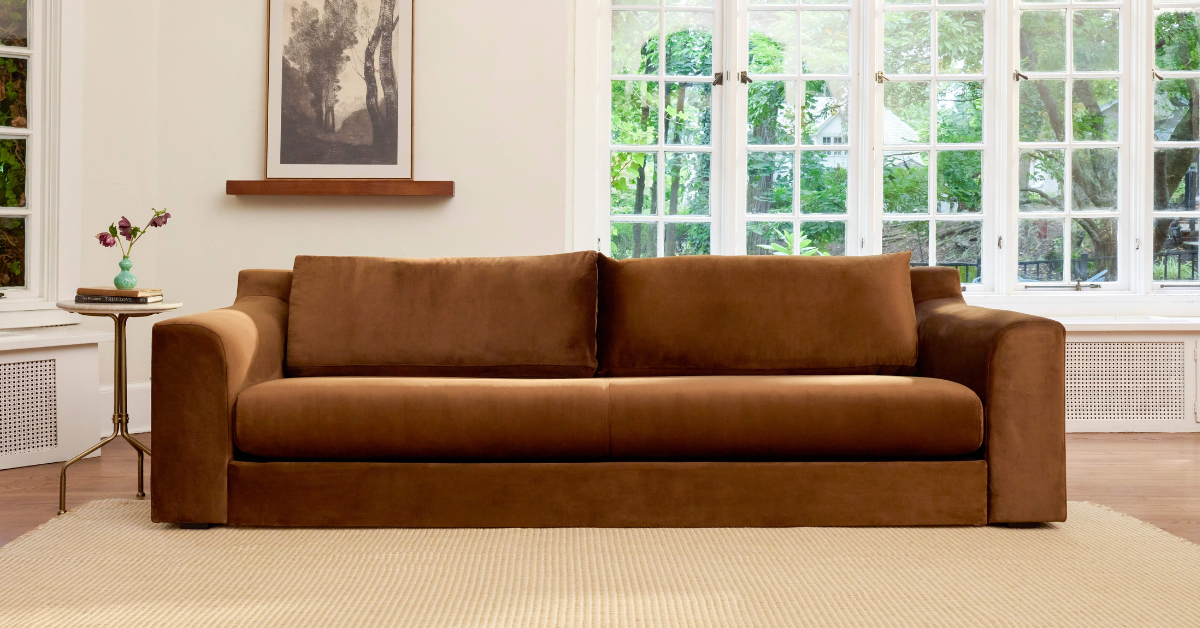
Somewhere in a New York apartment right now, a Sabai sofa is doing something ordinary furniture never does - waiting to be repaired instead of replaced. Its cushions can be swapped. Its slipcover can be re-ordered. Its frame is FSC-certified wood, its velvet spun from recycled bottles, and when its owner finally moves on, the company will buy the whole thing back. That is the small, stubborn idea at the center of Sabai: a couch should be the last thing you throw away, not the first.
The word itself is Thai. Sabai - roughly, comfortable, at ease. Co-founder Phantila Phataraprasit grew up around it: her mother ran eco-lodges in Thailand, her parents co-founded a tea garden. Comfort and conscience weren't opposites in that world. They were the same thing. Years later, furnishing a first apartment in a city that sells disposability by the truckload, she couldn't find a single sofa that carried both. So she and college friend Caitlin Ellen decided to build one.
90.1
B Corp Score
2019
Founded
1st
US Furniture Buyback
~28
Team Members
How It Started
A law-school side project with a landfill problem to solve.
Sabai was born in 2019 while Phataraprasit was a student at NYU School of Law. She and Ellen had met at Columbia, where they'd once teamed up to start a student-run credit union - so building something from scratch wasn't new. What was new was the target: the furniture industry, a category that ships enormous, non-recyclable objects across oceans, sells them cheap, and watches most of them rot in landfills within a few years.
Their bet was that a generation raised on climate anxiety and thin wallets wanted a third option. Not fast furniture. Not heirloom prices. Something well-made, non-toxic, and priced for a first apartment - sold directly, shipped flat, and designed to be kept. They grew it largely the unglamorous way: organic social media, one honest post at a time, until the audience passed 58,000.
Sabai is a Thai word that roughly translates to comfortable. We started it to make it easier for people to live according to their values.
- Phantila Phataraprasit, Co-Founder & CEO
What They Make
One sofa, engineered to never become garbage.
The catalog is deliberately narrow. Sabai builds The Essential Collection - sofas, sectionals, loveseats and chairs - and does it obsessively well, offered in a rotating set of recycled and plant-based fabrics. Modularity is the trick: expansion kits let a starter sofa grow into a corner sectional when your life (or your apartment) does.
Product
The Essential Collection
Modular sofas, sectionals, loveseats and chairs on FSC-certified wood frames. Low profile, wide arms, removable back pillows.
Program
Repair Don't Replace
Buy just the part that broke - legs, cushion inserts, slipcovers - instead of a whole new sofa. Over a piece's life, that can save thousands.
Program
Sabai Revive & Buyback
The first US furniture buyback: Sabai buys couches back for up to 20% credit or 15% cash, then resells the clean ones pre-owned.
Product
The Eclipse Sleeper
A sleeper sofa built for small-space living - the Essential line stretched to fit a real NYC apartment.
Recycled VelvetUpcycled PolyRecycled Water BottlesHemp BlendVegan Cactus LeatherFSC-Certified WoodOEKO-TEX Certified
The Business Model
Most brands sell you a sofa. Sabai closed the loop.
Here is the counterintuitive part: a company whose whole promise is that you'll buy fewer of its products. The economics work because retention, repair parts, and a growing pre-owned line all keep customers inside the loop instead of walking to a competitor.
01
Make
Recycled fibers & FSC wood, built in High Point, NC.
02
Use
Flat-packed, self-assembled, non-toxic to live with.
03
Repair
Swap a part, not the whole sofa. Keep it out of the landfill.
04
Revive
Sell it back. Sabai cleans it and resells it pre-owned.
The Founders
Two friends, one credit union, and a furniture idea.
Co-Founder & CEO
Phantila Phataraprasit
Raised in Thailand around eco-lodges and a family tea garden; started Sabai while at NYU School of Law. Named an Apartment Therapy Design Changemaker and profiled by Forbes for making sustainable furniture accessible.
Co-Founder
Caitlin Ellen
Met Phataraprasit at Columbia, where the two first built something together - a student-run credit union. Co-founded Sabai in 2019 with a shared goal: furniture that matches a generation's budget and its values.
The goal is simple: make sure no Sabai sofa ends up in a landfill.
- Sabai Design, on its founding promise
The Story So Far
Milestones
2019
Sabai is founded
Phantila Phataraprasit and Caitlin Ellen launch a D2C sustainable furniture brand out of New York.
2020-2021
Building through Instagram
The brand grows an engaged, values-driven audience largely through organic social media.
Aug 2022
Seed round
Closes a seed financing with participation from the NYU Innovation Venture Fund.
2023
Design Changemaker
Phataraprasit is named an Apartment Therapy Design Changemaker; the buyback program (a US first) draws national coverage.
2025-2026
Still expanding the line
Featured in Cultured Magazine; The Good Trade reviews the new Eclipse Sleeper Sofa for small-space living.
Odds & Ends
Things worth knowing
★ "Sabai" is Thai for comfortable, or relaxed - the exact feeling the founders were after.
★ Phataraprasit's parents co-founded a tea garden; her mother ran eco-lodges.
★ The founders once started a student-run credit union together at Columbia.
★ A Sabai sofa is made in part from recycled plastic water bottles.
★ Its B Impact score of 90.1 nearly doubles the ~50.9 median for ordinary businesses.
★ Sofas are made in High Point, North Carolina - not offshore.
The Scene, Revisited
Back to that fourth-floor walk-up. The rigged choice - cheap-and-doomed versus expensive-and-guilt-free - is quietly gone. The couch going up the stairs arrived flat in a box, cost what a first paycheck can bear, and comes with a promise that it will be repaired, not replaced, and bought back, not binned. Same apartment, same budget, different ending. That's the whole point of Sabai: it didn't make the sofa fancier. It made the sofa stay.