The pot arrived before the company. In early 2017, Blaine Butler was in her San Diego garage, learning the temperament of concrete: how it mixes, how it pours, how it waits, and how an idea can crack if the material is hurried. She painted the finished vessels herself. Geometric patterns came from fashion, music, architecture and whatever else caught her eye. Soon the house and garage were so crowded with the evidence that her two-year-old daughter, Keegan, kept looking around and asking, “Momma… pots?” A brand name had wandered into the room wearing toddler punctuation.
The phrase worked because it was both literal and affectionate. Butler was a mother making pots. She was also trying to translate a private delight into an object other people could take home. She had grown up in Lakeside on a few acres threaded with two ponds and two creeks, digging for crawdads, fishing with her father and roaming outside with the energy she now recognizes in her son. Years later, after about 15 years opening and managing restaurants, she returned to the garden. The question that eventually produced Momma Pots was direct: “How do I share this feeling with others?”
Her answer was a vessel. A plant can make a room feel awake, but the object holding it is usually asked to be either anonymous or precious. Butler saw room in between. She wanted modern shapes, strong color, accessible prices and the boring bits done properly. The pot needed a drainage hole. It needed a water tray. It needed to flatter the plant without requiring its owner to improvise a saucer from a dinner plate. Beauty would get attention; completion would earn trust.
“From that moment on, I started going pot crazy!”Blaine Butler, recalling the beginning
01 / The apprenticeshipRestaurants were the business school
Butler’s previous career can look like an unrelated first act. Restaurants and ceramics share little on a résumé. In practice, they are close cousins: both turn raw material into an experience, both depend on timing, and both expose sloppy operations immediately. Butler had spent years navigating the complexity of openings and managing multiple locations. She credits mentors from that period with much of the business knowledge she later carried into Momma Pots.
That background helps explain the speed of the early leap. By 2018, the garage operation had moved into a 5,000-square-foot warehouse with retail space. The early products were still hand-poured and hand-painted, and clients already included boutiques, nurseries, plant suppliers and gift shops. Butler said Instagram helped the name spread quickly. A visual product had found a visual catalog, and wholesale buyers could see a shelf taking shape before a box reached them.
The move did not make the work easy. Butler has spoken plainly about difficult partnerships, funding pressure, sourcing, staffing and moments of self-doubt. Her pride is less polished: she is proud that she continued. In a category built around fragile objects, persistence became an unlisted material. The 5,000 square feet mattered, but the habit formed in restaurants mattered more. Open the doors. Solve today’s problem. Put a product on the shelf that deserves to return.
02 / The objectColor is the invitation; function closes the sale
Momma Pots eventually expanded beyond its first concrete pieces. The Gemstone Collection uses high-fired, food-grade porcelain. The Hand-Painted Collection uses terracotta. Vases, cache pots and watering cans joined the planters. Across the range, Butler’s taste for color became a commercial language: matte greens, pinks, blues, golds and earth tones that make the planter aisle look less like building supplies and more like a box of chalk pastels.
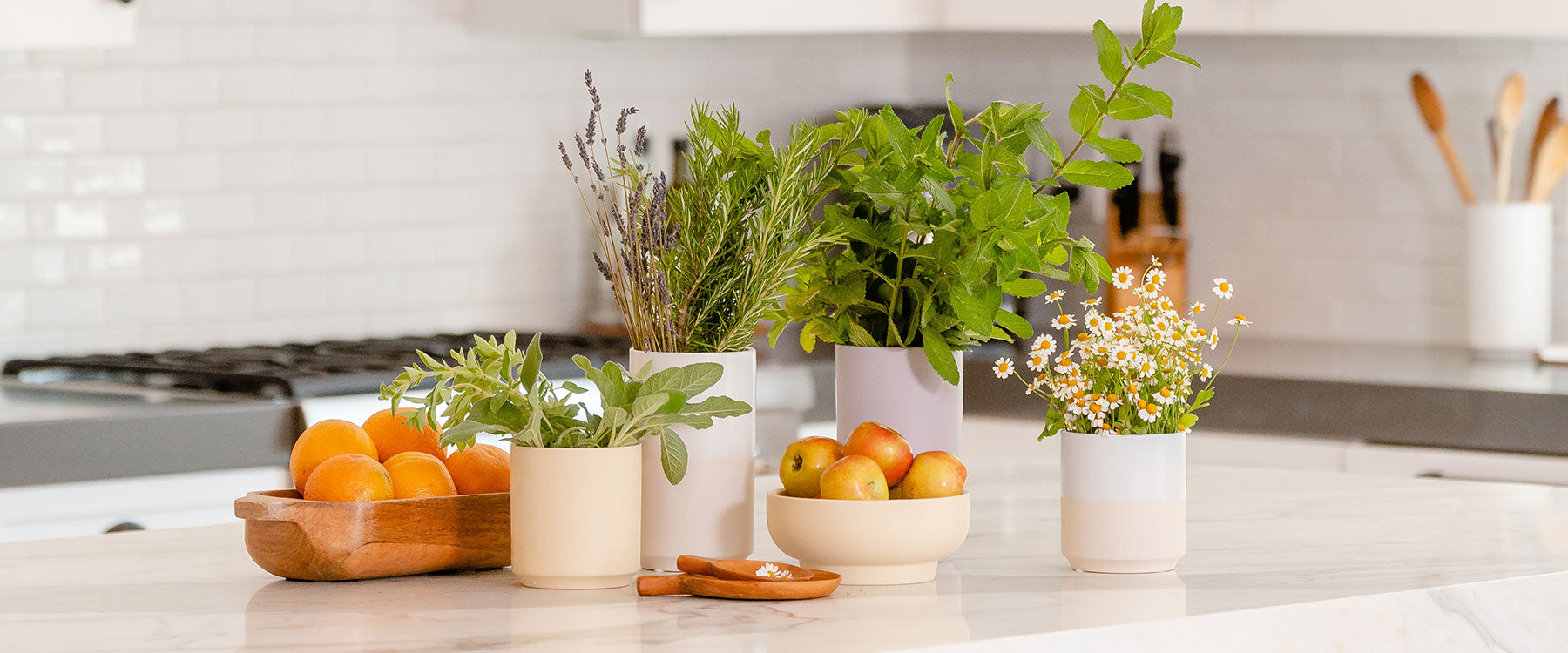
Color alone would be decoration. Butler paired it with mundane competence. Each planter was designed with drainage and a matching tray. That second part is easy to underestimate. A customer does not want half a solution followed by an errand. A retailer does not want to explain why the lovely object on the shelf cannot safely hold the thing pictured inside it. By treating pot and saucer as one product, Momma Pots removed a small nuisance. Small nuisances are where repeat purchases often go to die.
The four-part Momma Pots proposition
There is a useful discipline in this. Founders often hunt for a dramatic point of difference when the customer is waiting for someone to finish the product. A complete object is quietly generous. It anticipates what happens after the unboxing, after the first watering and after the shopper has forgotten the marketing copy. Butler’s planter is designed for that ordinary Tuesday.
03 / The routeLet the neighborhood shop tell the story
Momma Pots grew outward through retailers. Independent plant stores, nurseries, garden centers and gift shops became the company’s local narrators. Those shops already had rooms full of people inclined to care about a leaf, a shelf and the exact blue of a cylinder. Instead of persuading every customer from a distance, the brand could place a tactile product where color, weight and finish made the argument.
The numbers chart that route. In 2023, when Butler discussed a new 700-square-foot shop in El Cajon, Momma Pots had sold more than one million products and reached over 700 retailers worldwide. The company now reports more than two million designs sold and placement in more than 1,300 stores. The figures are company milestones rather than audited financial results, but the direction is clear: wholesale turned one garage into many storefronts.
From one room to a distributed storefront
Store counts reported publicly by Momma Pots and in Butler’s interviews. Bar lengths show relative reach, not revenue.
Wholesale imposes its own manners. Color must be consistent from run to run. Packaging must protect breakable inventory. Pricing has to leave room for the shop. Delivery dates become part of the product. Momma Pots developed an exclusive relationship with a family-owned, woman-led manufacturer in China, allowing the company to move from handmade batches toward scale while keeping a coherent palette and form language.
Butler’s restaurant years surface again here. Hospitality is partly the art of letting someone else have a smooth experience because you handled the complexity out of sight. A reliable wholesale order does the same for a shopkeeper. The planter arrives complete. The colors work together. The display can be assembled. The customer understands it at a glance.
04 / The characterA competitive streak in garden gloves
Butler describes her childhood self as an adventurous ball of energy, determined and “slightly” competitive. She played softball for years. The quotation marks around slightly are easy to imagine. Her adult version of competition seems directed less at rivals than at the distance between an idea and a finished shelf. Early on, she called herself a perfectionist and emphasized research, development and consistency. Later, seeing her work in shops still gave her a “pinch-me” feeling.
There is play in the seriousness. She has joked that every new plant owner eventually joins “Plant Killers Anonymous.” Her advice is forgiving: start with sturdy varieties such as sansevieria, ZZ plants, pothos or dracaena; learn the conditions in your own home; experiment and observe. The philosophy sounds a lot like product development. Choose something resilient. Pay attention. Adjust. Do not mistake a failed leaf for a failed identity.
“You have to put your best product out, and ignore the fear of failure.”Blaine Butler on entrepreneurship
Her stated ambition has stayed close to the beginning. She wants people to slow down and notice natural beauty. Company plans have included new shapes, textures, colors and possible brick-and-mortar expansion. At home, the wishlist is wonderfully specific: a flower garden that blooms across the seasons, proteas, a lily pond, vegetables, chickens and a shed of her own. The founder of a company built on vessels still dreams in ecosystems.
What another founder can borrow
- Carry skills across categories. Operations learned in restaurants can run a ceramics company.
- Complete the customer’s job. The matching saucer is part of the promise.
- Use distribution that already holds trust. A good local shop can tell the product story in person.
- Keep one human detail. “Momma… pots?” makes a scaled business feel like the room where it began.
05 / The pointThe company is a prompt disguised as a pot
Two million objects can make a founder sound far from the first one. Butler’s story keeps circling back to attention: a child noticing the garage, a shopper noticing a color, a person noticing that a succulent has produced a new baby. Momma Pots sells ceramics, but its founding proposition is behavioral. Put something lovely around the plant and perhaps a busy person will pause long enough to see the plant itself.
That is a modest assignment for a business, and a durable one. The pot does not demand reverence. It catches water. It adds color. It sits still while the living thing changes. Butler’s achievement is to have preserved that humble usefulness while moving from concrete dust and paintbrushes to porcelain runs and international shelves. Scale did not require a grander idea. It required the original idea to survive contact with inventory.
Some companies begin with a technology. Some begin with a spreadsheet. This one began with a garden, an ordinary vessel and a toddler who noticed the obvious before the adults had named it. “Momma… pots?” was a question. Nine years later, it also reads like the answer.