Steve King arrived on Shark Tank with his son, a grooming kit and a small piece of landscaping. The plant had a practical assignment: make a roomful of investors understand a product intended for a rather less public setting. Josh would trim the shrubbery. Steve would supply the line. A father-and-son business presentation had become a gardening demonstration, with enough innuendo to keep everyone awake.
It was October 2018 when the episode aired. King and his son Josh were representing MANSCAPED, the San Diego grooming company whose product names sounded as though they belonged in a potting shed. The Lawn Mower was a trimmer. The Plow was a razor. The investors could inspect the merchandise while enjoying the vocabulary. Here was a company that had brought its own conversation starter.
The scene offers a useful introduction to King, MANSCAPED's co-founder and former CEO. He could deliver the joke, but his early work also involved subscriptions, sponsorships and the search for a chief financial officer. The television appearance was one conspicuous moment in a much more ordinary business problem: persuading people to buy something, then giving them reasons to come back.
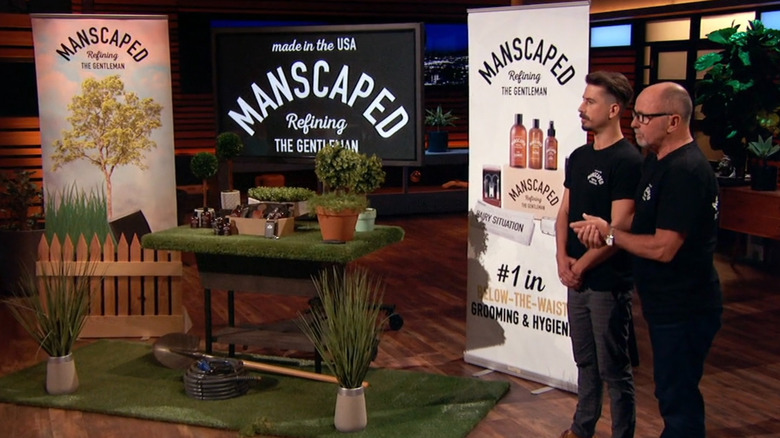
A bathroom purchase, explained in the garden
MANSCAPED was established in 2016, with Paul Tran and King identified as co-founders. Its early public language was unusually specific about where its products belonged. In a December 2016 launch announcement, King was introduced as president and chairman. The ambition was to give men a dedicated set of grooming tools for an area that rarely appeared in the conventional shaving advertisement.
A customer could understand a beard trimmer without a lengthy explanation. This purchase required a little more conversational assistance. MANSCAPED's garden names supplied it. They made the intended use legible while leaving room for a smile. A person could say the product name out loud without delivering a miniature anatomy lecture at the dinner table. The horticultural profession had acquired some unexpected brand ambassadors.
King's early positioning also reached beyond the individual buyer. He talked about relationships and the difference between the grooming options available to men and women. That wider frame mattered commercially: a product used by one person could be purchased by someone else. The bathroom shelf, like the household shopping basket, need not be the work of a single customer.
Josh brought a family connection to the sales floor. During the television pitch, he described his father as his idol and credited him with helping turn the idea into a business. Their demonstration let viewers see that relationship at work. Each had a part to play, and the product gave them something to do together while the investors watched.
Before the cameras, a reason to reorder
Several months before the episode aired, King was addressing a quieter question. In March 2018, MANSCAPED launched an exclusive grooming subscription box on Cratejoy's marketplace. King, identified then as CEO, said customers had been asking for it. The move put a recurring purchase alongside the company's existing ecommerce business.
“We've been receiving hundreds of customer requests for a subscription service, so we are excited to finally launch.”
Steve King · March 2018
There is a pleasingly unglamorous quality to that statement. The customer request comes first. The platform comes next. A business selling a durable tool must think about what happens after the first box arrives: replacement parts, replenishment and the convenience of ordering again. King was discussing that machinery while the brand was still young enough to be introducing itself.
He also pointed to Cratejoy's platform and campaign capabilities as reasons for the choice. This was distribution work as well as product work. A merchant can have memorable packaging and still need a place where customers can discover the offer, understand the terms and complete the purchase. The pun may earn attention; the checkout has its own responsibilities.
Taking the joke to the card table
In May 2018, the company partnered with the World Poker Tour for its Tournament of Champions in Las Vegas. Players were to receive MANSCAPED's Perfect Package grooming kit. The event moved between the Aria and Luxor, placing a bathroom product in a setting organized around cards, competition and an audience accustomed to watching men take calculated risks.
King's announcement linked the partnership to the brand's idea of the refined gentleman, then made the inevitable joke about getting lucky. The language was consistent with the product names. Whether the setting was a website, a gift bag or a television studio, the company kept offering buyers a way into the subject through humor.
The gift bag also made the introduction physical. A player could open the package and examine what the brand was selling. For a business whose explanation could easily be swallowed by its own punchline, that was useful. The product had to remain present. An audience laughing at an advertisement still needed to remember what could be ordered afterward.
The numbers arrive after the laughter
On Shark Tank, the Kings asked for $500,000 in exchange for 7 percent of the business. Their pitch included a reported $1.5 million in 2017 sales. That gave the room something to discuss beyond the shrub. The request implied a company value of roughly $7.1 million before the proposed investment, making the exchange between entertainment and arithmetic fairly immediate.
The pair described a difficult opening stretch while they worked out how to communicate with customers. Humor became part of the answer. Contemporary accounts of the episode describe investors laughing at the demonstration, then pressing on the business model. King had brought a product that invited jokes into a format that eventually insists on a price.
$500,000 in both cases. The on-air agreement with Mark Cuban and Lori Greiner did not close.
Mark Cuban and Lori Greiner offered the requested $500,000 for a quarter of the company. The Kings accepted on television. The agreement did not ultimately close. That distinction belongs in any account of the appearance: an accepted offer on a program is a stage in a transaction, with more work still to happen after the cameras stop.
King's own description of the experience kept the brand's comic register intact. Before the broadcast, he warned that the water was frothy and the bites went deep. It was a suitably theatrical account from someone who had just volunteered to negotiate in front of a national audience. Even the investor meeting came with a theme.
A CFO enters the picture
Days after the episode aired, MANSCAPED announced Katy Hopwood's appointment as chief financial officer. King described an extensive search and said the choice reflected her character, leadership experience and record of results. He also praised the way she connected with people. Hiring, in his account, involved both professional qualifications and the effect a person had on a room.
Hopwood brought experience in startup and larger-company finance, operations and capital raising. Her appointment placed a different sort of expertise alongside the public-facing brand. Accounting, financial planning and the demands of a growing organization were entering the picture just as television was giving the product a broader introduction.
This is an illuminating detail in King's story because it brings the CEO into view. A founder can enjoy the demonstration and still spend time comparing finance candidates. The same company needs someone to make the offer attractive and someone to understand what delivering it will cost. A successful gag does little to reconcile an account.
From a potted plant to a rear bumper
By February 2019, MANSCAPED was announcing its first NASCAR appearance. It became an associate sponsor of StarCom Racing's number 00 Camaro for the Daytona 500, driven by Landon Cassill. The company's logo was assigned to the rear bumper television panel. The garden-themed pitch had found a considerably faster vehicle.
King welcomed the partnership publicly. Like the poker arrangement, it put the brand beside a sporting audience through a setting with its own culture and spectators. A grooming company could seek customers outside the bathroom aisle. Its name would do some of the explanatory work whenever a viewer encountered it.
That same early-2019 period brought a more conventional form of recognition. The Lawn Mower 2.0 received a Handsome Award from Grooming Lounge. King, described in that announcement as an operations partner, welcomed the recognition. In March, he also spoke for the company when it joined the Personal Care Products Council. Alongside the humor, MANSCAPED was making connections within its own industry.
What King wanted the customer to feel
King offered a particularly plain account of the brand's purpose in a 2019 interview: “It's about self-respect.” He also described women writing to the company about purchases for their partners. The comments brought the business back from its advertisements to the people opening the packages, using the tools and deciding whether the experience deserved another order.
For all the suggestive names, that is a modest ambition. A grooming purchase can be part of getting ready, choosing how to look and feeling comfortable with the result. King's public language allowed both the joke that introduced the product and the ordinary satisfaction it was meant to provide. The customer was permitted to take the routine seriously.
Paul Tran leads MANSCAPED as founder and CEO today. King's place in its early history includes the public pitch with Josh and the less photogenic decisions around subscriptions, partnerships and hiring. Put those moments beside each other and the portrait becomes more interesting: a founder willing to perform, with an operator's work waiting after the performance.
The plant remains an apt closing image. It made the product understandable, gave father and son a shared task and let the investors laugh before asking their questions. For a few minutes, a pot of shrubbery carried a sales pitch. King still had to negotiate the terms.