The problem started, as a lot of good product ideas do, at the worst possible hour. Dr. Wei-Shin Lai was a family physician taking after-hours calls, and the calls kept coming at 3 a.m. Answering was the easy part. Falling back asleep was not. She wanted to listen to something calming, but the options were bad in predictable ways: over-ear headphones dug into her skull on the pillow, and earbuds worked loose and dropped out. In 2007 there was simply no such thing as headphones built for lying down.
So she made some. With her husband, Jason Wolfe, a video-game developer, she took thin, flat speakers and slid them inside a soft fabric headband. He soldered; she sewed. The first run - about 500 units - was assembled by the two of them at their kitchen table in State College, Pennsylvania. They called the product SleepPhones and the company AcousticSheep, a nod to the sheep you count when the music does not work.
That is the whole origin, and it is worth pausing on because it explains everything the company did next. AcousticSheep did not start with a market study or a category to disrupt. It started with a market of exactly one annoyed person - who happened to be a doctor - and it turned out a lot of people were lying awake with the same complaint.
01What they actually make
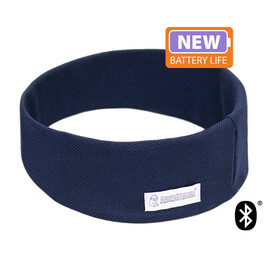
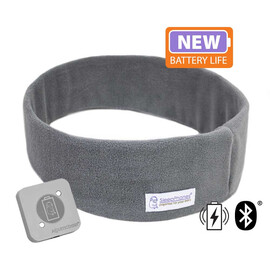
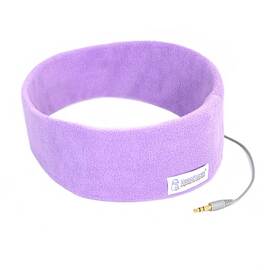
The core product is deceptively simple: a headband with removable, ultra-thin speakers inside. You can lie on your side without a hard lump against your ear, and when the band gets grimy, you pop out the electronics and wash the fabric. Over the years the line has grown from one cord-and-jack model into a small family, each solving the same problem with less friction.
02Who is lying awake wearing them
The customer list reads less like a demographic and more like a support group. Insomniacs and light sleepers were the obvious first buyers. Then came people with tinnitus, who use gentle audio to mask the ringing, and noise-sensitive sleepers who need something between silence and a snoring partner. Travelers use them against jet lag; shift workers wear them to sleep through daylight; meditators fall asleep to guided sessions. RunPhones pulled in a second crowd entirely - gym-goers and runners who wanted headphones that would not bounce out.
Those stories are the reason AcousticSheep frames itself the way it does - not as an audio-gadget company but as a sleep aid. The stated ambition is to sit on the nightstand next to melatonin, a white-noise machine, or the over-the-counter bottle. It is a bold place to put a headband, and it is also an honest read of why people buy the thing.
03From $30,000 to seven continents
The growth curve is the least flashy part of the story, which is precisely what makes it interesting. First-year sales were about $30,000. The founders ran the "kitchen-table business" out of their house for roughly six years while keeping their day jobs. A 2013 Indiegogo campaign - modest, with a $5,000 goal and $7,955 raised - marked the moment they went all in. In 2014 they moved operations to Erie, launched a Bluetooth model, crossed $3 million in sales, and Lai retired from medicine to run the company full time.
Notice what is missing from that timeline: a Series A. There is no venture round, no board of investors, no growth-at-all-costs sprint. The expansion ran on reinvested profit and, later, export financing to protect international orders. For a hardware company selling a physical object with real manufacturing costs, "boring and bootstrapped" turned out to be a feature.
04Why the copycats have not won
Search any marketplace and you will find dozens of headband headphones now - CozyPhones, MUSICOZY, Perytong, Bedphones - many cheaper than SleepPhones. In-ear options exist too, from Bose Sleepbuds to Amazfit's ZenBuds. So why does the original still hold a spot? Part of it is that AcousticSheep defined the category and kept iterating one product for more than fifteen years, from cord to Bluetooth to induction charging to washable fabric. Part of it is a wall of awards. And part of it is the least fakeable moat in consumer hardware: comfort you can only judge by wearing it.
05The awards shelf, and the town
For a soft headband, the trophy case is unusually full: eight Consumer Electronics Association innovation awards, a Red Dot Design Award, and the CTA's Small Business of the Year in 2015. In 2016 the U.S. Small Business Administration named Dr. Lai Pennsylvania's Small Business Person of the Year. The company has leaned into its home base too, keeping jobs and work in Erie and partnering with local and regional groups rather than decamping for a coast.
06What a reader can steal
The transferable lesson is not "sell headphones." It is the method. Build for your own specific, unglamorous problem first; the market of one is often a market of millions in disguise. Take a thing people already tolerate - headphones - and remove the single friction that ruins it - hard parts on a pillow - then own the category nobody bothered to name. Name it plainly (SleepPhones, RunPhones) so the product explains itself. And let a decade of word-of-mouth do the marketing that a war chest usually pays for.
Where it would not work: this is a slow build. There is no overnight curve here, no winner-take-all network effect, and a low-cost competitor can always undercut you on price. If you need a fast exit or a defensible software moat, a washable headband is the wrong business. But if you have a real, boring problem and the patience to iterate one product for fifteen years, AcousticSheep is a working blueprint.