The sharks became kangaroos. When FEA Angels introduced its campus version of the startup pitch show in 2018, the organizers called it Canguru Tank, borrowing the animal from the athletic association of the University of São Paulo’s economics and business school. Three startups presented. Investors asked questions. A familiar television format acquired a distinctly local accent.
There was a mentoring platform, a business selling corporate fitness programs and a delivery startup. The range was revealing: this was a community gathering around entrepreneurs, rather than an industry gathering around one technology. FEA Angels was turning a shared educational background into an occasion to talk business, and potentially finance it.
Eight years later, that basic proposition remains legible. The nonprofit association connects entrepreneurs with individual angel investors, using committees, events and mentorship to organize the encounter. Its official site reports more than 100 active members, more than 50 backed startups and over R$5 million invested. Those figures describe activity. The more interesting question is how the network gets people from a friendly introduction to a considered decision.
A six-year idea meets a LinkedIn post
Milton Daré had the idea when he graduated in business administration in 2012. He wanted former students to help one another promote entrepreneurship. In the university’s account, the move from intention to organization came in 2018, after he posted on LinkedIn and talked with interested people.
That sequence is pleasantly undramatic. The initial organizing tool was a public invitation. The community came from an institution whose graduates already had something in common. Daré’s professional background included Gympass and financial services, giving the project a connection to operating businesses as well as the classroom.
The lesson for another alumni group is an organizational one: make participation concrete. An invitation to hear founders and question their assumptions gives a professional community a task. The Canguru Tank launch supplied exactly that. Shared identity could bring people through the door; a recurring reason to meet could keep them engaged.

Today, the official roster places Hugo Vivas in the presidency and Daré at the head of the board. Executive responsibilities include startups, community, finance and new business. That division offers a useful glimpse of the work: finding companies, maintaining relationships and running the association are distinct jobs, even when they serve the same room of investors.
The pitch gets you a hearing
For founders, the entry point is an application. FEA Angels accepts submissions continuously and says it evaluates them within three weeks, giving priority to teams with FEA-USP connections. Selected companies reach the network’s Pitch Nights. A school connection helps with access; the published process still requires a business to explain itself.
The requested material is refreshingly specific. Who has the problem? How does the product address it? How does the company charge? Who is on the team? Applicants are also asked about competitors, market opportunity, future plans and the proposed round, including valuation, ownership and use of funds.
The application guide itself is worth copying. It makes an entrepreneur connect the product to the economics and the requested capital. A polished demonstration answers only part of that brief. A founder who can explain what the money will accomplish gives the discussion somewhere practical to go.
Selection is one decision; investment is another. The association’s published membership process says investors assess the risks and opportunities themselves, indicate interest and receive instructions from the startup for the next steps. The three-week screening window therefore describes review, not the arrival of money in a company’s account.
Membership buys a place to participate
FEA Angels serves two constituencies. Entrepreneurs want capital and useful people. Investors want companies worth investigating and other people with whom to investigate them. The association organizes the meeting between those needs through paid membership, selected opportunities, educational content and events.
Its membership offering includes committee participation. Members can help evaluate startups, mentor founders or contribute content. That makes expertise part of the service. An experienced executive has something to contribute before writing a check, and a newer investor has a structured setting in which to learn how other members ask questions.
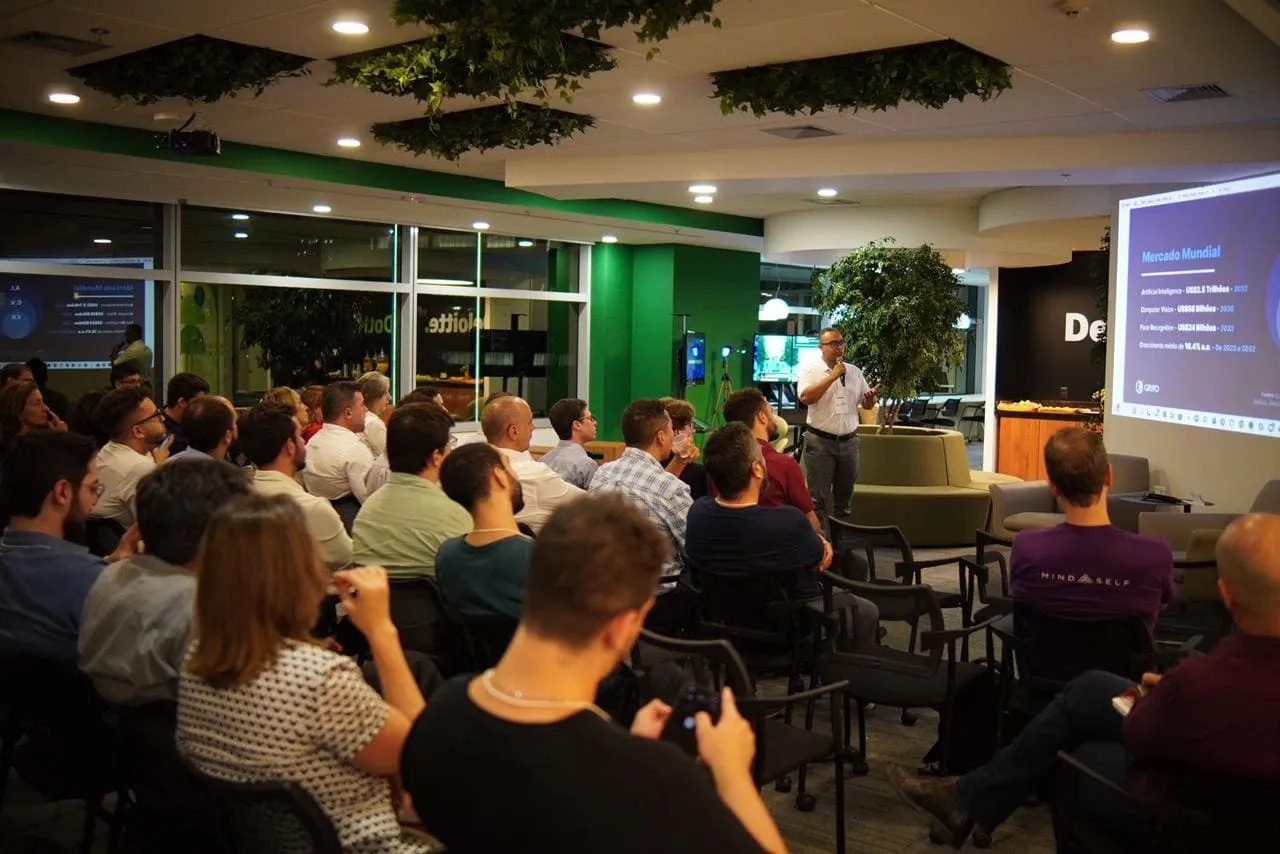
The social calendar supplies repetition. The published event descriptions distinguish Pitch Nights from Papo de Anjo discussions and the larger FEA Angels Day gatherings. A conversation about a particular company and a conversation about investing are different experiences; the network makes room for both.
There is also a cost to keeping an association running. A university report published in 2019 described a requirement for funded startups to donate 5% of the capital raised through FEA Angels back to the organization. At that historical rate, R$100,000 raised would imply R$5,000 for the association. That calculation illustrates the old mechanism; it is not a current price quotation.
The model deserves to be read at two levels: membership supports access and participation, while investors commit capital to particular businesses. An entrepreneur assessing the offer should keep those arrangements separate. A useful introduction has value, but it does not settle the economics of the eventual investment.
The milk business needed several kinds of money
Future Cow makes the network’s place in financing unusually tangible. The Brazilian startup develops dairy ingredients through precision fermentation. In June 2025, Startups reported that its Captable crowdfunding campaign, involving FEA Angels and Anjos do Brasil, attracted 167 investors and raised approximately R$1.26 million against a R$1.5 million target.
Approximately 84% of the target. This is the whole crowdfunding campaign, not FEA Angels’ individual contribution.
The campaign fell short. The broader financing picture included support from FAPESP and Embrapii, however, allowing the company to pursue further development. The technical work concerned improving production yield and reducing unit cost before commercialization. Its plan was to license the process to industry.
The useful distinction is between attracting financial interest and making the production economics work. A room of investors can help finance an experiment. It cannot, by enthusiasm alone, increase the amount of protein produced per liter. Future Cow’s case illustrates why a scientific business may need several funding routes and a clear technical milestone.
FEA Angels also has an institutional route into that world. In 2024, FAPESP named it among partners helping businesses supported by PIPE, the foundation’s small-business research program, find investors. FAPESP explicitly distinguished introducing companies to angel networks from investing through those networks itself.
For a researcher, the arrangement offers access to people who ask commercial questions. For an investor, it offers another route to research-backed companies. The inference is straightforward: institutional introductions can help the two groups find each other. They do not turn scientific promise into a guaranteed commercial result.
What enthusiasm gets wrong
Daré’s own public writing supplies a useful counterweight to the optimism of a pitch night. In a LinkedIn post drawing on his master’s studies and experience with FEA Angels, he described a frustration among investors: putting too much into companies that failed and too little into those that performed well.
His response was to set allocation rules and check sizes before excitement takes over. He also urged investors to be candid about their intended involvement. The person who promises introductions and then disappears creates a different problem from the person who clearly offers only capital.
“Be honest with founders.”
Milton Daré, on setting expectations for angel investment
These observations explain a practical limit of the association’s offer. Mentorship depends on available people doing useful work. A founder seeking help with a specific problem needs an investor whose experience and attention fit it. Membership in the same network is the starting point for that conversation, not its conclusion.
For readers organizing something similar, the copyable pieces are modest: state the selection criteria, give meetings different purposes and make participation explicit. For founders, the equivalent is to arrive with a defined use of capital and a clear request for help. The process becomes less useful when both sides leave their expectations implicit.
The campus circle gets wider
FEA Angels occupies an identifiable corner of Brazil’s early-stage market: an alumni-rooted association that screens companies and brings them to individual investors. Poli Angels is a nearby alternative with its own USP origins. Anjos do Brasil provides another network through which founders can seek angel backing.
Those relationships can be collaborative. The official FEA Angels calendar lists the July 30, 2026 USP Angels Day: AI-First as a joint gathering with Poli Angels and Sanfran Angels. The choice brings three university-linked communities into one event, broadening the circle around the original alumni proposition.
The portfolio is broader than the theme of that evening. The current startup page includes education businesses, fintech, food technology, deep technology and biotechnology, with names such as Storm Education, Conducco, Gryfo and Cellva Ingredients. What connects them on this page is the investor network, rather than a single product category.
A founder can use FEA Angels to seek a hearing, a mentor and possible investment. An investor can use it to find companies and participate in their evaluation. The organization’s lasting idea is simple enough to survive the change from Canguru Tank to an AI-themed gathering: give capable people a reason to show up, then put a real business in front of them.
Enter the conversation
Visit FEA Angels · Submit a startup · Explore events