A founders agreement is an unlikely opening act for a startup dream. It asks who owns what, who decides what, and what happens when enthusiasm stops being unanimous. Punjab Angels Network put precisely that subject on its January 2024 calendar, inviting entrepreneurs to a question-and-answer session with chairman Sahil Makkar. Before the triumphant funding announcement comes a considerably less glamorous conversation about the people signing it.
That choice of topic captures the company's approach. Punjab Angels Network, or PAN, connects startups with investors while offering the preparation that makes those introductions useful. Its work includes financial advice, legal support, mentoring and opportunities to pitch. The audience extends beyond founders: investors, established businesses and educational institutions all have a place in the operation.
Its own formulation is blunt: “We Make Eligible Startups We Make Eligible Investors”. Read that as a statement of intent. The interesting proposition is that both sides of a deal need homework. A founder may need to understand ownership; an investor may need to understand the business, the terms and the patience required. PAN wants to be in the room for both conversations.
“We Make Eligible Startups
We Make Eligible Investors”Punjab Angels Network · its stated ambition
02 An accountant at the centre of the room
The company was incorporated on June 1, 2016, and operates from Mohali, part of the wider Chandigarh urban area. Its public identity straddles those neighbouring places: LinkedIn lists Chandigarh, while the company gives a Mohali office address. The region is the point. PAN explicitly wants to encourage entrepreneurship across North India, assembling people who might otherwise encounter one another only by accident.
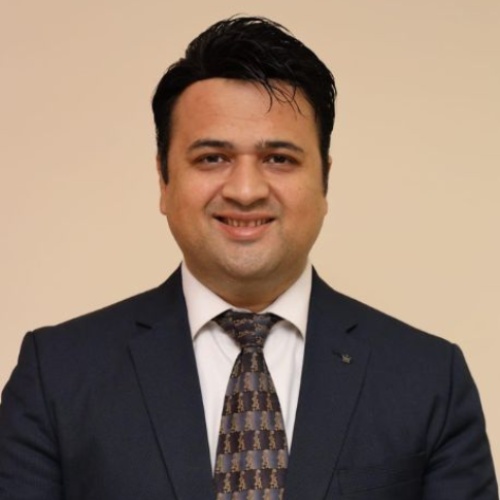
Makkar, its chairman and CEO, is a fellow chartered accountant whose company biography describes experience in equity and debt fundraising, mergers and acquisitions, and business expansion. It also lists study at the Indian School of Business and executive education at IIM Bangalore. Anuradha Chawla is identified as chief operating officer, with a background in performance coaching and corporate training.
The leadership mix helps explain the emphasis on preparation. This is a company selling access to people and professional judgment. Its advisory roster draws from finance, industry and public administration. The practical appeal is a founder's ability to take a question beyond a search result and put it to someone with relevant experience. Whether that becomes useful advice depends on the match.
03 Two or three startups get the floor
The Transform series makes the operating model tangible. PAN describes it as a generally quarterly program that selects two or three startups, after screening, for an in-person pitch. Expert talks, a panel discussion and investor networking sit around those presentations. Transform 12.0 was listed for January 15, 2025, at Bella Vista by ITC Hotels in Panchkula; Transform 14.0 followed on the calendar for October 31 at JW Marriott.
The small pitch roster is a useful detail. The advertised format favours a few selected presentations within a broader gathering. For a founder, that makes selection part of the work. The event is also a place to hear the questions other businesses attract, meet prospective collaborators and work out which conversations deserve a follow-up.
PAN used a similar structure for its Women Entrepreneurship Ecosystem Development program, advertised around International Women's Day in 2025. It described selecting two or three women-led startups to pitch, alongside talks and a panel. The acronym, W.E.E.D, is memorable enough to do its own marketing. The underlying mechanism is straightforward: choose a small group, give it investor attention, then create room for conversation.
04 A course with the cap table attached
PAN's startup offering covers a broad stretch of company building. Its foundation course addresses startup stages, founders and shareholders agreements, and preparation extending toward an eventual IPO. Financial planning support includes budgeting, expense management and tax compliance. Mentorship takes the form of accelerator programs, masterclasses and podcasts; fundraising assistance can involve grants, banks and investors.
Those are different needs, and a young business may encounter them in a different order. A university team working out ownership has another immediate problem from a trading company trying to finance expansion. The useful feature of the menu is its range. The corresponding task for a founder is to name the actual job: review an agreement, organise the numbers, assess a funding route or prepare a pitch.
There is a hands-on educational strand too. PAN listed a finance masterclass for May 9, 2025, at Panjab University in Chandigarh, aimed at founders and business leaders. Its description emphasised understanding the financial consequences of business decisions. That is an instructive choice for an investment network: getting an entrepreneur comfortable with the numbers can precede getting anyone comfortable with the investment.
05 The numbers belong to different pockets
The fundraising program for ecosystem enablers advertises investment amounts from ₹2 lakh to ₹10 lakh. It describes a minimum 1% equity stake for participating investors, annual exit opportunities and reports on investment performance. Those are advertised program features. An exit opportunity still needs a workable transaction; it should never be read as cash automatically arriving on a particular date.
The same program sets out a residency format: three intensive days each month, weekly online classes, mentoring and pitch feedback. Experts can receive remuneration, advisory shares and additional fees for extra services. That combination puts cash, ownership and professional work into the same conversation. The investment amount belongs in a different column from what someone pays for advice or participation.
PAN also offers corporate membership, with access to resources, events and funding opportunities. Its commercial shape is a network combined with advisory and educational services. For anyone engaging it, the sensible unit of purchase is a defined service with clear deliverables. A pitch opportunity, a consulting assignment and an equity investment each need their own expectations, terms and decision.
Advertised investment range.
Separate from membership or advisory costs.
06 Mohali has a Sydney connection
PAN's geographic ambition is clearest in its CAPTECH delegations. The company promoted its November 2024 Australia visit as the third consecutive edition, following participation in 2022 and 2023. Before the trip, an August 2024 online session brought together NobleOak chairman Stephen Harrison, CAPTECH CEO Sarah Morgan and SIPBN president Raman Bhalla to discuss the Australian business environment and presenting at the Indian Pavilion.
That preparatory session makes the international proposition more specific than a plane ticket and a group photograph. Founders were being offered help understanding a market and the people they would meet. PAN subsequently described Indian businesses, including GETPOS, presenting during the 2024 delegation. The useful output to look for is a relevant business conversation with a next step.
The company listed another Sydney delegation for November 2025. Its next announced itinerary, CAPTECH 2026, schedules Sydney activities for September 23-25 and Brisbane for September 28. As of September 10, those dates are still ahead. PAN calls this its fifth consecutive year leading an India business delegation to the event. The continuity gives its regional network a recurring international appointment.
07 A campus is part of the customer base
Schools and colleges are another audience. PAN offers institutions help connecting early-stage ventures with investors, alongside financial, research, market, human-resources and legal support. That extends the company upstream: it can meet a prospective entrepreneur while the business is still being discussed in a classroom or an incubation centre.
There is a public record of that educational presence. Chitkara University's Emerge Fest 2024 named Makkar among its speakers for the February 7-9 program. Chandigarh School of Business also recorded his participation in its September 2023 entrepreneurship conclave. These appearances place PAN's leadership in the same rooms as students exploring business models, fundraising and the obstacles involved in starting a company.
The institutional offering also clarifies what the organisation brings to the market. A college supplies students, faculty and research activity; an investment network supplies a different set of contacts and questions. Those functions can complement one another. A useful outcome might be a better-defined business proposition, even before an external investor becomes involved.
08 One network in a crowded neighbourhood
Punjab Angels Network operates alongside other organisations serving North Indian founders. Chandigarh Angels Network is a separate angel network, founded in 2015, with its own investment activity. The similar names invite confusion. Innovation Mission Punjab lists both organisations in its investor network, placing PAN within a wider regional field rather than on an island.
PAN's own partner material names Sydney Investors, Indian Healthcare Angels and StaticFlow, among others. Bharat Angels Networks also presents Punjab Angels Network as a regional chapter under its umbrella. Together, those relationships suggest an organisation trying to connect local entrepreneurial activity with specialist and wider investor communities.
Its particular combination is the selling point: local gatherings, business preparation, institutional relationships and repeated Australia delegations. None of those activities alone settles which network a founder should choose. The useful comparison is concrete: who understands this sector, who can help with this stage, and which introduction is likely to move the business forward? A familiar name on an event poster answers only part of that question.
09 Bring a problem worth discussing
A founder can start through PAN's application form, which asks for company details, a description and a pitch deck. Investors have a separate enrolment route that asks about investment preferences and professional background. The two entrances reflect the same central job: finding a useful fit between a business and the people who might support it.
The approach offers a few things worth copying. Teach a specific subject before asking people to make a consequential decision. Keep a pitch session focused enough for individual businesses to receive attention. Prepare participants for an overseas market before they arrive. These are practical lessons suggested by PAN's published programs, rather than a formula for reproducing anyone's investment returns.
The fit matters as much as the invitation. A business seeking immediate, certain financing may find an advisory-and-introduction process poorly suited to its deadline. An investor requiring a quick exit has a different problem from one willing to spend time evaluating young companies. For both, the productive starting point is a precise question. Arrive with the agreement, the numbers or the business problem. Give the room something it can actually work on.
Keep the conversation going
Explore the programs, apply or follow the network.