The scooter was not supposed to be there. Its maker had been turned down for a startup pitch competition in Sausalito. So the founder of Diggler, a rugged scooter with mountain-bike hardware, came through lunch anyway. Roger King later recalled that the gate-crasher left with a $10,000 investor check. The selection process had said no. Someone at lunch said yes.
- Founders apply, get screened, and can earn a pitch to individual angels.
- Pitching costs nothing. Investment decisions belong to members.
- The useful takeaway: prepare for the questions as carefully as the presentation.
A tent before a network
King told the story in a 2020 interview. The precursor event had a $12,000 chamber-of-commerce budget; he recalled returning roughly $36,000. Overflow demand meant renting a parking-lot tent. After two years, the chamber lost interest. King had found something he wanted to keep doing.
That sequence explains Bay Angels rather well. A local gathering became a repeatable way to connect people who needed capital with people willing to risk it. Its early meetings filled the Spinnaker Restaurant. OpenTable was among the early presenters; the organization says it helped the reservation company raise seed funding.
One name, many checkbooks
Today, Bay Angels describes itself as an angel group whose members invest individually or syndicate together. It does not operate as a fund. That detail changes the founder’s task. Winning a place on the program creates an opportunity to meet potential backers; it does not produce a single institutional decision.
The organization reports more than 75 active members, over 3,000 decks reviewed and more than 500 companies pitched. Its audience spans startup builders, experienced investors and professionals learning the craft. The service for founders is access, feedback and introductions. For investors, it is screened opportunities and peers with whom to examine them.
Other regional groups occupy similar ground. Band of Angels also offers fee-free presentations and independent member investment decisions. Bay Angels’ appeal therefore rests on the particular people, relationships and opportunities assembled around its events. A founder choosing between networks should care about who understands the business and might actually follow up.
For a founder, that suggests a more specific goal than winning applause. Identify the person whose experience matches the company’s next obstacle. A useful conversation might concern distribution, a prospective hire or the assumptions behind a sales forecast. The introduction matters when it leads to work the company can actually use.
“We never charge founders to pitch.”Bay Angels · pitch application
Free does not mean unfiltered
The application lists several routes to eligibility. These include at least $100,000 in annual recurring revenue, at least $100,000 in outside investment, or a recommendation from a current member in good standing. Blockchain companies and FDA pre-approved digital biotech also appear among the accepted categories. Applicants need to check which route fits their company.
The form also asks whether the founder can present in person in the San Francisco Bay Area. That is a practical filter worth noticing before polishing slide twelve. A company seeking its very first validation, with no traction, backing or member connection, may need more preparation before this application becomes useful.
- 01Apply
- 02Review
- 03Office hours
- 04Pitch night
Once an application enters the process, the deal-flow team reviews it. Selected founders go to office hours before finalists reach the membership. There is a useful distinction here between being eligible, being selected and receiving money. Each is a separate hurdle, and none should be mistaken for the next.
The number with a denominator
Bay Angels says that, in 2025, approximately one in four companies presenting at its live pitch events received an investment. That is an interesting outcome for companies that reached the stage. It says nothing about the odds for every submitted deck. Nor does it establish check size, follow-on funding or investment returns.
The public preparation material offers something more immediately reusable: a 12-slide deck structure and a ten-category, 100-point rubric. Founders can examine their company across market, competition, traction, team and finances before an investor does. Weaknesses become easier to discuss when the questions are visible in advance.
Five minutes, then the questions
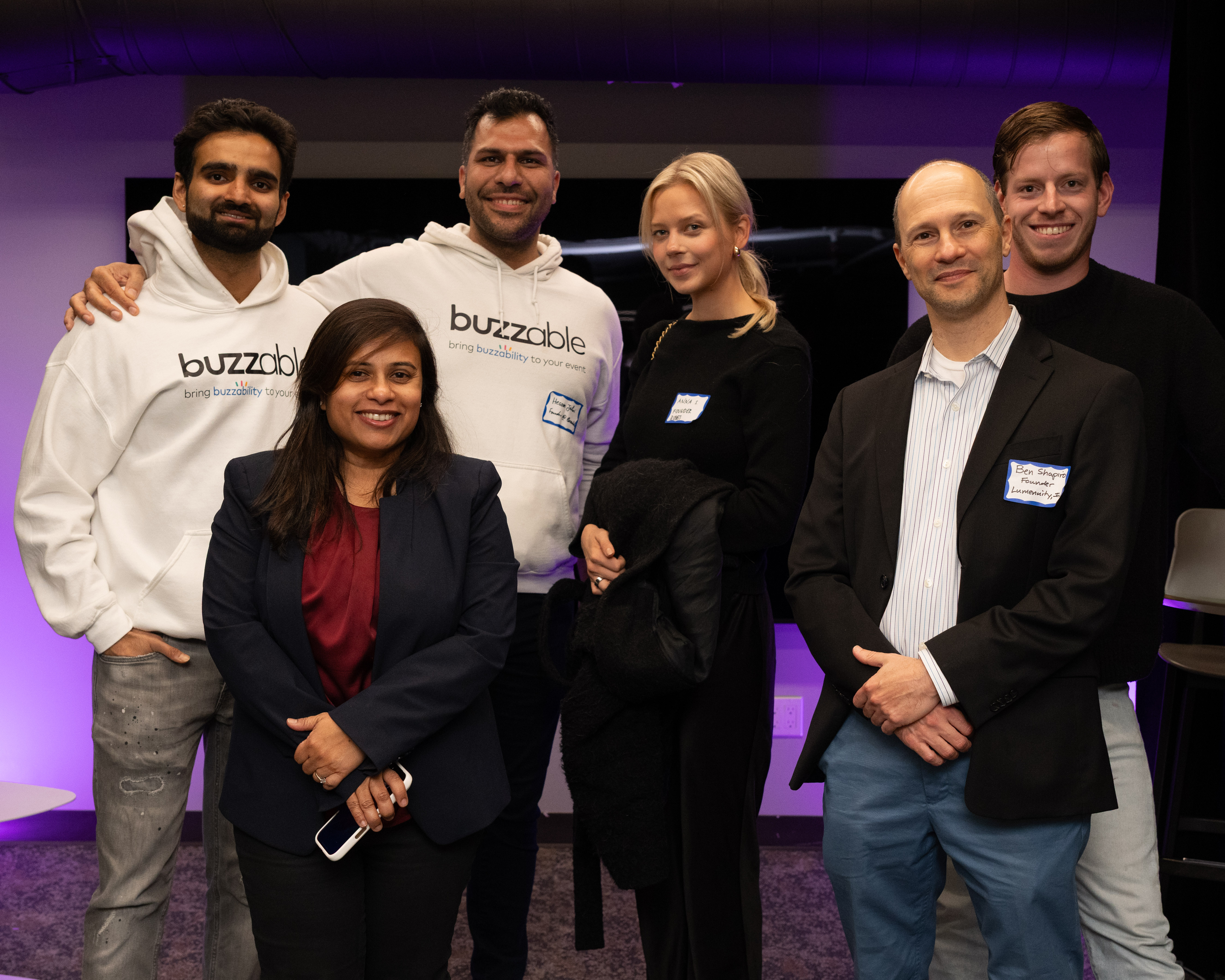
At the February 25, 2026 event at Werqwise in San Francisco, the advertised format gave four startups five minutes to pitch and five minutes for questions. Networking surrounded the presentations. The company’s recap named MayimFlow, AWEAR, Nebula and Skillfully, spanning water-leak detection, stress sensing, music investment and skills-based hiring.
The symmetry is instructive. A polished opening earns only half the allotted exchange. The other half belongs to whatever investors want explained. A founder can copy that rehearsal format: deliver the short presentation, then ask someone unfamiliar with the company to interrogate it for the same amount of time.
The exercise also exposes a common fundraising confusion: an audience understanding the product does not mean it understands the investment. A founder still has to connect the customer problem to a business that can grow. Questions about competition or customer demand test that connection more effectively than another carefully designed slide.
The business around the room
Bay Angels offers investor, contributing and junior membership tiers. Investor membership provides deal-flow access; the other tiers emphasize community and learning. Its live membership pages currently say pricing is shared after application review. Membership purchases access to the network, while startup investments remain separate decisions made with members’ capital.
Sponsorship adds another commercial layer. Presenting, event and community packages offer different combinations of visibility, speaking opportunities and newsletter mentions. Listed partners include Sutter Law and Chief People, King’s recruiting firm. Chargebee sponsored February’s event. Legal and hiring expertise are sensible neighbors for businesses trying to turn early funding into operations.
That arrangement has a practical limit. Introductions can shorten a search for help, but a network cannot supply customer demand on command. A founder needs a reason to raise money and a plan for using it; access becomes useful once those are clear.
The rooms also change. A May 2026 event at Nordic Innovation House in Palo Alto brought Bay Angels presenters together with featured Nordic startups. Its listing described a venue of roughly 50 people. A June event moved online. Those formats offer different ways to meet, without changing the underlying work of evaluating a company.
The scooter anecdote survives because the committee’s first decision was not the last word. Bay Angels now has a formal route to its audience, and founders should use it. But the larger lesson travels: build a setting where people can ask questions, inspect an unfamiliar idea and revise a judgment. Sometimes the valuable part happens after the scheduled pitch.