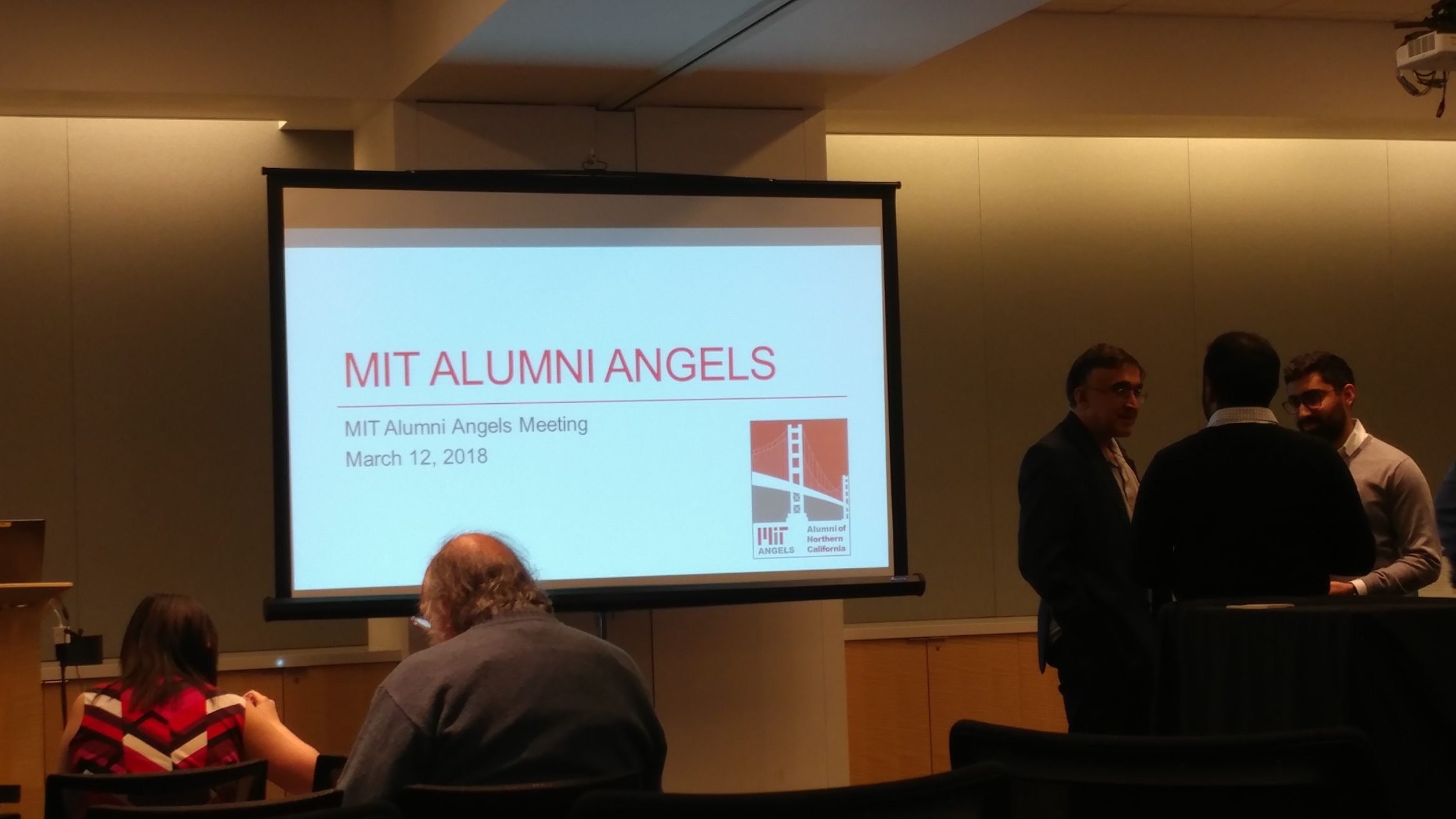
A photograph from March 2018 shows a projector screen, a few people talking, and chairs arranged for a meeting. The slide reads “MIT ALUMNI ANGELS.” It is an ordinary room for an unusual exercise: deciding whether somebody else’s complicated invention deserves your money. The setting offers a useful clue. Before the funding announcement comes the conversation. And the quality of that conversation depends on who understands what.
- For founders: science and engineering startups can apply without an MIT connection.
- For investors: membership requires MIT alumni status and accreditation.
- The attraction: technical diligence, business experience, introductions and mentoring.
MIT Alumni Angels of NorCal organizes that conversation around emerging technology. Its stated interest is companies with substantial research and intellectual property. The group connects founders with alumni who can bring money, operating experience and informed questions. For a scientist trying to turn an invention into something people buy, an informed question can be an encouraging development.
The mismatch that started it
Co-founder Swati Chaturvedi described her early search for angel investments in an interview on The Sure Shot Entrepreneur. Visiting groups around 2012 and 2013, she encountered the prevailing enthusiasm for social, local and mobile businesses. Her interests ran toward scientific and technological inventions. The available conversations were a poor match for the questions she wanted to ask.
Chaturvedi and Lisheng Wang are identified on the NorCal team page as co-founders. The group dates its operations to January 2014. They also co-founded Propel(x), a separate investment platform. That distinction matters: the alumni group and the platform share people and interests, but a platform’s financing, fees or investment minimums cannot simply be assigned to the group.
“You need a better diligence infrastructure.”
Swati Chaturvedi, explaining Propel(x)’s origins to Breakout Labs, 2014
In that interview, Chaturvedi described what the angel-group experience had taught them. Complex technologies needed more investigation. Investors wanted primary research and access to people who could answer questions. Propel(x)’s early written diligence reports led toward a more interactive approach. The revealing change was in how understanding was delivered: investors wanted to participate in the inquiry.
The invention has to leave the lab
The NorCal portfolio makes the focus tangible. Aromyx works on digitizing taste and smell through biochips. C2Sense applies sensing to problems such as food spoilage. Left Hand Robotics developed autonomous equipment for outdoor work. These are businesses in which evaluating the central technical claim is an essential part of understanding the opportunity.
Left Hand Robotics supplies a particularly practical example. In March 2021, Toro announced its acquisition of the company, describing autonomous technology for turf and snow management. The buyer wanted capabilities that could help contractors and grounds managers work more efficiently. A snow-clearing robot has to earn its place in somebody’s operating budget. Toro’s announcement shows a commercial destination for that engineering.
Hayden AI offers another. In April 2023, the portfolio company announced a Washington Metropolitan Area Transit Authority contract for bus lane and bus stop enforcement cameras. The initial plan called for 140 systems. Computer vision had a specific job: identifying vehicles obstructing public transport. The customer was a transit authority with an operational problem, giving the technology a concrete purpose.
An editorial lens for reading the portfolio.
The group’s expertise is correspondingly varied. Its team page lists Ronjon Nag as managing director and includes people with backgrounds in acquisitions, product development, semiconductors and health care. The useful combination is technical understanding alongside experience of how companies operate. A patent and a route to market invite different kinds of scrutiny.
That places the group between two familiar resources: a networking event that may produce introductions, and a specialist investor who can examine a technology closely. Its published offer brings those activities together with mentoring. Founders can seek an audience for a pitch and people able to discuss the difficult parts afterward. Investors get exposure to inventions within a community organized around a shared educational connection.
Borrow the questions
For founders, the approach suggests a practical way to prepare. Identify the claim your business depends on. Explain what has been demonstrated, what remains uncertain and who outside your team can evaluate the evidence. Then connect the result to a customer’s problem. This is a reading of the group’s focus, rather than an official application checklist.
Consider the distinction between a technically impressive device and a useful purchase. An expert may understand why the device works while still questioning installation, reliability or the buyer’s willingness to pay. Preparing for both conversations makes a pitch more informative. It also gives a potential mentor something specific to help with.
The money deserves equally careful reading. Propel(x) named the NorCal angels among investors in a financing announced in July 2020, totaling just over $5.5 million including converting notes. That figure describes the entire round. It tells us the group participated; it does not tell us its check size. The same discipline belongs in any reading of portfolio fundraising.
There is something worth copying here even if you never apply. Build the conversation around a question someone can actually answer. A materials expert might assess a performance claim; an experienced operator might challenge a manufacturing assumption. Those contributions become useful when the founder has separated the uncertainties. Asking a room to admire an invention gives it less to do than asking it to examine one.
Two doors, different rules
NorCal’s eligibility rules create an interesting asymmetry. Accredited MIT alumni can register as investors. Startup founders can apply without MIT personnel on their management team. Compare that with the separately run Boston chapter, which says presenting companies typically have an MIT connection. For an unaffiliated science founder, the distinction can determine where an application belongs.
The arrangement has limits. A business without a substantial scientific or engineering foundation has less reason to seek this particular audience. A founder seeking certainty should also distinguish an invitation to present from a commitment to invest. Technical curiosity opens a discussion; it leaves the commercial questions very much alive.
As of October 27, the group lists November 1, 2026 as the application deadline for its December pitch event. The next useful step is straightforward: read the entrepreneurs page, assess the technical fit and apply. The transferable idea is just as concrete. Find people equipped to examine your hardest claim. Give them enough evidence to ask a better second question.