Consider the strange predicament of a scientist with something that works. The experiment is convincing. The prototype has survived its demonstration. Now comes a different examination: finding an organization willing to use it. The person who understands the invention may be several introductions away from the person who controls the budget. SeaX Ventures has built its investment proposition around that distance.
- Global deep-tech investments, with Southeast Asia as a route to expansion.
- Corporate investors can also become commercial connections.
- The portfolio runs from cancer research to carbon capture and hospital AI.
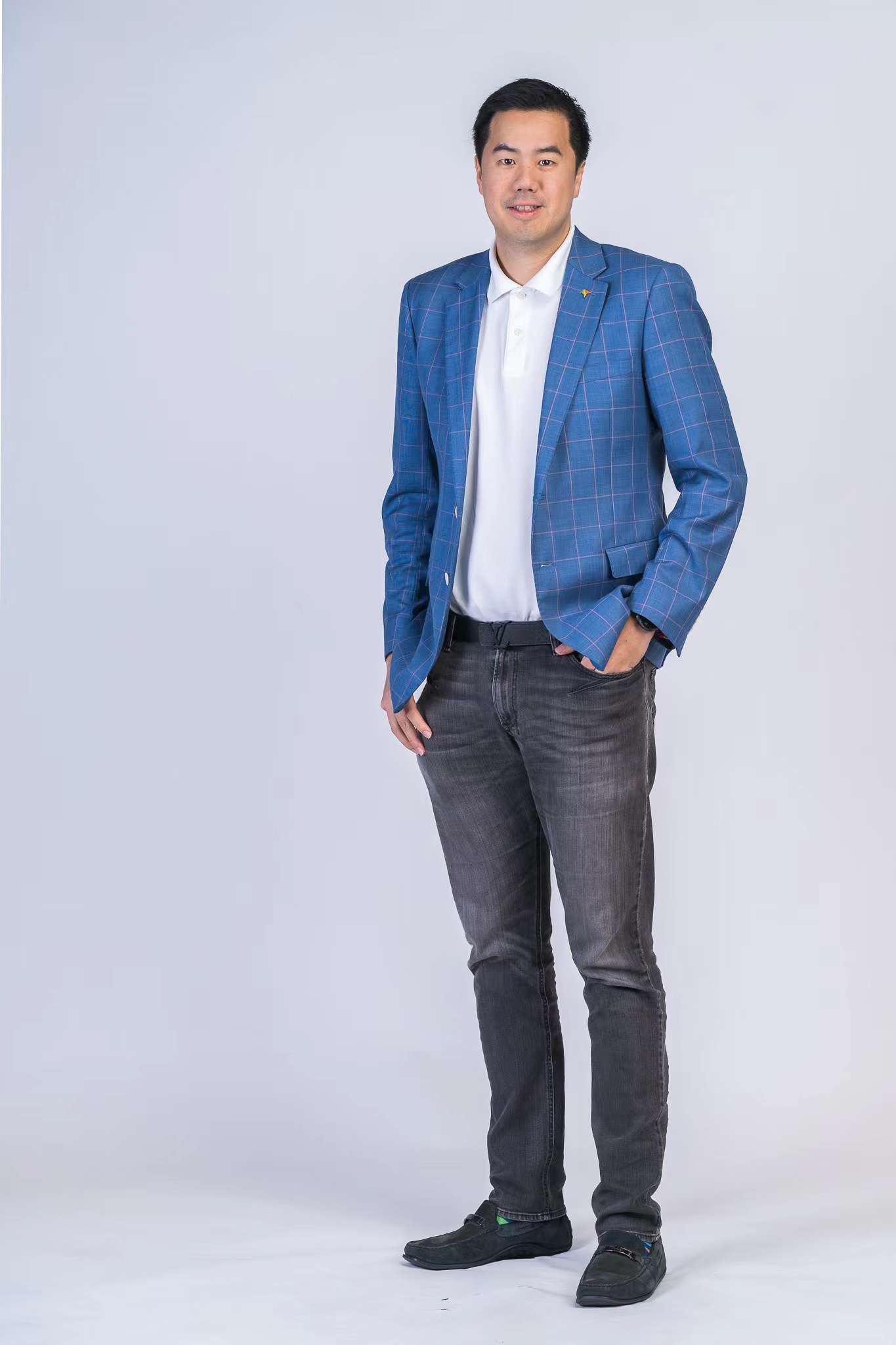
Its founder, Supachai “Kid” Parchariyanon, trained as a doctor. His biography also includes medical bioinformatics, entrepreneurship and Stanford’s Executive Program. Medicine is a useful background for this particular puzzle. A promising intervention and a working healthcare business require different kinds of proof. Between them sit institutions, professional habits and people whose cooperation cannot be assumed.
The customer was already in the room
Before SeaX, there was RISE, the corporate innovation organization Parchariyanon founded in 2016. SeaX followed in 2018. In his account of its formation, Southeast Asia had a flourishing e-commerce scene but weaker connections to frontier science. Time at Stanford sharpened his view of the gap. He began looking at overseas deep-tech companies as potential partners for businesses back home.
That sequence matters. The relationships preceded the investment pitch. SeaX could approach a founder with a regional network already attached to its affiliate. It could approach a corporation with access to technologies being developed elsewhere. The same connection offered something different to each participant.
The arrangement becomes more interesting when the corporation is also a limited partner, an investor in the fund. Fund II’s disclosed backers included PTT OR, Central Pattana, Singha Ventures and Ramkhamhaeng Hospital. Energy, property, consumer businesses and healthcare enter the same conversation. For a startup, each represents a different possible setting in which an invention might become useful.
“I actually never thought I’d run a VC fund!”Kid Parchariyanon, founder
On his SeaX biography, Parchariyanon describes venture investing as a way to help regional businesses grow. Read that way, the corporate roster is part of the investment machinery. The firm is trying to connect a technology looking for an application with an established business looking for an improvement.
Keep the dates on the dollars
There is real money behind the proposition. SeaX announced Fund II at $60 million in April 2022, above an original $50 million target. That announcement set out investments of $500,000 to $5 million across pre-seed, seed and Series A companies. These were amounts earmarked for investment, rather than a price founders pay to join a program.
The website now lists the second fund at $70 million. The two figures belong to different moments and should keep their dates. Neither tells a founder the terms of a particular deal. The essential exchange remains capital for an investment interest, accompanied by support. A founder still has to judge ownership, control and the usefulness of the proposed relationships.
Three very different routes out of the lab
Look at RyboDyn. In January 2025, SeaX and Genedant Capital co-led its $4 million pre-seed round. The company develops methods for finding previously overlooked proteins and identifying potential cancer-treatment targets. Its financing supported target discovery and drug development. A pharmaceutical connection could matter here, but it cannot substitute for the research needed to turn a target into a therapy.
Brineworks presents another version of the problem. The company announced a €5 million seed round led by SeaX in September 2025. Its electrolyzer is designed to capture carbon dioxide while also producing hydrogen, using renewable electricity. The money was intended to accelerate commercialization. Potential customers have to care about equipment, integration and economics as well as the chemistry.
Then there is a2z Radiology AI, which announced a $4.5 million seed round with Khosla Ventures and SeaX in December 2025. Its FDA-cleared triage system flags seven urgent conditions on abdomen-pelvis CT scans. Funding was directed toward deployment and further development. Here, access to hospitals becomes useful only alongside clinical credibility and a place in the radiologist’s workflow.
- 01Validate the technology
- 02Reach a relevant institution
- 03Prove it fits the work
Bot MD supplies a more operational illustration. SeaX participated in its $5 million Series A in 2021. The company began with an AI assistant for doctors and built Bot MD Care during the pandemic. Its own account now describes automated patient-engagement workflows serving more than 100,000 patients across Southeast Asia. That is portfolio-company usage, rather than a count of SeaX customers.
These businesses share little laboratory equipment. They do share a need to persuade organizations with demanding adoption processes. That helps explain why a corporate network belongs beside an investment portfolio. In this reading of SeaX’s model, the recurring question is which institution can help a discovery cross the distance to practical use.
The introduction has homework
SeaX’s team reflects the demands of that journey. Partner Jo Wongcharoenyai brings finance and risk credentials. Venture partner Desney Tan’s background includes Microsoft Health Futures, computer science and healthcare technology. Their experience addresses different questions: whether a business makes sense, whether a technology can become a product, and what institutions need before adopting it.
There is also a training pipeline. SeaX’s published fellowship for October 2026 through May 2027 is remote and open to students, with sector or geographic research, deal sourcing and monthly meetings. It gives the firm another way to investigate emerging companies. For a participant, the attraction is seeing how an interesting technology becomes an investment argument, including the commercial questions that an elegant demonstration can leave unanswered.
For founders comparing investors, SeaX offers a specific proposition: global technology exposure coupled with Southeast Asian corporate access. The useful comparison is with another investor’s ability to reach relevant decision-makers and help a company prepare for them. A large contact list becomes valuable when the right organization has a reason to act.
That suggests a practical habit worth borrowing. Map the buyer while testing the invention. Identify who uses it, who pays, who approves and what evidence each needs. Ask prospective investors which of those people they can actually reach. Corporate access has limits when a product is premature, approvals remain unresolved or no budget exists. The door can open; the company still has to earn its place inside.