Zero is an awkward number to put in front of an investor. It suggests the experiment has barely begun. At TRANSFORM VC, however, zero can be an acceptable first entry in a founder’s impact report. The condition is that the founder chooses something worth counting and keeps counting it. Before the grand promise comes the baseline.
- Back overlooked founders building technology that is difficult to copy.
- Connect the business to a measurable social or climate outcome.
- Build the community that helps those founders get a hearing.
That requirement is an unusually useful way into this San Francisco investment and advisory firm. Its mission is enormous: nurture 1,000 technology founders, each aspiring to impact a billion people and make a billion. Read those numbers as ambition. The operating instruction is smaller, and more interesting. In a 2024 NVCA interview, founder Raed Masri described asking founders to report one impact metric from day one.
“Even if said metric is zero for a while, our founders track with intent to improve over time.”Raed Masri · NVCA interview, February 2024
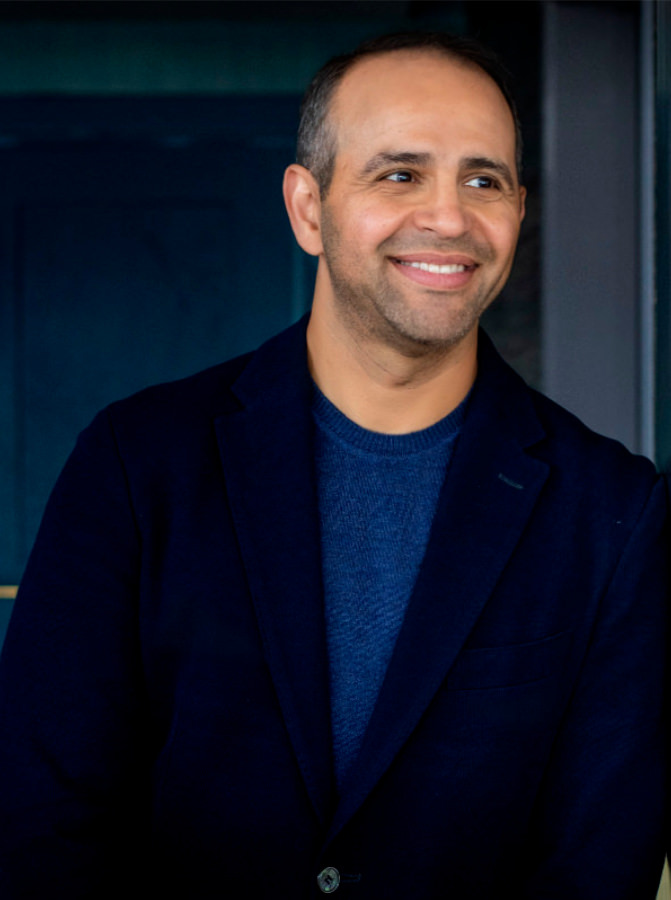
The person behind the spreadsheet
Masri’s own biography offers a refreshing detail for a venture capitalist: three failures. It also records two entrepreneurial outcomes of 20 times, a figure he reports himself. His earlier businesses included Jaguar Wireless and SkySurf, the Canadian inflight-connectivity company that exited to Gogo. An engineering degree and an MBA sit alongside the experience of trying to make difficult businesses work.
This background helps explain the firm’s interest in founders whose markets look complicated or premature. TRANSFORM’s published thesis gives particular attention to overlooked entrepreneurs. Its team includes partners Rama Chakaki, Muna AbuSulayman and Walter Hughes, bringing impact, media and operating perspectives alongside Masri’s technical history. Education and collaboration appear among its stated values.
Good intentions still need a moat
TRANSFORM’s founder criteria are demanding. The firm looks for technology that is hard to reproduce, strong network effects and a 10x advantage over alternatives. The fields include artificial intelligence, materials science, robotics, complex engineering and biotechnology. This places it where early-stage deep-tech investing overlaps with impact capital. An attractive social purpose accompanies a competitive argument.
There are several ways a company can qualify on impact. Its founder may come from an overlooked group. Its hiring may create opportunities for underserved workers. Its product may serve a vulnerable community. These are distinct possibilities, with distinct evidence requirements. A diverse founding team tells you something about access to entrepreneurship; it does not automatically tell you what a product does for its customers.
Follow the money into the machinery
Consider aiXplain. In April 2023, TRANSFORM and Calibrate Ventures co-led its $8 million seed financing. That was the round’s total, rather than a disclosed individual cheque from TRANSFORM. At the time, aiXplain offered a no-code and low-code environment for developing, testing and deploying AI applications. The practical proposition was to reduce the difficulty of assembling useful AI systems.
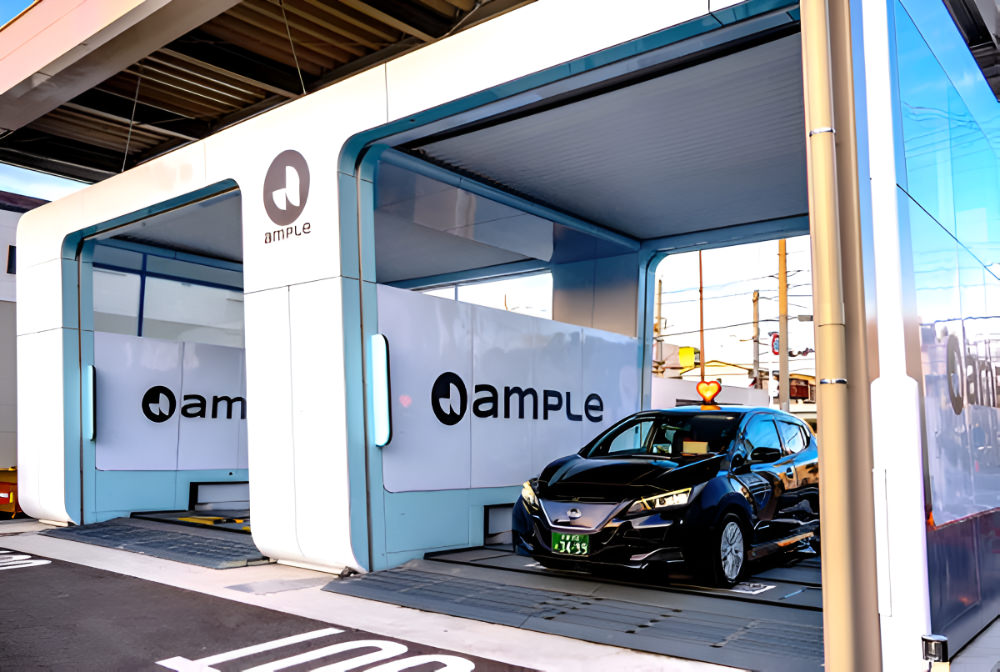
Ample offers another example. TRANSFORM’s portfolio lists an investment in 2021. Ample builds modular battery-swapping infrastructure for electric vehicles. When it introduced its next-generation station in 2023, it described five-minute swaps and years of development behind the apparent simplicity. These businesses look different on the surface. Both involve technical infrastructure intended to remove an obstacle for people using it.
The firm’s economic role is to invest capital and support portfolio companies on behalf of its fund investors. Founders receive investment consideration, guidance and connections; limited partners seek returns with an impact objective. A prospective founder can use the application linked from TRANSFORM’s Founders page. The stated process moves from review to a possible call, due diligence and mutual agreement.
The road leads through Greensboro
Finding founders is itself part of the strategy. Masri and Chakaki incubated Impact a Billion in 2022 as a roadshow and community initiative. The firm’s impact page reports activity across 13 US and Canadian cities. Its events bring founders, investors and community organizations into contact. The useful idea is geographical: leave the familiar room to change who gets considered.
A July 2024 account of Guilford Dialogues in Greensboro reveals a sharper problem. TRANSFORM described a disconnect between Silicon Valley’s startup pipeline and the pressing needs of marginalized communities. Its proposed response was to bring community knowledge into the creation and evaluation of companies. The account supports a correction to the sourcing process: ask people about their problems before deciding which technology they need.
A seat at the table has a cost
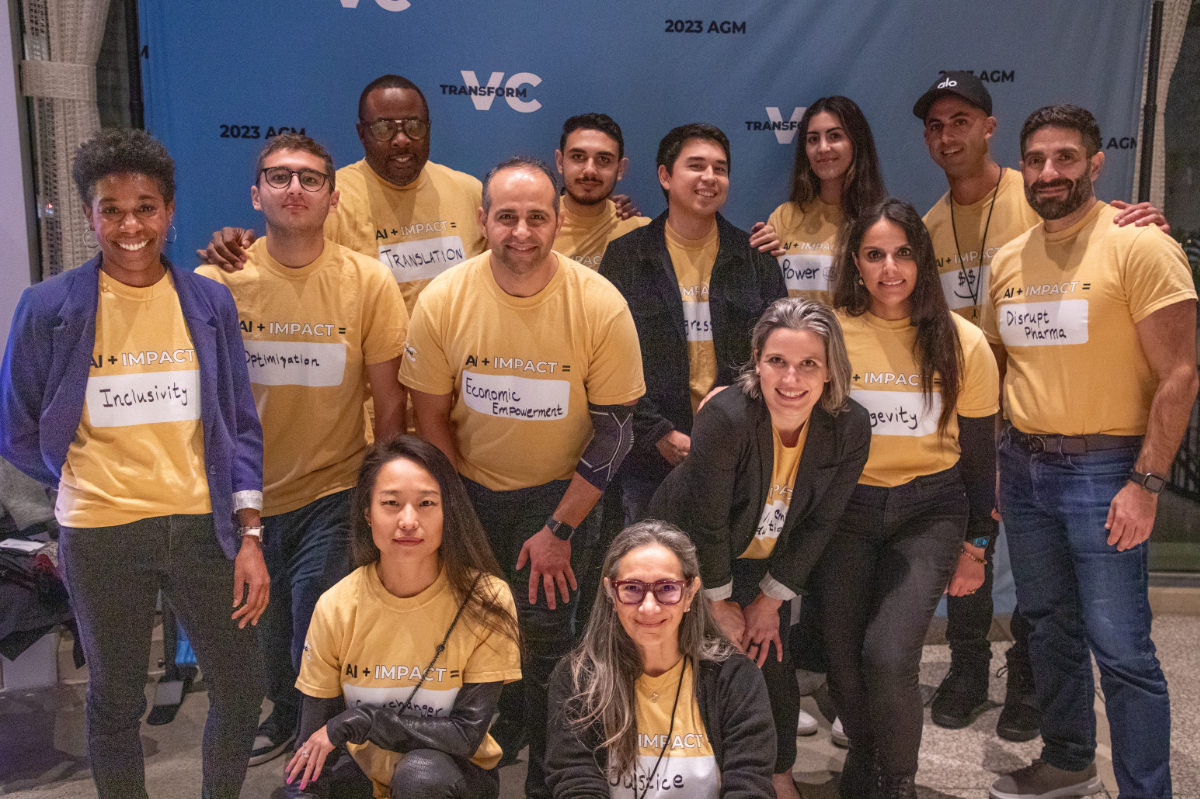
The fellowship extends that approach to people evaluating investments. TRANSFORM describes a three-month program, renewable for another three months, covering research, startup assessment and founder meetings. Its impact page reports 100 fellows across 10 cohorts. In February 2025, fellows described working across countries and time zones and gaining exposure to pipeline evaluation and fund operations.
The program is volunteer and unpaid. That matters when assessing an inclusion effort: someone must still have time and income available to participate. For an applicant who can make that arrangement, the work offers a route into venture practice. For someone who needs paid employment immediately, the same design creates a barrier. Access has more than one dimension.
Copy the question, then keep counting
Readers can borrow the measurement habit without raising a fund. Choose a beneficiary, identify one outcome connected to the business, record a baseline and revisit it. That is an editorial application of TRANSFORM’s rule. It works only if the measure captures a meaningful benefit. Counting activity while ignoring outcomes would produce a tidy report and a weak explanation.
TRANSFORM’s approach also asks something of the business itself: defensibility, commercial potential and a credible connection between growth and benefit. A readily copied product or a disconnected social promise would struggle with those criteria. The most portable lesson is a modest discipline inside an enormous ambition. Put the number on the page. Give yourself a reason to improve it.