A small delivery vehicle rolling along a sidewalk seems an unlikely starting point for a theory about the cost of living. It carries somebody’s dinner. It needs to get around pedestrians. Yet, to understand SNR, the San Francisco venture firm, this is a useful place to begin. Take an everyday service, examine the work required to provide it, and ask how much of that work technology could make cheaper.
- SNR backs early-stage founders working across software, robotics and biology.
- Its connecting idea is productivity: more useful output for less expense.
- Its public writing gives founders a practical test for adoption and competitive advantage.
A cheaper delivery, a bigger question
Coco Robotics, an SNR investment, makes the idea tangible. In June 2025, Coco announced $80 million in strategic financing and named SNR among its returning investors. The company said its vehicles had completed more than 500,000 deliveries in American cities and Helsinki. Uber and DoorDash were established platform partners. A technology thesis had found its way into the dinner rush.
Those numbers need careful handling. TechCrunch reported that the $80 million covered multiple financings between 2021 and 2025. It was money raised by Coco across investors. The meaningful detail for this profile is SNR’s continued participation in a company trying to change delivery economics. Investors can share a destination while contributing very different amounts of capital.
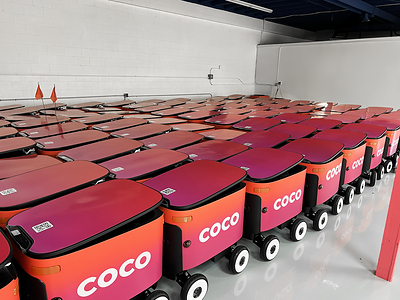
SNR’s portfolio language reaches far beyond sidewalks: autonomous robots, artificial wombs, asteroid mining and distributed electric utilities. Read as a list of industries, it looks unruly. Read as a search for ways to increase output and lower essential costs, it becomes coherent. The firm’s ambition extends to a world where living costs could approach zero. That is a statement of intent, rather than a measured portfolio result.
From security engineer to first believer
Founder Kevin Mahaffey came to investing through building. Lookout’s official biography records that he co-founded the security company in 2007 with John Hering and James Burgess, and studied electrical engineering at the University of Southern California. SNR dates his startup investing to 2013. His experience puts technical questions close to the investment decision: what works, what breaks, and what a team can actually build.


The other person featured on SNR’s team page, Amit Gupta, has held leadership roles at Qualcomm, INQ Mobile, Lookout and Benchling. Together, their biographies explain the firm’s appeal to technical founders seeking judgment alongside capital. SNR describes a working relationship that can become deeply involved or remain available as needed. It wants founders to call during difficult moments as readily as during breakthroughs.
Economically, SNR sits between startup builders and investors in private investment vehicles. It supplies venture capital and company-building support; founders supply the businesses whose future value makes the investment worthwhile. An alternative might be another seed investor, a sector specialist or an operator angel. SNR’s stated distinction is its combination of technical experience, concentrated early-stage investing and attention to capital efficiency.
The orchard and the accounting department
Bonsai Robotics shows why that combination matters in physical environments. Its January 2025 announcement described vision-based autonomy for agricultural equipment, including operation without satellite navigation or a cellular connection. It reported more than 40 deployed units and operational data covering over 500,000 acres. SNR participated in the $15 million Series A led by Bison Ventures. Here, the problem was specific: help growers operate equipment amid labor shortages and harsh conditions.
What job gets done, what does it consume, and why would a customer switch?
Condor Software approaches productivity from an accounting desk. Its March 2026 financing announcement named SNR Ventures in a $24 million Series A led by Insight Partners. Condor connects clinical, operational and financial data for life-sciences teams, including forecasting and month-end accounting. It reported managing over $19 billion in R&D spend. Its customers buy visibility into expensive research programs; SNR backs the company providing that visibility.
Then there is CivilGrid. In August 2026, it announced a $26 million Series A including SNR Ventures, led by Spark Capital. CivilGrid combines fragmented site and underground-infrastructure data for utilities and engineers. The family resemblance is practical: find an expensive coordination problem, make information usable, and help people avoid costly surprises.
A good invention can still gather dust
The harder question is getting people to change. In his January 2026 essay, Mahaffey retells a handheld laser-welding adoption story from SpaceX. Equipment sat unused despite technical promise. Broader uptake required production pressure and a shift in perceived career risk. The example belongs to his argument about adoption; it is not an SNR portfolio turnaround.
“Models are moving faster than customers can change.”Kevin Mahaffey · January 2026
His framework separates four considerations: performance, economics, friction and pressure. A founder can copy the discipline immediately. Test real-world reliability. Include integration, training and maintenance in the cost calculation. Identify who must approve deployment. Find the consequence that makes waiting expensive. A good model alone cannot answer all four.
What survives the next model?
Mahaffey’s December 2024 writing adds a second test. AI capabilities spread quickly, and established software companies can absorb useful features. A startup’s impressive advantage may shrink when competitors use the same enabling technology. His argument directs attention toward what the company controls and what remains valuable as the underlying models improve.
His earlier essay on startup risk supplies the financing logic: companies raise money in stages as they resolve uncertainty about future cash generation. For a founder, the useful interpretation is to connect capital to an answerable question. Demonstrate that a machine handles difficult conditions. Establish that a buyer can deploy the software. Show that the economics survive ordinary operating costs.
That makes SNR interesting beyond its portfolio. Its public thinking offers a way to inspect a technology business without getting distracted by the demonstration. The robot has to deliver. The software has to earn its place in someone’s working day. The customer needs a reason to move.