A venture fund can begin with a proposition simple enough to fit on a business card. Persuading someone to finance it takes rather more room. At an emerging-manager gathering Howard Kim helped host in 2024, the conversation turned to a distinction every ambitious investor eventually meets: an institution is deciding whether to trust a firm, with people and processes that will endure, as well as a particular fund. The check is only the visible part of that decision.
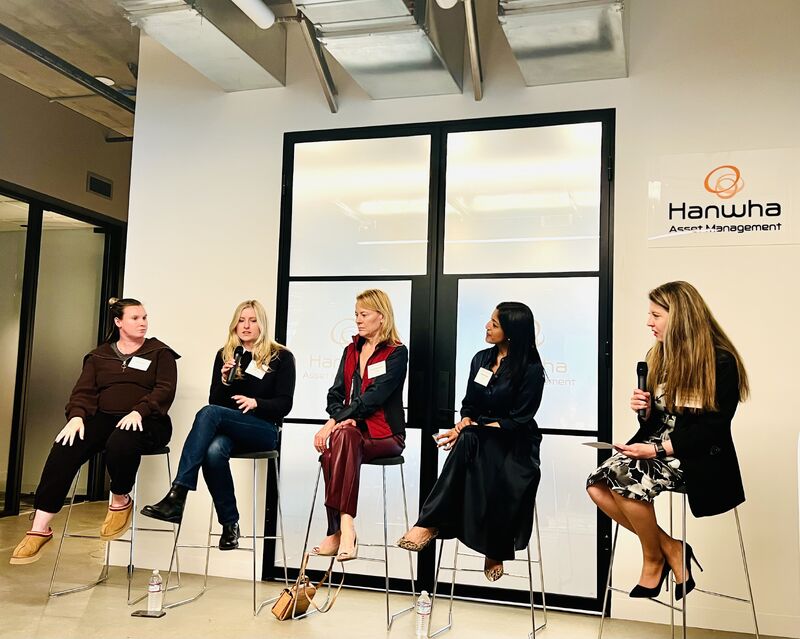
The panel brought together women from TPG, Top Tier Capital Partners, GIC and Pantheon. Elizabeth Soulé of Hanwha moderated. Investor Claire Chang credited Kim and Michael Notaro, alongside Hanwha Life, with hosting the inaugural Emerging Fund Manager’s Program. Her recollection of the discussion was practical: identify suitable investors, understand their decision process, keep in touch thoughtfully, and take the long view. There was advice here for people accustomed to giving advice themselves.
That is a useful place to begin with Kim. In San Francisco, he is co-chief executive officer of Hanwha Asset Management (USA) Ltd. His work includes technology investing, but it also includes the machinery around investing: teams, funds, partnerships and the relationships that make a new firm possible. The interesting question in his career is how those pieces come together. A good investment needs a company. A durable investment practice needs considerably more.
Seventeen years inside one orbit
Kim joined Hanwha in 2009. Most of his career has unfolded within the group, across venture capital, growth equity and global private equity and venture investing. Before becoming co-CEO, he headed Venture and Growth Investments at the U.S. asset-management business. He helped develop its venture presence, including the Emerging Manager Program. The progression connects investing in individual opportunities with building a platform through which other people can invest.
His academic foundation was finance: a bachelor’s degree in business administration from Sungkyunkwan University. His public professional profile records attendance from 2003 to 2009 and identifies him as a CFA charterholder. It also lists an advanced valuation certificate from NYU Stern, issued in January 2021, and mergers and acquisitions training from Stanford’s Graduate School of Business, issued that July. They are a fairly precise set of subjects for someone working with private companies.
Valuation asks what an asset is worth. An acquisition asks what might happen when ownership changes. Venture investing adds a troublesome complication to both: much of the company’s future still has to be built. The exercise involves judging prospects before all the evidence has arrived. Kim’s training sits beside that uncertainty, bringing the vocabulary of finance to businesses whose next chapter may depend on an engineering problem, a customer decision or another round of capital.
There is a pleasing tension in a career spent largely within one organization while working with emerging companies and managers. The surrounding institution supplies continuity; the investment opportunities supply change. Kim’s professional path has taken shape through those two conditions together. His move from venture and growth leadership to the co-CEO role gives that career a wider organizational scope, while keeping investment decisions close to the center of the job.
- 2009Joins Hanwha
- 2021Valuation and M&A study
- 2024Emerging-manager gathering
- 2026Co-CEO; Nexus fund filing
The investors need investors, too
The emerging-manager event offers a more human view of the work than a title alone. The people in the audience were trying to build investment businesses. Across from them were people representing institutions with their own mandates and selection processes. The panel included Pamela Pavkov of TPG, Katie Kelly of Top Tier Capital Partners, Chloe Breider of GIC and Susan Long McAndrews of Pantheon. Kim helped create the occasion for that exchange.
For a new manager, raising a fund means asking another investor to accept a chain of judgments. The manager will select companies, assess founders and decide when to commit money. Before any of that, a prospective backer must assess the manager. The conversation can therefore become wonderfully recursive: investors investing in investors who invest in founders. Somewhere in the middle, someone still has to answer a very ordinary question about how the business will run.
“Investing in a FIRM not a Fund.”
Claire Chang, recalling the emerging-manager panel
That phrase, from Chang’s account of the panel, places the emphasis on continuity. A fund has a particular portfolio and a particular life. A firm carries people, habits and responsibilities into the next one. In this reading, the fundraising conversation is partly about whether a working relationship can survive beyond a single transaction. It is an apt lens for Kim’s involvement in a program designed around emerging managers.
The practical detail matters. Questions about an institution’s process are questions about timing, attention and expectations. A manager may have a compelling thesis and still be talking to an unsuitable prospective backer. Getting those expectations into the open is part of making the relationship workable. Kim’s place in the event is concrete: he was among the hosts bringing the two sides together. The panelists supplied the advice; the program supplied a place to hear it.
A camp with a serious syllabus
Another 2024 gathering widened that circle. Hanwha Life’s inaugural Global Mentorship Program brought emerging managers, venture investors, speakers and students together. Participant Seyoung Lee described hearing Lightspeed cofounder Barry Eggers discuss building a global venture brand and the defensibility of investment strategies. Kiha Lee and David Lam addressed Asian representation and community in the U.S. venture ecosystem. Race Capital’s Edith Yeung and investor Zach Coelius discussed lessons from investing and fundraising.
Lee thanked a Hanwha team that included Kim, Soulé, Dongjun Im and others. That acknowledgment places him within a collective effort. It also gives the career story a different scale: alongside choosing investments, there is work in convening people who may be at very different stages of an investing career. A student, a first-fund manager and an established venture investor have different immediate concerns, but can still benefit from the same conversation.
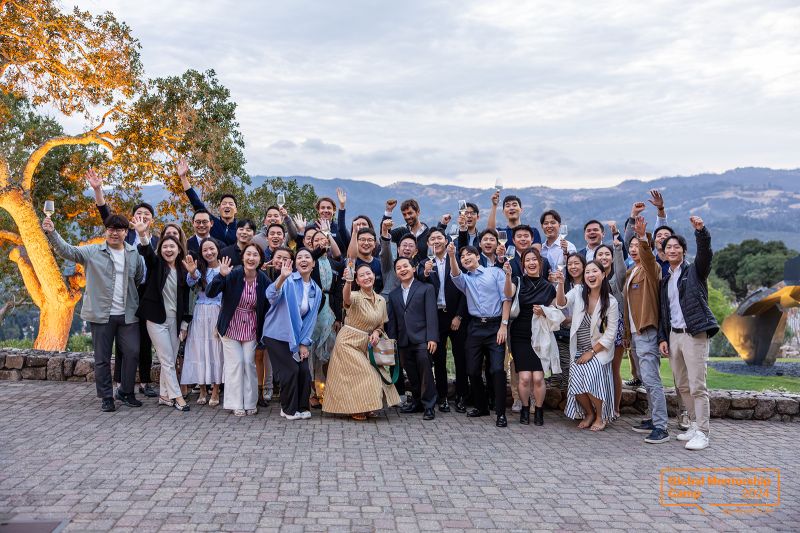
The camp’s advertised format mixed discussions and workshops with social activities in San Francisco and Napa Valley, including a Giants game at Oracle Park. Finance had acquired an itinerary. The program called for emerging managers and venture professionals who wanted to start funds, alongside students and senior industry figures. Its design made room for introductions outside a formal presentation, where a conversation could proceed without the next slide waiting impatiently behind it.
Hanwha’s 2025 Global Mentorship Camp was scheduled for July 8 through 11, again in San Francisco and Napa Valley. Its invitation included participants from both sides of fund investing, as well as emerging managers across asset classes. These gatherings are part of the broader financial-group setting in which Kim works. Their appeal is legible: professional knowledge becomes more useful when someone can ask a follow-up question and remember whom to call later.
From the room to the portfolio
Kim’s current investment remit emphasizes artificial intelligence, robotics and deep technology. As a member of the Investment Committee, he participates in sourcing, investment decisions and portfolio construction. His stated approach favors patience and partnership with founders, with relationships among co-investors and limited partners in the United States, Europe and Asia. The geographic range is broad; the job still returns to decisions about particular people and particular businesses.
Kim’s responsibilities span all three, as an Investment Committee member.
The institutional setting has been changing around that work. Hanwha Asset Management’s U.S. business relocated its headquarters to San Francisco and opened a New York branch in 2022. It launched its first alternative investment fund in the Americas in 2023. In December 2024, Hanwha’s financial companies established an AI Center in San Francisco to pursue research relationships, technology partnerships and investment opportunities. Those are group milestones, giving context to the U.S. platform Kim helps lead.
A more recent detail bears his signature. On July 7, 2026, Kim signed the initial offering notice for Hanwha-8090 Nexus Growth Fund LP. The document identifies him and Aram Ko as managers of the general partner and co-chief executive officers of the manager; Kyung Dong Park is also named as a general-partner manager. It records a venture capital fund formed in 2026, with the first sale yet to occur and zero dollars sold at that filing date.
The distinction between establishing a vehicle and raising money is small enough to vanish in a headline, and consequential enough to preserve. Here, the concrete development is a new fund structure and Kim’s management role in it. The date marks another piece of platform building. After the panels, the introductions and the investment discussions comes the formal work of defining who is responsible for what. Even a venture career needs its paperwork.
The next conversation
Kim was also listed for the May 4, 2026 Global Investors’ View: South Korea panel at the Milken Institute Global Conference. That setting fits the cross-border nature of his work: a San Francisco investment role within a Korean financial group, with relationships extending across regions. The career connects institutional capital with newer firms and technologies, and puts him in conversations where those different perspectives have to meet.
Return to the emerging-manager panel and the question becomes clearer. What makes an investment firm worth staying with? A pitch can open the conversation. The people, decisions and working relationships give it a future. Kim’s story follows that longer task, from joining Hanwha in 2009 to helping lead its U.S. investment platform today. The next company matters. So does the organization that will still be there to work with it.