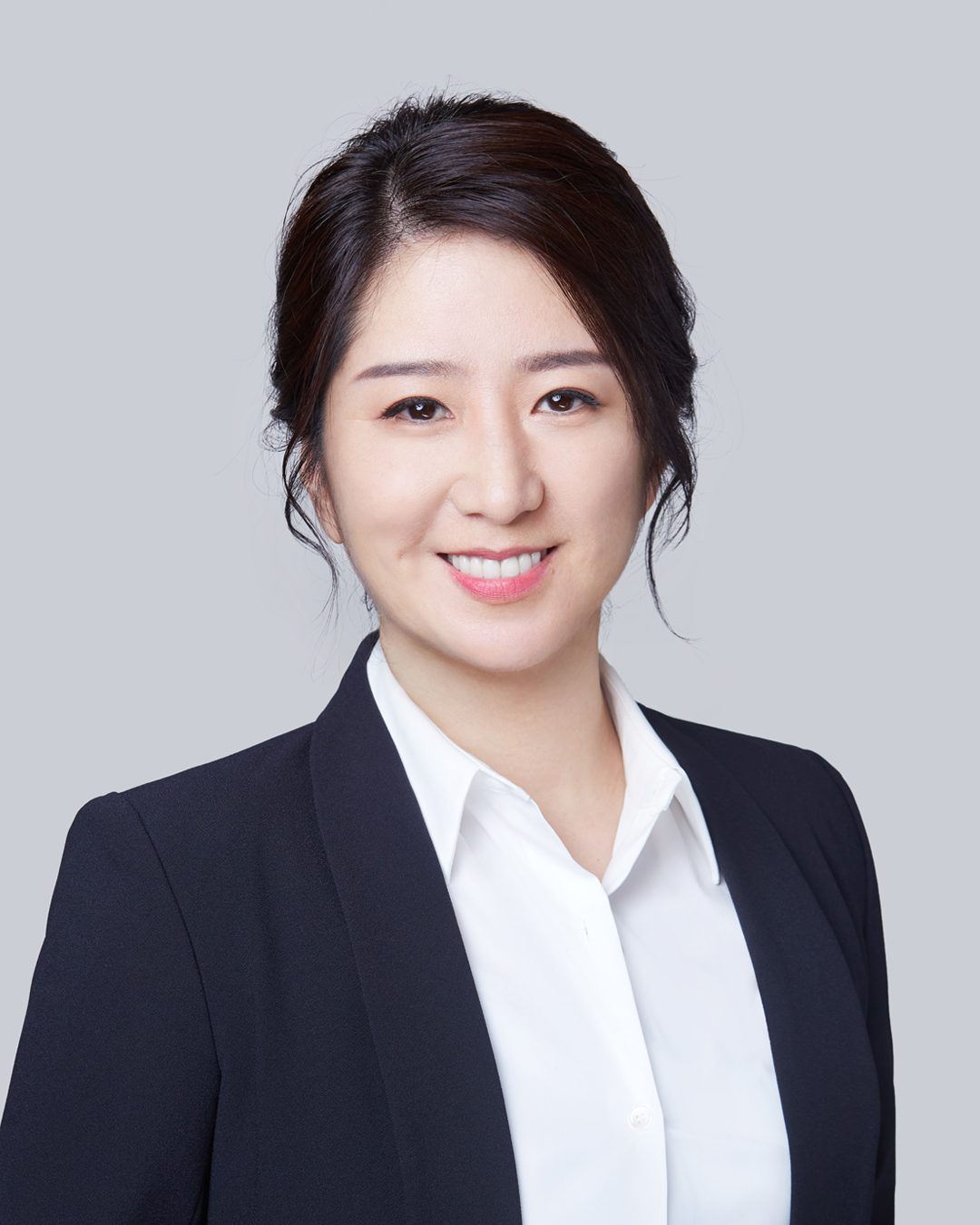
Mid-stride at the frontier of everything hard
Most venture capitalists arrive at their thesis by reading TechCrunch. Daisy Cai arrived at hers by doing the engineering. Before she ever wrote a term sheet, she was a chip architect at AMD in Silicon Valley, deep in the physics of transistors and system design. The six U.S. patents she filed in semiconductor design are not marketing credentials. They are the kind of technical fluency that makes a GP credible in a room full of robotics engineers or defense contractors - people who can tell immediately whether someone understands the work.
Today she is a General Partner at B Capital, the multi-stage firm co-founded by Eduardo Saverin (Facebook co-founder) and Boston Consulting Group. She leads B Capital's China expansion and manages a portfolio that spans humanoid robotics, enhanced geothermal energy, enterprise AI, government technology, and space infrastructure. Her investment sweet spot sits at $25M to $60M - big enough to matter, concentrated enough to stay involved.
She is not the GP who parachutes in for board meetings. She is the one who built the lab before it needed a board.
From chips to capital: an atypical arc
The standard VC path is consulting to business school to analyst seat. Daisy Cai's path started in a semiconductor lab. She studied engineering at Tsinghua University - one of China's most competitive institutions - then earned a master's in electrical engineering from USC. AMD hired her to design chips. Six patents followed.
The pivot to investing came through finance: Goldman Sachs Investment Partners in Hong Kong, where she led TMT, consumer, and financial services deals across Greater China. Then Deutsche Bank Principal Investments, where she worked on growth equity and PIPEs. Then TA Associates, where she made it to Managing Partner running growth capital across technology, media, telecom, education, and consumer sectors in Greater China.
We are looking to back the next Salesforce, Oracle, Zoom or Shopify that emerges from China.
- Daisy Cai, CNBC, October 2021The Baidu chapter came next - and it was not a single role. She became Managing Partner for both Baidu Capital (late-stage) and Baidu Ventures (early-stage) simultaneously, overseeing investments across AI, virtual reality, and augmented reality at a moment when Baidu was positioning itself as China's answer to Google's AI ambitions. Simultaneously managing two funds with different mandates and different time horizons requires a rare kind of institutional clarity.
Before landing at B Capital, she co-founded Gaocheng Capital, a growth-equity firm backed by Hillhouse, and spent a year as Partner at SoftBank Vision Fund - one of the largest tech investment vehicles ever assembled. Each institution brought a different vantage point: Goldman for financial rigor, Baidu for deep AI market access, SoftBank for global scale, Hillhouse for long-term capital discipline.
Semiconductor Design
Goldman, Baidu, SoftBank+
Simultaneously at Baidu
Deep tech, long moats, and why hard is a feature
B Capital was built on a specific premise: that the next generation of category-defining companies would come from outside Silicon Valley's traditional playbook - from Asia, from enterprise, from sectors where technology and physical infrastructure collide. Daisy Cai was the firm's China expansion, announced in 2021 with a potential allocation of 40% of B Capital's $1.9 billion global fund to Chinese markets.
Her investment thesis at B Capital has sharpened around a counterintuitive observation: the longer the R&D cycle, the stronger the eventual moat. Robotics, geothermal energy, space systems, and government tech all share a common property - they take years to build and are nearly impossible to commoditize quickly. She articulated this at the 0100 Conferences deep tech panel in January 2026: "Longer R&D cycles translate into stronger long-term moats."
On the AI agent question - the defining industry conversation of 2025-2026 - she did not reach for the comfortable answer. When CNBC asked her in April 2026 whether AI agents threatened the software industry, she called it a "tech restacking": traditional SaaS models getting challenged as enterprises shift toward outcomes over seats. The companies that understand this are already ahead.
The rise of AI agents is not an existential threat to the industry but rather a tech restacking - traditional SaaS models are being challenged as enterprises shift towards outcomes and efficiency.
- Daisy Cai, CNBC, April 2026The bets on the board
The portfolio she has built at B Capital spans sectors that most funds consider too capital-intensive, too technical, or too geographically complicated to underwrite. That is the point. Three exits already mark the track record:
The institutions that built the investor
The bridge between two innovation ecosystems
There is a particular kind of investor fluency that comes from having actually lived and worked in multiple systems. Daisy Cai built her investment career across Silicon Valley, Hong Kong, and the US-China tech corridor at a time when that corridor was one of the most consequential and contested geographies in global business. She saw the rise of China's enterprise software market from the inside - at Baidu, where she had access to one of the country's most sophisticated AI development environments, and at TA Associates and Goldman Sachs, where she watched capital flow into companies that most Western VCs had not yet discovered.
Her engineering background shapes how she evaluates opportunities in ways that are difficult to replicate through finance alone. When Apptronik raised for its Apollo humanoid robot - a $520M extension - the people who could assess whether the robotics architecture was defensible were in short supply on the cap table. Her early career at AMD provides exactly that kind of signal-from-noise capability.
At the 0100 Conferences deep tech panel in January 2026, she mapped the emerging convergence of AI across hard-tech verticals: robotics, autonomous systems, semiconductors, and defense. Not as trends to track. As specific bets to make.
Longer R&D cycles translate into stronger long-term moats, and AI is increasingly embedded across hard-tech verticals - from robotics and autonomous systems to semiconductors and defense.
- Daisy Cai, 0100 Conferences, January 2026Her China expansion at B Capital came at a deliberate moment. When she joined in 2021 to lead the firm's push into Greater China, Western institutional capital was beginning to hesitate on China exposure. Daisy Cai read it differently: the enterprise software transition in China was still, as she put it to CNBC, "at the very beginning." She was building the team to catch it early.