Kevin Jiang grew up hearing about stock options at the dinner table. In Cupertino, where his parents worked as engineers and technology companies supplied both employment and conversation, the business of invention was close enough to ask questions about. Who built these companies? How did they go public? Why did an idea make one person wealthy while another company disappeared? For a child interested in how things worked, Silicon Valley offered an unusually expensive set of puzzles.
Years later, after Goldman Sachs, Apollo and a place on the founding investment team of SoftBank’s Vision Fund, he chose a name for his own firm: Mangusta. It means mongoose in Italian. A financier with experience inside a $100 billion fund had settled on a small animal with a taste for difficult opponents. Venture capital has plenty of grand names. This one came with teeth.
Today, Jiang is Founder and CEO of Mangusta Capital, based in San Francisco. The firm invests in AI, software and consumer businesses, with connections extending to Italy and beyond. His move into founding a firm gives the résumé a different shape. For years, he helped decide which entrepreneurs deserved institutional capital. Now he also has to persuade investors that his own enterprise deserves their trust.
The education before Harvard
His parents came from China to the United States for undergraduate and graduate study. Both became engineers. Jiang remembers growing up around the semiconductor industry and its cycles of expansion and contraction. Technology was a family occupation before it became his investment category. He heard the language of startups and public offerings early, along with the less glamorous reality that businesses have good years and bad ones.
That combination matters. A child can absorb Silicon Valley as a collection of famous products, or as a place where people put their careers and savings at risk to make those products possible. Jiang’s account includes the second view. The fascination was financial as well as technological. He wanted to understand the machinery behind the invention, including the incentives that made people build companies in the first place.
He went east to Harvard and earned an A.B. in economics. Then came investment banking at Goldman Sachs and private equity at Apollo Global Management. His career also included public markets at Soros Fund Management, covering technology, media and telecom. Each setting put a different question in front of the same basic object: a business. What can it earn? What can it borrow? What should somebody pay to own it?
Those are useful questions to carry into venture capital, where the future can be much more articulate than the present. A founder may describe an enormous opportunity while the accounts describe a modest operation. Jiang’s background spans both languages. The banker, buyout investor and public-market analyst all have reasons to ask what lies underneath a persuasive forecast.
A very large classroom
At SoftBank, Jiang worked on growth investments in software and logistics across North America. His record includes leading investments in Flexport, ShipBob and Wiz. Freight forwarding, ecommerce fulfillment and cybersecurity may occupy different corners of technology, but each puts software into work that customers already need to do. These businesses gave him experience with expansion, boards and the choices companies face as they approach acquisitions or public markets.
Scale changes the questions an investor asks. In an established growth business, there is more operating history to examine, and considerably more money can be at stake. Jiang saw the pressure of those decisions inside the Vision Fund. He also worked with Masayoshi Son, whose willingness to make concentrated commitments became part of his education in investing.
Jiang has described a Tokyo meeting around 2020 involving a robotics business serving warehouses and ecommerce. Son wanted a 20 percent stake. The founders were reluctant to sell that much. Jiang’s job was to negotiate a deal that could satisfy both sides. The anecdote is memorable for its arithmetic: one investor’s desired ownership became somebody else’s practical problem to solve.
There is a useful distinction between admiring conviction and understanding its cost. An investor can decide that a company matters enormously; the founders still have to accept the terms. Jiang’s account puts him in the middle of that conversation. Belief had to be translated into a transaction. The experience helps explain why his subsequent approach gives so much attention to the person across the table.
Starting earlier, earning the invitation
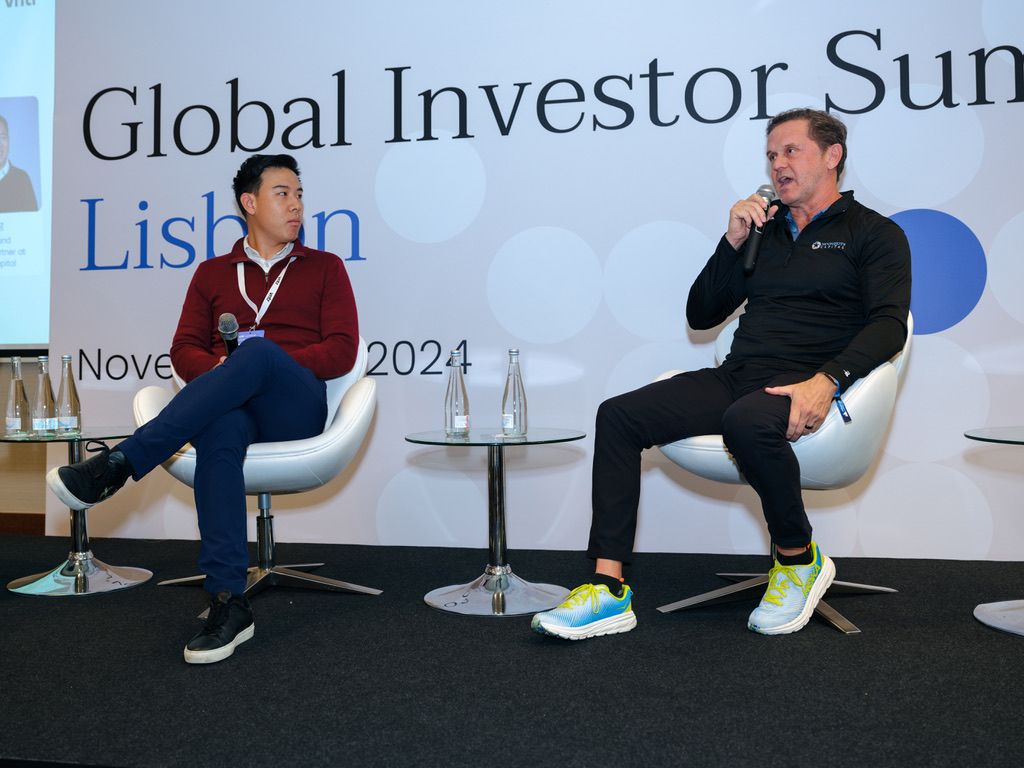
Mangusta began in 2024, with Jiang joining Tommaso Chiabra and Leonardo Maria Del Vecchio. Chiabra brought experience as an entrepreneur; Del Vecchio brought connections to the family behind Luxottica. The combination helps explain the firm’s two interests: technology that changes how businesses work, and brands or products that change what consumers choose.
For Jiang, earlier investment offered room to make a different contribution. He has described growth investing as a crowded market, where large funds often pursue the same companies. At the beginning of a business, a founder’s choice of investor can depend more heavily on trust, useful introductions and practical assistance. Having the money is only one qualification. The founder must also want the investor around.
His public commitments to founders are surprisingly mundane, which is a point in their favor. He promises to promote their businesses, read their updates, help with operational problems and respond when they ask for support. A pitch deck can make partnership sound rather grand. Reading an investor update makes it concrete. It is hard to offer a useful opinion on a company whose last three emails remain unopened.
He frames these relationships as lasting more than a decade. Over that interval, a company may change products, markets and executives; the investor remains on the capitalization table. Jiang’s promise makes attentiveness part of the job description. The appealing part is also the demanding part: people can tell whether you have done it.
Make introductions and help the business get seen.
Keep up with the company’s updates and plans.
Work through practical operating questions.
Stay available when the founder asks.
AI with a job to do
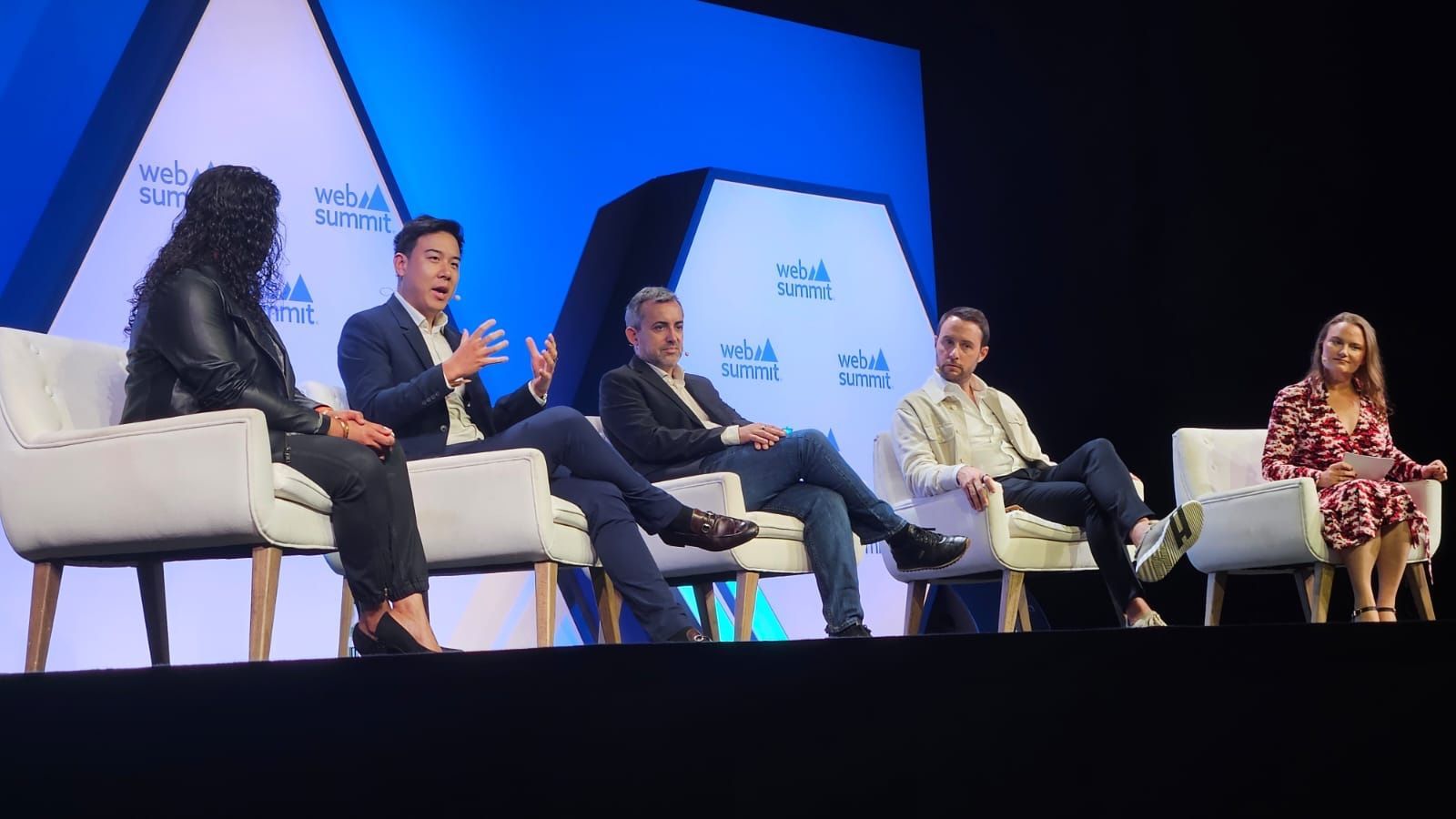
The firm’s early writing laid out a specific argument about vertical AI: software built for the workings of a particular industry. In a September 2024 essay co-authored with Dongwoo Suh, Jiang examined how specialized software companies had found opportunities inside needs that broad platforms served imperfectly. The difficult final portion of a workflow could support a business of its own.
AI gave that argument a new ingredient. A company could use underlying models while concentrating its own effort on an industry’s data, routines and customers. In accounting or financial services, usefulness depends on understanding what professionals actually do. A convincing demonstration is an introduction. Repeated use in a working business is a much longer relationship.
Jiang has outlined three filters for assessing these opportunities: domain depth, defensibility and distribution. The first asks whether the founders understand the work. The second considers advantages such as access to proprietary data and integration with existing systems. The third asks how the product reaches customers efficiently. TaxGPT and GAIL are examples he has discussed within that approach.
The framework brings the conversation back to business fundamentals. A capable model can be available to many competitors. Customers still need a reason to choose one product, fit it into their work and keep paying for it. Jiang’s interest lies in those decisions. The technology has to arrive somewhere useful, and the company has to know the route.
- Domain depthDoes the team understand the customer’s work?
- DefensibilityWhat advantage becomes harder to copy?
- DistributionHow will the product reach its customers?
Supply chains provide a bridge back to his earlier career. In May 2025, Mangusta announced its backing of Omnifold, a business developing AI for operational planning. Its proposed approach combined company records with information from documents and external signals, delivering recommendations inside existing workflows. The attraction fits Jiang’s history in logistics: complicated physical operations leave plenty of room for better decisions.
The mongoose keeps a calendar
By August 2026, Jiang was discussing robotics alongside software applications. He described Mangusta’s investment in Physical Intelligence, which develops models for robots. His interest was in the possibility that improving hardware and AI could bring more useful deployments within reach. It was an investment thesis and a forecast, with the uncertainty that both contain.
In the same conversation, he emphasized caution about rich valuations and a preference for deploying capital consistently across years. He described an annual deployment target of roughly 25 to 30 percent of each fund. The purpose was to reduce dependence on a single market vintage. Even an investor attracted to speed needs a calendar that survives a change in the weather.
Jiang’s stated target for deploying each fund annually.
That discipline adds texture to the mongoose imagery. Agility can mean moving quickly when an opportunity appears. It can also mean declining to let the market set every deadline. Jiang’s approach contains both an appetite for ambitious companies and concern about the price of admission. The animal may be hungry; the fund still has to keep accounts.
“Our goal really is to be known for our performance.”
Kevin Jiang
A founder among founders
Starting a firm has also made Jiang more public about the process of raising one. At the end of 2025, he announced a series of 40 lessons from raising Fund I, to begin on January 1, 2026. He described fundraising as an experience that tested his assumptions about trust, decision-making and rejection. His intention was to share mistakes while the experience remained fresh.
There is something fitting about that turn. The investor who once studied businesses from inside established institutions now has his own building project to explain. A record of previous investments can introduce him. It cannot conduct every conversation, answer every objection or make every new relationship durable. Founding Mangusta gives him a practical share of the uncertainty he asks other founders to manage.
Away from the investment vocabulary, Jiang describes himself as a tennis player, an amateur golfer and a reader of biographies on flights. The biographies are a pleasing detail for somebody whose work involves assessing people’s next chapters. Tennis supplies another sort of feedback, with fewer opportunities to revise the forecast after the ball has landed.
His aspiration for Mangusta is a lasting investment platform, built from the results of successive funds. It starts with individual decisions: which founder to back, which price to accept, which introduction to make, which message to answer. The mongoose gives the enterprise a memorable name. Jiang’s work is to give that name a history worth reading.