ProKlean had spent three years developing its products. The next obstacle was getting prospective customers to look at them. For a business selling cleaning technology into textile, leather and hospitality companies, that was a rather expensive place to get stuck. The Chennai Angels helped make introductions: a 2012 account described a list of 500 prospects becoming immediate access to 25 companies.
Here is the useful question to ask an angel investor: whose door can you open? A cheque pays for the next stretch of work. A well-chosen introduction can help determine what that work should be. TCA’s appeal rests on bringing both into the same relationship, with members who have experience building companies and dealing with buyers themselves.
The network’s portfolio now stretches from tea shops to music licensing. Its organising idea remains refreshingly tangible. A founder needs money, certainly, but also people who recognise the next commercial obstacle before it consumes another year.
Eleven people put money behind the idea
Established in November 2007, the organisation began as Chennai Entrepreneurship Trust Fund. Public reporting identifies R. Ramaraj, Gopal Srinivasan, K. B. Chandrasekar and Raghu Rajagopal among its founding members. The connections ran through internet businesses, investment and entrepreneurship.
TCA’s membership page gives the origin a pleasingly exact price: eleven founding lifetime members each contributed ₹5 lakh. That makes an initial corpus of ₹55 lakh. It is a founding contribution, a different number from the money members would subsequently put into startups.
The organisation, which identifies itself as ChennaiAngels Network Association, also offers individual, institutional and corporate membership categories. That structure makes room for personal investors, investment organisations and companies. The network supplies a way for their money and experience to meet entrepreneurs seeking both.
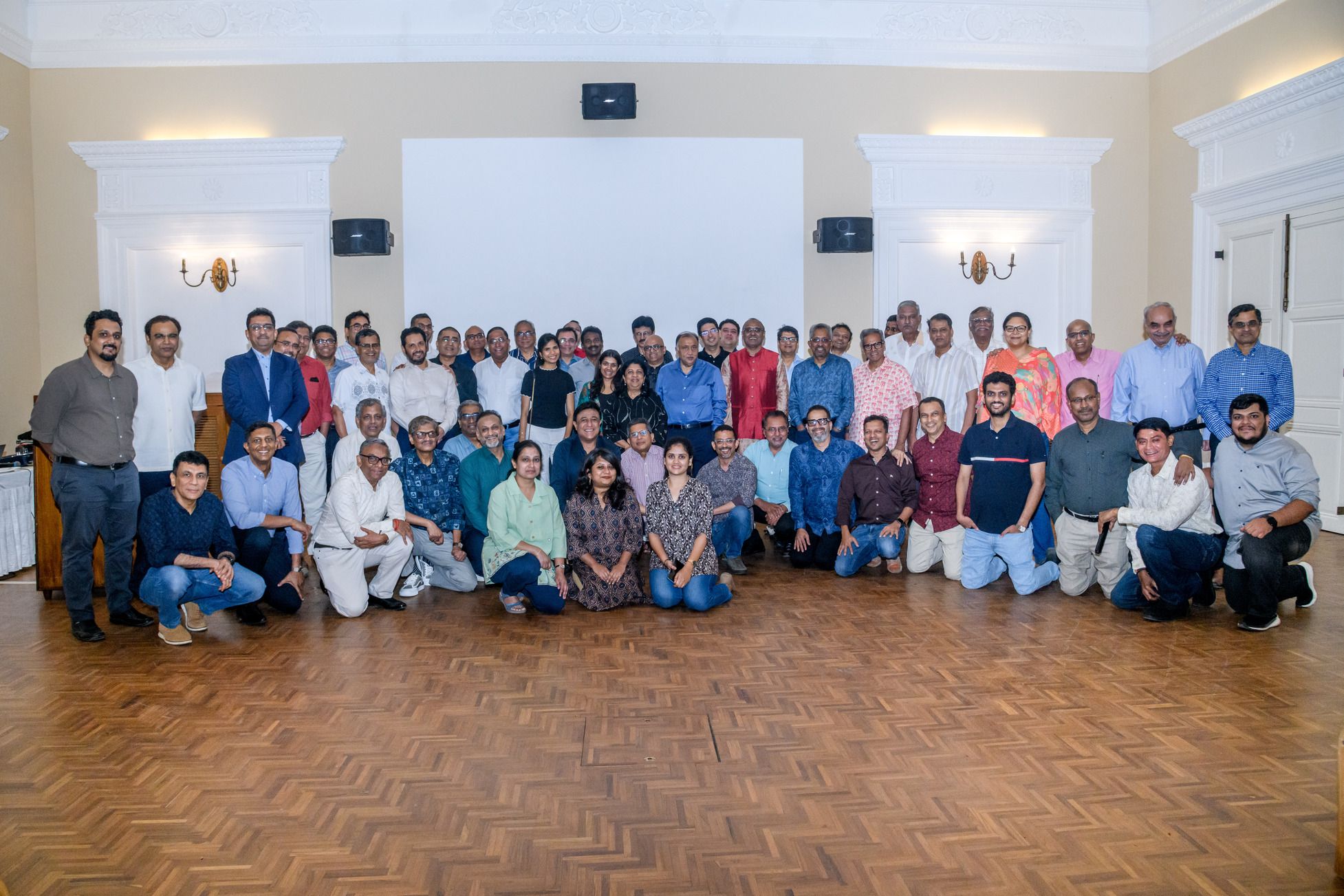
Its stated culture is built around mentoring and collaboration. That claim has some substance in the professional backgrounds on display: the published leadership biographies include experience at Cognizant, CAMS, Tube Investments and Cairn India. Those careers suggest different questions to ask about a young company: procurement, financial controls, manufacturing and the realities of serving a large customer.
TCA reports more than 150 investors. The number describes a membership network, rather than a payroll of full-time advisers. A founder should ask who will actually follow the business: the person leading a deal, the members with relevant operating experience and the people available when a difficult decision arrives. Access becomes useful through participation.
The product is a working relationship
TCA serves two constituencies. Founders want funding and help building a business. Investors want access to companies they can evaluate, support and eventually exit. The network sits between them, organising the work that makes an investment possible and the relationships that may make it worthwhile.
Its public offer includes mentoring, introductions to customers and partners, and help navigating later fundraising. The website also says it participates in subsequent rounds. The cheque is therefore one event inside a potentially longer association. A startup’s next problem does not politely wait until the investor has finished celebrating the last round.
There are familiar alternatives: Indian Angel Network, Mumbai Angels, Hyderabad Angels and seed venture funds. Research from IIM Bangalore has compared these networks and found similarities in their investment approaches. TCA’s case should be judged on the relevance of its people to a particular business, rather than on the suggestion that mentorship is exclusive to Chennai.
That is a useful distinction for founders comparing investors. A prestigious name may help a pitch deck. A member who understands a purchasing committee, a distributor’s economics or an industrial trial may help next Tuesday. The practical test is whether the experience matches the company’s immediate work.
A tea chain earns its place at the table
Chai Kings makes TCA’s breadth easy to picture. Jahabar Sadique and Balaji Sadagopan built a business around tea retailing. In January 2020, the company raised a $1 million seed round involving TCA, Hyderabad Angels and TiE India Angels. It was a shared bet on a consumer operation with shops, stock and repeat purchases.
In March 2025, Chai Kings raised $3 million from A.V. Thomas and Co. The announcement included a partial exit for TCA. It also described plans to strengthen the supply chain and expand the business. The commercial vocabulary is wonderfully ordinary: more stores, better operations, customers coming back.

Investor Piyush Bhandari has described recognising the business when it had six stores and introducing it to TCA. His account of the subsequent partial exit identifies him as the investment director representing the group. That gives the abstract word “network” a specific job: someone notices a business, brings it to other investors and remains involved.
Chai Kings’ own store locator now lists 80 outlets across Chennai, Hyderabad and Coimbatore. That current footprint should be kept separate from store counts reported at earlier funding rounds. It shows the business has continued expanding; it does not, by itself, calculate the return earned by any angel.
What changes an investor’s view? Understanding the business
The willingness to consider an offline company has a longer history. In 2014, The Economic Times described Skyfi Labs’ search for seed funding. The business offered practical engineering education, and its founders had struggled to find investors comfortable with that offering. TCA supplied ₹1 crore.
“They were able to understand that an offline offering like ours can have some potential.”Pawan Ponnaganti, Skyfi Labs · The Economic Times, 2014
The episode suggests a modest lesson about investment conviction: understanding an operating model can widen the field of businesses an investor takes seriously. It does not require a dramatic conversion or a new fashion in venture capital. Sometimes it requires recognising what customers are already buying.
A more recent example sits in digital media. TCA’s website posted news in March 2026 of an undisclosed investment in Hoopr’s ongoing pre-Series A. The music-licensing business serves creators and brands, with funding intended to support its platforms and technology, including copyright-violation detection.
In that announcement, TCA investment director Srinivasan B emphasised founder Gaurav Dagaonkar’s music background and the work of assembling rights, labels and customers. His explanation focused on the commercial foundations of the platform. For a licensing business, the catalogue and the right to use it are part of the product.
The cheque comes with a timetable and a bill
TCA’s published terms put its typical funding range at ₹50 lakh to ₹3 crore. Its process can take four to six months. The facilitation fee is 2.5% of total funds raised on deals it invests in; due-diligence agencies charge separately at actual cost.
Illustrative raise → facilitation fee.
Due diligence and other applicable charges are additional.
Applicants submit business information and a presentation through the online platform. TCA looks for early revenue, market evidence, defensibility and founders willing to work with mentors. Its sequence includes screening, investor presentations, detailed evaluation and closing. Quarterly reviews follow funding.
These conditions make fit fairly concrete. A business with an urgent payroll deadline should not build its survival plan around a process measured in months. An entrepreneur determined to avoid outside ownership or governance involvement will also need a different financing arrangement.
TCA says it does not sign NDAs and reserves the right to invest in competing startups, with restrictions on the involvement of relevant lead investors. Founders should therefore prepare disclosures deliberately and resolve questions about terms before assuming an introduction equals a commitment.
Many investors, one entry
In August 2026, reporting on TCA’s partnership with Anicut Capital described a Category I Alternative Investment Fund route for qualifying startups. The intended division of labour is straightforward: TCA contributes deal sourcing and its investor network; Anicut contributes investment-management capabilities.
The structural feature worth watching is a single investor entry on the startup’s cap table. That is the ownership record a company and its subsequent backers must work with. A network can offer many useful people while creating administrative work if each investment relationship must be handled separately.
Network & deal sourcing
Investment structure
One investor entry
The partnership is a response to that organisational problem. The promised simplification concerns the investment structure; it should not be read as proof of quicker closes or better investment returns. Those outcomes require a record of completed deals. For now, the announcement shows TCA adapting how money reaches a company while retaining the network behind it.
This also changes the comparison a founder needs to make. Evaluating an angel network involves looking at the people; evaluating a funding route also involves looking at the entity that will invest and how the relationship is administered. The announced partnership puts both questions into the same conversation. Founders can ask how investor communication, follow-on decisions and representation will work in their particular deal.
Bring the list of customers
The most useful thing to copy remains ProKlean’s specificity. A list of named prospects gives a mentor a task. “Help us grow” leaves almost everything unresolved. A founder can prepare the same way: identify the buyer, describe the obstacle and explain the introduction or expertise that would make progress possible.
An introduction still has to become a trial, an order and a repeat customer. Money and access cannot establish demand on their own. That is the limit of the model, and the reason a founder should judge support by what happens after the meeting.
TCA offers a way to put experienced businesspeople close to a young company’s decisions. The best question to bring into that relationship is wonderfully unglamorous: who should we talk to next, and what do we need to show them?
Meet the network. Hear the founders.
Official website ↗Funding terms & application ↗Explore the portfolio ↗News & podcasts ↗LinkedIn ↗X ↗Instagram ↗Facebook ↗
WATCH · FOUNDERS & FUNDERS