Most Demo Days have the manners of speed dating and the lighting of a webinar. A founder gets a few minutes, investors get a parade, and everyone leaves with a browser full of decks. StartupLanes has built its most interesting product by removing the parade. Its “exclusive Demo Day” is devoted to one company. The investors in the room are there for that pitch, and that pitch alone.
That small change explains the larger StartupLanes machine. This is not simply an angel syndicate, and it is not quite a conventional accelerator. Founded in 2016 by Shishir Gupta, its CEO, and Neha Gupta, its chief human resources officer, StartupLanes packages the jobs that pile up around a capital raise: validate the model, clean up the story, value the business, prepare the documents, find relevant investors, manage questions and keep the process moving. Beyond fundraising, it offers investment banking, legal help, marketing, technology work, business referrals and SME IPO support.
The company calls this “idea to IPO.” It is a suspiciously roomy phrase - nearly every awkward stage in company-building fits inside it. Yet the appeal is easy to see. A founder who might otherwise coordinate a consultant, lawyer, deck designer, developer, marketer and placement adviser gets one counter to visit. For an angel, StartupLanes promises filtered deal flow rather than a public inbox full of cold pitches.
These are StartupLanes’ current published figures, not audited portfolio statistics. Its LinkedIn description retains an older snapshot of more than ₹350 crore across 128 startups, a reminder that network numbers move and company pages do not always move together.
The product is concentrated attention
StartupLanes says it has run 150 Demo Days and funded 136 startups. Its site also advertises a 22-to-60-day path for raises between ₹50 lakh and ₹30 crore. Those are marketing claims, not a clock a founder should set without asking hard questions. What matters operationally is the sequence: application, screening, preparation, investor selection, a dedicated pitch and follow-through toward a close.
Screen
Prepare
Match
Demo Day
Close
The first screen is the unglamorous part and likely the useful part. In a public post, StartupLanes listed the qualities it looks for: steady revenue growth, high customer repeat, sensible margins, a large market, fair valuation, compliance, management information systems and an intention to reach public markets. A founder with a clever prototype and no evidence may find the “idea” end of idea-to-IPO less forgiving than the slogan sounds.
“We don’t hit and try, we do exclusive Demo Day for the Startup.”StartupLanes, describing its fundraising format
In return, StartupLanes says founders pay no upfront fee for fundraising. The company earns a success fee only after money reaches the startup’s bank account; it does not publish the percentage. That arrangement does two things. It lowers the cash barrier for a founder beginning a raise, and it gives StartupLanes a reason to prefer companies it believes can actually close. It does not erase diligence, dilution, legal costs or the risk of a process going nowhere.
A services shelf long enough to need aisle signs
Once the capital conversation begins, StartupLanes has many ways to stay in it. SL Angels handles early-stage investor access. The investment-banking practice targets larger venture, family-office, HNI, private-equity and debt rounds. SME IPO support takes eligible businesses toward a merchant banker and a public listing. Consulting covers business models, valuation, market entry, growth and franchising. Legal work includes founder, employment and commercial agreements; digital and technology services cover promotion, websites and products.
There is also a networking business operated under SL Enterpreneurs Private Limited, the legal operator named in the company’s terms. Its separate site reports more than 750 active members and 20-plus chapters. Weekly meetings exchange business referrals, and membership is exclusive by professional classification inside a chapter. The method resembles a disciplined referral club attached to a startup finance brand. Managed escrow, meanwhile, is offered for transactions between ecosystem members.
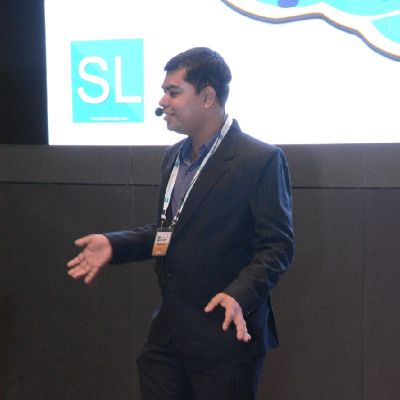
That breadth follows Gupta’s biography. He describes himself as a software builder since the late 1990s, an entrepreneur since 2001 and an angel investor since 2015. He later added legal and finance training and startup consulting. The company’s long product list feels less like a tidy software roadmap than an institutional version of its founder’s address book.
Who comes to the counter
The clearest customers are founders raising seed through growth capital, and SMEs mature enough to consider an IPO. On the other side are angels, VCs, family offices and corporate investors seeking screened opportunities. Around both sit mentors, consultants, service providers and working professionals who join chapters for leads or expertise. StartupLanes says this network now reaches 56 cities across 15 countries, with a UK headquarters listed in Edgware and an operating base in Panaji, Goa.
| Need | Typical alternative | StartupLanes’ answer |
|---|---|---|
| Early capital | Apply to funds or join a cohort Demo Day | Angel matching and a one-company pitch session |
| Raise preparation | Separate deck, valuation and legal advisers | Bundled consulting and documentation |
| Growth-stage capital | Investment bank or placement adviser | VC, family-office, HNI and private-equity outreach |
| Business leads | Local referral club or founder community | Chapter meetings plus digital groups |
| Public markets | Approach an SME merchant banker directly | Readiness support and banker introductions |
Against Indian Angel Network, Mumbai Angels, LetsVenture, ah! Ventures or Venture Catalysts, the difference is not merely deal access. StartupLanes wants the advisory work before the deal and the service relationship after it. That can spare a founder vendor roulette. It also means founders should ask who is acting for whom, how fees change across services, which advisers are regulated, and whether a recommended vendor is inside the same commercial ecosystem.
The receipts are uneven, but some are visible
StartupLanes’ public storytelling runs well ahead of the independent deal trail. One clearly documented transaction is Klassroom Edutech’s $300,000 pre-Series A in December 2021, where StartupLanes participated with ah! Ventures, HEM Angels and Meteor Ventures. A Convergence India publication in 2023 also identified StartupLanes as a seed backer of experiential-technology company ExperientialEtc. Company testimonials name Flutrr, Sepal, DocNmeds and Hobit as startups helped through fundraising.
The company says Burger Singh, Shiplog and Zappfresh are among its portfolio stories, and advertises ₹400 crore in angel investment. Those figures deserve a portfolio page with dates, round sizes and the network’s precise role in each transaction. Until then, a prospective founder or investor should treat the giant aggregate as the beginning of diligence, not its conclusion.
StartupLanes’ own corporate size is similarly fuzzy. Supplied business data estimates about 150 employees. LinkedIn places it in the 201-to-500 range; Internshala shows 11 to 50 and a history of remote, entry-level recruiting. Network businesses often blur employees, associates, chapter directors and venture partners. The important question for a customer is simpler: who will do the work on this engagement, and what have those people closed before?
What a founder can steal without stealing
The one-company Demo Day is the copyable idea. It recognizes that investor attention, not meeting software, is scarce. An accelerator, university or local angel group can borrow the format without recreating StartupLanes’ sprawling catalogue.
Build a smaller room with a sharper purpose
- Qualify one company against written evidence: revenue, retention, margins, market, valuation and compliance.
- Invite investors by thesis and cheque size, not by the length of the mailing list.
- Circulate the deck and diligence questions before the meeting.
- Give the founder enough time to explain the business and expose its weak spots.
- Assign one owner to follow every question through to a yes, a no or a clear next step.
The model has a narrow fit. It works when a company is ready for concentrated scrutiny, investors are genuinely relevant, and the adviser can survive a long success-fee cycle. It works poorly for pre-revenue ideas that still need discovery, distressed businesses hoping a pitch will repair their economics, or advisers without enough cash to wait for closings. A dedicated room does not rescue a fanciful valuation. Focus magnifies whatever is on the slide, including the holes.
A large mission built from small introductions
StartupLanes says its ultimate goal is to help generate one million jobs by supporting entrepreneurship. That is too large to judge from a funding counter alone. The more revealing measure will be whether portfolio companies hire, endure and raise again. Still, the mission explains why the company keeps adding doors: free messaging groups, local chapters, founder consulting, angel deals, later-stage banking and IPO advice.
There is a productive contradiction here. StartupLanes markets an enormous ecosystem, but its signature experience is deliberately small: one founder, one company, one room. The giant network matters only if it can assemble the right few people at the right time. For a founder, that is the whole proposition. Not more introductions. Better choreography.