In 2014, Chris Campbell brought ReviewTrackers to a startup accelerator in Madison. He had started with a frustrated customer and a problem: businesses needed a better way to understand their online reviews. At gener8tor, he went through more than 100 mentor and investor meetings. In his later account, those conversations helped him explain the company more clearly and become a better fundraiser. The interesting detail is the repetition. An introduction opens a door. A hundred conversations can expose what your explanation keeps getting wrong.
- Investment accelerators typically put $100,000 into each startup across a 12-week program.
- gBETA offers seven weeks of coaching without fees or an equity charge.
- Local partners connect founders with resources that a pitch deck cannot supply.
That is a useful place to begin with gener8tor. The company sells access, structure and attention alongside capital. Its wager is that a capable founder’s prospects depend partly on who will take the next meeting. And that the next meeting should be available somewhere besides the handful of cities already famous for arranging them.
Wisconsin was the first argument
Joe Kirgues and Troy Vosseller founded gener8tor in 2012. That year, two accelerator programs in Madison and Milwaukee invested in 13 startups, which raised more than $3 million in private capital. The starting ambition was regional: help Wisconsin’s entrepreneurs build companies where they already lived.
“entrepreneurs can build their companies no matter who they are or where they live.”
Troy Vosseller · 2022 anniversary statement
The geographical argument has teeth. A community can possess technical knowledge, customers and institutions while leaving its founders poorly connected to investors. gener8tor’s response is to organize those people into a working network. Universities, companies, governments and nonprofits become partners in programs tailored to a place or industry. The city supplies more than a backdrop; it supplies people with reasons to care.
The bill changes with the doorway
The investment accelerator offers a deliberately small room: five or six companies per cohort, 12 weeks and typically $100,000 per startup. That money comes with an ownership bargain. Founders should inspect the particular program’s terms before treating the headline amount as a price list. The firm’s general FAQ says investment terms are non-negotiable.
gBETA opens an earlier doorway. It launched in Madison in 2015 and offers a free seven-week program. Partners pay the bill; founders surrender neither fees nor equity. Scheduled programming generally takes about five hours a week, with extra flexibility needed for investor meetings. Work on the business happens beyond those hours. Free admission still requires a calendar.
For founders, the practical choice starts with the obstacle. A young company still clarifying its customers may benefit from coaching. A company ready to raise money may value an investment cohort. A water-technology business may need testing facilities and introductions to institutions that can use its product. Selecting a program by its biggest number would miss the point. The useful comparison is between what the company needs next and what the program can actually put within reach.
Water makes the model tangible
In December 2024, NOAA recommended a $13.4 million award to gener8tor Management for the Great Lakes Innovation Accelerator. This was public support for a commercialization program. It belongs in a different accounting drawer from a venture round raised by the accelerator itself.
By August 2026, the Great Lakes program was announcing its first cohort devoted to AI and water. Five startups each received $100,000 in non-dilutive funding. The partners included the Great Lakes Observing System and Michigan Technological University. The applications ranged from interpreting utility data to monitoring waterfront infrastructure and fish health.
Water is a revealing test of an accelerator’s promise. A better pitch cannot, by itself, prove that a technology works in the field. The program’s regional relationships offer a route toward the people and infrastructure needed to investigate that question. The value of a network becomes concrete when it helps a founder reach a relevant operator.
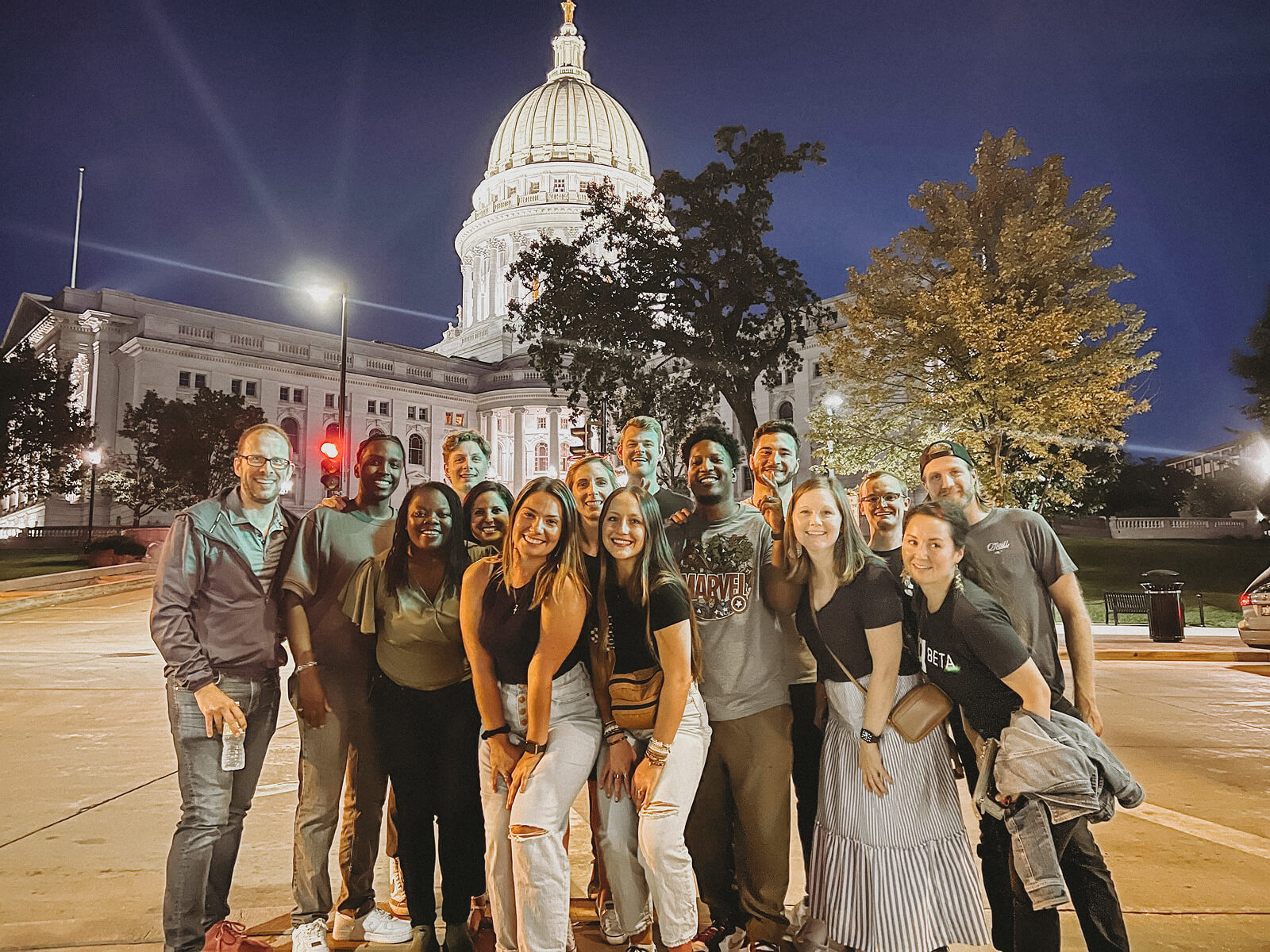
The people outside the startup photograph
gener8tor also runs programs for people who rarely appear in venture-capital group pictures. Its Art offering advertises $15,000 per visual artist, with a free 12-week program, mentoring and a showcase. Music programming helps artists and producers develop business knowledge and industry connections.
Skills serves eligible career seekers with training and coaching at no out-of-pocket cost. Private scholarships and public workforce initiatives fund participation. For 2025, gener8tor reported 639 Skills graduates, a 68% placement rate and an average salary of $64,943 for those placed. Those are reported outcomes, rather than promises to the next applicant.
Different measures: participation and investment are not interchangeable.
A network needs somewhere to lead
In the accelerator market, founders can also consider Techstars, Y Combinator, specialist incubators or direct fundraising. gener8tor’s distinguishing emphasis is its combination of local partnerships, small investment cohorts and programs beyond startup financing. Corporations get innovation programming; communities get a mechanism for supporting local talent; founders get a structured route to people they might otherwise struggle to reach.
The financing totals deserve careful reading. In August 2026, gener8tor reported that more than 2,200 supported startups had subsequently raised over $4 billion. That is money raised by the companies. It does not establish how much gener8tor invested, nor how much financing the programs caused. Selection and support can both contribute to an impressive alumni list.
Campbell’s experience offers something readers can copy: use repeated conversations to sharpen the proposition, then pursue the relationships that matter. This approach demands follow-through, a suitable cohort and a business problem that coaching or access can help solve. It offers less to a founder who cannot attend or already has those connections. The first useful question is therefore wonderfully ordinary: who, exactly, do you need to meet next?