New Jersey has put a dollar figure on a difficult business problem: helping a foreign technology company become a local commercial presence. The state awarded SOSA USA LLC $2.352 million over three years to operate NJ BASE, an international business landing center in Jersey City. The assignment includes the work that comes after arrival: strategy, introductions and help finding a place in the market.
That contract is a useful way into SOSA, a company whose industry description, “open innovation,” can sound like an invitation to a conference. Its actual work is more specific. A corporation needs technology it does not possess. A startup needs a customer it cannot reach. A government wants businesses to establish operations. SOSA researches the gap, introduces candidates and helps organize what happens next.
The stakes change with the client. For a cement producer, the objective might be lower-emission materials. For a public-safety agency, a technology worth testing with officers. For an overseas founder, a sales offer that makes sense to an American buyer. The common task is turning interest into a decision.
A landing pad with a public price tag
NJ BASE gives the business model unusual visibility. NJEDA’s January 2026 board memorandum separates SOSA’s operating contract from property and equipment costs. The full approved project budget was roughly $3.64 million. SOSA’s portion covers a three-year operating assignment; it is not a valuation of the company or a venture investment.
SOSA’s three-year operating contract
The program opened applications in May 2026. It offers free coworking space and practical help with market entry, operations and financing. Its intended participants are international companies already generating revenue, with enough capital to support expansion. That qualification matters: a landing pad can make entry easier, but a company still needs the resources to pursue business once it lands.
For the public customer, the desired result extends beyond a busy room. NJEDA encourages participants to establish operations and grow teams in New Jersey. Introductions are an intermediate step toward investment, commercial activity and employment. The arrangement makes SOSA an operator of economic-development infrastructure as well as an adviser.
The address came before the methodology
SOSA began in 2014 in south Tel Aviv. Its name means South of Salame. The original 1,200-square-meter site had housed a factory, a sewing shop and a carpenter’s shop before becoming a meeting place for investors, entrepreneurs and visiting companies. The location gave a global business a distinctly local name.
Its founding group brought together 25 investors and entrepreneurs. Reported members included Chemi Peres, Rami Beracha, Tal Barnoach and Barak Pridor. That origin helps explain the company’s starting advantage: access to people who could evaluate technology and open a commercial conversation. The space supplied somewhere for those conversations to happen.
SOSA’s own account describes a gradual shift from community building toward delivering business results. It says experimentation with different methods led it to focus more closely on client outcomes. New York became its U.S. headquarters in 2017. Its present offering carries the marks of that evolution: research teams, startup programs, technology sourcing and an investment operation built around what clients encounter.
A cement brief becomes an investment
Consider CSN, the Brazilian industrial group with interests in steel, cement and mining. SOSA examined its technical and commercial needs and looked for technologies that could support decarbonization. The search led to EnviCore, a Canadian company developing supplementary cementitious materials from recycled and natural mineral feedstocks.
According to SOSA’s case study, EnviCore reached CSN decision-makers within weeks. Within six months, CSN’s investment committee confirmed a $2 million commitment for a 10 percent stake. CSN independently describes its SOSA relationship and the EnviCore investment. Here the concrete outcome was an investment decision, with industrial application still the larger ambition.
“They translated our challenges into search criteria”
Felipe Steinbruch / Co-founder, CSN Inova
That phrase captures a useful part of the job. “Find something sustainable” leaves almost everything unresolved. Specifying the business, feedstocks, technical requirements and intended application gives researchers something they can investigate. A reader can copy that discipline without buying consulting: turn an aspiration into selection criteria before asking anyone for a shortlist.
Singapore puts the end user in the experiment
Public safety adds another test: whether a promising technology can serve the people expected to use it. HTX, Singapore’s Home Team Science and Technology Agency, launched Hatch in May 2023 with SOSA and Knovel Engineering. The center connects startup technologies with public-safety needs through scouting and innovation challenges.
Hatch’s first-year account is usefully specific. SOSA reported 20 challenge statements, more than 170 startup applications and 11 startups selected to develop proofs of concept with Ministry of Home Affairs end users. Those are three different measures. An application signals interest; selection starts a test. Operational deployment is a later decision.
A search becomes a test. These figures describe activity and selection, not a deployment success rate.
SOSA says it ran the initial acceleration cohorts locally and helped train a team combining international experience with Singaporean knowledge. That detail matters for anyone considering an innovation center. The operating method must survive beyond the visiting experts. Local staff and participating agencies have to be able to run the work.
The practical attraction is access to a real use case. Startup teams can refine products alongside agency personnel, engineers and scientists. Agencies can examine technologies developed outside their usual supplier circles. Both sides get a chance to discover whether the proposed fit holds up under closer scrutiny.
The sales pitch is sometimes the first thing to fail
SOSA’s market-entry writing offers a less glamorous view of international expansion. In one anonymized example, a Spanish cybersecurity company arrived with European traction but emphasized technical capability to American financial-sector buyers who cared more about reducing risk. The message failed to connect. In another, an Israeli AI company carried its New York approach into the Midwest and encountered different expectations around pricing and integrations.
These are SOSA’s examples, not independently identified company histories. Their lesson is still practical: early traction does not prove that a sales approach travels. Pick a region, identify the buying problem and test the offer before expanding the campaign. More introductions will have limited value if each meeting repeats the same misunderstanding.
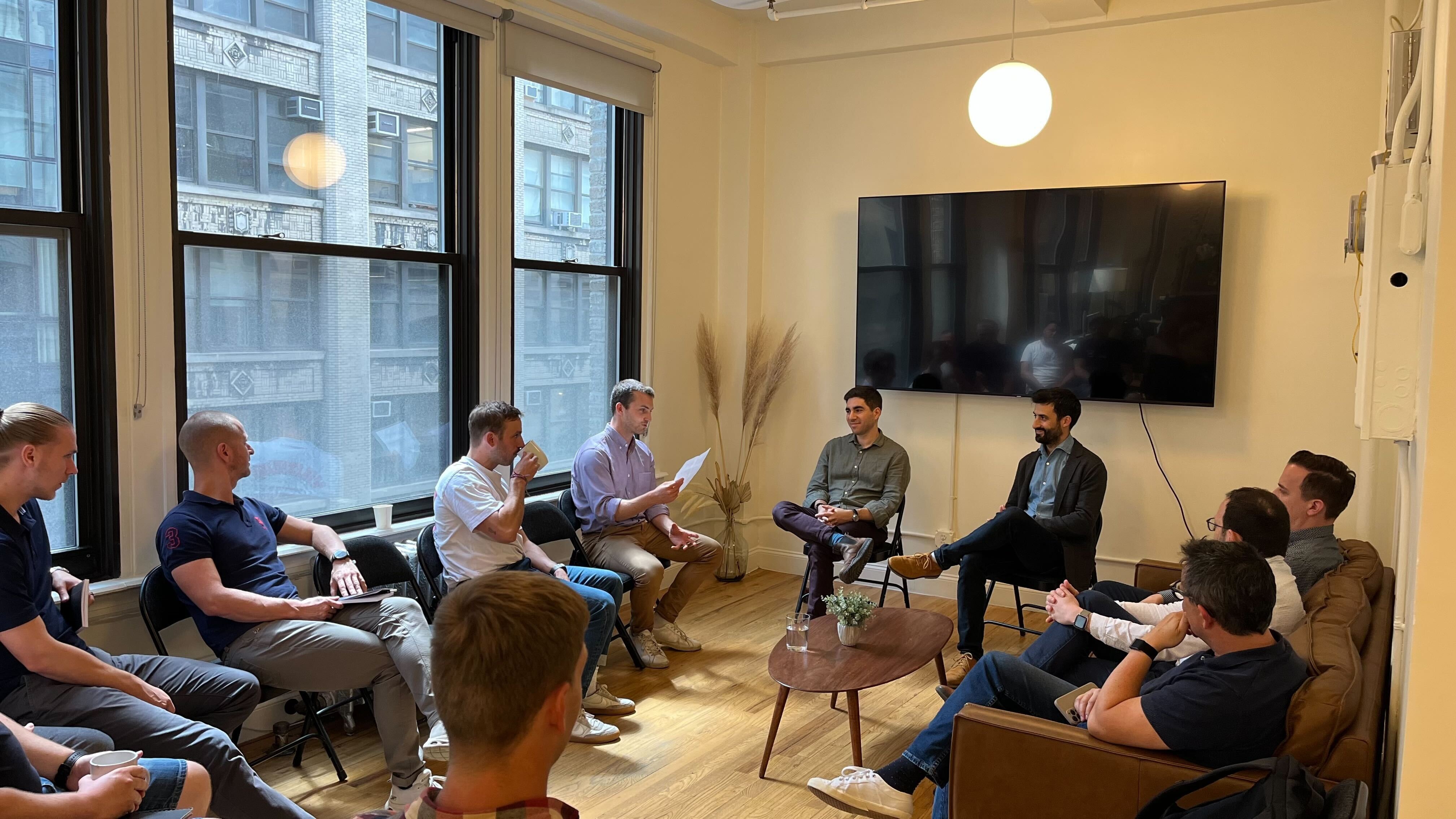
A named example shows what adaptation can look like. Brazilian company Fastdezine joined Land to Launch, a four-month program in 2023 that included a ten-day New York immersion. A workshop introduced AI tools that the business incorporated into its lead-generation service. SOSA reports that Fastdezine subsequently secured a three-year contract with Chicago’s IDL Ventures, with that feature strengthening its offer.
The case also reports that recurring revenue doubled during the program and the following six months. It is a participant success story, not an average return promised to every founder. What is worth copying is the sequence: learn something from the program, change the service, then take that revised offer into a commercial conversation.
One company, several ways to buy help
SOSA’s corporate services start with research and opportunity mapping, then extend to technology scouting, validation and proof-of-concept management. Its Savvy software supports open calls, applications and company reviews. This combination addresses both the intellectual task of deciding what to look for and the administrative task of keeping a search moving.
SOSA Solutions packages the sourcing of market-tested technologies for needs including public safety, education, energy and smart cities. The proposition is a shorter route to identifying something suitable for implementation. Buyers still need to establish the fit with their own systems, requirements and users; a tested product does not make every deployment identical.
For startups, the current U.S. Go-to-Market offering describes a five-month project combining research with sales or investor outreach. The sales component spans at least three months and includes prospecting, qualification and nurturing leads. That is a more sustained assignment than attending a pitch event. It is aimed at businesses with traction, backing or a product ready for international expansion.
SOSA Ventures adds investment to the mix. Its published process uses feedback from corporate and government collaborations as a signal, then carries out due diligence on selected companies. The attraction is seeing how potential customers respond before making an investment. Commercial feedback can improve the information available; it cannot settle every question about a startup’s future.
The advantage has to show up after the meeting
SOSA occupies a busy space between corporate consulting, startup acceleration and venture investing. A customer can also build an internal scouting team, work with another innovation consultancy or use a corporate-startup network such as Plug and Play. The sensible comparison is the actual assignment: who defines the brief, who finds candidates, who manages the pilot and who remains involved afterward?
Its staff biographies help explain the breadth of the pitch. CEO Uzi Scheffer previously built diamond ecommerce businesses and worked as a commercial pilot. Other team members bring experience in industrial technology, investment, scientific research and public safety. The research work sits alongside program delivery and commercial support, giving different specialists a role at different stages.
The clearest condition for making the arrangement useful is a client ready to decide. A shortlist needs someone who can evaluate it. A pilot needs users willing to participate. A startup entering America needs enough time and money to follow up. SOSA can organize those encounters, but the customer and supplier still have work to do together. The meeting earns its place when something happens afterward.