An expense claim can be a small declaration of intent. In 2022, Manav Gupta described a rule at Brinc: the company would not reimburse meat-based meals. The venture accelerator could discuss sustainability in investment meetings, then carry that discussion into the restaurant. Even lunch had a job description.
Gupta had a personal stake in the choice. “I’ve never eaten meat in my life,” he said. He cared about animal welfare. Here was a conviction translated into a line on the company’s accounts, with rather less room for interpretation than a mission statement. Anyone who has tried to turn a principle into an office policy will recognise the difference.
It is a useful place to begin with Brinc’s co-founder and chief executive. His business operates among founders, investors and large organisations, a setting fond of expansive language. His career becomes more interesting when the lens moves closer: a manufacturer willing to accept an order, a founder who needs distribution, a community that can supply an answer. These are the places where his ideas acquire moving parts.
A childhood with several forwarding addresses
Gupta calls himself a “True Third Culture Kid”. In his public account of his upbringing and later life, the itinerary runs from India, where he was born, through the Philippines, Hong Kong and Japan, then the United States and mainland China, before returning to Hong Kong. His LinkedIn education lists the Canadian Academy in Kobe, Japan, from 1997 to 2002.
That list gives a more concrete sense of his international outlook than the usual executive biography. The countries were places he lived, rather than dots added to a corporate map. It would be too neat to assign every business decision to a childhood move. Still, there is a visible continuity between that itinerant life and the company he later built around helping people work across borders.
Hong Kong became his base. The attraction was practical. A business trying to manufacture a connected device could reach the production networks of southern China while operating from a city accustomed to international trade. Gupta’s working world already included both sides of that journey.
The apprenticeship before the accelerator
Before Brinc, Gupta founded and ran FabriQate, a mobile technology product and platform business. His own professional biography describes seven years spent developing it in mainland China and, at the time of that account, a team of more than 100 people operating across three countries. He also reported selling two companies before starting FabriQate.
Those details put some operating experience behind his later advice. A founder responsible for a team has to think about what happens after a proposal is approved. Someone must build the product, answer the customer and make the next decision when the first one fails. An investor can admire an idea at a comfortable distance. An operator eventually gets a telephone call.
By 2017, when Gupta met volunteers over pizza at Brinc’s open office in the historic PMQ building, his career could be traced through manufacturing in Shenzhen, distribution in Guangzhou and connected devices in Hong Kong. The setting was fitting: people sitting among products, talking about how products become businesses. The pizza seems to have been the least complicated item on the table.
Small orders, large obstacles
Brinc was founded in 2014. At its public Hong Kong launch in 2015, Gupta drew attention to a problem familiar to young hardware companies: a small production order could struggle to attract a manufacturer’s interest. An inventor might have a working device and still lack a partner prepared to make it.
The early offer joined investment to practical help. Brinc maintained a presence in Hong Kong, Shenzhen and Guangzhou, placing product development, production and distribution within the same working geography. Its accelerator was built around the passage from concept to commercial product. There was plenty to do between the two.
Soundbrenner, an early investment, made the problem tangible. The startup’s wearable metronome gave musicians a pulse they could feel. Its team came to Hong Kong seeking the expertise needed to develop and manufacture the device. Gupta later remembered a pitch that included musicians demonstrating the product from the audience.
A musical demonstration is an agreeable break from slides. It also makes a hard demand of the person holding the cheque book: the thing works here; how will it reach everyone else? For Gupta, that question would outlast the original hardware programme.
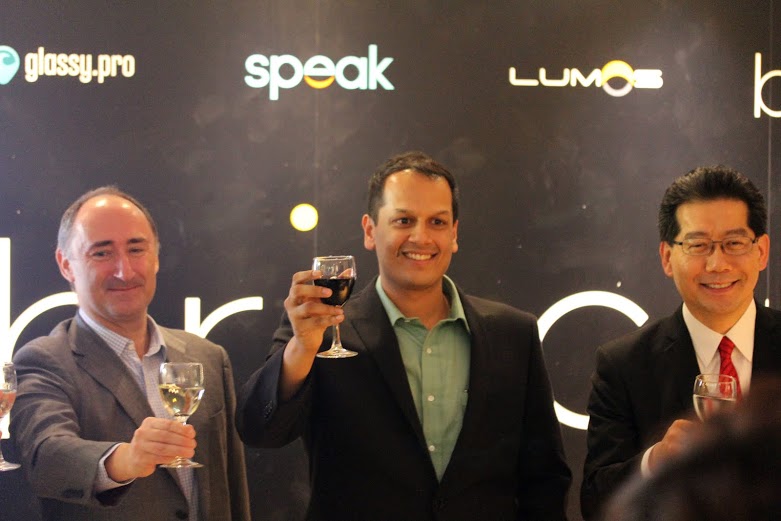
By the third year, the label was too small
At the end of 2017, Gupta published a review of Brinc’s third year. He acknowledged a communications problem. The business was building communities, developing products and helping drive sales, yet its public description had lagged behind the work. “we had failed to present ourselves correctly,” he wrote.
The review recorded 15 new investments, bringing the portfolio to 31 teams from more than 15 countries. It also described the acquisition of Enter China, a community built around peer education and relationships. An agreement with Artesian Venture Partners added another route to investment capital.
These developments belong together. Gupta was trying to make the different kinds of assistance legible to founders at different stages. A newcomer might need help producing a prototype. A team further along could need sales support. People already wrestling with either problem might be useful to one another.
An accelerator has an easy noun and a complicated daily workload. Gupta’s review is revealing because he admitted the mismatch. The business had to explain its own usefulness with the clarity it expected from a founder’s pitch.
The factory lesson reaches the food system
Food technology gave Gupta another arena for the same practical questions. Brinc introduced its food-tech programme in 2018. A 2021 regional assessment counted 40 seed-stage food-tech investments within its portfolio, including 29 alternative-protein businesses. These were figures from that period, a record of an investment direction taking shape.
His conference biography described support extending to sourcing, manufacturing, sales and inventory-backed lending. It also outlined an effort to help founders develop alternatives to dairy, meat and seafood. The details are less photogenic than a product tasting, but they matter to anyone trying to put a new product on a shelf.
Gupta has described a choice between building another business himself and creating a platform through which many businesses could develop. Food made that ambition concrete: multiple teams working on different parts of a production and supply system, each with its own technical and commercial obstacles.
There is a recurring arithmetic in this approach. One investor can back a product. An organisation that shares expertise, relationships and operating support might help several products find their way into use. The return depends on whether that assistance proves valuable in the ordinary, expensive business of execution.
- DevelopTurn an idea into a working product
- ProduceFind expertise, partners and capacity
- ReachConnect with markets and customers
A partnership that took years to arrive
Gupta met Animoca Brands co-founder Yat Siu in 2015. Their working relationship began with introductions to teams coming through Brinc’s Internet of Things accelerator. Siu personally invested in some of those companies. The later financing announcement therefore had a history of smaller encounters behind it.
On December 15, 2021, Brinc announced US$130 million in financing led by Animoca Brands. The composition deserves attention: US$30 million was a Series B raise, with a further US$100 million for startup investments. That distinction gives the headline number its meaning. Capital for the company and capital intended for founders would perform different jobs.
The announcement extended the partnership into blockchain ventures and accelerator programmes. At that point Brinc reported having invested in and supported more than 200 startups, with 18 programmes and seven offices. The figures describe its position in 2021, rather than a current census.
For Gupta, the relationship offers a fairly unglamorous lesson about networking. An introduction can become an investment. Repeated work can become a partnership. The large announcement arrives at the end of a sequence that began with somebody else’s young company.
Keeping an optimist at the table
Gupta’s enthusiasm has also been visible in rooms where the investment case was being argued. At the Good Food Institute Asia Pacific’s 2020 alternative-protein summit, a discussion of regional strategy brought together investors with different attitudes to an emerging sector.
Alexander Pestalozzi of Mueller Asia stressed facts and numbers and questioned investments made chiefly for lifestyle or charitable reasons. Gupta brought the perspective of someone who had watched an unfamiliar technology category develop in China. He remained optimistic about alternative protein despite the shortage of local talent discussed by the panel.
The exchange is useful because it leaves the disagreement intact. An emerging market needs believers willing to look beyond an immature set of numbers. It also needs people prepared to ask what those numbers justify. Gupta occupied the more hopeful end of that conversation. His operating model supplies a way to test that hope: work with the founders, find the missing expertise and see whether the company can progress.
“Trust, consistency and persistence.”Manav Gupta on the ingredients of a successful business, 2022
Advice gets its own delivery system
In May 2024, Brinc announced the acquisition of Callmi, a mentorship platform focused on the Middle East and North Africa. It offered one-to-one video consultations with experienced executives and entrepreneurs. The deal took a familiar part of accelerator life, access to someone who has dealt with the problem before, and gave it a dedicated product.
The plans included calendar integration, multiple languages and sessions involving more than one participant. Brinc also described vetting mentors and monitoring consultation quality. These are modest features with a serious purpose. Advice is only useful if the right person can actually be reached, and if the conversation addresses the problem at hand.
That year, Gupta’s own interview on the On the Brinc series covered market entry, strategic pivots, networks and tailored founder support. The topics sound consistent with the business he had been assembling for a decade. As its geographic reach widened, the recurring task was making useful knowledge available beyond the circle of people who already knew one another.
The next version still needs a customer
More recently, Gupta has carried that approach into VentureVerse. A public account of his Web Summit appearance described him discussing how artificial intelligence changes the work of building and operating companies, alongside Nuno Mateus-Coelho and Nicholas Lamb. VentureVerse was presented as infrastructure bringing intelligence, structure and benchmarks to founders.
By January 2026, a founder publicly described joining its virtual accelerator, with coaching, workshops, investor connections and a demonstration day. The language of software had acquired a recognisable accelerator timetable. Brinc’s current website likewise addresses investors, corporate and government partners, and founders through distinct services.
The distance from a wearable metronome to an AI-supported venture platform is considerable. A thread still runs through Gupta’s work: founders repeatedly encounter problems that require help outside their own team. The assistance might arrive through a factory contact, an experienced mentor, a partner organisation or software.
Whether it earns its place comes down to what the founder can do afterwards. That is a demanding test for a business built around helping other businesses. It is also a useful one. Somewhere beyond the pitch, a product has to be made, a customer has to be persuaded and an invoice has to be paid. Gupta has kept returning to that part of the story.