Block, Inc. - the corporate mark of Jack Dorsey's fintech portfolio, Oakland, California
Company Profile - Financial Technology
Block.
"Block builds technology for economic empowerment."
"Block builds technology for economic empowerment."
In 2009, a St. Louis glassblower named Jim McKelvey lost a $2,000 sale because he could not accept a customer's American Express card. He called his friend Jack Dorsey, who had recently co-founded Twitter. Out of that single missed transaction came Square - a small white card reader that plugged into a smartphone's headphone jack and let anyone, anywhere, take a card payment.
Seventeen years later, that company is called Block, Inc., and the card reader is one small part of a sprawling financial machine. Block trades on the New York Stock Exchange under the ticker XYZ. It runs six distinct businesses - Square, Cash App, Afterpay, TIDAL, Bitkey and Proto - bound together by a single, deliberately broad mission: to build technology for economic empowerment. Where most fintech firms pick a lane - payments, or lending, or crypto - Block has tried to occupy several at once, betting that the tools of commerce, consumer finance and bitcoin belong under one roof.
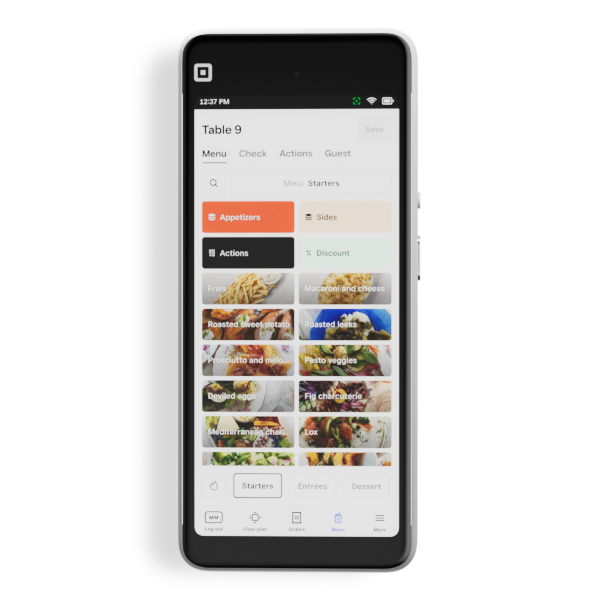
At its core, Block runs two large, interlocking ecosystems. Square serves the merchant: it lets a coffee shop, a hairdresser or a farmers-market vendor accept card payments and then layers on software for inventory, staff, payroll, banking and loans. Cash App serves the individual: a place to spend, send and store money, buy stocks and bitcoin, and - increasingly - borrow through a feature called Cash App Borrow.
The genius, and the risk, is in the connective tissue. Afterpay, the buy-now-pay-later platform Block acquired in January 2022, sits between the two - letting a Cash App user split a purchase at a Square-powered merchant into installments. It is an attempt to close the loop between the people who spend money and the businesses that take it. Around that core orbit three smaller bets: TIDAL, the artist-focused music platform; Bitkey, a self-custody bitcoin wallet; and Proto, a suite of bitcoin-mining hardware that shipped its first revenue in 2025.
Block's customers fall into two broad camps. On one side are millions of small and mid-sized businesses - the independent merchants for whom traditional card processing was once too expensive, too slow or simply unavailable. On the other are tens of millions of everyday consumers who use Cash App to move money, many of them underserved by conventional banks.
The problem Block set out to solve has not really changed since 2009: access. A merchant who cannot take a card loses a sale. A person without an easy way to send money to family, invest a few dollars, or borrow a small amount is locked out of the modern economy. Block's answer has been to lower the barrier at each of these points - a reader cheap enough for a market stall, an app simple enough for a first-time investor, installment plans for shoppers who would rather not reach for a credit card, and self-custody bitcoin tools for people who want to hold assets themselves.
An ecosystem of commerce tools: card acceptance plus software for sales, inventory, staff, banking and lending for sellers.
A consumer app to spend, send, store and invest money - including stock and bitcoin investing and Cash App Borrow.
Buy now, pay later - splitting purchases into installments and bridging Square sellers with Cash App shoppers.
A music streaming and artist platform focused on helping musicians build sustainable businesses.
A simple self-custody hardware-and-app wallet built specifically for holding bitcoin.
A suite of bitcoin-mining products and chips - Block's move into crypto hardware and infrastructure.
Block earns money in several ways at once: transaction fees on payment volume, subscription and services revenue from its software and banking tools, merchant and consumer fees from Afterpay, bitcoin sales routed through Cash App, and emerging hardware revenue from Bitkey and Proto. Rather than headline revenue - which is inflated by low-margin bitcoin sales - Block asks investors to judge it on gross profit across its two core ecosystems.
That number has climbed steadily. Gross profit reached $10.4 billion in 2025, up 17% year over year, and in early 2026 management raised its full-year guidance to roughly $12.2 billion. The growth engine of the moment is Cash App, whose gross profit rose 38% year over year in the first quarter of 2026, driven largely by the Cash App Borrow lending feature.
Block competes with different rivals in every lane it enters. In payments and consumer money it faces PayPal and its Venmo app, plus Stripe and Adyen. In merchant point-of-sale it runs against Toast, Clover and Shopify. In buy-now-pay-later, Afterpay squares off with Klarna and Affirm. In bitcoin hardware, Bitkey and Proto meet Ledger and established mining-chip makers.
What no single competitor matches is the shape of the whole. PayPal owns the consumer wallet but not the merchant register; Toast owns the restaurant counter but not the shopper's phone; Klarna offers installments but no bank-adjacent app. Block's wager is that owning both the seller and the buyer - and connecting them with lending and, eventually, bitcoin - creates a flywheel no point solution can copy. Whether that breadth is an advantage or a distraction is the central debate about the company.
Jack Dorsey and Jim McKelvey start Square to let anyone accept card payments on a smartphone.
The plug-in card reader brings card acceptance to small sellers for the first time.
Square introduces its consumer money app for sending and storing cash.
Square goes public under ticker SQ, raising about $243M at a roughly $6B valuation.
The company renames itself to reflect ambitions beyond payment hardware, including bitcoin.
Block completes its acquisition of the buy-now-pay-later platform Afterpay.
Block's bitcoin-mining chip business generates its first revenue as it doubles down on bitcoin hardware.
Block cuts over 4,000 jobs citing AI while raising gross-profit guidance to roughly $12.2B.
Block sits at the intersection of three markets that rarely share a company: merchant payments, consumer finance and bitcoin. That position makes it hard to categorize - part payments processor, part neobank, part crypto company - and that ambiguity is the point. The 2021 rename from Square to Block, and the later ticker change from SQ to XYZ, were deliberate signals that the company no longer wants to be measured as a single-product business.
In 2026 that identity was tested. Block announced it was cutting more than 4,000 of roughly 10,000 employees, pointing to artificial intelligence as a primary driver of the reorganization even as it raised profit guidance. It is a reminder that the company building tools for the future of money is itself being reshaped by the technologies moving through it. What holds the portfolio together is not a product category but a sentence - economic empowerment - broad enough to justify a card reader, a lending app and a mining chip in the same annual report.
Block is a global financial technology company, formerly named Square, that builds tools for economic empowerment across payments, consumer finance and bitcoin. It trades on the NYSE under the ticker XYZ.
It was founded in 2009 as Square by Jack Dorsey and Jim McKelvey. Dorsey serves as Block Head and Chairman.
Block operates Square, Cash App and Afterpay, plus the smaller businesses TIDAL, Bitkey and Proto.
In 2021 the company renamed to Block to signal a broader mission beyond payment hardware - referencing building blocks, city blocks and blockchain - and later changed its ticker from SQ to XYZ.
Mainly through transaction fees, software subscriptions and services, buy-now-pay-later fees, bitcoin sales via Cash App, and emerging bitcoin hardware - measured chiefly by gross profit across Square and Cash App.