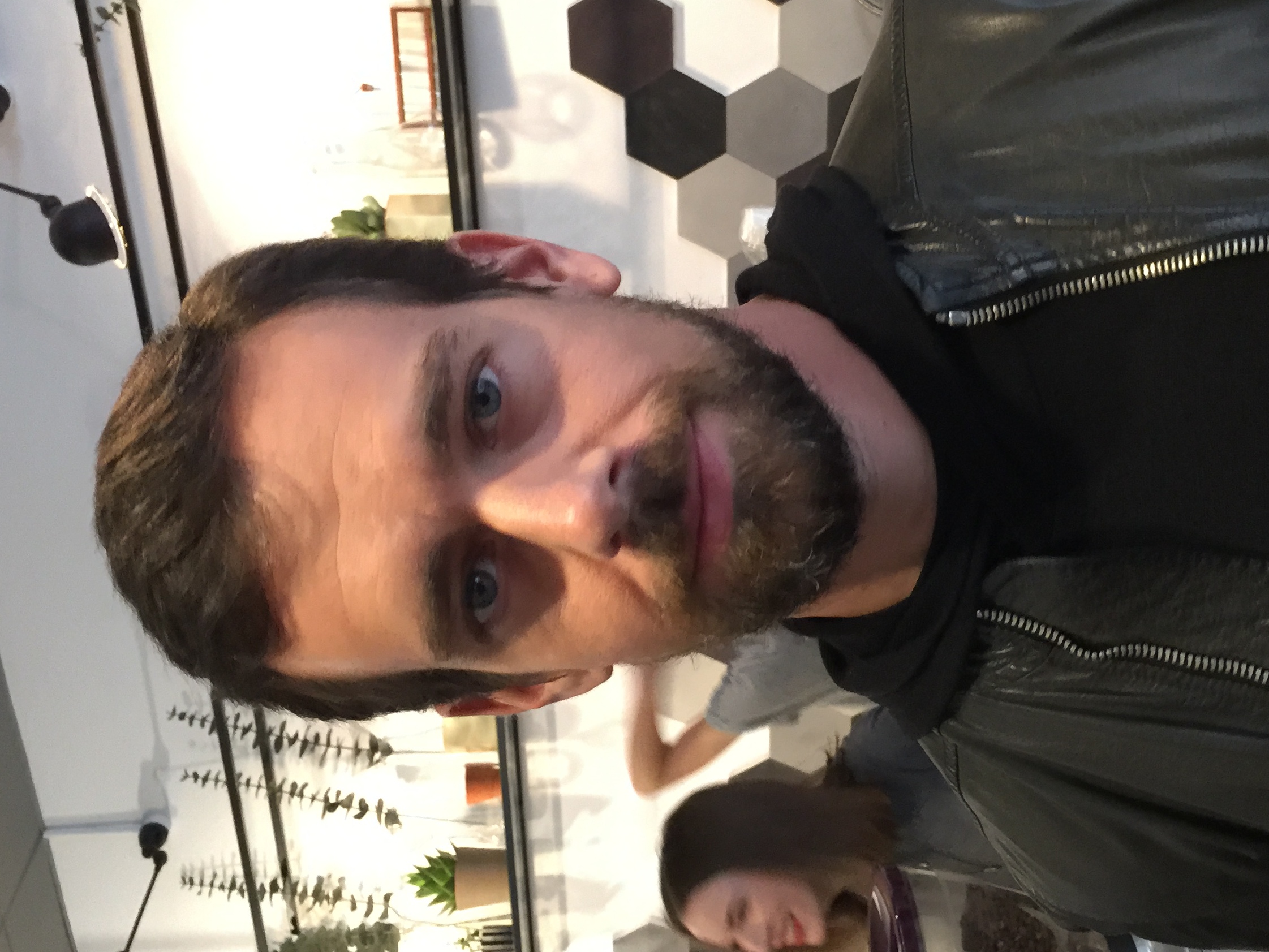
The Man Behind Two Revolutions
Right now, somewhere in San Francisco, Jack Dorsey is probably meditating. Or fasting. Or thinking about Bitcoin. The founder of Twitter and Square - now Block - is 49 years old, worth roughly $5.9 billion, and more interested in what comes after the internet than what's currently on it.
This is a man who spent years shaping how the world communicates in real time, then walked away from his own creation twice. The first time, he was pushed out. The second time, he left by choice. What he's building now - Bitchat, Block's Bitcoin treasury, a $10 million bet on Nostr - looks less like a tech company pivot and more like someone drawing a map to higher ground.
The strange thing about Dorsey is that his most radical ideas tend to look obvious in hindsight. A small white dongle that lets anyone accept a credit card. A dispatch software for taxis, written by a 15-year-old kid in St. Louis who just found the whole routing problem fascinating. A website where you could say what you were doing in 140 characters. Each one sounds too simple. Each one was.
His current thesis is simpler still: centralized systems are fragile. Money, speech, social networks - when a single company or government controls the rails, those rails eventually get used against you. Block holds nearly 9,000 Bitcoin. Bitchat routes messages over Bluetooth mesh without touching the internet at all. He gave $10 million to Nostr, an open protocol for social media that nobody owns. The pattern is not subtle.
The Dispatch Kid from St. Louis
The first thing Jack Dorsey ever built that mattered was dispatch software for taxicab companies. He was 15. He was not trying to be an entrepreneur - he was just captivated by the logistics problem. How does a cab find the closest passenger? How does a city move? He wrote the code. The companies used it for decades.
That detail is worth holding onto. Not the founder mythology, not the IPO, not the congressional testimony in the popped collar. The dispatch kid who found routing interesting. Because everything Dorsey has built since is really a variation on the same question: how do things - money, messages, people - find each other efficiently, without a middleman taking a cut and a government taking notes?
He left the University of Missouri-Rolla after two years, transferred to NYU, dropped out one semester before graduation. Moved to Oakland. Tried to start a web-based dispatch company. The idea was good but the timing was off. He spent the next few years coding, thinking, and waiting for something to click.
The click came in 2006. He was working at a podcasting startup called Odeo with Evan Williams and Biz Stone when the company needed to pivot. Someone suggested a service built around status updates - what are you doing right now? The team spent about two weeks building a prototype. On March 21, 2006, Dorsey sent 20 characters into the void: "just setting up my twttr." The void has been loud ever since.
"Make every detail perfect, and limit the number of details to perfect."
- Jack DorseyBuilding the Town Square, Losing the Keys
He raised Twitter's first venture capital round with a nose ring and dreadlocks. The investors said yes anyway. That tells you something about either the pitch or the moment - probably both.
Dorsey served as Twitter's first CEO from 2006 to 2008, then was pushed out in a boardroom maneuver. The reported reason, at least in tech folklore: he was leaving work early to practice yoga and take fashion design classes. The actual dynamics were more complicated - tensions with co-founder Evan Williams, concerns about focus, the usual early-startup political wreckage. He became Chairman of the Board. Evan Williams became CEO. Life went on.
While Twitter grew into a global communication infrastructure - revolutions organized on it, elections fought on it, celebrities undone by it - Dorsey was building Square. He came back to Twitter as interim CEO in 2015, then permanent CEO, holding both roles simultaneously. It was an unusual arrangement that led to unusual results. Twitter grew but never quite found its business model. The platform that had become essential to public discourse struggled to explain itself to Wall Street.
In November 2021, Dorsey resigned as CEO again - this time voluntarily. His statement was characteristically direct: founder-led companies are "severely limiting and a single point of failure." He handed the keys to Parag Agrawal and walked away. Six months later, Elon Musk bought the whole thing for $44 billion. Dorsey's 2.4% stake made him richer. He did not stay around for the transition.
In 2024, asked about what Twitter had become under Musk, he called it "freedom technology." This came the same day he left the board of Bluesky - the Twitter alternative he'd helped seed. The reaction was volcanic. The man who had once called Musk's acquisition a "mess" was now handing him a compliment. Dorsey shrugged it off. He has never been particularly interested in maintaining consistent PR positions.
"My goal is to simplify complexity. I just want to build stuff that really simplifies our base human interaction."
On his design philosophy"Constraints inspire creativity."
On limitations as fuel"If I were not at Square or Twitter, I would be working on Bitcoin."
On Bitcoin, years before he moved all in"Twitter being founder-led is severely limiting and a single point of failure."
Resignation statement, November 2021Square Became Block and the World Barely Noticed
The origin story of Square is almost too clean to be real. Jim McKelvey - Dorsey's friend and co-founder - tried to sell a piece of glass art for $2,000 and couldn't accept the buyer's credit card. The sale fell through. They built a company to fix it. That company is now called Block and it processes $241 billion in payments every year.
The white dongle was genius in its specificity. Not a new payment network. Not a bank. Just a tiny piece of plastic that plugged into a headphone jack and turned any smartphone into a point of sale. Any food truck owner, any flea market vendor, any small business that had been invisible to the credit card system suddenly wasn't. Square signed up 100,000 new merchants a month in 2011. By 2012, the company was worth $3.2 billion.
When Square went public in 2015, the IPO was considered a rough landing - shares priced below the last private round. Wall Street's reaction to Dorsey holding two CEO jobs simultaneously was skeptical. He didn't seem to care. He just kept building.
Cash App - launched 2013, now Block's consumer flagship - quietly became one of America's most-used financial products, particularly in communities traditionally underserved by banks. By 2024, Block had 57 million users. TIDAL, the music streaming platform Block acquired from Jay-Z in 2021, became part of a broader thesis about artists controlling their economic relationship with fans. Afterpay, acquired for $29 billion, added buy-now-pay-later. The pivot to Bitcoin was gradual and then total.
In February 2026, Block cut 40% of its workforce - roughly 4,000 jobs. Dorsey's explanation was blunt: AI is doing these roles now. The company was moving from 10,000 employees to ~6,000. The memo described an AI-first operating model where middle management would be replaced by automated systems. Employees learned about the cuts in a company-wide announcement. It was not, by most accounts, a warm delivery.
One Protocol to Rule Them All
Dorsey's Bitcoin conviction is not new and it is not casual. Years before Block became a Bitcoin company, he told interviewers that if he weren't running Square or Twitter, he'd be working on Bitcoin full-time. He's since made that essentially true while still running Block.
Block's Cash App has allowed Bitcoin buying and selling since 2018. Block's hardware wallet, Bitkey, lets users hold their own Bitcoin without custodians. Spiral, Block's open-source arm, funds Bitcoin development grants. The corporate treasury holds ~9,000 BTC - worth roughly $2.2 billion as of early 2026. This is not a hedge. This is a position.
In 2025, Block unveiled the Proto Rig, a modular Bitcoin mining system designed to challenge Bitmain's near-monopoly (roughly 80% of mining hardware market share). Dorsey's argument: concentrated mining hardware is a threat to Bitcoin's decentralization. Build your own miner. He also seeded OCEAN, a decentralized mining pool.
On April 28, 2026, Block launched a Bitcoin proof-of-reserves feature allowing independent verification of customer holdings. Trustless verification. His entire arc has been moving toward systems that don't require trust in any specific actor - including Block itself.
Bitchat: Messages That Don't Need the Internet
In July 2025, Dorsey launched Bitchat. No accounts. No servers. No internet required. Messages route over Bluetooth Low Energy mesh networks - your phone passes the message to the next phone in range, which passes it further, until it reaches the recipient. Think of it as a walkie-talkie network that scales to city size. A fallback layer uses Nostr for longer-range delivery when Bluetooth range runs out.
The open white paper detailed the encryption architecture. A researcher found a user impersonation vulnerability shortly after launch. Dorsey flagged it publicly as a work in progress and kept shipping.
In September 2025, protests broke out in Madagascar. Bitchat hit 70,000 downloads in one week as protesters used it to coordinate when cell networks were disrupted. That is precisely the use case Dorsey designed for. When the infrastructure fails - or when the infrastructure is turned against you - the mesh still works.
Around the same time, he backed diVine - a Vine reboot built on Nostr, complete with 100,000 archived six-second Vine videos from the original platform. DiVine bans AI-generated content, runs on open protocols, and is led by Evan Henshaw-Plath ("Rabble"), a former Twitter engineer. The circle keeps closing.
"Curiosity is a key driver of success."
- Jack DorseySeven Things About Jack Dorsey That Deserve a Longer Story
He raised Twitter's first venture round with a nose ring. Brought it back in 2018. Wall Street reacted positively, because apparently at a certain net worth, everything reads as confidence.
His 10-day silent Vipassana retreats: no talking, no phone, 4 AM to 9 PM meditation. Each morning starts before most people have hit snooze once.
Wore open-toed sandals and a popped collar to testify before the U.S. Congress in 2018. Congress noticed. He did not appear to notice that Congress noticed.
His Twitter account was hacked in 2019 by "The Chuckling Squad," who posted racist tweets. He was also once briefly suspended from his own platform due to an internal mistake.
He publicly expressed interest in becoming Mayor of New York City in 2013. He did not follow through. New York City continues to exist without him as mayor.
His first extended weekend fast produced hallucinations on day three. He described the experience in a Medium post that Silicon Valley read as wellness content and everyone else read as a cautionary tale.
What He's Actually Built
One Idea He's Been Running on for 30 Years
The through-line from the St. Louis dispatch software to Bitchat is clearer than it looks. At 15, Dorsey was interested in how information gets from one place to another without unnecessary friction or centralized bottlenecks. At 49, that's still the entire project - just applied to money, speech, and social infrastructure instead of taxis.
His philanthropic instincts track the same thesis. The $15 million he gave to 29 mayors running guaranteed basic income pilots. The $10 million to Boston University's Center for Antiracist Research. The $1 billion COVID pledge. These aren't scattered donations - they're bets on systems that route resources to people more directly, cutting out the layers of bureaucratic drag.
He has said, in various forms, that he believes centralized control of communication platforms is dangerous regardless of who's doing the controlling. He said banning Trump from Twitter was right but set a dangerous precedent. He left Bluesky because it was centralizing. He funds Nostr because nobody can take it over. These are not contradictory positions - they're the same position applied consistently, which is rare enough in tech to be notable.
What comes next is probably more of the same: tools that route around control, infrastructure that works when official infrastructure fails, money that moves without permission. The dispatch kid's grown up. The problem is still the same. The routing is just more interesting now.