He taught machines to see inside airport baggage. Now he is teaching Bitcoin to do the one thing it was built to refuse: scale.
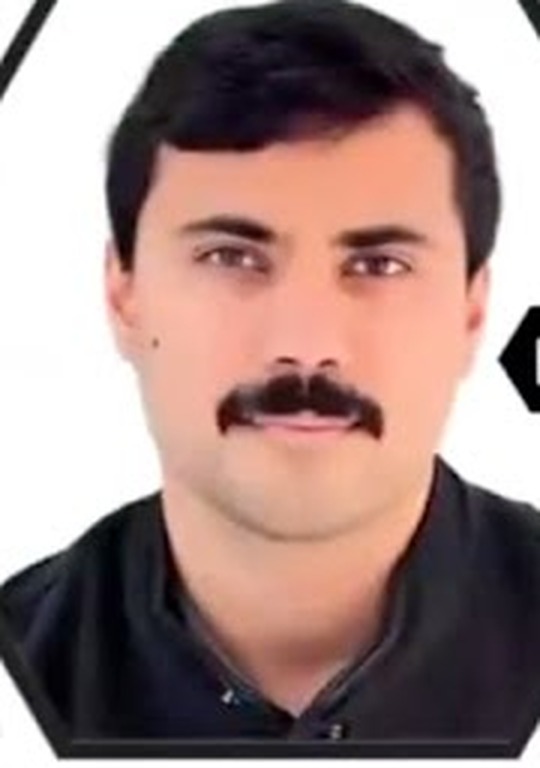
The face behind the proof. Co-founder, Alpen Labs.
Simanta Gautam runs Alpen Labs, a company with an unusual relationship to the word "no." Bitcoin says no to almost everything. No complex programs. No heavy computation. No quietly changing the rules. Most builders treat that stubbornness as a wall to climb over. Gautam treats it as the whole point.
His bet is simple to state and hard to build: instead of asking every computer on the network to re-run a hundred thousand transactions, let one machine run them, then hand everyone a small cryptographic receipt - a zero-knowledge proof - that the work was done correctly. Check the receipt, trust the math, skip the labor.
That receipt is the business. Alpen is building Strata, a zero-knowledge rollup that bundles activity off Bitcoin's crowded base layer and settles back to it with proofs instead of brute force. The aim is a Bitcoin that stays exactly as strict as it is today, while gaining the privacy, speed and programmability it has never had.
The longer goal is plainer than the cryptography: rails for money that anyone can use, without a tollbooth in the middle.
"Your mobile phone can verify it without actually verifying 100,000 transactions." Simanta Gautam, on what zero-knowledge proofs change
A quarter of Nepal's GDP arrives as remittances - money sent home by people working somewhere else. Every dollar of it passes through intermediaries who take a cut for the privilege of moving it across a border. The founders of Alpen Labs grew up close to that arithmetic. They did not need a whitepaper to understand what middlemen cost; they had watched it happen to families.
That detail is the seed of the whole company. When four MIT graduates sat down in June 2022 to ask what Bitcoin was actually good for, the answer was not speculation. It was the boring, enormous problem of moving money without losing a slice of it at every step.
They started where most people start - the Lightning Network. It scaled, but it strained on privacy, centralization and the plain experience of using it. So they went deeper into the mathematics, toward zk-SNARKs, and never came back. By April 2023, Gautam was on stage at BTC++ presenting a zero-knowledge rollup design for Bitcoin. The talk was technical. The motive was not.
Bitcoin, to this team, is not a casino chip. It is the most credibly neutral money the internet has produced, and the job is to make it usable by people who have never heard the word "blockchain."
Long before proofs and rollups, Gautam's problem was physical: what is inside that bag, and is it dangerous? His first company, Synapse Technology, built AI and computer vision for security screening - the kind of system that scans an X-ray of a suitcase and flags the threat. He was founder and CTO, and he raised more than $6 million before Palantir acquired the company in 2020.
Founder & CTO. AI and computer vision for security and defense. Raised $6M+. Acquired by Palantir.
AI Lead after the acquisition, heading Edge AI and ML infrastructure - machine intelligence at the edge of the network.
Research stints at storied institutions, plus engineering stops at Microsoft, Amazon and Clarifai. A resume built on hard problems.
The pattern is consistent. Vision, then verification. Seeing the physical world, then proving things about a digital one.
Founds Synapse Technology - AI for security screening.
Synapse acquired by Palantir; becomes AI Lead for Edge AI and ML infrastructure.
Co-founds Alpen Labs in June with fellow MIT graduates to scale Bitcoin with zero-knowledge tech.
Presents a Bitcoin ZK rollup design at BTC++. Ribbit Capital leads a $10.6M seed round.
Alpen Labs steps out of stealth, revealing its funding and its rollup, Strata.
Closes $8.5M strategic round led by the Cyber Fund and DBA. Speaks at ETHDenver; joins Brink on SNARKs, ZK rollups and BitVM2.
"What a zero-knowledge proof allows us to do is have some single server do that computation, generate a cryptographic proof, just like a signature, that could be verified by anyone."
"These layer-2s built with zero-knowledge proofs allow us to completely expand the horizon for the kinds of markets that could exist directly and be secured directly on Bitcoin."
"Someone can get a cryptographic guarantee that those transactions are valid without knowing the internal information."
A long-form conversation on Bitcoin, zero-knowledge proofs and the road to programmable money.
YouTube / PanelWith Shinobi, Marco Argentieri and Alex Bosworth - a panel on where Bitcoin goes next.
Brink / Eng CallGautam joins Brink engineers for a deep technical session on Bitcoin's verifiable-computing frontier.
His career runs through Harvard, MIT, NASA, Microsoft, Amazon and Clarifai - a tour of hard problems before the hardest one.
He went from AI that reveals the physical world to cryptography that conceals the digital one. Zero-knowledge proofs verify without ever showing.
He treats Bitcoin's rigidity as an asset: the harder the base layer is to change, the more valuable a proof that sidesteps it becomes.
He has described Alpen's ambition as building "the cypherpunk dollar forged from bitcoin" - stable money with Bitcoin's spine.
Strip away the cryptography and the funding rounds, and the goal is the one Gautam started with: let anyone, anywhere, move and access money without surrendering a cut to whoever sits in the middle. A Bitcoin that is scalable, private and programmable is not the destination. It is the road. The destination is the family in Nepal that keeps the whole dollar it was sent.
Most people try to make Bitcoin into something else. Gautam is trying to make Bitcoin enough.