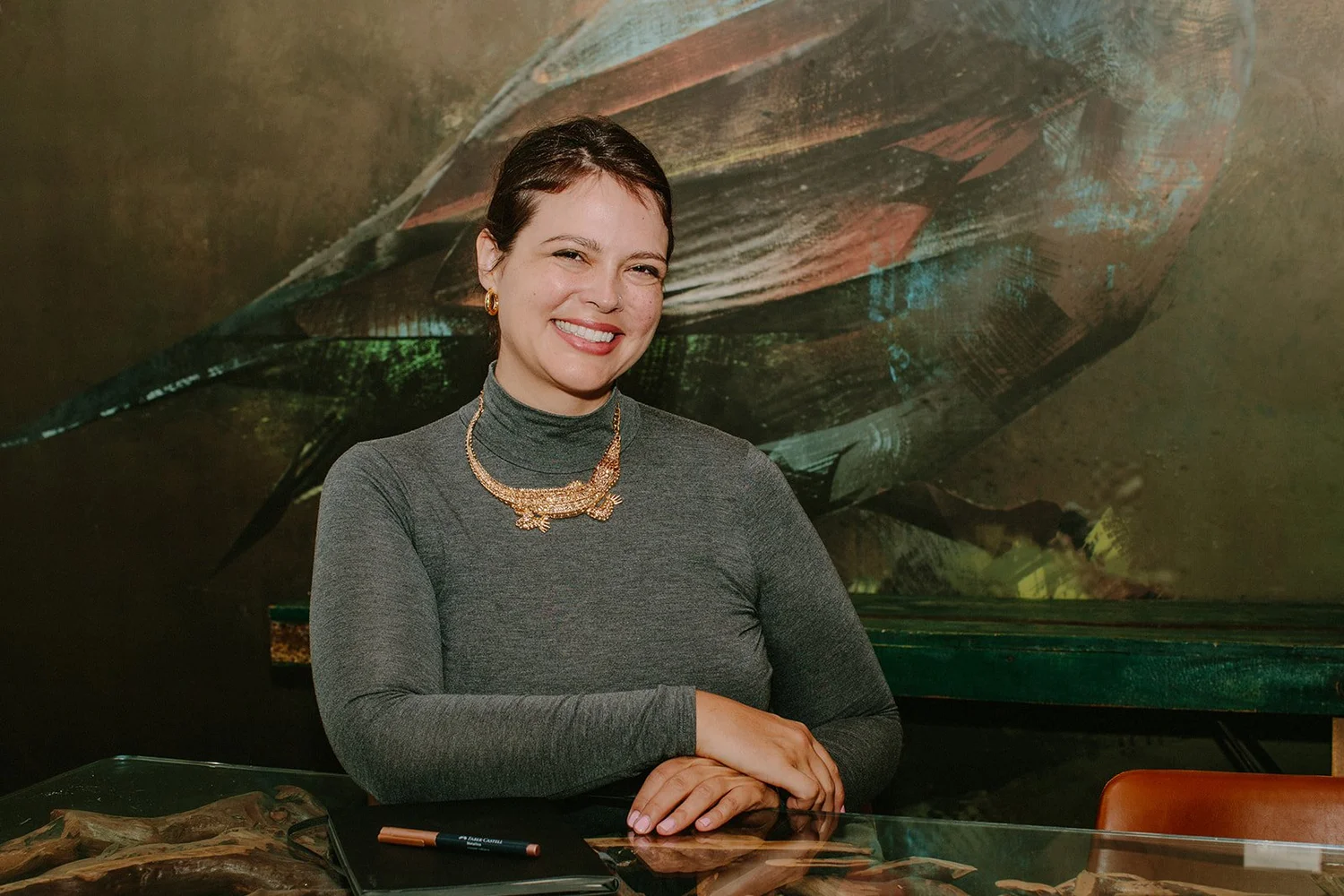
A career that refused to pick a lane
Sara Drakeley runs Sentz, a payments company built on a stubborn premise: that sending money across a border should be as quiet, fast, and private as sending a text. Formerly known as MobileCoin, the Sacramento company is wagering that stablecoins - digital dollars that hold their value - can do for remittances what email did for the letter.
She did not arrive here the usual way. There was no straight line from a finance internship to a corner office. Drakeley studied mathematics and computer science at MIT, where she meant to do physics until a course with complexity theorist Scott Aaronson rerouted her. From there the path bends in ways that sound invented: cartoon oceans, hedge-fund order books, rocket telemetry, and finally a cryptographic ledger meant to move value without leaking your life story.
"My origins root from a non-linear path through animation, finance, and aerospace," she has said, "before ultimately arriving at cryptocurrency." It is a tidy summary of an untidy resume. The through-line is not an industry. It is a method - the simulation of complex systems, whether that system is a wave, a market, or a rocket.
It is untenable for payments to lack privacy.
The shape of the story
The numbers are a sketch, not the portrait. She joined MobileCoin in August 2018 as its third engineering hire, became engineering manager in 2020, chief technology officer in 2021, and chief executive in 2023. Few founders climb every rung of a company they did not start. Drakeley did - principal engineer to CEO, without skipping a step.
The animator who did the physics
For roughly five years, Drakeley was a technical director at Walt Disney Animation Studios. The title sounds like committee work. The job was not. She led procedural geometry pipelines - software that grows the small infinities a film needs and no human could place by hand. The trees in Frozen. The fur in Zootopia. The water and waves of Moana. She also has credits across Wreck-It Ralph and Big Hero 6.
This is the strange specific worth keeping: when you watched Moana's ocean curl and breathe, you were watching the output of math Drakeley helped engineer. Animation, to her, was fluid dynamics with a deadline and an audience.
Then she left for Wall Street. At Engineers Gate, a Manhattan hedge fund, she built trading infrastructure and data engineering platforms - markets being just another dynamic system to simulate. From there she joined the simulation team at SpaceX, working on rocket simulators. Waves, then markets, then rockets. The same instinct, aimed at harder things.
The pivot to crypto
The 2017 cryptocurrency boom caught her attention, and MobileCoin's mission held it. CEO Josh Goldbard recruited her. What pulled her in was not speculation - it was privacy, and the social weight of who a private, low-cost payment network could actually help. As the third engineer in the door, she got to touch nearly every layer of the stack: SGX attestation, consensus protocols, the Fog service, and a research branch chasing smart contracts and zero-knowledge proofs.
Can you imagine if you go to a coffee shop, and you pay for your coffee, and in that instant the barista knows your salary?
That climb up the ranks was not handed to her. Joining a company as its third engineer means there is no playbook and no fence around your job. She has said the role "provided me the opportunity to work on nearly every aspect of the MobileCoin technology ecosystem" - a polite way of describing the kind of total immersion that turns a strong engineer into someone who can run the place. By the time she chaired the Tech Advisory Committee of the MobileCoin Foundation, she had already touched the protocol from the metal up.
Sentz, and the case for boring money
MobileCoin powered the in-app payments Signal launched in beta in 2021, letting users send value with the same privacy expectation they bring to their messages. Under Drakeley, the company rebranded as Sentz and leaned into stablecoins and cross-border payments - the digital-dollar plumbing aimed at remittance corridors like Mexico, Nigeria, and the Philippines, where fees are high and speed is scarce.
Her pitch for blockchain is refreshingly unromantic. "With blockchain, you just have a single transaction between two parties," she says. "It is way simpler." No correspondent banks, no multi-day settlement, no chain of intermediaries each taking a cut and a copy of your data. The company has charted a path to revenue through transaction fees and value-added services such as lending.
The conviction underneath is consistent with everything before it: "Users should have the technology and the right to conceal or share their own data and communications." Privacy, to Drakeley, is not a feature you toggle. It is the default a payment system should have started with.
Private by default
Payments that do not broadcast your balance, your salary, or your habits to anyone watching the ledger.
Borderless
Stablecoin rails built for remittance corridors where legacy transfers are slow and expensive.
Instant + cheap
A single transaction between two parties - settlement measured in seconds, not business days.
The lineage matters. MobileCoin was founded in 2018 with Josh Goldbard among its founders, and it grew up entangled with Signal, the encrypted messaging app whose ethos - private by design, owned by users - it shared. When Signal switched on payments, it chose MobileCoin's coin to carry them. Drakeley inherited not just a codebase but a worldview: that the tools handling your most sensitive acts, your words and your money, should answer to you and to no one else. Backers including Binance Labs helped push total funding past $116 million, with a $75 million Series B along the way.
Stablecoins are the unglamorous center of that bet. They do not promise to make anyone rich overnight. They promise the opposite - a digital dollar that stays a dollar, cheap to move and quick to land. For a worker wiring wages home across an ocean, boring is the entire point. Drakeley's company is selling reliability dressed as software, and aiming it squarely at the people legacy finance serves worst.
Start with the test
Ask Drakeley how to untangle a hard problem and you get an engineer's koan: "Why don't you start with the tests. What should it be doing? Write those and see where that gets you." Define success first. Work backward. It is the same discipline whether the deliverable is a believable ocean or a payment that clears.
She describes her team with an orchestra metaphor and an unguarded warmth, calling them "the smartest, kindest, and hardest working people" she has encountered. She is an advocate for women leading in tech and finance, and she frames her larger aim in plain terms: "I envision a world where technology empowers individuals to take control of their financial destinies and create equitable opportunities for all."
She even has a productivity motto, a wink borrowed and bent from Mark Twain: "Never put off till to-morrow what you can do day after to-morrow just as well." Coming from someone who shipped Oscar-caliber films, traded on Wall Street, and now runs a payments company, it reads less as procrastination than as a sense of humor about deadlines she has clearly learned to beat.
What ties the whole improbable resume together is a refusal to treat any one field as home. Animation, finance, aerospace, cryptography - she keeps finding the same problem wearing different clothes, and she keeps reaching for the same tools to solve it. The polymath label gets thrown around loosely. In her case the evidence is on screen, on the order book, on the launchpad, and now on a ledger built to keep your money your own business.
From MIT to the CEO's chair
Five things that stick
- 01The ocean in Moana and the trees in Frozen both passed through code she helped engineer.
- 02Her career runs cartoon physics, hedge-fund algorithms, then actual rocket science - in that order.
- 03She was employee number three on the engineering team at the company she now runs.
- 04She holds patents in blockchain and cryptocurrency.
- 05Her productivity motto is a joke: "Never put off till to-morrow what you can do day after to-morrow just as well."