Felix raises $75M Series B led by QED Investors 400,000+ active users across 9 countries $1B+ in annual remittance volume via WhatsApp 12x revenue growth from 2023 to 2024 Named 2026 Endeavor Outlier Mastercard + Circle + Stripe partnerships Harvard Business School case study NPS above 90 — payout success rate near 99% Felix raises $75M Series B led by QED Investors 400,000+ active users across 9 countries $1B+ in annual remittance volume via WhatsApp 12x revenue growth from 2023 to 2024 Named 2026 Endeavor Outlier Mastercard + Circle + Stripe partnerships Harvard Business School case study NPS above 90 — payout success rate near 99%
Co-Founder & CEO — Félix

Manuel
Godoy

Venezuelan Engineer · Wharton MBA · WhatsApp Banker

He's building the bank that lives in your chat app. Félix sends money from the U.S. to nine Latin American countries - no download, no SWIFT delays, no extortionate fees. Just a WhatsApp message and USDC moving at blockchain speed.

$90.5M
Total Raised
$1B+
Annual Remittances
400K+
Active Users
9
Countries
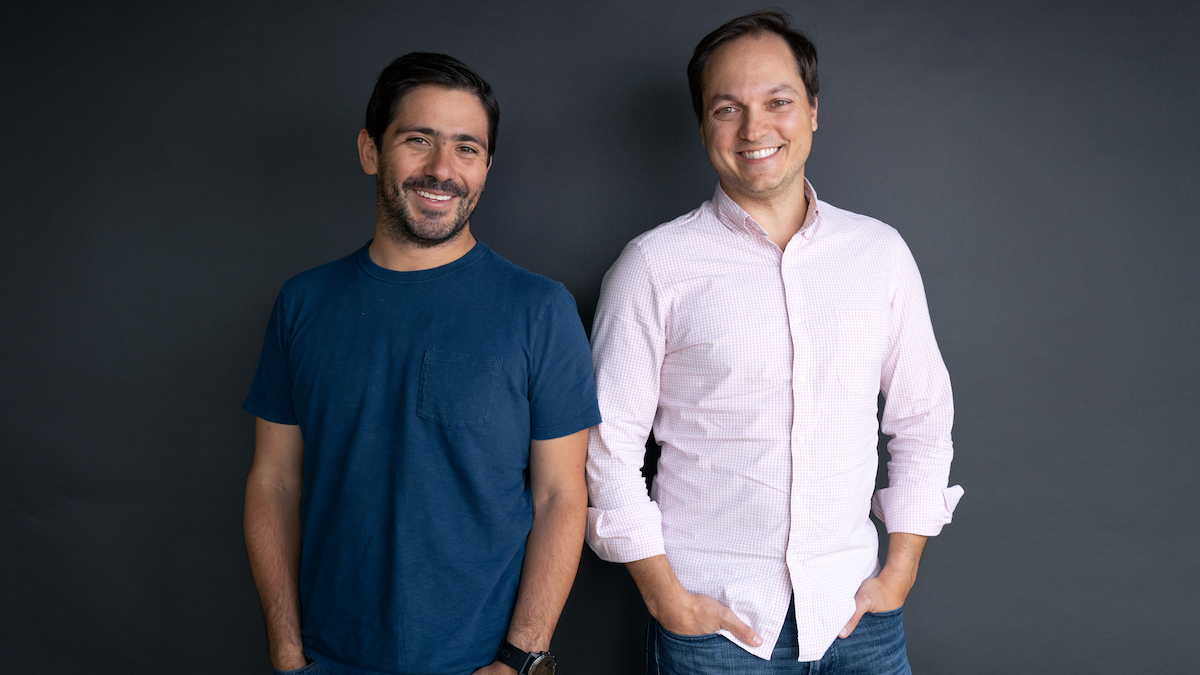
Manuel Godoy and Bernardo Garcia, co-founders of Félix
Manuel Godoy (right) and co-founder Bernardo Garcia — Photo: Susana Portillo Barragan for TechCrunch, 2023
12x
Revenue Growth 2023-2024
$3B
Payment Volume on Stripe
99%
Payout Success Rate
40K+
Cash Pickup Locations

The Immigrant Who Turned WhatsApp Into a Bank

Manuel Godoy grew up in Venezuela and left for California to study electrical engineering at Caltech - one of the most demanding technical programs on earth. He didn't study fintech. He didn't study payments. He studied circuits, sensors, and signal processing. Then he went to work for Schlumberger in Texas, building hardware for oil wells.

Which makes the story of Félix stranger and more interesting than the usual startup origin myth. This is not a payments insider who spotted a gap. This is an engineer who lived the friction - sending money home across borders, paying fees that felt like a toll booth run by a cartel, waiting days for transfers that should take seconds - and decided the problem was a solvable engineering problem.

He went to Wharton for his MBA. There, in the Wharton Latin American Student Association, he met Bernardo Garcia from Mexico. Two immigrants, one shared pain, one shared spreadsheet of ideas. Félix was born from that conversation.

Trust is the biggest barrier to reaching Spanish-speaking consumers - once you earn it, everything changes.

- Manuel Godoy, Co-Founder & CEO, Félix

The insight that separated Félix from every other remittance app: don't build a new app. Your users already have WhatsApp. They already trust it. Their families already use it to communicate. Building a separate app means asking a first-generation immigrant from Honduras or Guatemala to learn a new interface, create a new account, trust a new brand with their money. That's a lot of friction stacked on top of an already stressful transaction.

Instead, Félix embedded directly into WhatsApp. You message Félix the way you'd message a friend. An AI-powered chatbot handles the conversation in Spanish or English. USDC stablecoins move on the Stellar blockchain. The money arrives - at a bank, a mobile wallet like Mercado Pago or Nubank, or one of 40,000+ cash pickup locations across Latin America - in minutes instead of days.

The economics, plainly stated: Traditional remittance services charge $10 or more to send $100. Félix, using blockchain settlement, can deliver the same transfer for a fraction of that cost. For a family receiving $300/month from a relative in the U.S., that difference compounds into real money over a year.

Godoy joined Money20/20 US 2025 as a keynote speaker on cross-border payments - a stage typically owned by the incumbents whose business model he's disrupting. Western Union, MoneyGram, and the legacy wire transfer networks collectively charge billions in fees annually on the $120 billion U.S.-to-Latin America remittance corridor. Félix's model, structurally, eliminates the reason those fees exist.

The $75 million Series B announced in April 2025 - led by QED Investors, with General Catalyst, Monashees, Endeavor Global, and the existing investors following on - was not a lifeline. It was ammunition. The round followed 12x revenue growth in a single year, 400,000 active users (doubled from 175,000), and a Net Promoter Score above 90. Users don't just use Félix. They tell their cousins.

Blockchain Rails Under a WhatsApp Window

The stack underneath Félix's deceptively simple WhatsApp interface is sophisticated. Circle's USDC stablecoin eliminates the currency risk during transit - dollars don't become pesos until they arrive, which means the exchange happens once, not twice. The Stellar blockchain handles settlement at near-instant speed for fractions of a cent in transaction costs. Bitso converts USDC to Mexican pesos at the other end.

This infrastructure is why the payout success rate sits near 99%. Legacy remittance companies fail transactions because they're routing through correspondent banking networks with multiple failure points. Félix's blockchain settlement has one hop instead of five.

The AI layer matters too. Godoy's background in engineering means he thinks about reliability mathematically. The chatbot is multilingual (English/Spanish), handles edge cases, and routes customers to 24/7 live support when needed. The AI doesn't just reduce costs - it extends the service to people who've never used mobile banking and need patient, conversational onboarding.

From MBA Startup to $90.5M Raised

Félix's funding arc is a lesson in compounding conviction. The Series A ($15.5M) came from specialist investors who understood blockchain and LatAm payments - Switch Ventures, Castle Island Ventures, and HTwenty. By the time QED Investors led the Series B, the company had earned the right to name its terms.

Series A
$15.5M
Series B
$75M
Total Raised
$90.5M

Nine Countries, One Chat Window

Félix launched focused on the Mexico corridor - the single largest U.S.-to-Latin America remittance channel, worth roughly $60 billion annually. From there, Godoy expanded methodically: Guatemala, Honduras, El Salvador, Dominican Republic. Then the 2025 Series B opened the door to Colombia, Ecuador, and Peru.

The Mastercard partnership (via Mastercard Move) accelerated Central America coverage significantly. Mastercard's infrastructure handles local last-mile delivery in markets where Félix's own payout network is still maturing. The dLocal partnership brought instant stablecoin-funded payouts to more markets. These aren't vanity partnerships - they're pieces of infrastructure that would take years and hundreds of millions of dollars to build independently.

The expansion roadmap beyond remittances is where Godoy's ambitions get large. Credit products for immigrants who lack U.S. credit history. Savings accounts. Financial services for people who are fully employed, tax-paying members of the U.S. economy but remain invisible to the traditional banking system. Félix's NPS above 90 means the trust is already there. The distribution is already there. The hard part, he has argued, is already done.

Every Major Payments Player Is Backing This

Félix's investor and partner list reads like a who's-who of global payments infrastructure. This is not accidental. Godoy structured the company to sit at the center of multiple networks rather than competing with them - a deliberate architectural choice that accelerated expansion without requiring Félix to own every piece of the stack.

QED Investors General Catalyst MercadoLibre Monashees Endeavor Global Castle Island Ventures Switch Ventures HTwenty Circle (USDC) Mastercard Move Stripe Nubank dLocal Bitso Mercado Pago

The Record

🎓

Harvard Business School Case Study

Félix and Manuel Godoy became a Harvard Business School case study while the company was still in early growth - a rare marker of genuine business model innovation.

🏆

2026 Endeavor Outlier

Named among the top 10% of Endeavor-backed companies globally. The 2026 cohort collectively raised $31 billion. Félix is in their company.

📊

Wharton Most Disruptive Startup 2021

Poets & Quants recognized Félix as one of Wharton's most disruptive MBA startups in the year it launched. The trajectory since has justified the label.

🎤

Money20/20 Keynote Speaker

Invited to speak at Money20/20 US 2025 on cross-border payments - a stage typically reserved for incumbents, not the companies disrupting them.

$3B on Stripe

Félix powers $3 billion in payment volume on Stripe's platform - a benchmark that earned a Stripe case study and placed Félix among the platform's notable fintech success stories.

🌎

Caltech + Wharton Pedigree

BS and MS in Electrical Engineering from Caltech, then MBA from Wharton. The engineering rigor and business acumen combination is rare - and visible in how Félix is built.

Reinventing Remittances, One WhatsApp Message at a Time

The U.S.-to-Latin America remittance market moves roughly $120 billion per year. A significant portion of that - estimates suggest 5-8% - disappears in fees before reaching the families who need it. For a farmworker in California supporting a family in Oaxaca, that's hundreds of dollars a year that should go toward food, education, or a small business, diverted instead to legacy financial infrastructure.

Godoy's engineering background shapes how he thinks about this. The fees exist not because the incumbents are especially greedy (though margins are healthy), but because the underlying infrastructure is inefficient. Multiple correspondent banks, each taking a cut. Currency conversion happening twice, with spread captured at each step. Settlement windows measured in business days because the systems were designed in the 1970s.

USDC on Stellar eliminates most of this friction at the infrastructure level. The fee goes nearly to zero because the cost structure goes nearly to zero. Godoy didn't disrupt the incumbents by being better at their game. He changed the game.

The next chapter - credit products, savings accounts, full financial services for the 44 million Latin American immigrants in the U.S. - is built on the trust that the remittance product earned. A 90+ NPS means Félix users are telling friends. The growth from 175,000 to 400,000 active users in one year happened largely without a traditional marketing funnel. The product was the marketing.

The technology lets us be 10x cheaper than the incumbents.

- Manuel Godoy

Godoy has spoken in interviews about the moment he realized trust - not technology - was the hardest part to solve. He could build a technically superior product and it would still fail if a first-generation immigrant from Honduras didn't believe their money would arrive. WhatsApp solved that. The app is already trusted. The conversation interface is already familiar. Félix borrowed credibility from a platform two billion people already rely on daily.

That insight - find where trust already lives, and build inside it - is the kind of thing a BCG consultant might write in a slide deck. Godoy built a company on it.

What Drives Manuel Godoy

Trust is the biggest barrier to reaching Spanish-speaking consumers - once you earn it, everything changes.

On the role of WhatsApp in building user trust

The technology lets us be 10x cheaper than the incumbents.

On USDC stablecoin settlement vs. traditional rails

We're not just building a remittance product - we're building the financial infrastructure for the next generation of Latino immigrants.

On Félix's broader mission

Share this profile