Company File / FP&A
Abacum.
The AI-native financial planning platform that wants to make the finance team the most interesting people in the building.
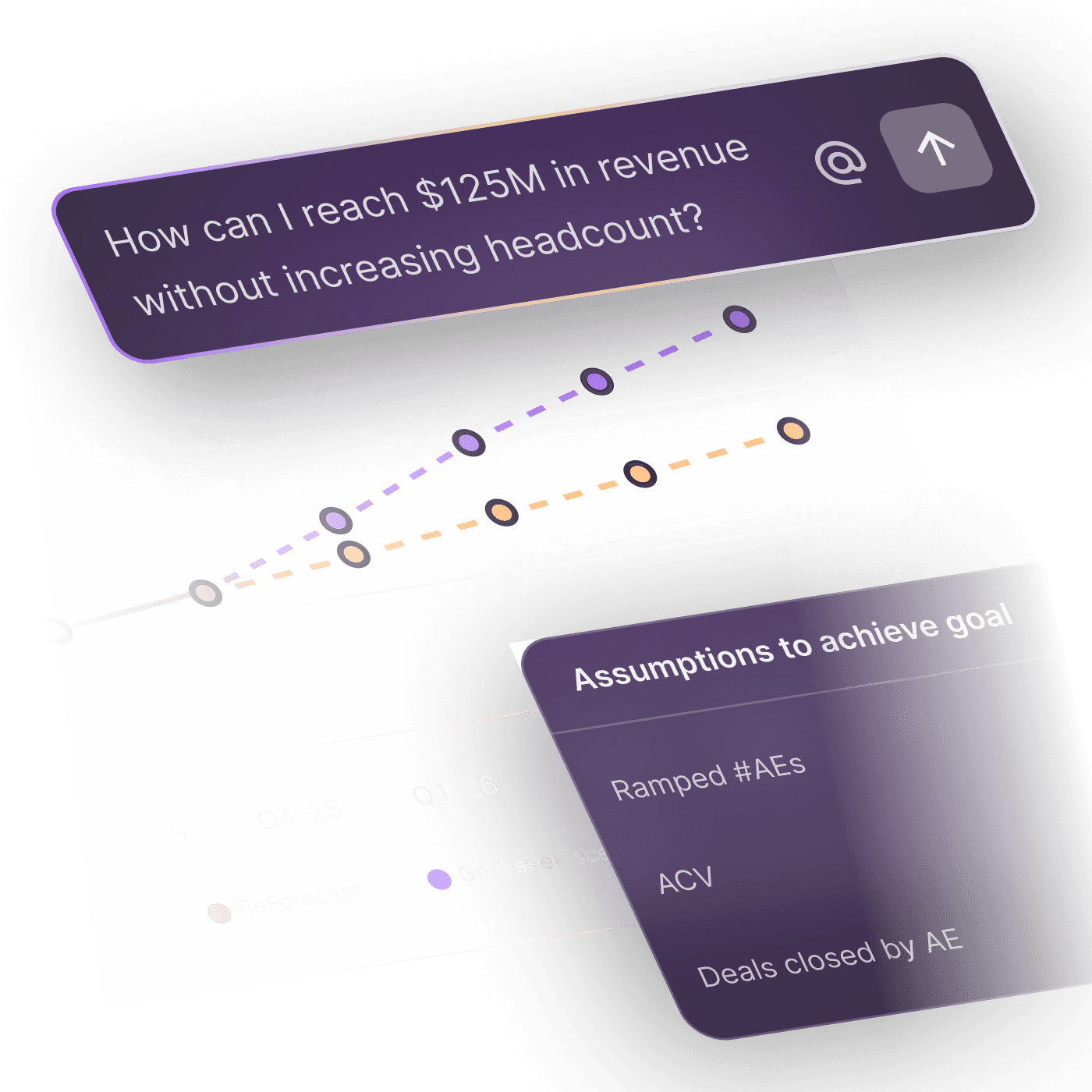
The AI-native financial planning platform that wants to make the finance team the most interesting people in the building.
Somewhere in a mid-market company you've probably heard of, a finance analyst is not rebuilding a broken spreadsheet at 11pm. The forecast updated itself when the actuals landed. The board deck pulled live numbers. An AI flagged an odd spike in cloud spend before anyone asked. This is the small, unglamorous revolution Abacum is selling: finance work that finishes on time.
Abacum is an FP&A platform - financial planning and analysis, the discipline of figuring out where the money is going and whether the plan still holds. For decades that meant spreadsheets, copy-paste, and the quiet dread of a formula that referenced the wrong cell. Abacum's pitch is that the office of the CFO deserves software that does the grunt work so humans can do the thinking.
"We believe finance is undergoing a generational shift. CFOs and FP&A leaders deserve better tools to become strategic drivers."
The dirty secret of corporate finance is that the most important number in the building usually lives in a spreadsheet that one person understands and is afraid to touch. Data comes from the ERP, the CRM, the HR system, and the bank - all speaking different dialects. Reconciling them is a job. Cleaning them is a second job. By the time the report is ready, the question has changed.
The founders had lived this. Julio Martinez came from investment banking at Citi across New York, Sao Paulo and Zurich. Jorge Lluch had been COO at TravelPerk and CFO at Wallapop. Both knew the specific exhaustion of being asked "what happens if revenue drops 15%?" and realising the answer would take three days and a fresh tab.
"FP&A was fundamentally broken - finance teams spent too much time on tedious manual tasks, leaving little room for strategy."
In 2020, in Barcelona, Martinez and Lluch made a bet that sounds obvious in hindsight and was anything but at the time: that finance teams would pay for software built specifically for them, by people who had done the job. They called the philosophy "by finance, for finance." A year later they were in Y Combinator's Winter 2021 batch.
The wager had a second half. Most planning tools sold to the enterprise giants - long implementations, six-figure contracts, consultants. Abacum aimed at the mid-market: companies big enough to feel the pain, small enough to want something they could actually deploy. It is a less flashy stretch of the market. It is also where a great many companies live.
"Our mission is to make finance teams the hero of their organization."
Abacum's platform pulls financial and operational data into a single, real-time layer, then lets finance teams do the work that used to take a week in an afternoon. Connect the ERP, CRM and HRIS; the data gets cleansed and reconciled automatically. Build connected models. Run scenarios without rebuilding the workbook. And yes - there is a two-way Excel connector, because the most honest way to win finance teams over is to meet them where they already live.
Connected models for revenue, headcount, multi-entity and scenario planning - updated from live data, not last quarter's snapshot.
Automated reports, dashboards, variance and investor reporting that refresh themselves when the numbers move.
AI summaries, anomaly detection and multi-agent capabilities that surface the spike before the board meeting does.
Two-way Excel sync plus NetSuite, Sage Intacct, Workday and Salesforce - with the data cleansing done for you.
"Surface actionable insights, forecast with confidence, model scenarios to reduce uncertainty, automate reports, plan headcount - and much more."
A finance tool that can't show its own results is a punchline. Abacum's are real: in the twelve months before its 2025 Series B, the company tripled revenue while keeping the same team size - the kind of efficiency CFOs frame on the wall. Its customers span 31 countries and include Strava, Aiven, JG Wentworth and Mastercam. The product carries a 4.8 out of 5 rating across hundreds of reviews, and holds SOC 2 Type II and ISO 27001 certifications.
The investor list reads like a vote of confidence that compounded. Atomico, Creandum, K Fund and Y Combinator all came back for the Series B - the rounds led, in turn, by Scale Venture Partners with Cathay Innovation alongside. Partners like Valuemont handle joint deployments, and a Built for NetSuite certification keeps the ERP plumbing honest.
Abacum's stated mission is to empower finance teams to work smarter, make better decisions, and accelerate their companies' success. Stripped of the deck language, it means this: the people who guard the money should spend their days advising the business, not wrestling formulas. The company's bet on agentic AI - software that anticipates the next question rather than waiting to be asked - is the logical next chapter of that idea.
There is a pleasing irony here. Finance, the function most associated with caution, may turn out to be one of the first to be genuinely reshaped by AI. Abacum is wagering that the change comes not from replacing the analyst but from giving them an apprentice that never sleeps and never miscounts.
"CFOs and FP&A leaders deserve better tools to become strategic drivers."
The analyst we left at the start - the one who isn't crying - represents something larger than one company's product roadmap. Every business runs on a plan. Most of those plans are still held together by spreadsheets and the heroics of overworked people. If Abacum is right, the next decade quietly rewires how companies decide what to spend, who to hire, and what to bet on.
That is the wager $90M is funding: not flashier dashboards, but better decisions, made faster, by people who finally have the time to make them. The close finishes on schedule. The forecast is already current. And the most interesting conversation in the building is happening, for once, in finance.
"Make finance teams the hero of their organization."