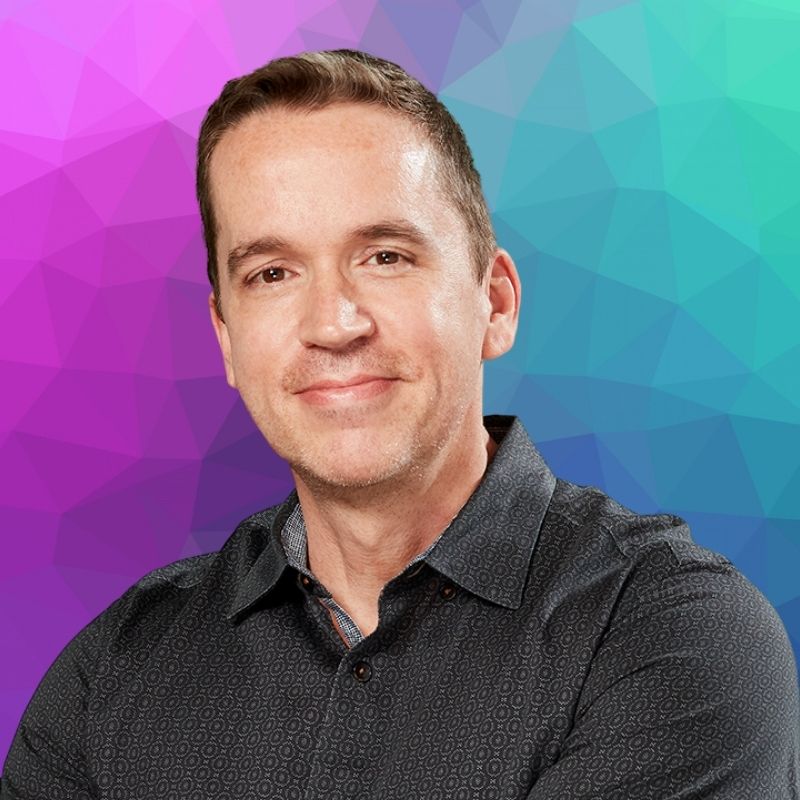
Sean Neville has, over roughly a decade, invented one thing you have probably used and is trying to invent another that will use you. The first was USDC, the dollar-pegged stablecoin he architected at Circle, the Boston company he cofounded with Jeremy Allaire in 2013. USDC has since settled hundreds of billions of dollars in transaction volume. The second, still in progress, is Catena Labs, a 17-person Boston company that is applying for a national trust bank charter and whose intended account holders are, mostly, not humans.
Catena's thesis, delivered in the flat, patient voice of a person who has done this before, goes like this. AI agents are about to conduct a lot of economic activity on behalf of people and businesses - booking travel, negotiating supply orders, paying for API calls, subscribing to things, cancelling things, buying things. Legacy financial systems are built around humans presenting plastic cards and reading captchas. That is a bad fit. The agents need bank accounts. The banks need to know how to underwrite them. Nobody, in the traditional sense, has built the guardrails yet.
So Catena is building the guardrails. It has released an open source protocol called the Agent Commerce Kit, or ACK, that defines how an agent proves who it is (using decentralized identifiers), how it enforces the payment rules its principal set (a human, a business), how it produces verifiable credentials for receipts, and how it moves money across chains in stablecoins. It has raised $48 million across two rounds: $18 million in a May 2025 seed led by a16z crypto with Breyer Capital, Coinbase Ventures, Circle Ventures, Pillar VC and, among the angels, Tom Brady; and $30 million in a May 2026 Series A led by Acrew Capital and a16z crypto. It has, of course, also filed the paperwork to become a bank.
The bank-charter question is the interesting one. Most fintech founders spend their careers rerouting around the banking system. Neville is doing the opposite. He would like Catena to hold a national trust charter from the Office of the Comptroller of the Currency, which would put its AI-facing accounts inside the perimeter of U.S. banking supervision. The argument, when he makes it at conferences, is that if the agents are coming - and he thinks they are - the guardrails need to exist before the traffic does, not after. Neville has told regulators, in polite terms, that he would like them to help him invent this category on purpose.
At a Money20/20 talk in Las Vegas in October 2025, Neville explained why the credit card is the wrong instrument for an AI. "If an AI actor is making a payment," he said, "it doesn't make a lot of sense for it to have a physical credit card - it makes a lot of sense for it to have money that moves at internet speed." The line is drier than a stand-up bit but it is, in its way, a whole product roadmap. Money that moves at internet speed is the stablecoin. Money the bot can spend on your behalf is the account. Money the bank will accept from a bot without shrugging is the identity protocol. Catena is building all three.
What he keeps saying, in podcasts and press interviews, is that the hard part is not the wallet. "Giving an agent a wallet is pretty easy," he told the a16z crypto show, "compared with giving a business a governed way to trust it." A wallet is a key pair and a balance. A business willing to send money to a bot needs an audit trail, an identity, a set of rules the bot cannot override, receipts a court would accept, and a counterparty who is on the hook if something goes wrong. That last part is the bank. This is the part Neville, in his engineer way, seems to enjoy explaining slowly.
He has done this before, roughly. In 2013 he and Allaire cofounded Circle with the pitch that money should behave like email - "instant, global, free, fun, and open," Neville has said. They picked stablecoins as the vehicle. USDC launched in 2018 and did, in fact, become one of the primary instruments of on-chain finance. Neville stepped down as co-CEO in December 2019 and stayed on the board. Circle went public in 2025 and had a 450 percent first-day surge. Neville, having watched the internet dollar he architected become a public-market asset, went and started Catena instead of retiring.
Before Circle, there was another life - the software one. Neville founded a consultancy called Code Studio in 1998, joined Allaire the company in 2000 as a senior software engineer, then followed the Allaire acquisition into Macromedia, where he was a senior architect and principal scientist through 2006 (which, chronologically, means he was in the room during the Flash years, and then in the room again after Adobe bought Macromedia). He was a senior software architect at Brightcove after that, then ran his own mobile app studio, Sevenchord, from 2008 until Circle. The pattern, if there is one, is that he tends to build the plumbing under other people's names. Allaire is Circle's public face. USDC is a Circle product. ACK, at Catena, is being released as a neutral open source protocol; the bank is the business.
Catena's cap table is worth noting mostly because of who is on it. a16z crypto led both rounds. Breyer Capital, Coinbase Ventures, Circle Ventures, CoinFund, Pillar VC and Stanford Engineering Venture Fund joined the seed. Acrew Capital led the Series A. Tom Brady put money in. This is not the cap table of a lifestyle business.
The cap table also, quietly, encodes a bet on where regulation is heading. If Catena secures the trust charter, it will have a plausibly defensible moat - the guardrails Neville wants to build under the agent economy will have his company's name on them. If it does not, or if the OCC takes years to decide, it still has an open source protocol that anyone can adopt, and the market position of the person who invented USDC saying, again, that money should behave differently. Neville has, more than once, gotten paid for being right about this.
He is understated about it. In interviews he uses the phrase "we are in early days" the way other founders use "we are disrupting." When Fortune asked him what percentage of transactions would eventually be initiated by agents rather than humans, he said the majority, if not all initial ones. When the Barefoot Innovation podcast host, who had known him personally during a Harvard senior fellowship near Circle's original office, asked him the same question with more context, he said the same thing. The consistency is characteristic. Neville has been saying variations of "the payment rails are wrong for what's coming" since roughly the summer of 2013. He is now on his second attempt to build the ones that are right.
The company is small on purpose - 17 employees for $48 million raised, or about $2.8 million per head, which is either a lot of runway or a lot of runway-per-hire depending on how you look at it. Catena is not trying to be a big consumer app. It is trying to be a specific, boring, regulated piece of infrastructure that other people will build on top of. Neville has done that before. It was called USDC.
The trick, and the reason to pay attention to Catena rather than to any of the dozens of "AI agent for X" companies that launched in the same year, is that Neville is not building a product for agents to use. He is building the counterparty they will need to have. That is a much smaller category. The category has, at present, exactly one credible entrant.