paas
(13)
mx51
mx51 is a Sydney-based fintech that provides a bank-grade, cloud-native Payment-as-a-Service platform. Spun out of Assembly Payments in 2020, it gives banks, acquirers and payment providers white-label, multi-channel payment infrastructure - in-store terminal software, merchant and support dashboards, analytics and 150+ point-of-sale integrations - so they can serve merchants without building the technology themselves. Its customers include Commonwealth Bank and Westpac, and the platform has processed billions of dollars in transactions across the Asia-Pacific region.
Pomelo
Pomelo (Pomelo Group) is a London- and Singapore-based payments technology company that provides a unified, API-based Payment Platform-as-a-Service. It gives financial institutions, fintechs and enterprises ready-to-use payment rails, merchant onboarding and management, transaction monitoring, and a range of acceptance methods - from QR codes and tap-to-pay to payment links and card issuing - under a single white-label platform. Founded in 2017 as Pomelo Pay, the company has grown into a regulated e-money issuer serving 2,000+ businesses across the UK and Southeast Asia.

8090
8090 is an AI-native software factory that helps regulated enterprises build and modernize production software using teams of people working alongside AI agents. Founded by Chamath Palihapitiya in January 2024 and headquartered in the San Francisco Bay Area, its flagship Software Factory platform runs the full software development lifecycle - from business intent to production code - through five modules (Refinery, Foundry, Planner, Assembler, Validator) while preserving the documentation, oversight and audit trails that regulated industries require. The company raised a $135M Series A led by Salesforce Ventures in June 2026, with Chamath stepping in as full-time CEO.
Vectara
Vectara is a Palo Alto-based enterprise AI company building a trusted, end-to-end platform for retrieval-augmented generation (RAG) and AI agents. Founded in 2022 by former Google AI researchers, it lets companies embed grounded, citation-backed GenAI - conversational assistants, semantic search, and agents - into their products while actively detecting and correcting hallucinations at runtime. Its stack includes the Boomerang embedding model, the RAG-tuned Mockingbird LLM, the open-source Hughes Hallucination Evaluation Model (HHEM), and a Guardian Agent layer, positioning Vectara as a leader in factual, secure, compliance-ready enterprise AI.

ServiceNow
ServiceNow is the enterprise software company behind the Now Platform, a single cloud system that turns the messy, cross-departmental work of large organizations - IT tickets, HR cases, customer issues, security incidents - into digital workflows that can be automated. Founded in 2004 by Fred Luddy and now led by CEO Bill McDermott, the company has grown into one of the most valuable software firms in the world, generating over $13 billion in annual revenue and racing to embed agentic AI into every business process for the 8,000-plus enterprises and the vast majority of the Fortune 500 that run on it.

Bin Zhao
Bin 'Tony' Zhao is the founder, CEO, and Chairman of Agora (NASDAQ: API), the Real-Time Engagement Platform-as-a-Service he built after 20 years on the frontlines of internet voice and video - from being a founding engineer at WebEx to CTO of JOYY with 300 million users. Founded in 2013, Agora now powers over 80 billion minutes of real-time engagement monthly, supplied the audio backbone for Clubhouse's viral moment, and in 2025 launched a Conversational AI Engine bridging human voice and large language models.

Sameer Kazi
Sameer Kazi is the CEO of Pantheon, the leading WebOps platform powering websites for The Home Depot, Kaiser Permanente, and Doctors Without Borders. A two-decade SaaS veteran who scaled ExactTarget through its $2.7B Salesforce acquisition, ran Cheetah Digital across 18 countries, and served as ActiveCampaign's first-ever president, Kazi brings a rare combination of operational rigor and growth instinct to Pantheon's 10,000-customer platform.

Pantheon
Pantheon is a San Francisco WebOps platform that runs Drupal, WordPress, and Next.js sites for over 12,000 organizations - from MIT to Patagonia to the United Nations Foundation - giving marketing and engineering teams a shared environment to ship the open web faster.

Render
Render is a San Francisco-based cloud application platform that lets developers and software teams deploy web services, databases, cron jobs, and AI workloads without managing servers. Founded in 2018 by former Stripe engineer Anurag Goel, the company has grown into one of the most popular alternatives to Heroku and a default choice for AI-native startups, now valued at $1.5 billion after a $100M Series C extension in February 2026.

TwelveLabs
TwelveLabs is a San Francisco-based AI company building video-native multimodal foundation models that give machines the ability to see, hear, and understand video the way humans do. Its flagship models - Marengo for embedding and retrieval and Pegasus for video-to-text generation - power enterprise applications in media, government, sports, and security, enabling precise semantic search, summarization, and insight extraction from video at scale. With 30,000+ developers on its platform and backing from NVIDIA, Databricks, Snowflake, and In-Q-Tel, TwelveLabs is becoming the standard infrastructure layer for video intelligence.
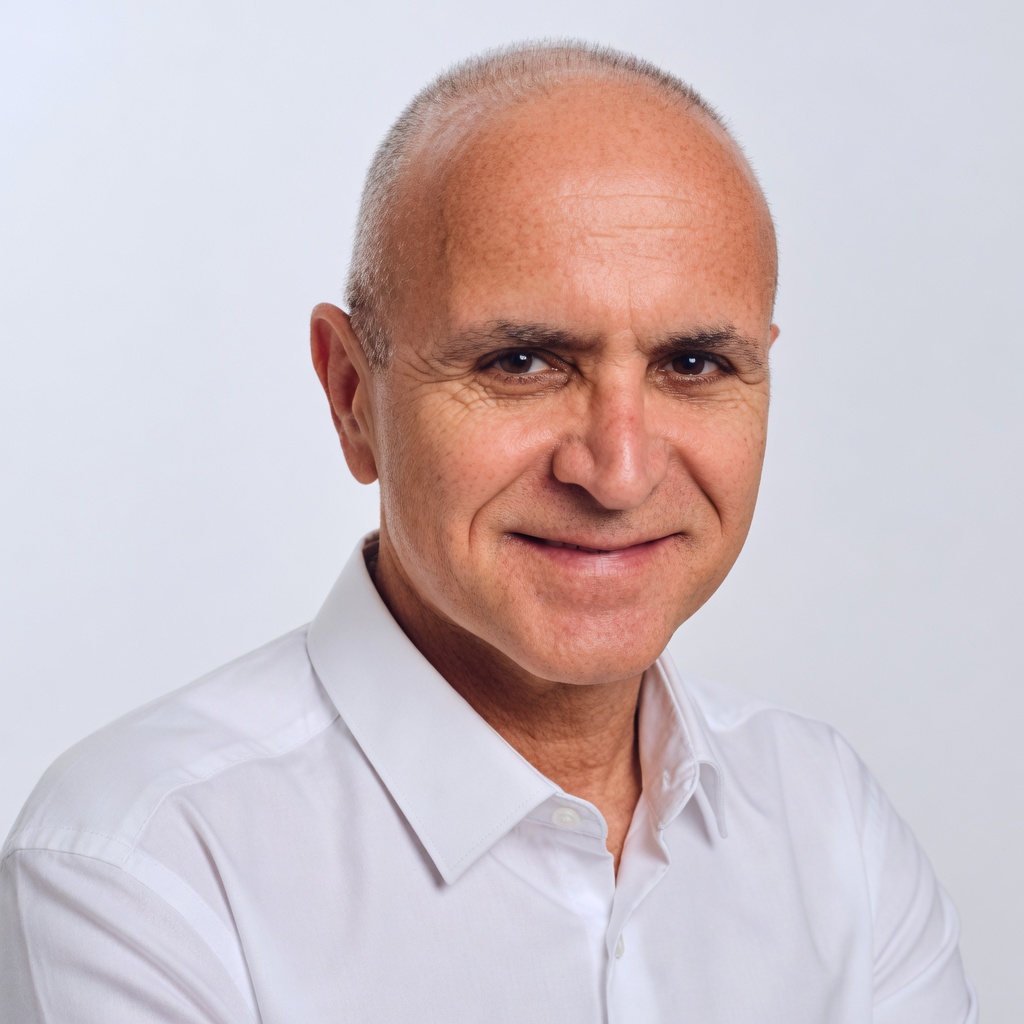
Frank Zamani
Frank Zamani is the Founder, President, and CEO of Caspio, a pioneering low-code platform that has powered over one million business applications in 150+ countries. Born Farhang Zamani in Tehran, Iran, he fled religious persecution as a Baha'i in 1986, was smuggled across the border to Pakistan, and received U.S. asylum in 1988 - arriving in San Francisco with his brother and just $70 between them. After earning a CS degree from Cal State Chico, working on Microsoft's PowerPoint team, and co-founding Autoweb.com (which IPO'd in 1999 at a $938 million valuation), he started Caspio in 2000 with a single conviction: business professionals should not need to code to build the tools their organizations need. By 2024, Caspio had grown to $120.7 million in annual revenue, 15,000+ customers, and roughly 230 employees.

John Grady
John Grady is the CEO of Ayla Networks, a San Jose-based IoT and smart home software platform that powers over 15 million connected devices and 250 billion annual transactions for brands like SharkNinja, De'Longhi, Canadian Tire, and Schneider Electric. A Boston College and Indiana University Kelley School of Business graduate with 20+ years in technology sales and operations, Grady rose through roles at Brown Brothers Harriman, Covad Communications, Pace PLC, ChargePoint, and Solar Mosaic before joining Ayla in January 2022 as Head of Global Sales and ascending to CEO in 2024. Under his leadership, Ayla was ranked the #1 US-based Smart Home Platform by ABI Research and announced a major Google Cloud partnership in April 2025.

Railway
Railway is a Platform-as-a-Service (PaaS) and cloud infrastructure company founded in 2020 by Jake Cooper, positioning itself as 'the developer cloud for the AI era.' It lets developers deploy apps and databases instantly with zero configuration — no DevOps, no FinOps, no SecOps required. Starting from zero marketing spend, Railway grew to over 2.68 million developers and penetrated 31% of Fortune 500 companies purely through word-of-mouth. In January 2026 it raised a $100M Series B to challenge AWS and the legacy cloud giants, underpinned by its own proprietary Railway Metal bare-metal data centers.