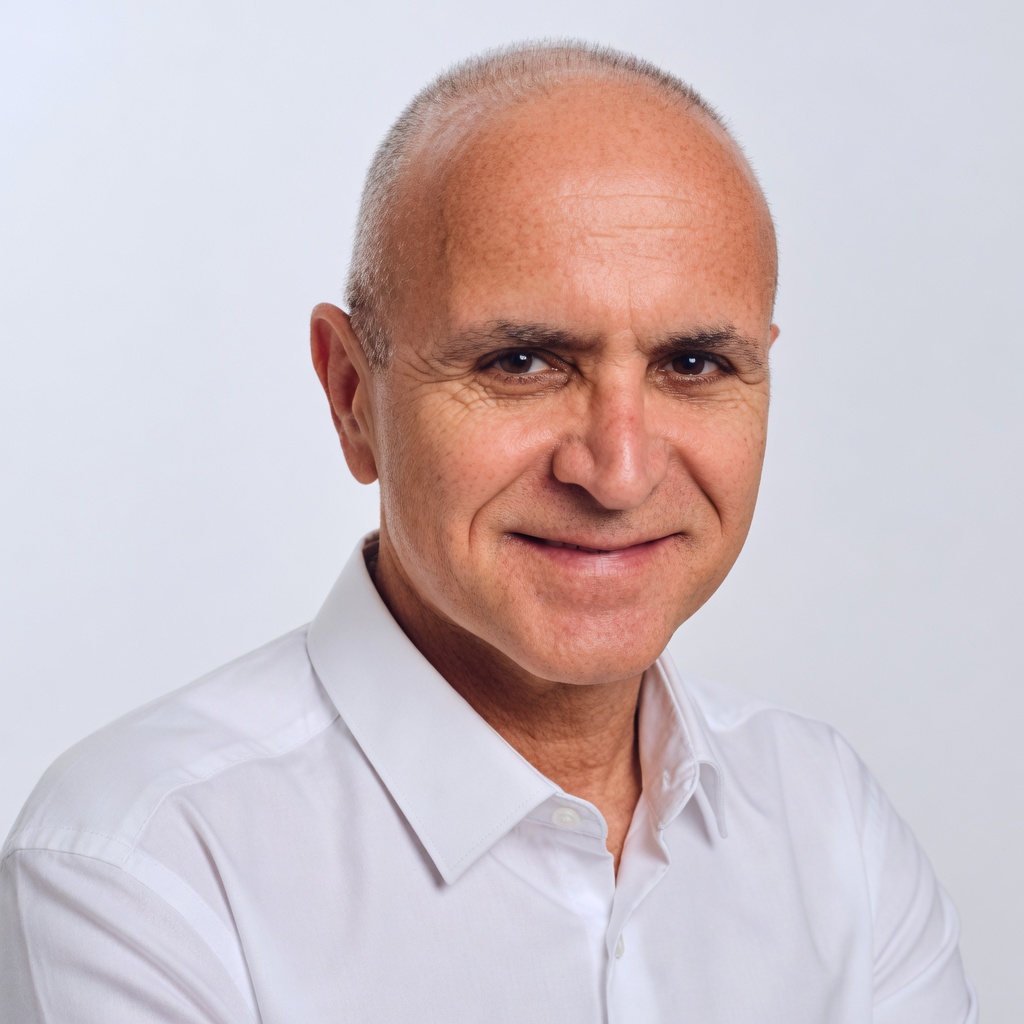
Profile
The Platform Running Quietly Inside Thousands of Organizations
Caspio does not run commercials. Its founder does not keynote TED conferences. Yet right now, somewhere inside a hospital, a university's registrar office, a government agency, or a Fortune 500 compliance department, someone is using a database application they built themselves - in hours, not months - on a platform that Farhang "Frank" Zamani created in Sunnyvale, California in the year 2000.
One million applications. Fifteen thousand customers. A hundred and fifty countries. These are not projections - they are the receipts. Caspio's 2024 revenue landed at $120.7 million, up from $19.1 million just four years prior. Forrester Research ranks it as a Leader in low-code platforms for business developers. And yet the company remains bootstrapped, private, and deliberately unglamorous. That is not an accident.
"I wanted to build a tool for businesses to create their own apps without coding," Zamani has said. He has been saying some version of that sentence since 2000. The word "no-code" did not exist then - at least not as a category. Frank Zamani was building the category before anyone thought to name it.
Origin Story
Smuggler, Pakistan, San Francisco - Then Cal State Chico
Frank Zamani was born Farhang Zamani in Tehran, Iran, and raised in the Baha'i Faith - a religion the Islamic Republic of Iran regards with deep suspicion, frequently targeting its practitioners for imprisonment, persecution, and worse. By 1986, with the Iran-Iraq War grinding on and the threat of forced military conscription looming alongside religious pressure, Zamani made a decision that would define his life: he hired a smuggler to get him out.
The route took him across the border to Pakistan, where he spent two years navigating the bureaucratic uncertainty of asylum-seeking. In 1988, the United States granted him asylum. He and his brother Payam arrived in San Francisco with approximately $70 in total - an amount more poetic than practical.
Think about how you can empower everyone in the organization, how you can democratize application building, and how you can put a business-application platform at their fingertips.
- Frank ZamaniHe enrolled at California State University, Chico, earned a BS in Computer Science between 1991 and 1994, and has since been recognized as a distinguished alumnus. The campus-to-tech pipeline was direct - he landed at Microsoft, where he contributed to the PowerPoint team. This is not a footnote; watching thousands of engineers hand-code common tools while businesses waited in line for IT resources planted the seed for everything that came next.
First Act
The $938 Million Opening Day
Before Caspio, there was Autoweb.com. In 1994 - the same year he graduated from Cal State Chico - Frank co-founded the early online car-buying marketplace with his brother Payam. The internet was barely a commercial entity. Autoweb was building infrastructure for it anyway.
March 1999: Autoweb.com went public. On the IPO's opening day, shares rose from $14 to $40 - a jump that valued the company at $938 million. This was peak dot-com, and Autoweb rode the wave with everyone else. In 2001, it was acquired by Auto-by-Tel LLC. The boom had busted, but Frank Zamani had already moved on to the next idea.
The experience at both Microsoft and Autoweb had clarified something: the biggest bottleneck in building software was not intelligence or resources, it was the insistence that only trained engineers could build the tools organizations actually needed. That was a solvable problem.
Main Act
Caspio: 25 Years and Counting
Caspio launched in March 2000. The dot-com crash was underway. The timing looked terrible on paper. Frank Zamani was not deterred - he was, if anything, building for the world that came after the crash, where organizations would need to do more with less.
The central idea was simple: a cloud-based platform that any businessperson - not just an engineer - could use to build online database applications, web forms, workflows, dashboards, and data-driven tools. Drag-and-drop. Point-and-click. No coding required. In 2001, the first product, Caspio Bridge, shipped.
From there, the roadmap followed real-world regulatory pressure as much as technology trends. HIPAA-compliant edition in 2014. GDPR compliance in 2016. SOC 2 certification. SAML SSO for enterprise customers. Role-based permissions. Audit logs. FIPS 140-2 compliance. Caspio did not just build an app builder - it built an enterprise-grade app builder that non-technical teams could actually trust with sensitive data.
The Milestone That Mattered
In 2018, Caspio announced that over one million applications had been built on its platform. Hospitals, universities, government agencies, nonprofits, financial services firms, and small businesses had collectively put a million pieces of software into production - most of them built by people who would never call themselves developers.
That same year, Forrester Research placed Caspio among the highest tier of low-code platforms for business developers. The recognition formalized what customers already knew.
Zamani's leadership philosophy centers on something he calls democratizing application building - getting relevant tools into the hands of everyone in an organization, not just the technical minority. "Technology should be accessible to all, regardless of technical expertise," he has said. Caspio's product decisions follow directly from this belief: unlimited users per plan, no per-seat pricing traps, a visual app builder that anyone can learn in a weekend.
By 2024, Caspio employed approximately 230 people across offices in Sunnyvale, Kraków, and Dnipro - and generated $120.7 million in annual revenue. It has never taken outside investment. No venture capital. No IPO. Frank Zamani built a nine-figure software business on the same principle he started with: make the tool good enough that customers find it, and trust that service keeps them.
Humanitarian
Once a Refugee - Now Helping Others
In February 2022, when Russia invaded Ukraine, Caspio had a development team based in Dnipro. Within days, Zamani mobilized. He personally arranged housing and supplies for Caspio's Ukrainian employees and their families, helping many of them relocate to Poland. He opened Caspio's platform free to any organization building applications to support Ukrainian humanitarian relief efforts.
The response was widely covered - including by the San Francisco Chronicle - and praised as an example of a technology company with institutional memory of what displacement actually costs. Zamani did not frame it as charity. He framed it as recognition. He had been that person at the border.
Caspio partners volunteered expertise and time to build operational tools for relief organizations. One partner created a logistics app for the BGV Charity Fund. Another built a virtual classroom connecting displaced Ukrainian children with educators from around the world. The platform did what it was designed to do.
Career Timeline
From Tehran to a Thousand Countries
Achievements
The Receipts
- Founded Caspio in 2000 - now serving 15,000+ customers across 150+ countries
- Platform has powered over 1 million applications worldwide
- Grew Caspio from $19.1M (2020) to $120.7M annual revenue (2024) - without outside investment
- Co-founded Autoweb.com, which IPO'd in 1999 at a $938 million opening-day valuation
- Distinguished alumnus of California State University, Chico
- Led Caspio to Forrester "Leader" designation in low-code platforms for business developers
- Climbed Mount Kilimanjaro - twice
- Provided free Caspio platform access and personal humanitarian support for Ukrainian employees during the 2022 Russian invasion
Just So You Know
Six Things Worth Remembering
Find Frank Zamani