Breaking
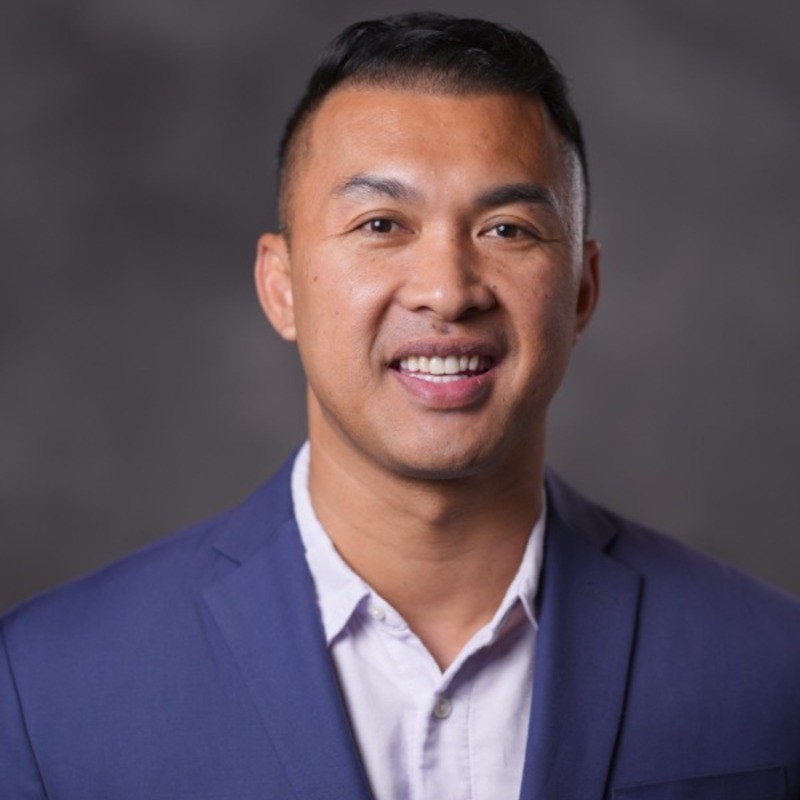
Heang Chan - CEO & Co-Founder of Prelim Stanford MBA + M.Ed. • Ex-Goldman Sachs • YC S17 Alum Prelim serves banks managing $5T+ in assets 50+ banking integrations, one platform ICBA ThinkTECH Accelerator 2024 cohort member Founded 2017 • 38 employees • San Francisco, CA Partnerships: Finastra, Abrigo, EJF Capital Heang Chan - CEO & Co-Founder of Prelim Stanford MBA + M.Ed. • Ex-Goldman Sachs • YC S17 Alum Prelim serves banks managing $5T+ in assets 50+ banking integrations, one platform ICBA ThinkTECH Accelerator 2024 cohort member Founded 2017 • 38 employees • San Francisco, CA Partnerships: Finastra, Abrigo, EJF Capital
Heang Chan, CEO of Prelim
YC S17 • Prelim
Founder • Executive • Fintech

Heang
Chan

The banker who walked out - and rebuilt the whole thing

CEO and Co-Founder of Prelim. He spent two decades learning banking from the inside - Wells Fargo, Bank of America, Goldman Sachs, Blend - and then founded the startup that makes banks wish they'd hired him back sooner.

Founder CEO Fintech Stanford YC Alum Banking
$5T+
Assets at banks served
50+
Banking integrations
2017
Founded (YC S17)
$4.1M
Total funding raised
38
Team members

Walk into a community bank in 2024 and ask a loan officer how long it takes to open a new business deposit account. The answer - two to three weeks, a stack of paper, and a cluster of siloed software systems that don't speak to each other - is not a secret. It's the status quo. Heang Chan has spent the better part of a decade making that answer obsolete.

Chan is the CEO and Co-Founder of Prelim, a San Francisco-based fintech that serves as the connective tissue between banks and the digital century. Prelim doesn't try to be a bank. It makes banks better - faster, leaner, and capable of competing with the fintechs circling their customers.

What makes Chan an unusual founder is the trail he left before founding anything. Most fintech entrepreneurs have seen banking from one angle. Chan has seen it from all of them. He started as a Credit Manager and Loan Officer at Wells Fargo, moved into commercial real estate lending at Bank of America, landed at Goldman Sachs in investment management, and then made a lateral move that changed everything: he joined Blend as a Product Expert, where he helped design the consumer mortgage application that ended up inside three of the ten largest U.S. banks.

By distilling system interfaces down to a single line of code, we are bringing a new level of accessibility, control, and convenience to financial institutions as they implement their digital roadmaps.

- Heang Chan, CEO of Prelim

Building the Skeleton Key for Banking Systems

In 2017, Chan co-founded Prelim with Chris Blaser - a CTO who had previously built electric race cars at UC Berkeley's CalSol team - and put the company through Y Combinator's Summer 2017 batch. The combination of banking insider and engineering builder turned out to be exactly what the problem required.

The insight was specific: banks weren't failing because of bad intentions. They were failing because their software infrastructure was a patchwork of 20-year-old core systems stitched together with integrations nobody wanted to maintain. Opening a business deposit account required employees to navigate a dozen different systems, copy-paste data between screens, and wait for back-office queues to clear. Customers expected something closer to a smartphone app. Banks were delivering something closer to a 2003 DMV experience.

Prelim built the middleware layer that bridges that gap. The platform orchestrates more than 24 disparate bank systems and 50+ integrations - KYC, KYB, AML compliance, treasury services, digital account opening - through a low-code interface that lets bank employees configure workflows without writing custom code from scratch. The pitch to community banks is direct: stop trying to out-engineer JPMorgan Chase. Use Prelim to move faster instead.

🏢
24+
Bank Systems Orchestrated
🔗
50+
Banking Integrations
🏆
2024
ICBA ThinkTECH Cohort

Two Decades of Watching the Machine from Inside

Chan's career reads like a deliberate curriculum designed to understand every layer of banking before disrupting it. He attended UC Berkeley studying economics, then spent four years as a credit manager and loan officer at Wells Fargo learning how loans are actually written at scale. He followed that with a VP role in commercial real estate lending at Bank of America before heading back to school - earning both an MBA and a Master of Education from Stanford simultaneously between 2008 and 2010.

The dual Stanford degree is a tell. Chan is interested not just in how financial systems work but in how people learn to use them - a thread that runs directly through Prelim's product philosophy. The platform's value proposition isn't just technical integration. It's the usability layer: bank employees shouldn't need a computer science degree to configure a digital account-opening workflow.

After Stanford, Chan joined Goldman Sachs as an Associate in Investment Management, spending five years inside one of the most systematized organizations in global finance. Then came Blend - where the problem Chan would later solve at Prelim first came into full focus. At Blend, he was the domain expert brought in to translate mortgage industry complexity into a product that could actually work at the top banks. He succeeded. Three of the nation's ten largest banks ended up running the application he helped design.

That experience taught him something important: even the best-resourced companies in banking struggled to ship digital products that matched customer expectations. The problem wasn't talent. It was architecture.

"Customers expect an easy-to-use, real-time onboarding process when applying for a new financial product."

- Heang Chan, on the gap between bank and customer expectations

The Operating System Banks Didn't Know They Were Missing

Prelim's product has expanded considerably since its 2017 debut at Y Combinator. The platform now covers digital account opening for both retail and business banking, treasury origination and management, commercial lending, and the compliance infrastructure - KYC, KYB, AML - that wraps around all of it. Banks can configure customer-facing application flows, internal processing workflows, and third-party integrations through Prelim's low-code interface without waiting months for custom engineering work.

The company's client base reads like a who's-who of the community banking world: Pacific Western Bank, Climate First Bank, Harbor Bank of Maryland, Advantage Credit. In 2024, Prelim was selected for the ICBA ThinkTECH Accelerator - the Independent Community Bankers of America's competitive innovation program that targets fintechs genuinely useful to community banks, not just venture-backed concepts.

Major partnerships have followed. Finastra, one of the world's largest fintech software companies, integrated Prelim's technology into its Phoenix core banking solution to handle deposit account opening. Abrigo, a leading financial risk management platform, partnered with Prelim to streamline deposit onboarding for their shared bank clients. These aren't pilot programs - they're infrastructure-level integrations into systems banks already run.

Chan's vision for Prelim extends beyond account opening. He has described the company's ambition as building the full operating system for the financial industry - a single platform that covers every point of friction from customer acquisition through account maintenance, lending, treasury, and beyond.

We enable community FIs to more effectively compete in the marketplace by providing a modern, efficient customer journey by leveraging the easy-to-use API connectors.

- Heang Chan, Prelim CEO

The Insider Who Became the Disruptor

Most fintech founders approach banking as an industry to beat. Chan approached it as a system to study. The difference shows in Prelim's architecture. The company doesn't try to replace banks. It makes them more competitive - a positioning that resonates with community banks who are skeptical of fintechs promising to disrupt their market from the outside.

Chan's 2019 Medium essay "How to Start a Digital Bank" laid out the infrastructure playbook he was simultaneously building at Prelim: invest in mobile-first design, enable online applications with digital identity verification, market through financial comparison platforms, differentiate on more than rate. Reading it now is like watching a founder think publicly about the exact problem their company solves. That kind of transparency - writing about the market you're building for, not just your product - is unusual among startup CEOs.

Chan's early investor list also signals something about how he built Prelim. Max Altman - younger brother of OpenAI's Sam Altman - joined as an angel investor. So did Ryan Petersen, the founder of Flexport. Y Combinator backed the company in S17. EJF Capital, a Washington D.C.-based alternative asset manager with deep financial services expertise, led the 2022 funding round. These aren't generalist tech VCs making a fintech bet. They're investors who understand why banking infrastructure is hard to get right.

Every Stop Was a Lesson

2003-07
Wells Fargo
Credit Manager & Loan Officer
2007-10
Bank of America
VP, Consumer Real Estate Lending
2008-10
Stanford University
MBA + Master of Education (concurrent)
2010-15
Goldman Sachs
Associate, Investment Management
2015-17
Blend
Product Expert - Consumer Mortgage Platform
2017-now
Prelim
CEO & Co-Founder (YC S17)
  • 01
    Co-founded Prelim through Y Combinator S17 - now serving financial institutions with more than $5 trillion in total assets under management.
  • 02
    Built the consumer mortgage application at Blend that became the standard for 3 of the top 10 U.S. banks, processing tens of thousands of applications annually.
  • 03
    Raised $4.1M from Y Combinator, EJF Capital, S2 Capital, Fuel Capital, Liquid 2 Ventures, Max Altman, and Flexport CEO Ryan Petersen.
  • 04
    Selected for the ICBA ThinkTECH Accelerator 2024 cohort - the ICBA's competitive innovation program for community banking fintechs.
  • 05
    Secured infrastructure-level partnerships with Finastra (integrating into the Phoenix core) and Abrigo, expanding Prelim's reach across community banking.
  • 06
    Presented at FinovateSpring 2022 and 2023, demonstrating Prelim's white-labeled platform that enables banks to build 100+ financial apps and digital customer experiences.

Chan earned two Stanford graduate degrees at the same time - an MBA and a Master of Education - suggesting his interest in how institutions learn runs as deep as his interest in how they transact.

Among Prelim's early angels: Max Altman (Sam Altman's brother) and Ryan Petersen (founder of Flexport). Two investors who understand what infrastructure companies look like before they're obvious.

Chan wrote a Medium essay in 2019 mapping out exactly how to build a digital bank - effectively a public blueprint for the market Prelim was already serving from the inside.

Before fintech was a common word, Chan was writing mortgages at Wells Fargo in 2003 - over two decades of firsthand banking experience before the industry called what he was doing "disruption."