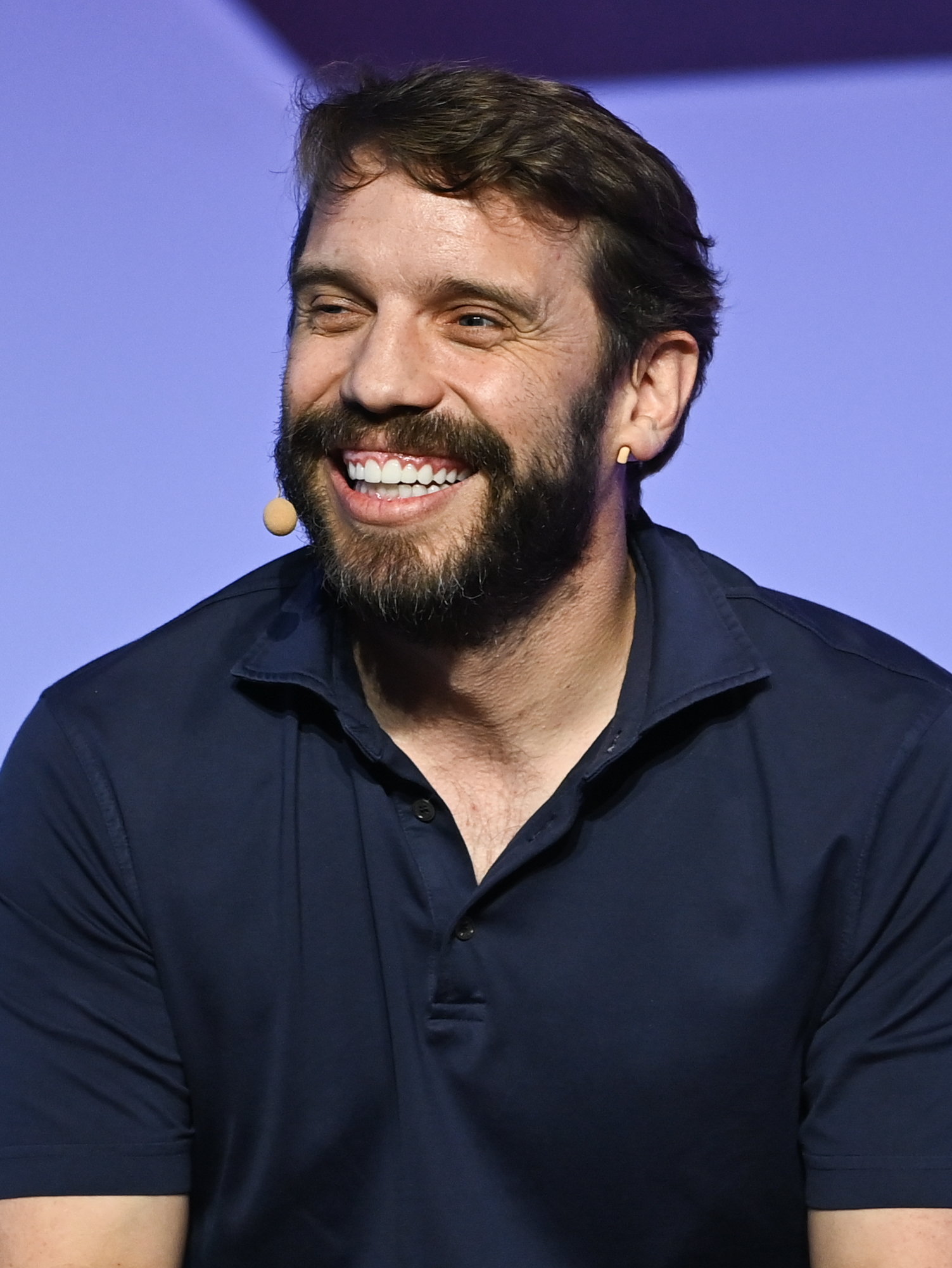
Ryan Petersen did not arrive at a boardroom and decide to disrupt logistics. He arrived at China at 24, running an eBay side hustle he started at 17 with his brother David - buying goods, shipping them stateside, listing them online. Most people see that as a hobby. Petersen saw it as an education in how broken global trade really was. It took ten years and two companies before he figured out exactly what to do about it.
Flexport, founded in 2013, is the product of that long observation. The premise was deceptively simple: freight forwarding - the arcane, paper-heavy business of moving goods across borders - was still being run on fax machines and phone calls. Petersen wrote software for it instead. By 2022, the company was processing over $26 billion in merchandise annually for businesses around the world. That same year it raised $935 million in a Series E at an $8 billion valuation. Not bad for a company that got into Y Combinator in 2014 and whose founder spent his twenties living out of a suitcase in Shenzhen.
The supply chain is not a glamorous industry. It is a world of shipping containers, customs brokers, demurrage fees, and HS codes. Petersen has spent his entire adult life in it, and his superpower is that he finds it genuinely fascinating. He thinks about port logistics the way most people think about sports. This is not affectation. When the ports of Los Angeles and Long Beach started clogging up in October 2021 - threatening a supply-chain crisis that could empty store shelves before Christmas - he did not call a consultant or request a government briefing. He rented a boat.
The boat tour is now legend. Petersen spent an afternoon on the water at Long Beach, watching the container ships queue up, talking to longshoremen and truckers, and piecing together the real bottleneck: the docks couldn't accept empty containers, so trucks couldn't collect new shipments. The whole system had seized up on something mundane. He got back to shore and posted a 14-tweet thread on Twitter under his handle @typesfast. His main proposal: let ports stack empty containers more than two high. Obvious in retrospect. Not yet done.
The thread went viral in a way that supply chain content essentially never does. California Governor Gavin Newsom called him the same day. NPR, the Washington Post, the Los Angeles Times, and Business Insider all covered it. Some of the changes he suggested were implemented. People started calling it the "tweetstorm that saved Christmas." That is almost certainly an overstatement. But it says something about the state of infrastructure policymaking that a tech CEO's afternoon boat trip became a significant input to port operations.
What makes the story work is not that Petersen was uniquely brilliant. It is that he went to look. He is that kind of operator - curious, field-level, unimpressed by the gap between how things are done and how they could be done. He built ImportGenius in 2007 on the same instinct: if international shipping data exists, someone should make it searchable. The company quietly became the dominant provider of import-export transaction data. It also, memorably, got Petersen a call from Steve Jobs. ImportGenius had tracked Apple's shipments and identified an unannounced product. Jobs rang US Customs, who rang Petersen. That is a story worth savoring: the privacy-obsessed founder of the world's most secretive tech company, personally trying to shut down a shipping data startup. Petersen was in his twenties. He did not shut it down.
The leadership chapter at Flexport was not without turbulence. In 2022, Petersen made a move that surprised many observers: he stepped back from the CEO role and brought in Dave Clark, the former Amazon Worldwide Consumer chief, to run the company. The logic was plausible - Clark had deep operational experience scaling logistics at a level few people in the world have seen. The arrangement lasted fourteen months. Clark resigned in September 2023 following reported disagreements with Petersen. Petersen returned to the CEO seat without ceremony, the way founders often do when they realize that handing off a company is harder than building it.
Since returning, the company has leaned harder into technology. In early 2025, Flexport launched more than twenty new tech and AI tools for supply chain management. The same year, Flexport's customs brokerage and compliance business posted gross profit growth of 99% year-over-year - a reflection of the chaos introduced by US tariff policy and the premium clients placed on having good customs infrastructure. Petersen was blunt about the tariff situation: his February 2025 estimate was that a 145% tariff on Chinese imports could bankrupt 80% of small US importers from China. He was not wrong about the stakes. He rarely is about his own industry.
A BlackRock partnership in early 2025 added $250 million to Flexport's supply chain financing capacity, nearly doubling it. The company is targeting profitability in 2026 and has plans to expand into six new countries. For a company that has raised $2.3 billion total and spent years losing money at the pace that tech startups typically do, this is the chapter where the original thesis - software can make global trade cheaper, faster, and more transparent - gets to prove itself on the income statement.
Outside of Flexport, Petersen became a venture partner at Founders Fund - Peter Thiel's firm - in 2023. The focus, naturally, is supply chain technology. He is the rare investor who can evaluate a pitch by someone building freight infrastructure with the same skepticism as the person running freight infrastructure. That combination is not common in venture capital, and Founders Fund clearly knows it.
The personal details are spare. He is married to journalist Olivia Zaleski; they have two daughters. He grew up in Bethesda, Maryland, the son of a government economist and a biochemist-turned-entrepreneur. He holds a BA in Economics from UC Berkeley and an MBA from Columbia Business School, where he later received an Early Achievement Award. None of that reads like a typical Silicon Valley origin story. He came to technology through trade, not the other way around. That lineage still shows in how he thinks: he is more interested in containers than in code, and in systems than in slides.
His Twitter handle is @typesfast. He earned it. He posts with the urgency of someone who has strong opinions about container stacking regulations, which he does. He has called out policy failures, warned about tariff risks, and explained the mechanics of shipping backlogs for a general audience that largely learned about supply chains for the first time in 2021. He is, in this sense, one of the better public educators on an industry that most people only notice when it fails.
The larger story is this: Petersen identified a genuine inefficiency in the global economy - the Byzantine complexity of international freight forwarding - and built a company to solve it. He has done it through three major market disruptions: the pandemic supply chain collapse, a CEO transition and return, and a tariff storm that fundamentally reshuffled trade flows. Through each one, Flexport's position got more defensible, not less. The software matters. So does the founder who went to China at 24 and never stopped caring about how the box gets from the factory to the shelf.
The Boat Tour
In October 2021, Petersen rented a boat and personally toured the LA/LB port congestion. He returned, tweeted a 14-tweet thread, and had a call from Governor Newsom by end of day.
Steve Jobs vs. ImportGenius
ImportGenius tracked Apple's unannounced product through shipping data. Steve Jobs called US Customs. US Customs called Petersen. He didn't fold. The data stayed live.
The CEO Pivot
Stepped down as CEO in 2022, brought in Amazon exec Dave Clark. Clark lasted 14 months. Petersen quietly returned in September 2023. Founders don't leave - they wait.
$8B Valuation
Series E in 2022 valued Flexport at $8 billion, raising $935M in a single round - for a company in freight forwarding, an industry most VCs had never thought about before.
Y Combinator, 2014
Flexport's acceptance into YC was the credibility moment that put the company on the map. Few freight companies had ever done it. Fewer had the ambition Petersen brought to the batch.
Founders Fund Partner
Joined Peter Thiel's Founders Fund as a venture partner in 2023, backing supply chain technology. He is possibly the only VC who has personally navigated a container ship yard.
1997
Co-founded an import-export business with brother David at 17, buying goods from China to sell on eBay - years before "dropshipping" was a word.
2002
Graduated from UC Berkeley with a BA in Economics. The theory for the supply chain came later. The practice had already started.
2005
Relocated to China to run the import-export business full-time. Two years immersed in the world's largest manufacturing ecosystem.
2007
Co-founded ImportGenius with brother David and Michael Kanko. Became the leading provider of international shipping transaction data. Steve Jobs was not a fan.
2008
Earned an MBA from Columbia Business School. Received an Early Achievement Award years later. Left ImportGenius to identify the next big problem.
2013
Founded Flexport in San Francisco to modernize freight forwarding with software. The industry had not meaningfully changed since the 1970s.
2014
Flexport accepted into Y Combinator. The startup ecosystem finally had a freight company worth watching.
2021
Rented a boat to tour the LA/LB port crisis. Posted a viral Twitter thread. Governor Newsom called. Some proposals were adopted.
2022
Flexport raises $935M Series E at $8B valuation. Stepped down as CEO, appointed Dave Clark. Flexport moved $26B of merchandise this year.
2023
Clark resigned. Petersen returned as CEO. Joined Founders Fund as venture partner focused on supply chain technology.
2025
Launched 20+ new AI and tech tools. BlackRock partnership added $250M financing capacity. Customs brokerage profit up 99% YoY. Spoke at TechCrunch Disrupt.
2026
Flexport targeting profitability, expanding to six new countries, growing customs and compliance business in an era of persistent trade volatility.