claims-management
(38)
Genasys wants insurance to move at the speed of an idea
A yacht policy built in ten days. A million-plan migration measured in years. Inside the insurance software company making a business out of knowing the difference.
Accident Exchange sells the days between a crash and normal life
Now trading as AX, the British accident management company turns replacement cars, repair coordination and insurance paperwork into a business. Its next test is keeping electric-car drivers electric.
ICE-Tech wants to give insurers their time back
Aviva cut its quote journey from 20 minutes to 10. Ticker reached market in six months. Behind both sits ICE-Tech, an insurance software business built around a stubborn idea: customers should be able to change their own products.
IMS Wants Your Next Drive to Cost Less
The telematics company puts driving scores, rewards and crash evidence into insurers’ hands. Its harder assignment is giving motorists a reason to welcome the passenger in their phone.
The £250 Million Bet on Making Insurance Less Like Email
Verisk bought Sequel for £250 million to digitise the stubbornly human London insurance market. The result is a software suite built to remove rekeying and spreadsheet drift - while leaving judgment to brokers and underwriters.

Origami Risk Built a 1,000-Client Business by Fixing Insurance’s Unglamorous Plumbing
The Chicago software company won by treating claims, safety reports and policy records as one connected data problem. Now its bet is that the same platform can carry insurers from first incident to final invoice - with AI tucked into the paperwork.
Majesco Put Insurance's Back Office in the Cloud. Now It Wants to Give It Agents.
The 44-year-old software company turned a $729 million take-private into a cloud conversion, an acquisition spree and a bet that insurance's next interface will be less clicking and more delegating.

Riskonnect's $683,000 Bet: Put Every Corporate Risk Under One Roof
Most companies still manage danger in spreadsheets and departmental silos. Riskonnect built a sprawling enterprise platform to connect the clues - and one commissioned study shows both the appeal and the price of the bet.
BriteCore Put Six Small Insurers in the Product Room - Now 100+ Carriers Run on the Result
BriteCore began with six carriers, one software shop and a failed rating-engine integration. Its useful idea is still the same: let mid-sized insurers modernize the machinery without handing the keys to an army of consultants.
Intact Built a $25 Billion Insurance Machine - Then Sent It Toward the Fire
Canada's largest property and casualty insurer grew by treating insurance as an operating system: price risk better, control more of the repair, and buy only what the machine can improve. The catch is that climate volatility keeps stress-testing every advantage it has built.
SFM Built a $1 Billion Balance Sheet by Trying to Stop the Next Injury
The Midwest workers' compensation mutual sells a required product, then spends its energy trying to make that product less necessary - through safety advice, medical coordination and an unusually patient view of the customer relationship.
The Insurance Giant Hiding Behind the Repair Bill
AmTrust built an $8.8 billion premium engine by insuring the businesses and breakdowns bigger carriers can overlook. Its next policy is being written in software, claims data and a network of specialist partners.

Arbella Insurance Group
Arbella has built a billion-dollar regional insurer by staying close to home - backing more than 450 independent agents, learning New England's risks block by block, and treating community work as part of the operating model.
ONEGROUP Risk Management and Insurance
The Syracuse brokerage has spent decades turning a once-a-year insurance purchase into an always-on operating discipline - combining coverage, claims, benefits, HR and prevention under one roof.

Bradford & Barthel, LLP
Bradford & Barthel built a statewide legal machine around one stubbornly complicated field. Its edge is not courtroom theater, but a network of local counsel, specialist units and practical training designed to make workers' compensation claims move.

Assurant
You may never shop for Assurant, yet it may already be standing behind your phone, car, apartment or mortgage. The $12.8 billion company has built a business out of everything that happens after the sale.
AIG
AIG spent years shrinking a sprawling financial empire into a sharper general insurer. Now it is betting that global reach, underwriting discipline and AI-assisted decisions can make a 107-year-old company faster without making risk feel simple.
Waystar
The company that runs the plumbing behind American medical bills is betting AI can drain billions in administrative waste - and half the country's patients are already in its pipes.

Mercury Insurance
Mercury built a nearly $6 billion insurance business by pairing disciplined underwriting with thousands of independent agents. Now it is adding apps, telematics and online service without abandoning the human network that still produces most of its premiums.
Crawford & Company
For 85 years, Crawford & Company has made a business of the difficult middle between loss and recovery. Its next act pairs thousands of adjusters, nurses and contractors with software built to make claims move faster - without pretending the human judgment can be automated away.

Travelers
Travelers sells a familiar promise under a red umbrella. Behind it sits a 170-year experiment in pricing uncertainty - powered by agents, engineers, claims professionals, data and, increasingly, an insurance-trained language model.
HReasily
HReasily is a Singapore-headquartered cloud HR and payroll platform that helps small and mid-sized businesses across Southeast Asia automate payroll, leave, claims, staff records and time-attendance in one place. Founded in 2015, it operates across six Asian markets and handles local statutory compliance so growing companies can run HR with less paperwork.

Inclusivity Solutions
Inclusivity Solutions is a Cape Town-based inclusive insurtech that designs and delivers embedded, affordable digital insurance for emerging consumers across Africa. Through its open-API platform ASPin, it partners with banks, telcos, insurers and fintechs to build, sell and administer low-cost products - life, accident, hospital cash, device and crop cover - distributed via mobile channels people already use. The company operates in roughly ten African markets and has served over two million customers.
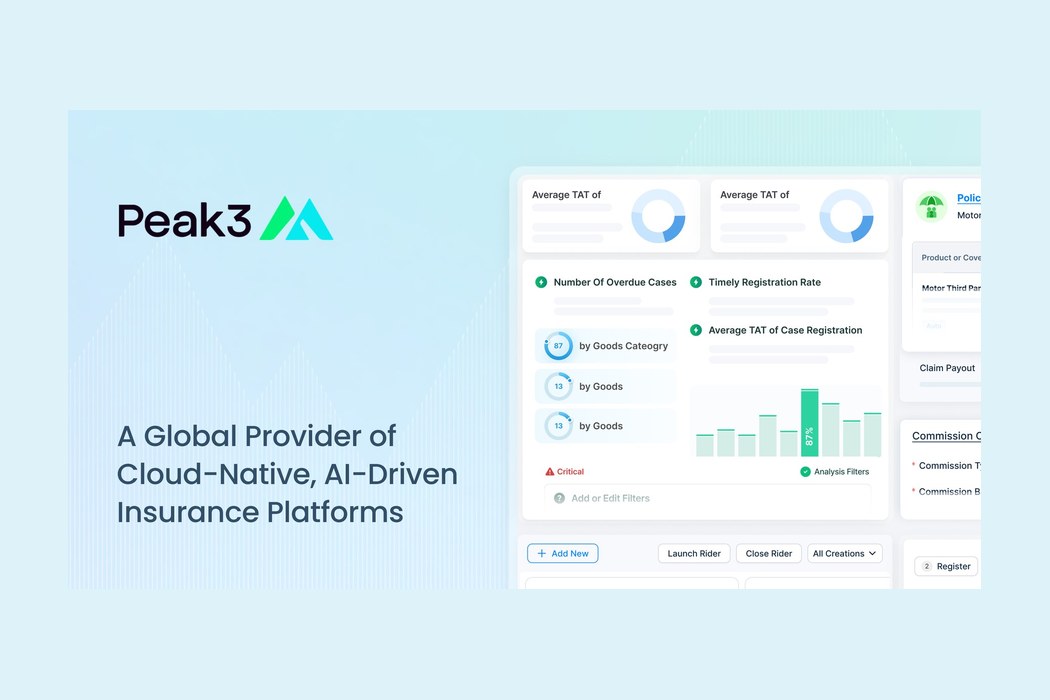
Peak3
Peak3 (formerly ZA Tech) is a Singapore-headquartered insurtech that builds cloud-native, AI-ready core software for the insurance industry. Its modular platform - spanning policy administration, distribution, claims and orchestration - lets insurers, MGAs and brokers launch and run life, health and property & casualty products across many markets. Founded in 2018 out of Chinese insurtech ZhongAn and rebranded to Peak3 in 2024 alongside a US$35M Series A led by EQT, the company powers global insurers such as AIA, Generali, Prudential and Zurich, and embedded-insurance programs for digital platforms including Grab, Klook, Lazada and PayPay. Its software has supported over a billion policies across 20-plus countries.

PolicyStreet
PolicyStreet is a Malaysia-based, full-stack insurtech group that makes insurance simpler and more accessible across Southeast Asia and Australia. Founded in 2016 and operating under holding company Polisea, it works with more than 40 life, general and Takaful providers to deliver embedded insurance, employee benefits, gig-worker protection, financial advisory and an online insurance marketplace through B2B, B2B2C and direct-to-consumer channels. Backed by Khazanah Nasional, Cool Japan Fund and others, it has grown to serve over 10 million customers and turned profitable in 2025.
TachyHealth
TachyHealth is a UAE-based healthcare AI company that helps hospitals, clinics and insurers close the gap between clinical care and payment. Founded in 2018, it builds AI-driven tools for medical coding, claims review and auditing, and clinical decision support - branded AiCode, AiReview and AiGuide - aimed at reducing administrative burden, controllable revenue loss and claim denials while advancing value-based care across the Middle East and Africa. In October 2025 it raised a $5M Series A led by Saudi insurer Tawuniya.
Synthpop - Healthcare AI
Synthpop is a Cambridge, Massachusetts healthcare AI company building agentic automation that eliminates administrative bottlenecks across payer, provider and patient operations. Its platform combines document intelligence, payer-aware reasoning and conversational voice agents into one coordinated system that automates as much as 80% of healthcare back-office processes - referrals, prior authorizations, eligibility checks and claims follow-ups - by integrating directly with EHR, billing and e-prescribe systems. Founded in 2023 by Elad Ferber and Jan Jannink, the company has raised $23M total, including a $15M Series A in February 2026.
Truvi
Truvi (formerly Superhog) is a London-based technology company that helps vacation-rental property managers and hosts screen guests and protect their properties across every booking channel. Its platform combines ID verification and biometric checks, background and sex-offender screening, customizable damage protection of up to $1 million per booking, and a dedicated claims team - letting operators drop traditional security deposits while building trust between owners and guests. Founded in 2019 and led by CEO Humphrey Bowles, the company serves 800+ property managers globally and raised £5.5M in Series A funding in 2023.

WithCoverage
WithCoverage is a New York-based insurtech that replaces the traditional commission-based insurance broker with a flat-fee, AI-enabled risk management team. Its platform pairs licensed insurance experts, attorneys and claims specialists with an AI audit engine that scans policies and operations to find hidden exposures, run competitive carrier bidding, and cut premiums - routinely saving clients over $100,000 a year. Founded in 2023 by Opendoor co-founder JD Ross and Compound alumnus Max Brenner, the company has replaced brokers for 550+ fast-growing businesses including Gopuff, Bombas, Blank Street and Eight Sleep, and raised a $42M Series B in January 2026 co-led by Sequoia Capital and Khosla Ventures.

Insurity
Insurity is a Hartford, Connecticut-based provider of cloud-based software and analytics for the property and casualty (P&C) insurance industry. Its multi-tenant SaaS platform unifies policy administration, billing, claims, underwriting, and data analytics, and increasingly embeds AI into core insurance operations. Founded in 1985, the company serves carriers, brokers, and managing general agents - including a large share of the top U.S. P&C carriers - and is majority owned by private equity firm GI Partners.