supplier-management
(28)
Coupa makes the money leave smarter
Every company knows what it sold. Knowing what it bought is harder. Coupa built a business around closing that gap, one purchase request at a time.
ISN makes the paperwork count
Before a contractor can get to work, someone has to check the evidence. ISN turned that everyday bottleneck into a network connecting 900 hiring clients with 90,000 contractors and suppliers.
Magentic goes looking for the money manufacturers already earned
A contract promises a saving. An invoice quietly gives it away. Magentic’s AI workers patrol the space between the two - and its most revealing lesson is about people, not algorithms.
Scout RFP made the spreadsheet a $540 million question
Enterprise buying had a coordination problem. Scout RFP built a business around making it easier to ask, compare, and decide - then became Workday Strategic Sourcing.
VIVA USA makes a business of the missing pieces
A recruiter, a software builder and a supplier-data specialist share one company. VIVA USA’s most revealing product is the one that still needs someone to pick up the phone.
Exostar: The rivals who built a shared front door
Aircraft makers compete fiercely. Their suppliers still need a safe way to work with all of them. Exostar turned that awkward arrangement into a business spanning defense contracts, clinical trials and electronic prescriptions.
The Trouble With the Little Things
Simfoni built its business around the purchases too small to command attention and too numerous to ignore. Its wager is that a useful spend insight should lead all the way to a better purchase.
Noosh and the Invisible Factory Behind a Campaign
A campaign may look like one idea. Noosh built software for the hundreds of specifications, bids, approvals and invoices required to make that idea real.
Pactum AI and the Art of the Deal Nobody Had Time to Make
The first deal saved €80. Walmart later put the same idea to work across a supplier base of more than 100,000. Pactum's wager is that a commercial conversation can be worth having even when no buyer has time to start one.
The $540 Million Lesson Hidden in a Spreadsheet
Procurement software had plenty of features and almost no affection. Four founders discovered that the real rival was not another platform, but the spreadsheet people quietly preferred - then sold the remedy to Workday for roughly $540 million.

Jag Lamba Turned the Waiting Room of Business Into the Main Event
He arrived in New York with $2,000, learned how large companies make decisions, and built Certa to fix the corporate ritual everyone tolerated: waiting for permission to work together.
Matrix and the art of making hiring less chaotic
Councils need temporary workers. They also need to know where the money goes. Matrix has built a business around the awkward space between the two.
The $1 Trillion Procurement Bet: Zycus Wants AI to Finish the Job, Not Just File the Form
Zycus spent more than two decades building the plumbing of corporate purchasing. Now it is betting that procurement's next interface is a sentence in Teams - and its next worker is an AI agent with guardrails.
Trustwell Wants to Follow Your Food From Recipe to Recall
Food companies still run critical work through spreadsheets, inboxes and disconnected systems. Trustwell is stitching formulation, labels, suppliers and recalls into one long chain of evidence.
ORO Labs Put a Friendly Front Door on Procurement - and Found a $100 Billion Workflow Behind It
Big companies do not need another procurement system. They need the systems they already bought to behave like one - which is the expensive, unglamorous problem ORO Labs has turned into a fast-growing enterprise software business.

Ben Freeman Interviewed 300 Buyers. Then He Built the Software They Wanted
A teenage-events entrepreneur became an enterprise-software founder by treating curiosity as a job. Now the Omnea CEO is turning his company into a launchpad for the founders who may eventually leave it.
FoodByUs
FoodByUs is an Australian B2B food procurement platform that lets restaurants, cafes, pubs, caterers and aged-care venues order wholesale supplies, manage invoices, track prices and handle payments in one place. Founded in 2016 by the team behind Menulog, it connects thousands of hospitality venues with wholesale food and alcohol suppliers, layering software - digital ordering, an AI-powered Invoice Hub, menu costing and finance tools - over the traditionally phone-and-paper world of restaurant supply.
penny.
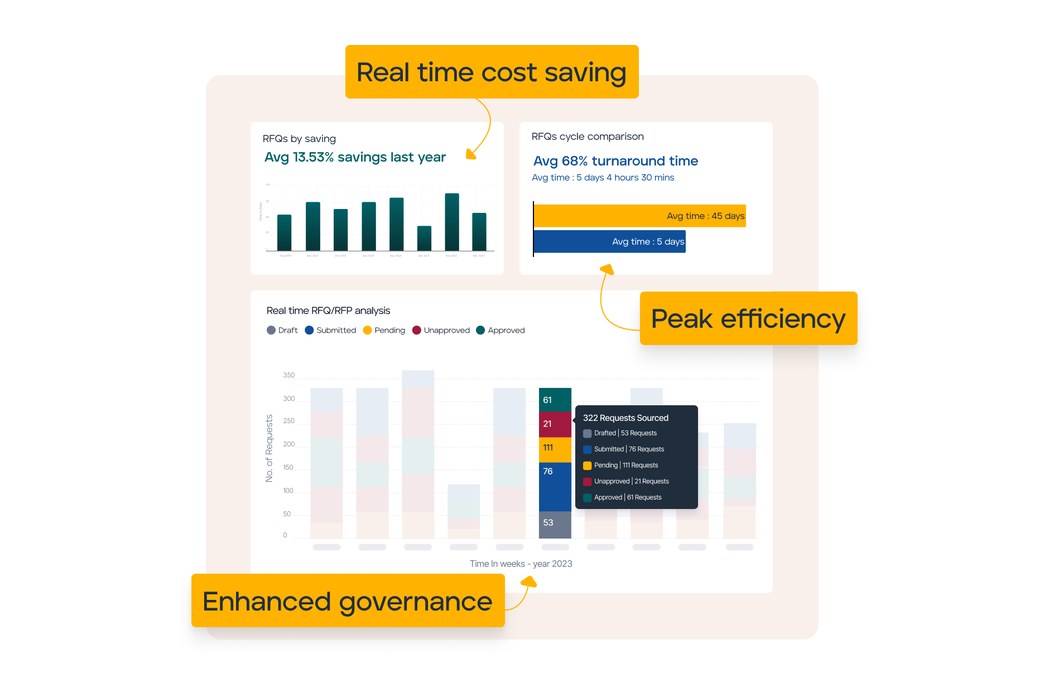
penny. is a Saudi-based B2B SaaS company that digitizes the full source-to-pay procurement cycle on one cloud platform. It combines e-sourcing, RFQs, purchase orders, supplier management, spend analytics and AI-driven automation so enterprises can cut costs, tighten governance and speed up buying. The modular, customizable system is used by companies across 75+ countries and is layered with AI tools like the Bidly.ai sourcing assistant to make procurement faster and more transparent.
Omnea
Omnea is an AI-native procurement orchestration platform that turns the slow, fragmented process of requesting, vetting, buying and renewing suppliers into a single, governed workflow. Founded in 2022 by former Tessian executives Ben Freeman and Ben Allen, the London- and New York-based company gives employees one 'front door' to make purchase requests in natural language, then automatically routes those requests to the right people and systems while tracking spend, risk and renewals. It serves enterprises including Spotify, Wise, MongoDB, Albertsons and Adecco, and has raised over $75M from Insight Partners, Khosla Ventures, Accel and others.
Procol
Procol is an AI-powered procurement platform that automates the full source-to-pay lifecycle - intake, strategic sourcing, eAuctions, supplier management, and spend analytics - for enterprise procurement and finance teams. Founded in 2018 by Gaurav Baheti and Sumit Mendiratta, the company pairs autonomous AI agents with white-glove service to help large enterprises cut procurement cycle times and unlock cost savings. Procol says it serves 200+ enterprises managing over $20B in spend, including IKEA, Hershey's, Havells, Emami, and the Tata Group.

Sustainment
Sustainment is an Austin-based public benefit corporation building an AI-native software platform for industrial sourcing, procurement, and supplier management. Founded in 2020 by military veterans and technology executives, it helps commercial OEMs, contract manufacturers, and Department of Defense teams find suppliers, run RFQs, manage purchase orders, and track supplier performance - with the broader mission of strengthening a resilient, domestic U.S. manufacturing base.

Gaurav Baheti
Gaurav Baheti is the founder and CEO of Procol, a procurement and sourcing software company he started in 2018. A designer and engineer by training who once built user experiences at Google in New York, he now leads a roughly 120-person team building tools for intake, RFx, negotiations, supplier management and spend reporting. Procol powers procurement for enterprises across India, the Middle East and Southeast Asia, cumulatively managing billions of dollars in B2B spend, and is backed by Peak XV Surge, Blume Ventures, Beenext and others. A Forbes 30 Under 30 honoree, Baheti wants to move procurement from a cost-cutting function into a source of strategic advantage.
LevaData
LevaData is an enterprise SaaS company that builds an AI-powered supply management platform for direct-materials procurement. Founded in 2015 and headquartered in Pleasanton, California, its Cognitive Supply Management platform blends a company's bill of materials and sourcing objectives with real-time market data covering over a billion parts and tens of thousands of suppliers to recommend cost savings, flag risks, and speed up new product introduction. It counts manufacturers and OEMs among its customers and raised a $47M Series C in 2021 led by Banneker Partners.

Levelpath
Levelpath is a San Francisco-based enterprise software company building an AI-native procurement platform that unifies intake, sourcing, contracts, and supplier management in one system. Founded in 2022 by the team behind Scout RFP (acquired by Workday for $540M), Levelpath aims to make procurement software people actually enjoy using - mobile-first, fast, and powered by AI agents that automate the repetitive 'ugh' work of buying at large companies. It has raised roughly $100M total, most recently a $55M+ Series B led by Battery Ventures in June 2025.

AVISIO
AVISIO was a Vienna-based hospitality-tech startup that built a cloud, AI-assisted procurement and inventory platform for independent hotels and restaurants. Founded in 2019 by Matthias Depenbusch and Johannes Ossanna, it integrated with POS and PMS systems to automate stocktaking, compare supplier prices in real time, and suggest order quantities from booking data - promising roughly 10% lower purchasing costs and less waste. It raised over EUR 2 million from backers including Falkensteiner Ventures and Next Floor Ventures before filing for insolvency in April 2023.

Bundle
Bundle is an Oakland-based, AI-powered materials procurement platform built for design and construction teams. It lets builders and suppliers quote, buy, and manage construction materials from initial quote through delivery in a single system - offering a live catalog of 50,000+ products, multi-supplier quote comparison, delivery tracking, a reusable materials library, and automated reordering. Founded in 2021 by Stanford MBA classmates Janna Colucci and Edison Ding, Bundle targets the SMB residential and ADU segment, aiming to run purchasing 10x faster and cut material costs 10-20%.

Clarasight
Clarasight is a New York-based AI platform for enterprise travel and expense. It unifies fragmented data from travel management companies, expense tools, corporate cards and HR systems into a single, AI-ready model, then helps teams automate workflows, forecast budgets, negotiate with suppliers, enforce policy and report on emissions - without ripping out the tools companies already use. Founded in 2021 as Climate Club with a sustainability mission, it rebranded to Clarasight in 2024 as it broadened from carbon planning into the broader operating system for travel and expense leaders. The company raised an $11.5M Series A led by AlleyCorp in April 2026.
Didero
Didero builds AI agents that automate enterprise procurement for manufacturers and distributors. Its platform sits as an agentic layer on top of existing ERP and procurement tools, reading the messy stream of emails, purchase orders, packing lists, and supplier messages, then executing the routine source-to-pay work - sourcing, quoting, PO lifecycle management, invoice reconciliation, and supplier communication - so supply chain teams can stop chasing exceptions and focus on strategic decisions.