The dangerous moment in a food business rarely looks dramatic. It looks like a revised ingredient sheet sitting unread in an inbox. A supplier certificate expires. A lot code arrives in the wrong format. The approved recipe says one thing while the label artwork says another. On an ordinary Tuesday, these are administrative irritants. During an allergen scare or recall, they become a map with pieces missing.
Trustwell sells the map. The Beaverton, Oregon, software company connects the work that happens before food reaches a shelf - formulation, nutrition analysis, specifications and compliant labels - with the work that follows it through the supply chain: supplier oversight, lot-level traceability, quality incidents and recalls. More than 2,500 brands use some part of its software, among them publicly featured customers such as Chipotle, Wawa, Tyson, Whole Foods Market, Wegmans, Reser's Fine Foods and Thorne.
Two old problems became one new company
Trustwell did not begin with two founders and a pitch deck. It appeared in 2023 after private-equity firm The Riverside Company combined ESHA Research and FoodLogiQ. The marriage makes sense once you see the opposite ends of the food record they controlled.
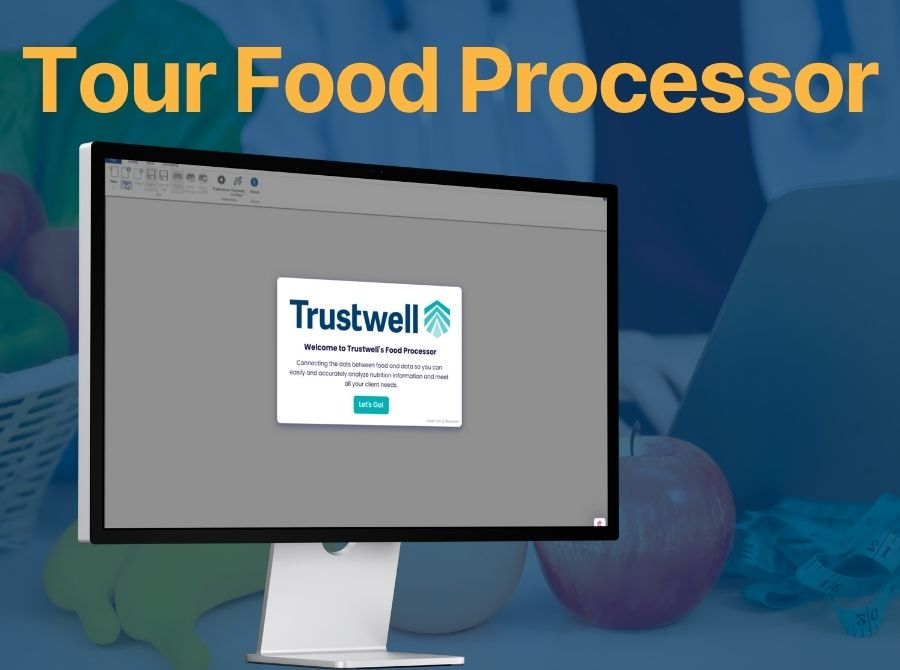
ESHA's history reaches to 1981, when Elizabeth Stewart Hands and associates began assembling a nutrition database with fewer missing values. The company released Food Processor in 1984 and Genesis R&D in 1991, just as standardized nutrition labeling was changing packaged food. Its software became a workbench for food scientists: enter ingredients and yields, calculate nutrients, check allergens, manage formula versions and generate a label.
FoodLogiQ came from another direction. Tom Finegan and Andrew Kennedy formed it in 2006 after Clarkston Consulting worked on Canadian cattle traceability. It eventually became cloud software for connecting brands to suppliers and recording where products went. One predecessor understood what was inside the package. The other understood where the package had been.
The combined portfolio is now called Trustwell Connect. Genesis Foods and Genesis Supplements handle formulation and labels. FoodLogiQ covers product specifications, supplier compliance, traceability, quality management and recall response. AskReg, a newer AI assistant, answers regulatory questions in plain language and links users back to official material. Professional services and training surround the software, because supplier adoption does not happen by clicking “send invite” 500 times.
The buyer is rarely one person. A food scientist wants to reformulate a snack and watch its nutrient panel change. Regulatory affairs wants the right rounding rules and allergen declaration. Quality assurance wants current certificates and corrective actions from every supplier. Supply-chain teams need lots and shipments to use identifiers that travel between companies. Operations wants a recall notice acknowledged by the right restaurant, not buried in a manager's inbox. Trustwell sits where these jobs touch, which is also where data tends to be copied, retyped or quietly lost.
The first thing to fail is the informal system
Trustwell's customer stories repeat the same opening scene. A growing company has records, but no reliable shared record. Wawa stored vendor documents in multiple places, struggled to see compliance status and waited on inconsistent communication. Reser's managed hundreds of suppliers across facilities with email and spreadsheets. Chipotle found that maintaining specification variations across suppliers demanded too much manual effort. At Thorne, roughly 300 supplement formulas lived in digital spreadsheets, where unit conversions and FDA measures required custom equations.
What changed their minds was not an abstract promise about transformation. Growth made the old method expensive. Wawa's expansion into new markets made fragmented onboarding unsustainable. Chipotle already used FoodLogiQ for supplier management, so adding Product Management offered a logical way to digitize specifications in the same environment. Thorne wanted calculations it could confirm and compliant labels it could hand to marketing earlier in a launch.
“Visibility is everything.”Meghan Boyle, Wawa
Wawa's result is the cleanest numerical case. It paired FoodLogiQ Compliance with Trustwell's Supplier Success service, which handled outreach and troubleshooting. Within 12 weeks, 90 percent of supplier locations were onboarded. Onboarding ran 50 percent faster, and centralized audit documentation eliminated an entire on-site day.
That qualifier matters. The software centralized documents and automated workflows; people chased the suppliers, clarified questions and kept the project moving. A buyer can copy the pattern without copying the vendor: define the required record, name the owner, set deadlines, give partners live help and measure adoption by location rather than by invitations sent.
A recall is a data problem with a clock attached
Food traceability becomes useful when it narrows uncertainty. FoodLogiQ records critical tracking events - moments such as receiving, transforming or shipping a product - and ties them to locations, lots and identifiers. An investigator can trace a questioned lot backward toward its source and forward toward destinations. Recall software then helps issue notices, collect acknowledgements and escalate locations that have not responded.
This is where Trustwell's breadth has teeth. If a formulation changes, the product specification and supplier data downstream should change with it. If a quality complaint identifies a lot, traceability should show its path. If a withdrawal begins, the response should target affected locations instead of treating the entire system as suspect. In 2025 alone, Trustwell says its platform recorded 58 million tracking events and 905,000 quality incidents. Those are breadcrumbs, not applause lines.
Chipotle's public advice is refreshingly procedural. Its traceability journey has four phases: vision, planning, execution, then maintenance and enhancement. It uses GS1 identifiers and barcodes carrying a product number, lot number and date data so cases can be followed from suppliers to distribution centers and restaurants. Technology enters in phase three. Shared commitment enters in phase one.
A traceability plan worth copying
The market is crowded when the jobs are separated. TraceGains and FoodChain ID compete around suppliers and compliance. SafetyChain focuses on food-quality operations. ReposiTrak has a large retail traceability network. Nutritics, Food Label Maker and MenuSano address formulation or labeling. The default competitor is still the home-built stack of ERP exports, spreadsheets, email and veteran employees who know where the bodies are buried.
Trustwell's difference is the span. A point product may be quicker or cheaper for one narrow task. Trustwell argues that food data gains value when the handoffs disappear. Its risk is the mirror image: a broad suite must feel connected, not like two acquired product families sharing a logo. The integration between Genesis Foods and FoodLogiQ Product Management - pushing approved formulation data into a living specification - is therefore more important than another dashboard.
The small front door and the enterprise contract
Trustwell mostly operates like enterprise SaaS: request a demo, scope modules, add implementation and receive a custom quote. Public customer stories do not attach dollar figures to deployments. AskReg is the exception and a clever entry point. It can be bought online without a sales call, with answers across food labeling, allergens, claims, packaging and traceability requirements.
The only public price tag
The assistant is trained for food regulation and returns links to primary regulatory material. Trustwell added state-level U.S. coverage and broader collaboration features in 2025. It can cut the search time for a routine question, but its most strategic job may be introducing a small regulatory team to Trustwell before that team is ready for an enterprise platform.
In January 2026, TPG's Rise Funds took a majority stake in Trustwell and Riverside exited. Financial terms were not disclosed. The impact-investing logic is easy to see: better traceability can reduce the blast radius of recalls, support regulation and make waste visible. The commercial test is harder. Trustwell must keep modernizing software with roots in the 1980s, connect the portfolio cleanly and persuade thousands of suppliers to participate in someone else's system.
The company's public culture follows the product: food people first, software people second. Its leadership biographies emphasize time in restaurants, manufacturing, grocery, food safety and supply chains. Customer education is unusually visible through workgroups, training, webinars and the annual reCONNECT program. That industry fluency is useful when a regulation arrives wrapped in acronyms and operational exceptions. It can also create tunnel vision. The best platform advice comes from people who know the plant floor, but product teams still have to make that expertise legible to a first-time user at a small brand.
Leadership assigns owners, suppliers participate, identifiers are consistent and teams rehearse the bad day before it arrives.
Source data is unreliable, partners refuse the workflow, implementation is treated as an IT handoff or a tiny company buys more suite than it needs.
Trustwell's most useful idea is also its least glamorous: food safety improves when a company can show its work. The recipe, label, supplier approval, lot event and recall acknowledgement should not be separate archaeological digs. On normal days, that saves time. On the bad day, it buys something rarer - a smaller, faster, more defensible answer.