Before there was a company, there was a queue. Jag Lamba had seen versions of it in large organizations and, later, while testing ideas of his own. One business wanted to work with another. The commercial case made sense. Then came procurement, legal, compliance, finance, information security and the patient exchange of documents. Intent moved quickly. Permission did not.
It is an almost comically ordinary problem, which is why it matters. The modern corporation is not one company so much as a small civilization of suppliers, partners, contractors and customers. Each new relationship introduces useful possibility and a fresh set of questions. Who owns this company? Will it protect data? Does it meet the policy? Is it financially sound? Can anyone find the answer without forwarding an email chain called Final_v7_reallyfinal?
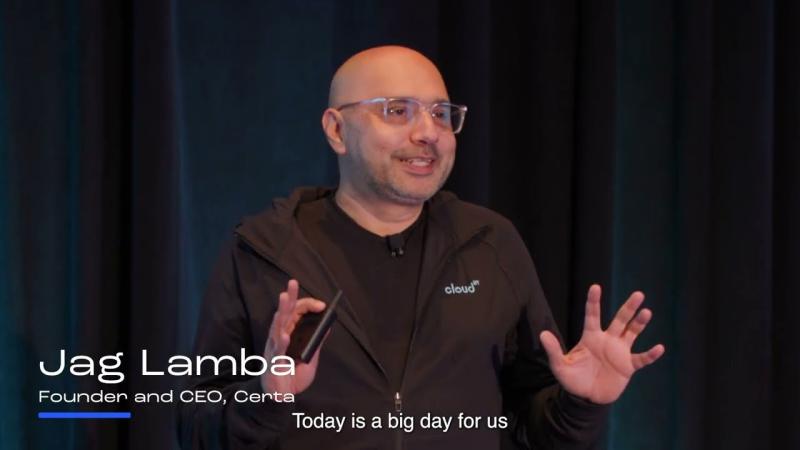
Lamba built Certa around that interval between wanting to work together and being cleared to begin. The destination was enterprise software. The route to it ran through a childhood near Mumbai, an early career writing code, a solo move to New York, roughly a decade at McKinsey, an MBA at Wharton, a spell in venture investing and several attempts to build something of his own.
The education of standing out
Lamba grew up in a suburb of Mumbai. His schedule was built around motion: tennis for a few hours in the afternoon, then soccer and cricket with friends in the evening. He was also a Sikh boy in a turban, visibly different and occasionally mocked for it. Years later, he would connect that experience to one of the less teachable parts of entrepreneurship. He learned not to make other people's discomfort his instruction manual.
The result was not a taste for rebellion as theatre. It was thicker skin. An unfamiliar proposal could be pitched without first waiting for universal approval. For a founder selling new machinery into conservative enterprises, that is not a decorative trait. It is operating capital.
“Every single time I wondered if I was thinking too big, I realized that, in fact, I wasn't dreaming nearly big enough.”Jag Lamba
He studied computer science at Pune Institute of Computer Technology and began as a software developer. In 1998, at 22, he moved alone to the United States. New York had already impressed him on a business trip: the energy, the crowds, the improbable sense that the city from films had become available in three dimensions. He arrived with $2,000 and a suitcase of clothes he later described, with useful self-mockery, as odd-looking for Manhattan.
His first job in the city was at McKinsey in Midtown. The fast talk and polished clothes amplified the culture shock. At first, Lamba tried to put away whatever seemed too Indian, as if becoming a New Yorker required an act of subtraction. The city eventually taught him a more generous equation. New York worked precisely because it did not demand a single model of a New Yorker.
A first officemate, Nat McNamara, helped make that lesson social rather than theoretical. He brought Lamba around his friends and treated his eccentricities with ease. Lamba still speaks of him with gratitude. Careers are often narrated as a procession of institutions. In practice, a life can turn because one colleague makes room at a table.
Learning the machinery
McKinsey gave Lamba a long view inside global enterprises. He moved from product-oriented work into strategy consulting and remained with the firm until 2010. Along the way he completed an MBA in finance and marketing at Wharton. The combination mattered: code had taught him how systems behave; consulting showed him how organizations behave; business school supplied a common language for capital, markets and management. Organizations, unlike code, rarely fail with an error message. They fail through delay, ambiguity and the ancient corporate art of assuming another department owns the problem.
After McKinsey came Sonoma Management Partners, where he worked on investment. Then came a period of entrepreneurial experiments. One account of Certa's origin has Lamba discovering the procurement problem from the seller's side: promising ideas could not get a fair hearing because becoming an approved vendor took too long. He had now stood on both sides of the door. The people inside wanted innovation. The people outside wanted a chance to deliver it. The lock was procedure.
Certa was founded in 2016 with a plain mission: simplify processes for businesses. Its early focus was the full life of a third party, from intake and onboarding through risk checks, contracting, monitoring and eventual offboarding. Lamba did not want one rigid process stamped across every customer. Large enterprises accumulate distinctive rules for good reasons, bad reasons and reasons nobody remembers. Certa's no-code approach was meant to accommodate those differences while still creating a visible path through them.
Deep before broad
Enterprise software punishes shallowness. A bright demo can win attention, but deployment requires the product to survive existing systems, approval hierarchies, changing regulations and users who have other jobs. Lamba has described Certa's strategy as investing in depth before going broadly to market. He also resists outsourcing the core capabilities that sustain a company. An agency, in his metaphor, is a laser: intense and useful for a project, but not the light that stays on.
The commercial milestones followed. In March 2022, Certa announced a $15 million Series A led by Point72 Ventures. In September 2023, it announced a $35 million Series B co-led by Fin Capital and Vertex Ventures Southeast Asia and India. That round took disclosed funding beyond $50 million. Around the same period, the company said it had about 200 employees and 170,000 users. Its current site reports more than 10 million entities processed across more than 120 countries.
Those numbers measure reach, but the more revealing measurements belong to customers. Certa's funding announcement included Box reporting a 78 percent reduction in cycle time and Uber reporting a 50 percent year-over-year reduction in operating costs alongside a rise in on-time payments. The point of orchestration, in other words, is not to make a better diagram of the delay. It is to shorten it.
“Every relationship with a third party introduces new risks to a business, and even one bad relationship can be catastrophic.”Jag Lamba
Risk makes this a delicate promise. Speed without scrutiny is merely a faster route to regret. Lamba's definition of a good supplier includes more than delivery: data security, privacy, sustainability and social impact all belong in the picture. He imagines a virtuous circle in which companies that choose responsible partners encourage those partners to do the same. It is an ethical ambition expressed through operational plumbing.
AI meets the paperwork
Generative AI gave that plumbing a more conversational surface. In public discussions, Lamba has focused on practical uses: collecting intake through familiar channels, extracting information from unstructured documents, producing reports and helping teams analyze risk. The appeal is clear. Most employees do not wake eager to learn another procurement form. They do understand how to ask a question in ordinary language.
Yet third-party risk is an unforgiving place for magic tricks. A useful system must preserve evidence, respect policy and route exceptions to the right human. It must adjust when regulations or supply chains change. In a 2025 interview, Lamba emphasized that operationalizing generative AI requires change management, not only model access. The observation sounds modest. It separates a product from a performance.
His public writing follows the same practical instinct. One piece reduced supplier due diligence to seven questions worth asking before bringing on a third party. Another examined the European Union's operational-resilience requirements. On podcasts, he has discussed sustainability data, procurement adoption and the effect of automation on compliance. The subject can become acronym soup in seconds. Lamba keeps returning to the person trying to make a defensible decision before lunch.
The permission to remain curious
The founder's story can be made too neat. A childhood experience becomes resilience; a consulting career becomes insight; an awkward approval process becomes a platform. Real life is messier, and Lamba seems to enjoy some of the mess. He speaks warmly of his persistent eccentricities. He hikes. He plays soccer with his son. Asked whom he would like to meet for breakfast, he skipped celebrity and offered to buy a meal for any procurement or compliance leader willing to talk shop about what Certa was building.
That answer is both earnest and slyly perfect. His business depends on hearing how work actually happens, including the parts that no official flowchart admits. Curiosity is market research with better manners.
Lamba once said that the American Dream ends when a person stops learning and growing. His own American story began with an attempt to fit in and matured into confidence about standing apart. Certa carries a related proposition into the enterprise: software should meet an organization where it is, then help it move. The queue has not vanished. Global business keeps inventing new risks, new rules and new forms. But it no longer has to pretend that waiting is the same thing as care.