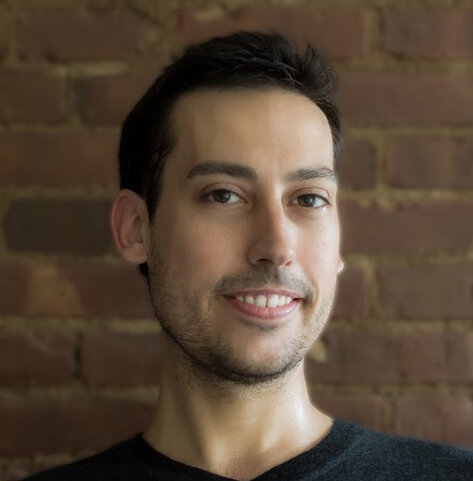
The investor who got tired of watching founders miss the obvious
Ryan Janssen spent six years at AGC Equity Partners in London making bets up to $50 million on technology businesses. He sat on around six boards across three continents. He watched dozens of companies navigate the same recurring friction point: they had built excellent data infrastructure, genuinely modern pipelines, and still nobody on the business side could use any of it. The SQL-fluent people were too few. The dashboards were too static. The gap between "data team" and "everyone who needs answers" was a chasm most companies had just quietly accepted.
That specific observation - not a grand theory about AI, but a practical frustration he kept encountering in boardrooms - became Zenlytic. Ryan co-founded the company in July 2020 alongside Paul Blankley, his CTO and former Harvard classmate. The two had already run a data consultancy together, Ex Quanta AI Studio, deploying business intelligence tools for clients in financial services and healthcare. They knew the gap from both the sell side and the do side.
There had been tremendous advancements in data pipelines over the past couple of years - but nobody's really using it.
- Ryan Janssen, on what led to founding ZenlyticWhat Ryan built is a platform that sits on top of a company's existing data warehouse - Snowflake, BigQuery, Databricks, whatever they're running - and lets any user ask questions in plain English. Not pre-defined dashboards. Not filtered reports that someone else built last quarter. A proper back-and-forth with the data, powered by what Zenlytic calls a semantic layer: a structured model that tells the AI what the data actually means, so it doesn't hallucinate or confuse revenue with gross profit.
The product's centerpiece is Zoe, an AI data analyst that has evolved considerably since launch. In May 2026, Zenlytic shipped Zoe Self-Learning - the capability for Zoe to connect to a new data warehouse, read the table structure, build the semantic layer itself, and be ready to answer questions, all without human setup. An AI that figures out how to understand your data before you even tell it where to look. That's not a demo feature. That's a genuine shift in how enterprise software can be deployed.
The real way to differentiate is not to be an AI business at all. The real way to differentiate is to solve a problem that happens to be using AI.
- Ryan JanssenRyan's background is an unusual stack for a founder. Engineering degree from the University of Alberta. Then McKinsey, where he worked in the growth-stage technology practice. Then Ernst & Young. Then the Oxford MBA. Then Harvard, where he completed a Master's in Computational Data Science and met Paul Blankley. The combination means he can read a data model and a balance sheet with equal comfort - which turns out to be exactly what you need when you're building analytics tools for businesses that care about both.
His six years on the venture side left a particular mark. He learned to spot which founders understood their own business, and which were telling stories. He learned that startup volatility - the rapid oscillation between crisis and optimism - is not a sign of failure. It's the default operating mode. That lesson is harder to absorb from the investor seat than from the founder seat, but Ryan had six years of watching it before he crossed over. When Zenlytic hits turbulence, he knows what the graph is supposed to look like.
When you're a big nerd like me, and you're good at Python or SQL, it was remarkable how fast we could go from cold to the most well-informed person in the room by just doing a couple of hours of data exploration.
- Ryan JanssenThat self-description - "a big nerd" comfortable in Python and SQL - is the tell. Ryan isn't playing the CEO-as-visionary role. He's the person who found a technical gap, built something to fill it, and is now doing the unglamorous work of scaling a 23-person company in New York while simultaneously advancing the state of what AI-assisted analytics can do.
Zenlytic's $9 million Series A in September 2024, led by M13 with participation from Bain Capital Ventures, Primary Ventures, Company Ventures, Correlation Ventures, and 14 Peaks Capital, brought total funding to $15.4 million. The round followed meaningful commercial traction: 6x ARR growth in the year prior, and a customer base of mid-market companies - typically in e-commerce, DTC, and SaaS - with revenues between $15 million and $500 million annually. These are companies that have real data but lack the team to turn it into decisions. Zenlytic's bet is that AI can bridge that gap without requiring a data scientist for every question.
The blog Ryan maintains on Zenlytic's site is worth reading for what it reveals about how he thinks. Posts like "Don't just index tables. Index queries." and "Tired of LLMs Giving Different Answers to the Same Question? Meet Memories" address real engineering problems in conversational AI, written at a level of specificity that signals someone who thinks about these things at the system design layer. When he writes "It's 2026. Why aren't we all using analytics agents?" it reads less like a marketing claim and more like a genuine question about adoption curves that he finds personally puzzling.
The real winners will be the people that are building nimbly. The people that are applying creative uses of this tech and finding creative new ways to deliver value that doesn't look very much like the generation of software that preceded them.
- Ryan Janssen, Value Inspiration Podcast, 2024There's a specific bet embedded in Zenlytic's product philosophy that's worth naming: that consistency matters more than intelligence. Ryan has written about this directly. The issue with most AI tools is not that they're wrong occasionally. It's that they're unpredictably inconsistent - they give different answers to the same question on different days. For business analytics, that's not an edge case. That's a dealbreaker. Zenlytic's semantic layer approach is architecturally designed to solve for consistency first, and let the intelligence sit on top.
Gartner Peer Insights users gave Zoe a 4.9 out of 5.0 rating, with 100% likelihood-to-recommend from data and analytics leaders. That's the kind of number that doesn't come from flashy demos. It comes from the product actually working the way users expect it to work, repeatedly, in production environments where the stakes are real.
Ryan runs Zenlytic from a 23-person office at 153 W 27th Street in New York. He writes prolifically on LinkedIn and X under @ryanjanssen, where his posts land somewhere between technical explainer and strategic provocation - the kind of content that gets shared in Slack channels between data teams and the people who manage them. He shows up regularly on podcasts, from the Joe Reis Show to AtScale's Data Driven series, always talking about the same things: what actually makes BI work, why most companies are one semantic layer away from real self-serve analytics, and why the people who will win with AI are the ones solving specific problems rather than chasing the hype.
The narrative of "VC who becomes founder" is common enough to be a cliche. The less common version is the one where the specific frustration that drove the decision is still, five years later, the exact problem the company is solving - and getting materially better at solving each quarter. That's Ryan Janssen and Zenlytic. The gap he spotted in boardrooms across London, New York, and three continents is the same gap Zoe is closing, one data warehouse at a time.