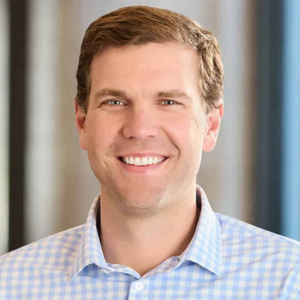
The Board Member Who Took the Wheel
Chris Abbott grew up in Minnesota. He went to the University of Minnesota. He went to Wall Street and worked at one of the only sell-side research firms that actually covered agriculture - a niche so specific it tells you everything about where his head was pointed from the start. Piper Jaffray. EcoAlpha Asset Management. Craig-Hallum Capital Group. Each stop the same thesis in different clothes: agriculture is the most important and most undercapitalized industry on earth.
By the time Abbott landed at Continental Grain's Conti Ventures as co-head, he had seen enough balance sheets and field trials to know what a real technology company looked like. Continental Grain - 200-plus years in food and agribusiness - gave him the platform to back early-stage companies across the entire food chain. One of those companies was a Berkeley startup called Pivot Bio.
That was 2018. Abbott joined the board. He watched the founders - microbiologist Karsten Temme and synthetic biologist Alvin Tamsir - build something that looked, on its face, almost too clean: microbes that colonize a plant's root system and convert atmospheric nitrogen into fertilizer, in real time, without synthetic inputs. No runoff. No volatilization. No nitrogen drifting downstream into rivers. Just microbes doing what microbes evolved to do, optimized.
Abbott has said he knew "within minutes" of meeting the team that the company would do something great. He spent five years testing that conviction from the board seat. In August 2023, Pivot Bio named him CEO.
"Within minutes of meeting the team, it was clear to me that this company was going to do something great."- Chris Abbott, on first meeting Pivot Bio's founders in 2018
Nitrogen, Glued to the Root
Synthetic nitrogen fertilizer is one of agriculture's great ironies. It transformed food production in the 20th century and created one of the 21st century's largest environmental problems. Roughly half of applied synthetic nitrogen never reaches the crop. It runs off into waterways. It volatilizes into the atmosphere. It costs farmers money and leaves a trail of algae blooms and greenhouse gases behind.
Pivot Bio's answer is old biology with new precision. Certain soil microbes evolved to fix atmospheric nitrogen - to pull N2 from the air and convert it into plant-accessible ammonia. But over thousands of years of heavy fertilizer application, those microbes essentially went quiet. Why work for nitrogen when it's being poured on you by the ton?
The company's gene-editing process wakes those microbes back up. Abbott explains it with characteristic directness: "Everything that we do starts with nitrogen. The foundational technology are gene-edited microbes converting atmospheric nitrogen to essentially nitrogen fertilizer right on the root system." The key phrase is "right on the root system" - when nitrogen gets produced at the root, it doesn't wander. As Abbott put it: "When it's essentially glued to the root system, it doesn't go anywhere."
The business case Abbott makes is blunt: "If you aren't better and aren't cheaper, it's pretty hard to have a sustainable impact at scale." Pivot Bio is cheaper - about 60% cheaper per pound of nitrogen. In most cases, it also drives a yield increase. The environmental benefit is almost a side effect of the economics working.
The Transition That Kept Both Minds
When Abbott stepped into the CEO role in August 2023, Pivot Bio handled it in an unusual way. Co-founder Karsten Temme didn't leave - he moved to Chief Innovation Officer. The scientific mind stayed in the building. Abbott came in as the operator, the investor who could speak to capital markets, supply chains, retail partners, and the complex logistics of getting microbes into farmers' hands at scale.
Abbott describes his job in terms that sound more like a systems thinker than a salesperson: "My job is to make sure that our teams are equipped with the right vision, focus and decision support frameworks." Not cheerleading. Frameworks. The finance background shows.
The transition worked. FY2023 results announced alongside the CEO appointment showed Pivot Bio crossing $100 million in annual revenue for the first time - 60% year-over-year growth. Net revenue retention from the 2022 customer cohort: 95%+. From the 2020-2021 cohorts: 190%+. Farmers who try the product keep buying it, and buy more.
"Farmers make the world a better place, and our job is to build more solutions and deliver opportunities for them. Our biggest goal is to fundamentally improve crop nutrition."- Chris Abbott
What Actually Happened Under Abbott
The numbers from 2024 tell their own story. Pivot Bio's products achieved a 16% improvement in nitrogen-use efficiency versus traditional fertilizer. The price dropped 25% with 0% financing options - Abbott applying investor-grade pricing discipline to a biotech product. Nearly 500 new retail locations added. The N-OVATOR program, which pays farmers cash for verified nitrogen reductions, delivered $4.5 million in farmer payments.
The company also expanded into cotton with CERT-N, a product that achieved 20% synthetic nitrogen replacement and a 200% return on investment in its first year. That's an important data point. Pivot Bio started in corn and small grains. Abbott's tenure is marked by extending the platform - proving the microbe works across crops and geographies, not just in ideal conditions.
| Metric | Result |
|---|---|
| FY2023 Revenue | $100M+ (first time) |
| YoY Revenue Growth (2023) | 60%+ |
| Net Revenue Retention, 2022 Cohort | 95%+ |
| Net Revenue Retention, 2020-21 Cohorts | 190%+ |
| Acres with Microbial Nitrogen | 5M+ |
| Synthetic N Avoided (since 2022) | 129,000+ metric tons |
| Nitrate Leaching Avoided (since 2022) | 102,600+ metric tons |
| Manufacturing Water Conserved (since 2022) | 665M gallons |
| N-OVATOR Farmer Payments (2024) | $4.5M |
| New Retail Locations Added (2024) | ~500 |
Better and Cheaper - or Don't Bother
Abbott's thinking on market adoption is unusually unsentimental for a climate-tech sector full of moral arguments. He acknowledges that plenty of farmers resist change. He acknowledges that product placement matters. He doesn't make the sustainability case as the primary pitch - he makes the economics case. Sixty percent cheaper. Yield gains in most trials. When those two things are true simultaneously, adoption follows.
On the relationship with synthetic fertilizer: "For a long time, we're going to be working in the system along them. Fertilizer plays a very key role. We're just a better option." Abbott isn't building a company that requires farmers to convert to a new philosophy. He's selling them a product that makes them more money while doing less damage. That framing - pragmatism over ideology - runs through every public statement he makes.
Wall Street, Venture, Then the Farm Gate
Abbott's career forms a straight line from analysis to execution. He didn't start in agriculture and migrate to finance - he used finance as a lens to understand agriculture from the outside, then kept moving closer to the dirt. Wall Street to asset management to investment banking to venture capital to the CEO chair of a company that literally makes microbes for farmers' fields.
Board Work That Isn't About Returns
Abbott serves on the board of InnerCity Tennis, an organization building youth development programs through tennis. It's a specific, grounded commitment - not an abstract charitable posture. Abbott is also a native Minnesotan, and while Pivot Bio is headquartered in Berkeley, Abbott operates from Minneapolis - a detail that speaks to the company's Midwest-centric market focus more than corporate geography.
His agricultural board history is extensive: Pattern Ag, Phospholutions Inc., Bushel, Sentera, with board observer roles at Vestaron Corporation and GreenLight Biosciences. Across all of them, the thesis is the same - technology that makes farming more precise, more efficient, and less dependent on blunt-instrument chemistry.
- Grew up in Minnesota; attended University of Minnesota
- Served on Pivot Bio's board for 5 years before becoming CEO
- Pivot Bio has been named to TIME's Best Inventions list three times
- Abbott serves on the board of InnerCity Tennis (youth development)
- N-OVATOR program creates a verified nitrogen credit market for farmers
- Pivot Bio's facilities span St. Louis, Omaha, Iowa, Chicago, and Iowa State University Research Park
- Total funding raised by Pivot Bio: $616.9M (Series D: $430M, July 2021)
Straight from Abbott
"Everything that we do starts with nitrogen. The foundational technology are gene-edited microbes converting atmospheric nitrogen to essentially nitrogen fertilizer right on the root system."- Chris Abbott, Agweek interview
"Our product today is about 60% cheaper than synthetic nitrogen. Growers are saving $20 instantly and in most cases see a yield increase as well."- Chris Abbott, Agweek
"It's an honor to participate in this year's Borlaug Dialogue and to celebrate leaders driving real, science-based change for farmers and the planet."- Chris Abbott, 2025 World Food Prize Borlaug Dialogue, Des Moines