Breaking James Wang publishes debut book on AI - endorsed by Reid Hoffman Creative Ventures backs 39+ deep tech companies $50M fund targeting hardware, climate, biotech & robotics Weighty Thoughts Substack surpasses 3,000 subscribers From West African microfinance to top-tier deep tech VC Creative Ventures GP on AI hardware, US-China tech competition James Wang: former Bridgewater analyst, Google X Makani team, now betting on deep tech James Wang publishes debut book on AI - endorsed by Reid Hoffman Creative Ventures backs 39+ deep tech companies $50M fund targeting hardware, climate, biotech & robotics Weighty Thoughts Substack surpasses 3,000 subscribers From West African microfinance to top-tier deep tech VC Creative Ventures GP on AI hardware, US-China tech competition James Wang: former Bridgewater analyst, Google X Makani team, now betting on deep tech
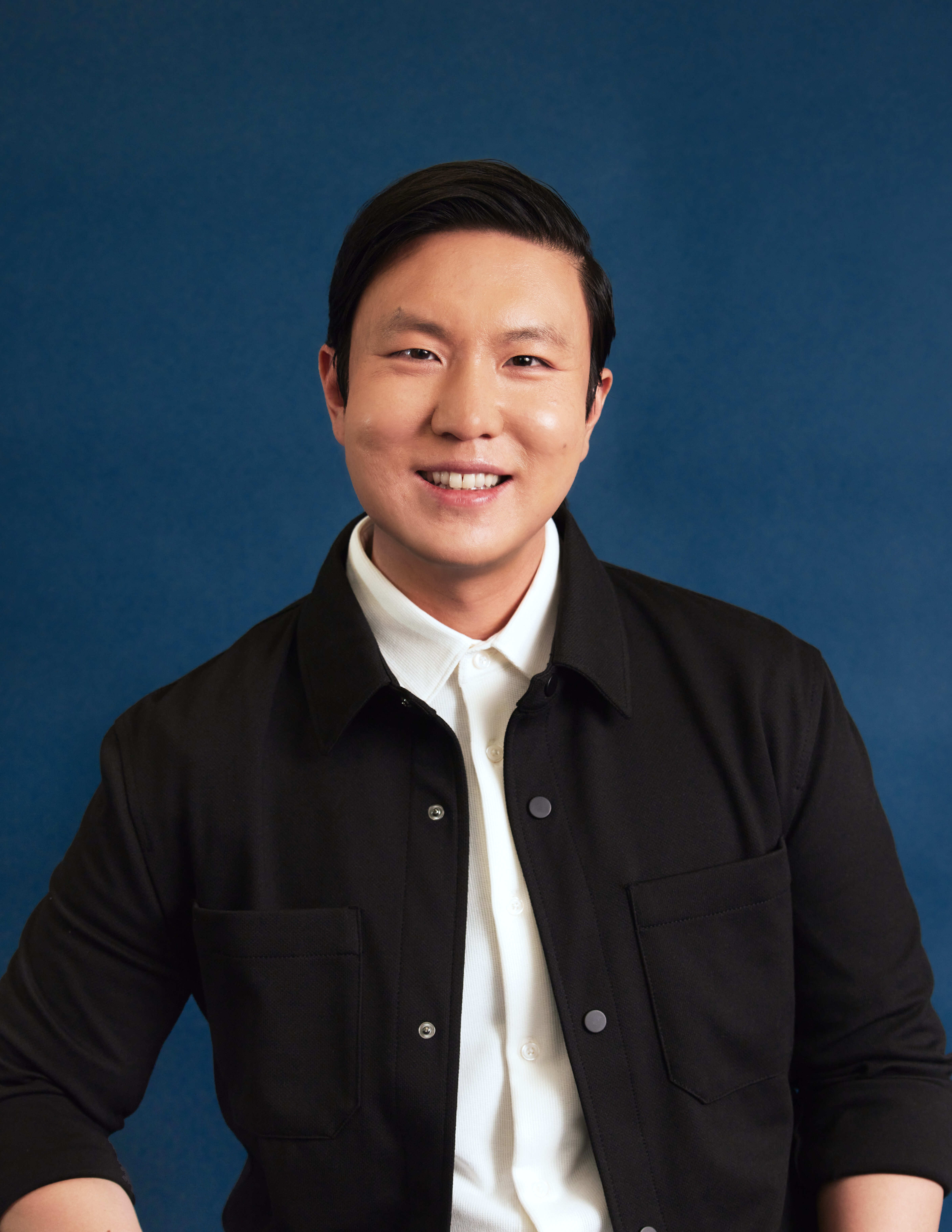
James Wang, General Partner at Creative Ventures

James Wang - General Partner, Creative Ventures

General Partner - Creative Ventures

James
Wang

Betting on the hardest problems. Early.

While most venture capital chases the next SaaS metric, James Wang is underwriting low-carbon cement, cell-free protein synthesis, and robotic surgery. As General Partner of Creative Ventures - a $50M deep tech fund in San Francisco - he has built a portfolio of 39+ companies working on problems that take decades to crack and pay off accordingly.

Deep Tech VC Author - 2025 $50M Fund Oakland, CA
39+
Portfolio Cos
Backed from pre-seed to Series A
$50M
Fund Size
Deployed in AI, robotics & biotech
3k+
Subscribers
Weighty Thoughts Substack readers
5
Degrees
Dartmouth, Berkeley, Georgia Tech & more
The Story

Before the term sheet, there are thousands of hours.

James Wang does not show up to a first meeting cold. Before sitting down with a founder, he and his team at Creative Ventures have already logged thousands of hours mapping the market, identifying failure modes, and building a thesis from the ground up. That discipline - borrowed from his years as a Senior Analyst at Bridgewater Associates, where systematic thinking is not a preference but a religion - defines Creative Ventures and separates it from the pattern-matching majority of early-stage VC.

Creative Ventures launched in 2016 with a clear, unfashionable conviction: the most important technology is physical. Not mobile apps, not pure software plays - but things that exist in the real world, subject to physics, supply chains, and the brutal timelines of hardware development. Robotics. Advanced materials. Medical diagnostics. Energy storage. Autonomous construction. Synthetic biology. The fund's $50 million, deployed across 39+ portfolio companies, follows that thesis with unusual consistency.

The firm writes checks of $250,000 to $1 million per deal, with a sweet spot around $750,000. The entry points are deliberately early: pre-seed and Seed, occasionally Series A. Wang's view is that deep tech requires capital at the moment most VCs are still watching from the sideline. "Deep tech remains significantly underinvested compared to software," he has said - and Creative Ventures has positioned itself to fill that gap.

"Deep tech remains significantly underinvested compared to software."

- James Wang, General Partner, Creative Ventures

"There's an important distinction between engineering risk and R&D risk."

- James Wang

Career Arc

The long way round.

There is no straight line from Dartmouth economics graduate to deep tech VC. Wang's arc ran through West Africa first - where, fresh out of college, he founded a non-profit consulting firm specializing in microfinance. The detail is not biographical filler. It suggests something important about how he thinks: capital is not abstract. Where it flows - and where it doesn't - shapes how communities and industries develop. That early orientation toward underserved markets with transformative potential reappears decades later in how he thinks about deep tech sectors that conventional venture capital ignores.

From West Africa, he moved to Bridgewater Associates (2010-2013), where he served as a Senior Analyst and Investment Associate. Bridgewater is not a training ground for generalists. It demands obsessive first-principles thinking, radical transparency, and the willingness to stress-test every assumption. Those habits show up clearly in the Creative Ventures diligence process.

Then came Google X and the Makani project - an audacious attempt to generate electricity from high-altitude wind using energy kites. Wang led the cross-functional team responsible for planning and executing Makani's first utility-scale energy kite pilot launch announcement. The moonshot environment, the tolerance for deep technical risk, and the intimate familiarity with hardware development timelines all translate directly into his investment practice today.

Parallel to all of this: he co-founded Lioness Health, a femtech startup, where he served as both CTO and COO. He also accumulated degrees at a pace that suggests genuine intellectual appetite rather than credential collection - an MBA from UC Berkeley Haas (where he was named a Jack Larson Fellow in Entrepreneurship), an M.S. in Computer Science specializing in AI/ML from Georgia Tech, a Data Science Specialization from Johns Hopkins, and PhD coursework in Computational Sciences and Engineering at UC Berkeley.

Early Career
Founded non-profit consulting firm for microfinance in West Africa
2010 - 2013
Senior Analyst and Investment Associate, Bridgewater Associates
2013
Co-founded Lioness Health (femtech), serving as CTO and COO
Pre-2016
Led launch announcement team at Google X for Makani energy kite project
2016
Founded Creative Ventures, targeting deep tech at earliest stages
2016 - Present
General Partner, Creative Ventures - 39+ portfolio companies, $50M fund
October 2025
Published debut book: "What You Need to Know About AI"
Investment Thesis

Real-world tech. Uncomfortable timelines. Patient capital.

🤖
Robotics & Automation
Disinfecting robots, food service automation (Picnic Works), autonomous construction scheduling, and industrial robotic systems replacing dangerous or labor-scarce jobs.
🧬
Biotech & Life Sciences
Cell-free protein synthesis, synthetic biology, quantum drug discovery, biopharmaceuticals, biofeedback devices, digital biomarkers, and scalable diagnostics.
Energy & Climate
Energy storage, cycle life extension, sustainable materials, TerraCO2 (low-carbon cement), and solutions to the built environment's carbon problem.
🏥
Healthcare & Diagnostics
Exo (nanotech ultrasound), ophthalmologic lasers, AI diagnostics, medical devices, and tools that bring hospital-grade capabilities to more accessible settings.
🌾
Food & Agriculture
AI-driven food production, precision agriculture, and technologies addressing supply chain fragility and the nutritional demands of a growing global population.
💡
Advanced Materials & Semiconductors
Material science breakthroughs, sustainable cementitious materials, advanced manufacturing processes, and semiconductor innovation at the physical layer of AI infrastructure.
Exo Imaging Picnic Works TerraCO2 Lioness Health +36 Portfolio Cos
How He Invests

Market structure first. Founder second. Always.

Wang's framework for deep tech evaluation starts somewhere most investors skip: the market itself. Before a single meeting with a founder, Creative Ventures builds a bottom-up model of how a sector actually functions - supply chains, customer types, regulatory pathways, incumbents, and the specific failure modes that have killed similar companies before. Only then does the technology get evaluated against that context.

The distinction he draws most often is between "engineering risk" and "R&D risk." Engineering risk means a technology works in principle and the challenge is execution: cost reduction, reliability, manufacturability. R&D risk means the underlying science remains unproven. Creative Ventures invests in the former. The fund is not a research lab subsidy. It backs founders who have cleared the scientific uncertainty and are now navigating the engineering and commercial path to deployment.

On founders, Wang is specific about what causes him to pass: lack of focus and lack of transparency. Deep tech founders who are chasing multiple product directions simultaneously, or who are reluctant to share the real challenges with their investors, do not survive the long development timelines that characterize this category. Wang has seen enough of those failures to be unambiguous about it.

$750K
Sweet Spot Check Size
Range: $250K-$1M per deal at pre-seed through Series A
10k+
Hours of Pre-Meeting Research
Diligence is built before founders walk in the door
2016
Fund Founded
Built when deep tech was still considered too slow for venture

The Author

He wrote the book. Literally.

What You Need to Know About AI
A Primer on Being Human in an Artificially Intelligent World

Published in October 2025, Wang's debut book is aimed at general readers trying to make sense of AI without a technical background - but informed enough not to traffic in hype or panic. The book synthesizes Wang's years of research, investing, and writing into a framework for understanding what AI actually is, what it isn't, and what it means for people navigating a world being reshaped by machine intelligence. It is not a book for engineers. It is a book for everyone else trying to keep up.

Reid Hoffman, LinkedIn co-founder Jordan Schneider, ChinaTalk
Thought Leadership

Weighty Thoughts.

Before the book, there was the newsletter. Wang's Substack, "Weighty Thoughts," has accumulated over 3,000 subscribers reading his takes on venture capital, AI, deep tech, and the startup ecosystem. The newsletter has become a reliable reference point in the deep tech investing community - long-form enough to develop actual arguments, short enough to remain readable.

Wang has also published through Medium and via Creative Ventures' own channels, contributing to a body of written work that spans market analysis, AI policy, hardware trends, and the practical realities of early-stage company building in hardware and life sciences. He appears regularly on podcasts - from ARK Invest's FYI (2019, on the future of AI hardware) to the ChinaTalk/Lawfare deep tech policy discussion on AI, semiconductors, and US-China competition.

The breadth of forums reflects a consistent priority: translating technical depth into accessible, actionable insight for audiences ranging from entrepreneurs and LPs to policymakers and curious non-experts.

Weighty Thoughts - Substack

"VC, AI, deep tech, and startups - without the hype."

3,000+ subscribers and growing

Subscribe

Personal Website

jameswang.ai - Essays, media appearances, and updates on AI and deep tech investing.

Media

On the record.

01
ARK Invest - FYI Podcast
"The Future of AI Hardware with James Wang" - June 28, 2019
02
ChinaTalk / Lawfare
"Deep Tech VC on AI, Chips, and US-China Competition"
03
Understanding VC
Guest interview on deep tech investment strategy - January 2023
04
Ready Set Startup
"Inside the World of Deep Tech Investing"
05
Deep Wealth Podcast
Episodes #366 & #405 on deep tech and AI
06
Earn & Invest
"The Future of Venture Capital: James Wang on Deep Tech"
07
Investor Connect
Episode 207 - Creative Ventures and early-stage deep tech
08
Hello Tomorrow Summit
Speaker - Global deep tech conference in Paris
Formation

Five institutions. One pattern.

Wang's educational path is unusual even by Silicon Valley standards. The combination of economics, philosophy, business, computer science, and computational engineering produces something that is genuinely hard to replicate: the ability to evaluate both the technical feasibility and the market logic of a deep tech company with equal rigor.

Dartmouth College
B.A. in Economics and Philosophy (with Honors)
UC Berkeley Haas
MBA
Jack Larson Fellow in Entrepreneurship
Georgia Tech
M.S. in Computer Science - AI/ML
UC Berkeley
Ph.D. Designated Emphasis in Computational Sciences & Engineering (coursework)
Johns Hopkins Bloomberg
Data Science Specialization
The Details

Things you won't find in the pitch deck.

The microfinance chapter: Before Wall Street, before Silicon Valley, Wang founded a consulting firm focused on microfinance in West Africa. The work shaped how he thinks about capital allocation in underserved markets - a frame that applies equally to deep tech sectors that traditional VC ignores.

The Makani connection: He was at Google X during the Makani energy kite project - one of the most audacious attempts to reinvent wind energy ever funded. He led the team that planned and executed the first utility-scale kite pilot announcement.

The femtech co-founder: He co-founded Lioness Health with his wife, serving as both CTO and COO. Navigating a startup as co-founders and spouses simultaneously is a particular test of both the partnership and the product.

Reid Hoffman endorsed the book: His debut AI book, published in October 2025, carries an endorsement from Reid Hoffman - LinkedIn's co-founder and one of Silicon Valley's most prolific investors. That's not a courtesy blurb.

Portfolio range: Creative Ventures has backed everything from ophthalmologic lasers to autonomous construction scheduling software to a company making low-carbon cement. The common thread is not the sector - it's the stage and the depth of the technology.

The Substack math: 3,000+ subscribers for a deep tech VC newsletter is a meaningful number. Most institutional investors are not writing 3,000 words for 3,000 readers. Wang is.

The Mission

What it's all for.

Wang's public statements return consistently to a framing that is larger than portfolio returns: deep technology as an answer to what he calls "humanity's crises." Climate change. The limits of food production. Healthcare access. The physical-world labor shortages that no software company can address. Creative Ventures is, by his framing, a bet that the most important investments of this decade will be the ones that take longest and require the most patience to see through.

His aspiration - visible in the fund's thesis, his book, his newsletter, and his speaking work - is to channel capital toward the founders working on those problems at the earliest, most uncertain stages: when the science is proven but the path to commercial deployment is still a decade of grinding iteration. And, alongside that capital work, to translate what deep tech actually means for a general audience that is going to live inside these technologies whether they understand them or not.

"We study market structure deeply before evaluating tech solutions."

James Wang - Creative Ventures

Share

Spread the word.

Find James Wang

Profiles, writing, and contact.